
Method to measure the shortest telomeres
a telomere and telomere technology, applied in the field of cell biology, molecular biology, diagnostics, and medicine, can solve the problems of inability to quantify tl for cancer studies, inability to analyze non-dividing cells such as senescent cells or resting lymphocytes, and inability to quantify tl. sensitivity, efficiency and specificity increase
Patent Information
- Authority / Receiving Office
- US · United States
- Patent Type
- Applications(United States)
- Current Assignee / Owner
- Publication Date
- 2018-11-29
Smart Images
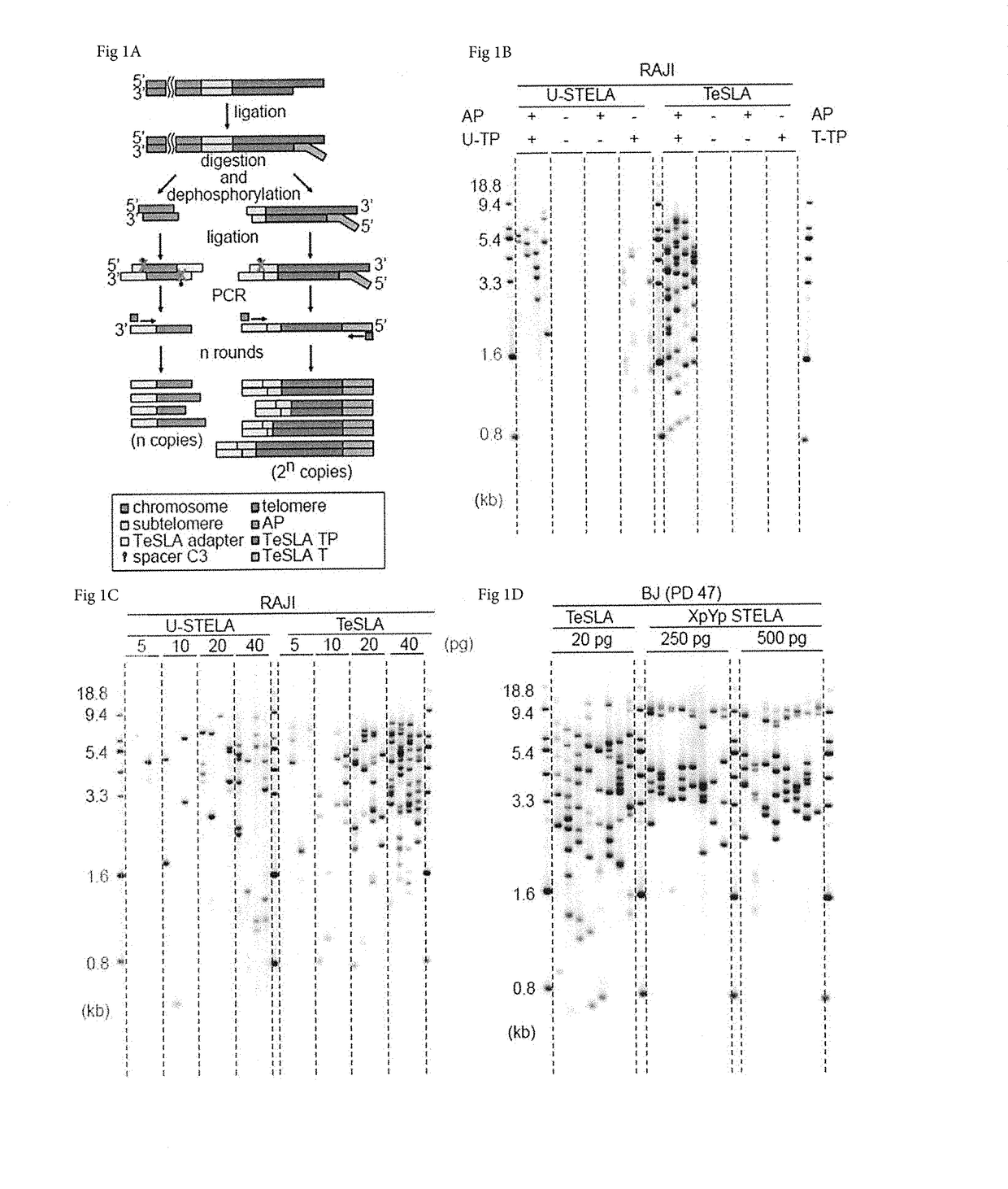
Figure 1 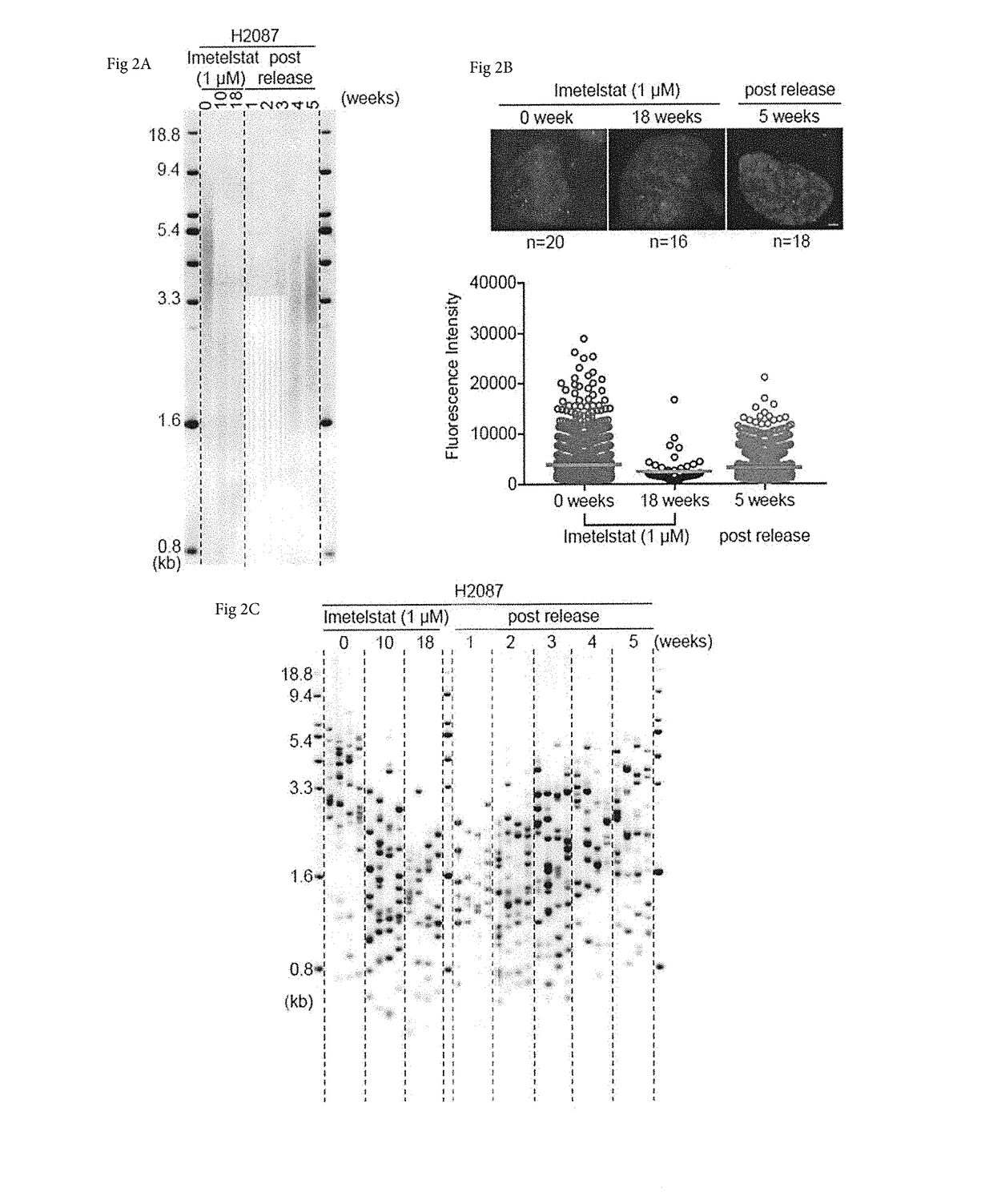
Figure 2 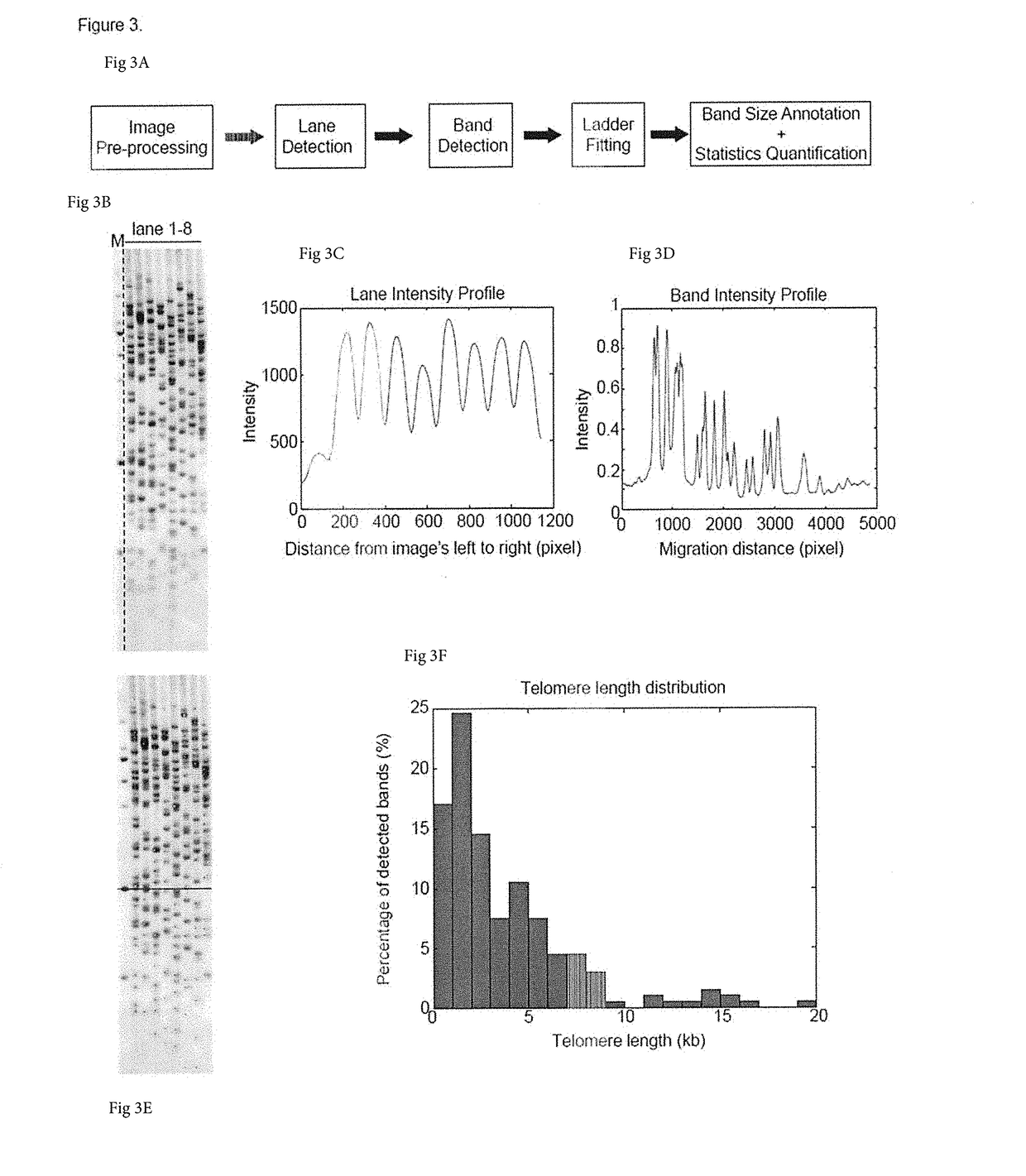
Figure 3
Abstract
Description
[0001] This application claims priority to U.S. Provisional Patent Application No. 62 / 504,009, filed May 10, 2018, which is incorporated by reference herein in its entirety.TECHNICAL FIELD
[0002] Embodiments of the disclosure include at least the fields of cell biology, molecular biology, diagnostics, and medicine, including at least cancer medicine.BACKGROUND
[0003] In vertebrates, telomeres consisting of repeat arrays of the canonical TTAGGG DNA sequence and their associated shelterin proteins reside at the ends of each chromosome to maintain genomic stability by preventing the ends from being recognized as DNA double strand breaks (Palm and de Lange, 2008). In most adult human somatic cells telomerase, a cellular reverse transcriptase that adds the repetitive DNA to telomeres is not detected. Therefore, telomeres progressively shorten with each cell division due to the “end replication problem” (Olovnikov, 1973; Watson, 1972). In humans, telomere shortening has been implicated as a ri...
Examples
example 1
TeSLA: A Method for Measuring the Distribution of the Shortest Telomeres in Cells and Tissues
[0050]Methods encompassed by the disclosure allow for more sensitive, efficient and specific for telomere length (TL) detection when directly compared to other methods for TL measurement. The methods may be used in combination with any other method, and in some cases may be used in combination with any imaging method, whether it is automated or not. As shown herein, one can detect telomere dynamics, especially for the shortest telomeres, in normal aging process, cancer, and telomere-related disorders in humans, for example. Also, one can apply the TeSLA method to different mammals such as mice, elephants, and bowhead whales to demonstrate the effectiveness of this improved technology.
Results
The Principle of TeSLA
[0051]A schematic presentation of the TeSLA method is shown in FIG. 1A. TeSLA is based on a ligation and PCR approach to detect amplified terminal restriction fragments which contain...