
Compounds for use as iron(III) MRI contrast agents
a contrast agent and compound technology, applied in the field of compound for use as iron(iii) macrocyclic compounds, can solve the problems of reduced potentials, lack of exchangeable water ligands, etc., and achieve the effect of shortening the t1 relaxation time of the protons and favorable paramagnetic properties
Patent Information
- Authority / Receiving Office
- US · United States
- Current Assignee / Owner
- Publication Date
- 2020-03-12
Smart Images
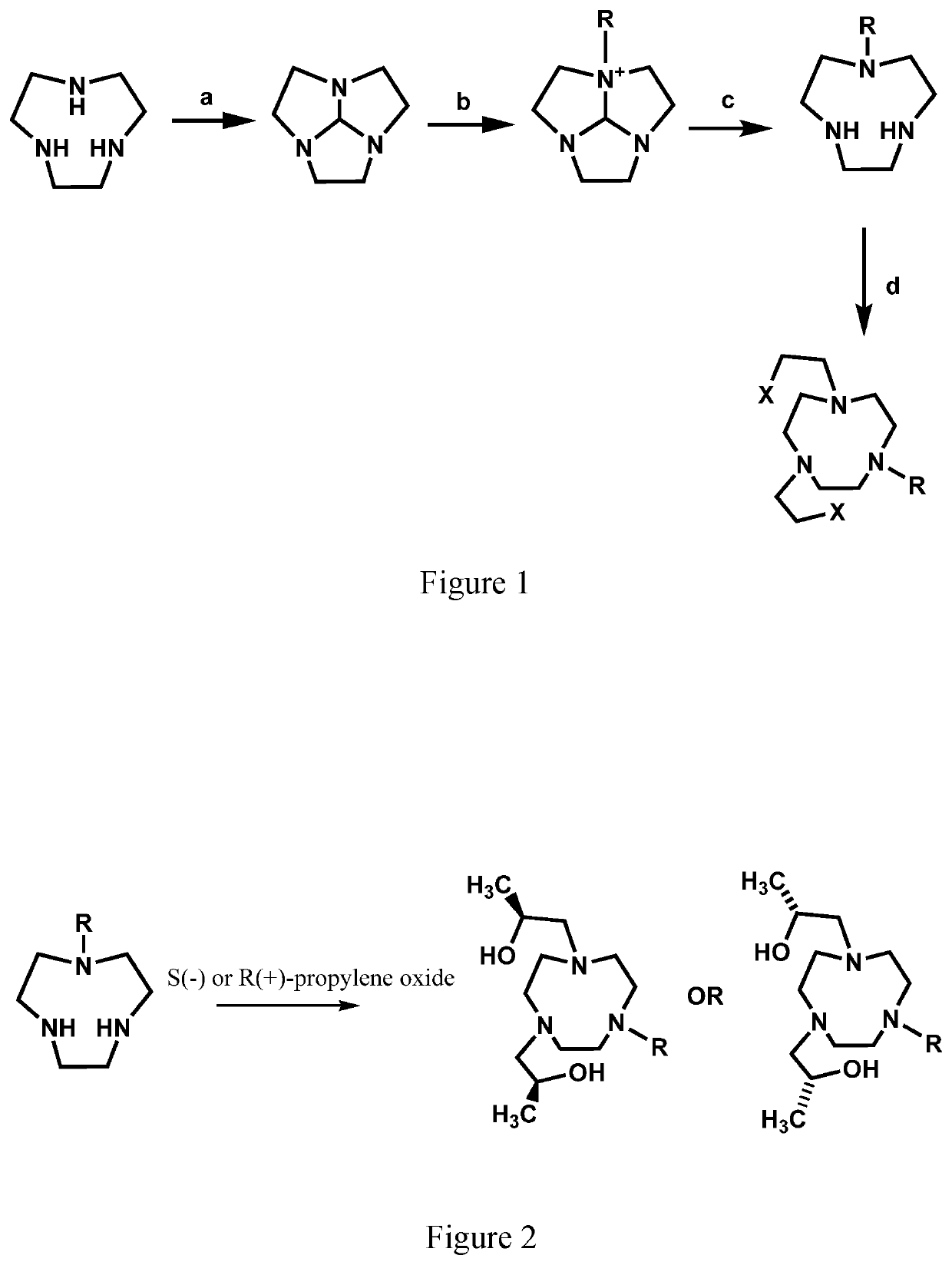
Figure 1 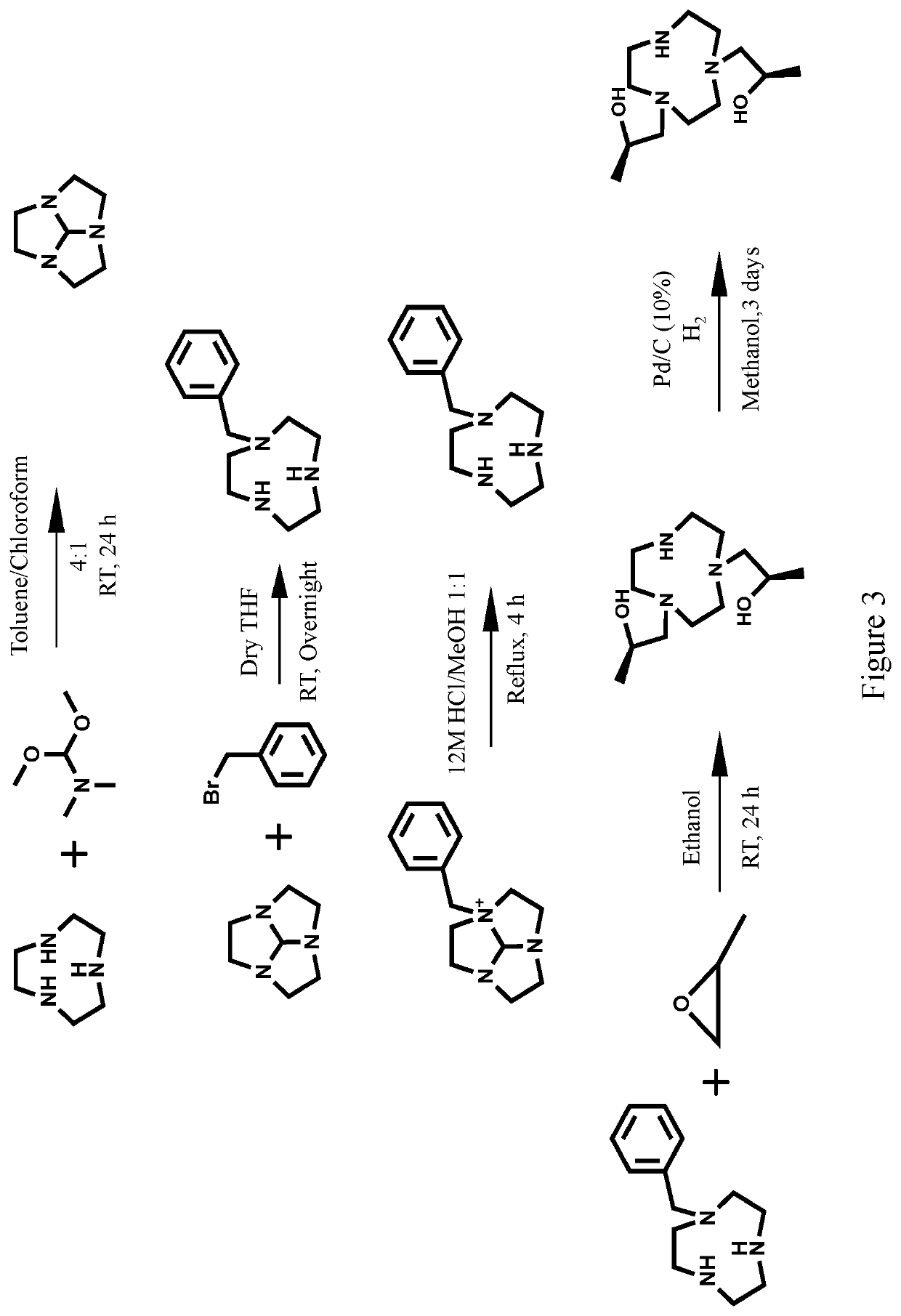
Figure 2 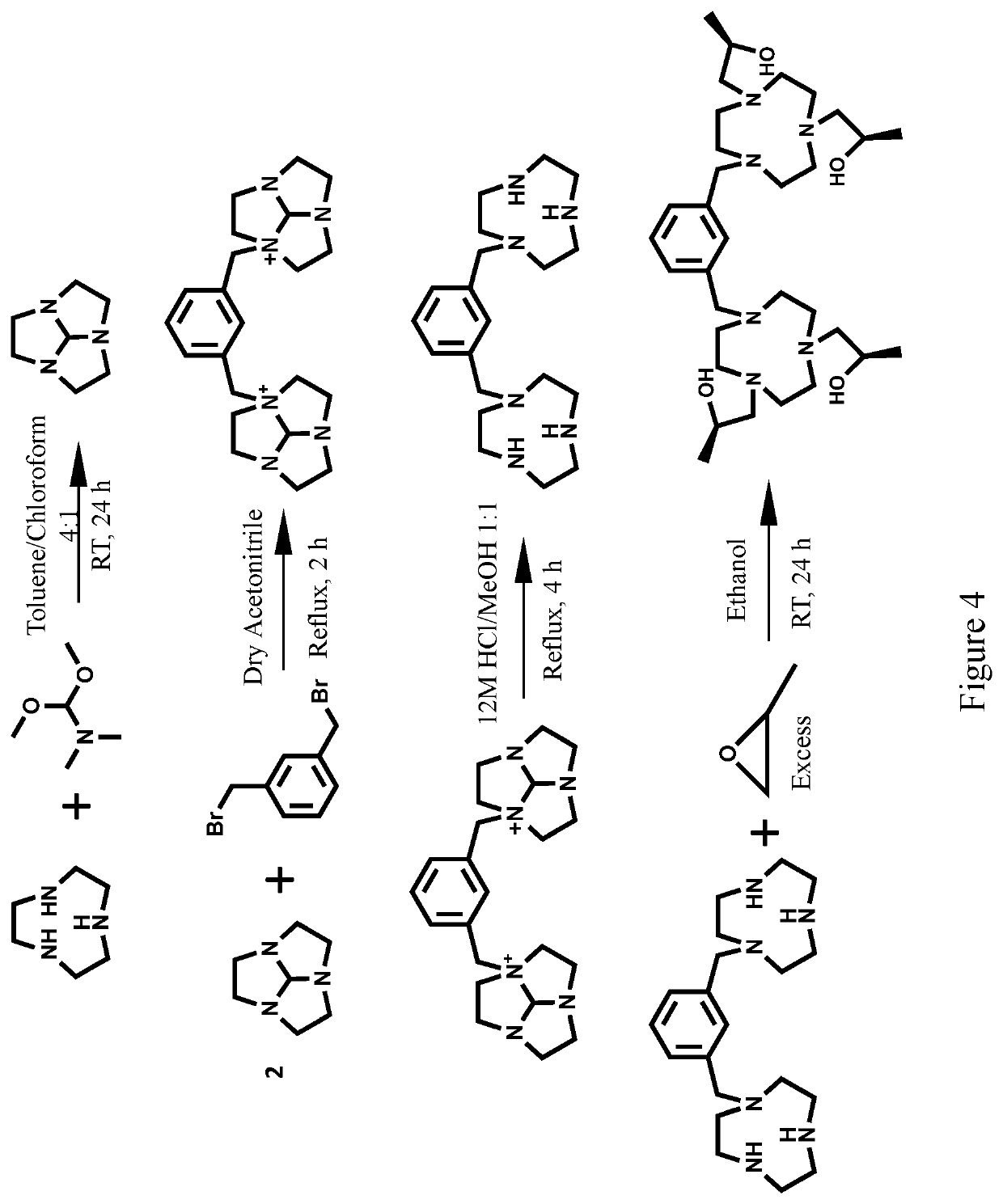
Figure 3
Abstract
Description
CROSS REFERENCE TO RELATED APPLICATIONS
[0001] This application claims priority to U.S. Provisional Application No. 62 / 508,548, filed on May 19, 2017, the disclosure of which is hereby incorporated by reference.STATEMENT REGARDING FEDERALLY SPONSORED RESEARCH
[0002] This invention was made with government support under Grant No. CHE1310374 awarded from the National Science Foundation and EB025369 from the National Institutes of Health. The government has certain rights in this invention.FIELD OF THE DISCLOSURE
[0003] This disclosure relates generally to iron(III) macrocyclic compounds. More particularly, this disclosure relates to iron(III) macrocyclic compounds that can be used as MRI contrast agents.BACKGROUND OF THE DISCLOSURE
[0004] Nearly all clinically-used contrast agents contain gadolinium (Gd as trivalent Gd(III)), yet a substantial proportion of patients in the US population (ca 10%) are considered at risk for being given Gd(III) contrast agents due to toxicity arising from long-t...
Examples
specific examples
[0130]Synthesis of TOB ligand. Synthesis of 1,1′-(7-benzyl-1,4,7-triazonane-1,4-diyl)bis(propan-2-ol). In a 10 mL round-bottom flask, 1-Benzyl-[1,4,7]-triazacyclononane (0.127 g, 0.5795 mmol) was dissolved in 5.0 mL absolute ethanol. To this solution was added (S)-(−)-propylene oxide (2.9 mmol, 5.0 eq). After the solution was stirred at RT for 2 days the solvent was removed under pressure to yield an oily crude product. The crude product was then dissolved in diethyl ether and precipitate removed through filtration. The filtrate was dried under pressure to yield 1,1′-(7-benzyl-1,4,7-triazonane-1,4-diyl)bis(propan-2-ol) as a clear oil (0.1657 g, 0.4942 mmol, 85%). ESI-MS: m / z=336.3 [M+H]+. 1H NMR (400 MHz, CD3OD); δ 1.09 (d, 6H, J=6), 2.25-2.94 (m, 16H), 3.55-3.83 (m, 4H), 7.15-7.44 (m, 5H). 13C NMR (75 MHz, CDCl3): δ 19.9, 54.4, 55.2, 62.7, 63.8, 66.4, 127.1, 128.2, 129.6, 139. To the TOB ligand in acetonitrile was added one equivalent of FeCl3, two equivalents of triethylylamine an...