
Systems and methods for rapid elemental analysis of airborne particles using atmospheric glow discharge optical emission spectroscopy
a technology of optical emission spectroscopy and glow discharge, which is applied in the direction of material excitation, measurement devices, instruments, etc., can solve the problems of labor- and time-intensive subsequent laboratory analysis, large excitation sources used in these methods, and long-term inhalation of toxic particulate matter that could pose a significant health risk to those who are routinely inhal
Patent Information
- Authority / Receiving Office
- US · United States
- Patent Type
- Applications(United States)
- Current Assignee / Owner
- Publication Date
- 2020-04-30
- Estimated Expiration
- Not applicable · inactive patent
Smart Images
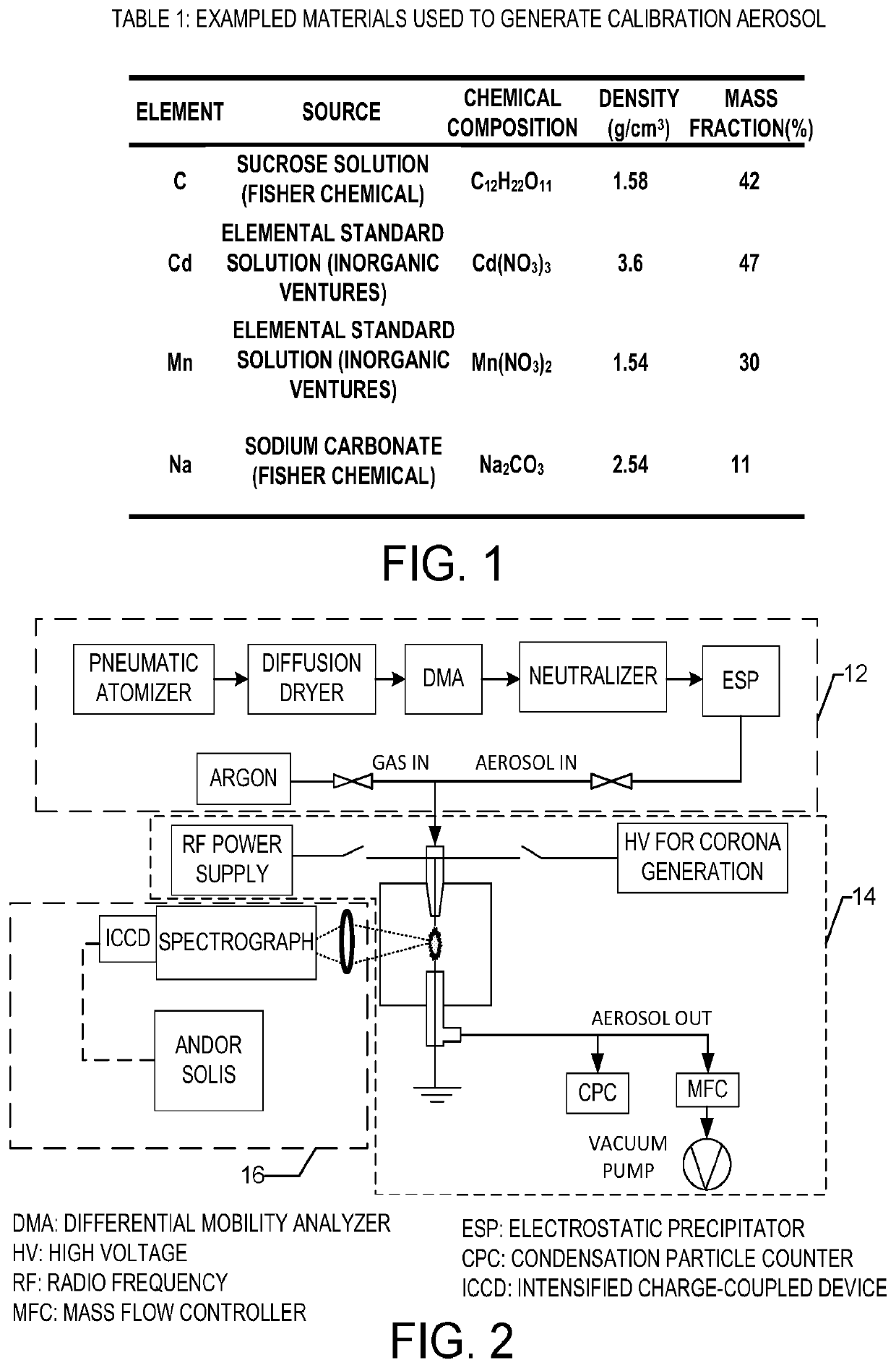
Figure 1 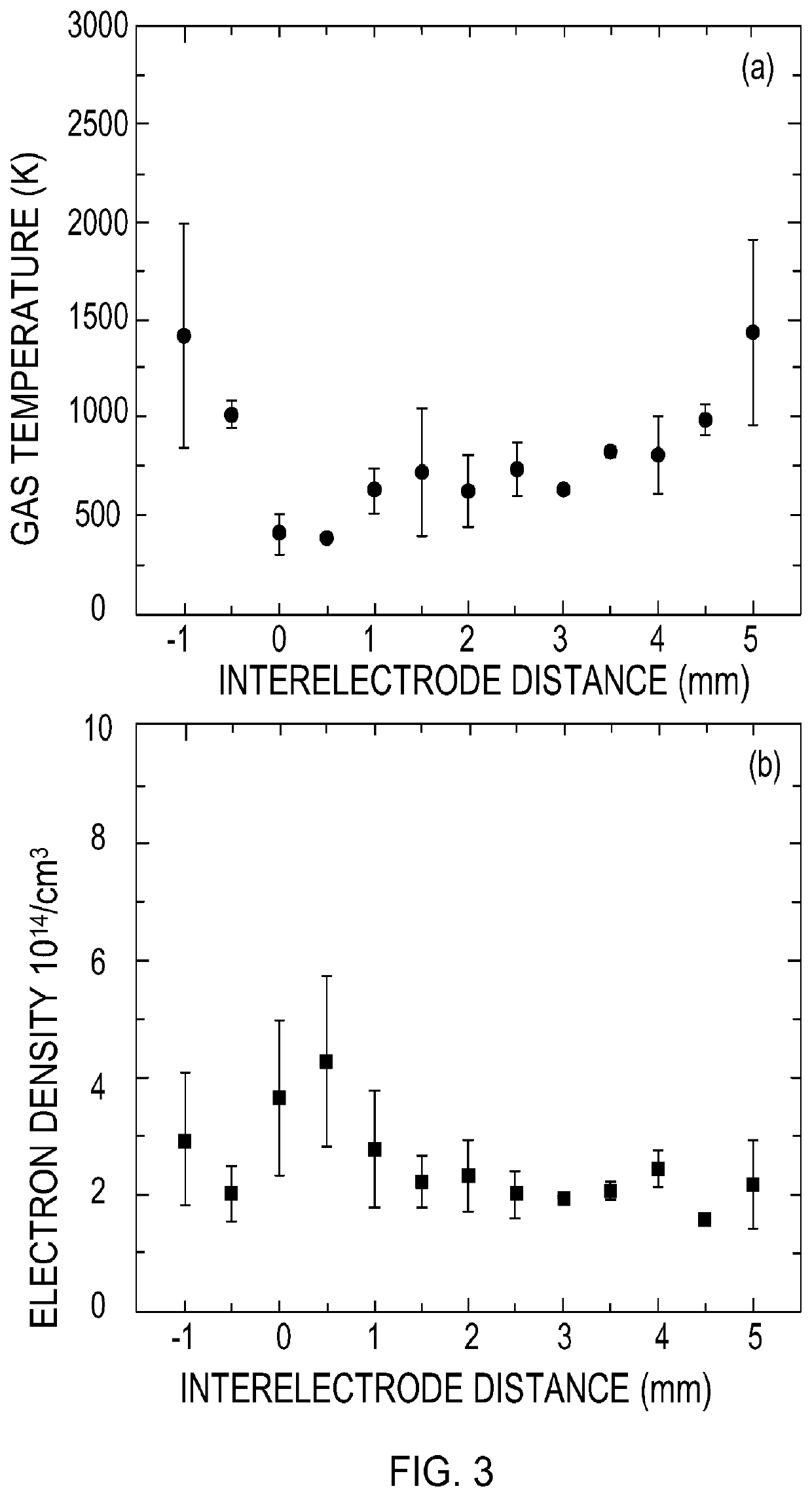
Figure 2 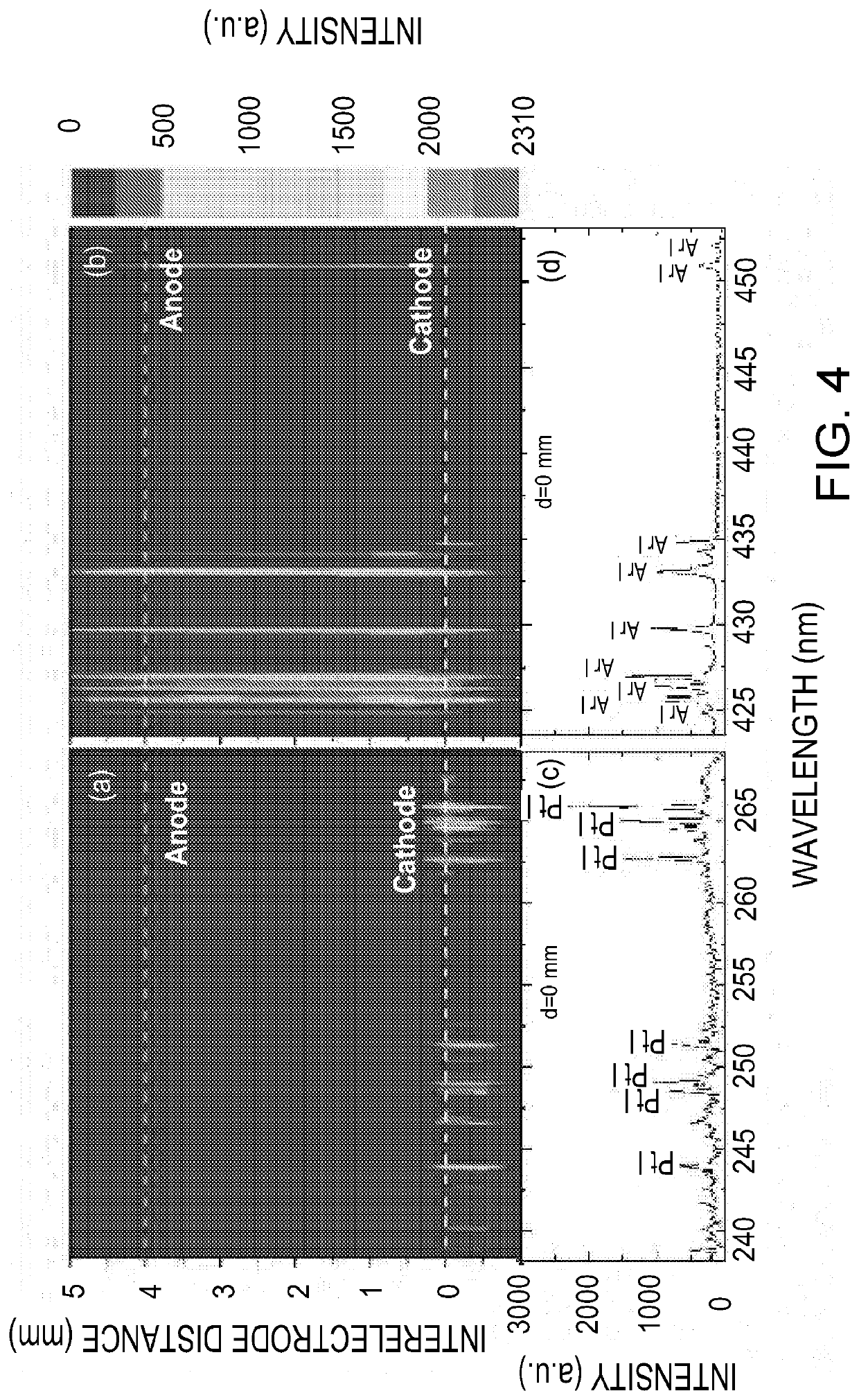
Figure 3
Abstract
Description
RELATED APPLICATIONS
[0001] The present application claims priority to U.S. Provisional Patent Application No. 62 / 484,300, entitled “Systems and Methods for Rapid Elemental Analysis of Airborne Particles Using Atmospheric Glow Discharge Optical Emission Spectroscopy,” filed Apr. 11, 2017, the entire contents of which are incorporated herein by reference.FIELD OF THE PRESENT DISCLOSURE
[0002] The present invention relates generally to methods and apparatus for the collection and analysis of aerosol particles.BACKGROUND OF THE PRESENT DISCLOSURE
[0003] Airborne particles affect the global climate, air quality, and human health. In particular, long-term inhalation of toxic particulate matter could pose a significant health risk to those who are routinely exposed to airborne particles, such as those in occupational environments. Measurement of exposure to metals is essential to environmental and occupational health studies.
[0004] The existing aerosol analysis methods require particle collectio...
Examples
example method
of Calibration
[0043]One embodiment of a calibration method 400 for calibrating the aerosol analysis system 10 is in FIG. 18. The calibration method 400 includes generating test aerosols at 402 and collecting of the aerosol particles on the flat tip 40 of the ground electrode 32B for predetermined amount of time at 404. The collected particles are ablated by glow discharge at 406 and the time-resolved emission spectra during glow discharge is recorded at 408. The emission signal for a particular analyte of interest for each spectrum is calculated at 410, while the time-integrated signal intensity for the particular analyte of interest is calculated at 412. Lastly, the calibration curve by plotting the integrated signal intensity as a function of analyte mass is constructed.
[0044]The following Equation (1) is used to determine the particulate mass deposited on the electrode for the known diameter of particles:
mp=ηCinQftcρpπ6dv3;(1)
where η is the capture efficiency of particles, Cin is...