
Heat-shrinkable plastic element, composite preform, and composite container
a plastic element and shrinkable technology, applied in the direction of rigid containers, synthetic resin layered products, packaging, etc., can solve the problems of difficult to obtain containers including portions, limit the means for obtaining containers having various functions and characteristics, etc., to improve the insertability of preforms and improve the production efficiency of composite preforms.
Patent Information
- Authority / Receiving Office
- US · United States
- Patent Type
- Applications(United States)
- Current Assignee / Owner
- Publication Date
- 2021-07-01
Smart Images
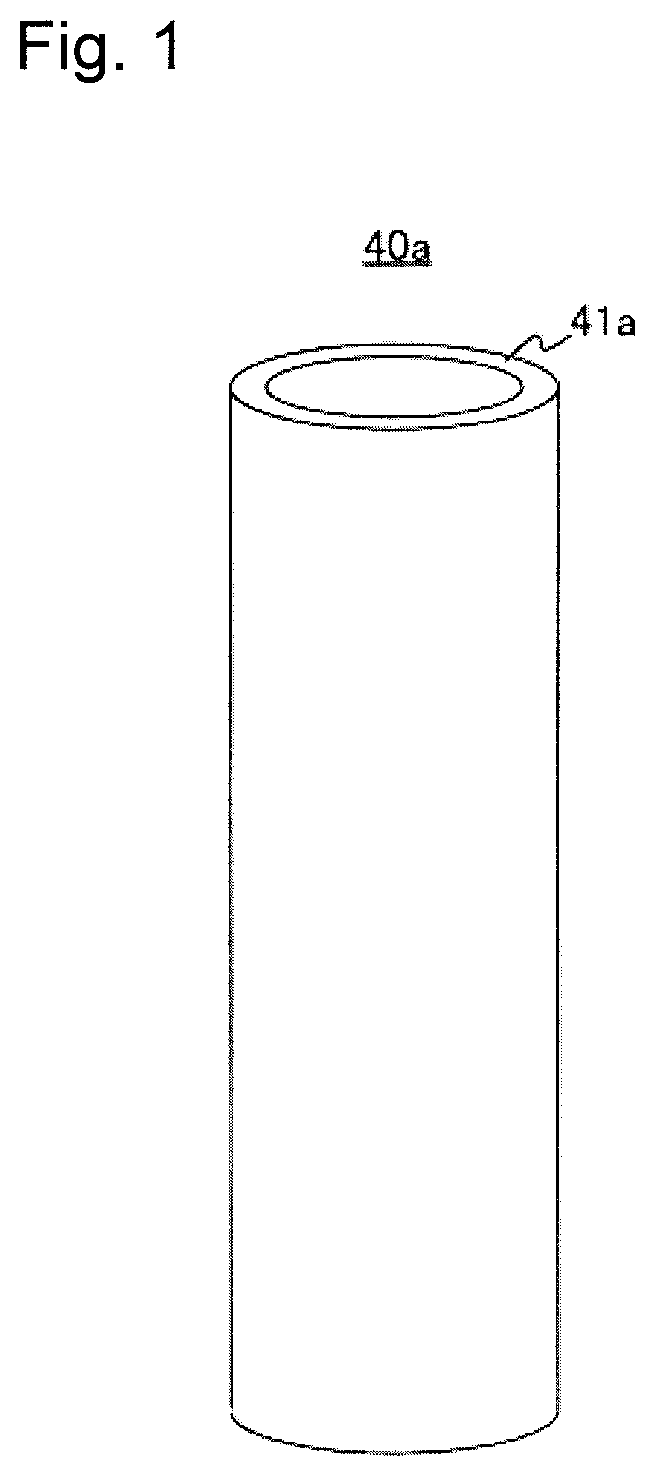
Figure 1 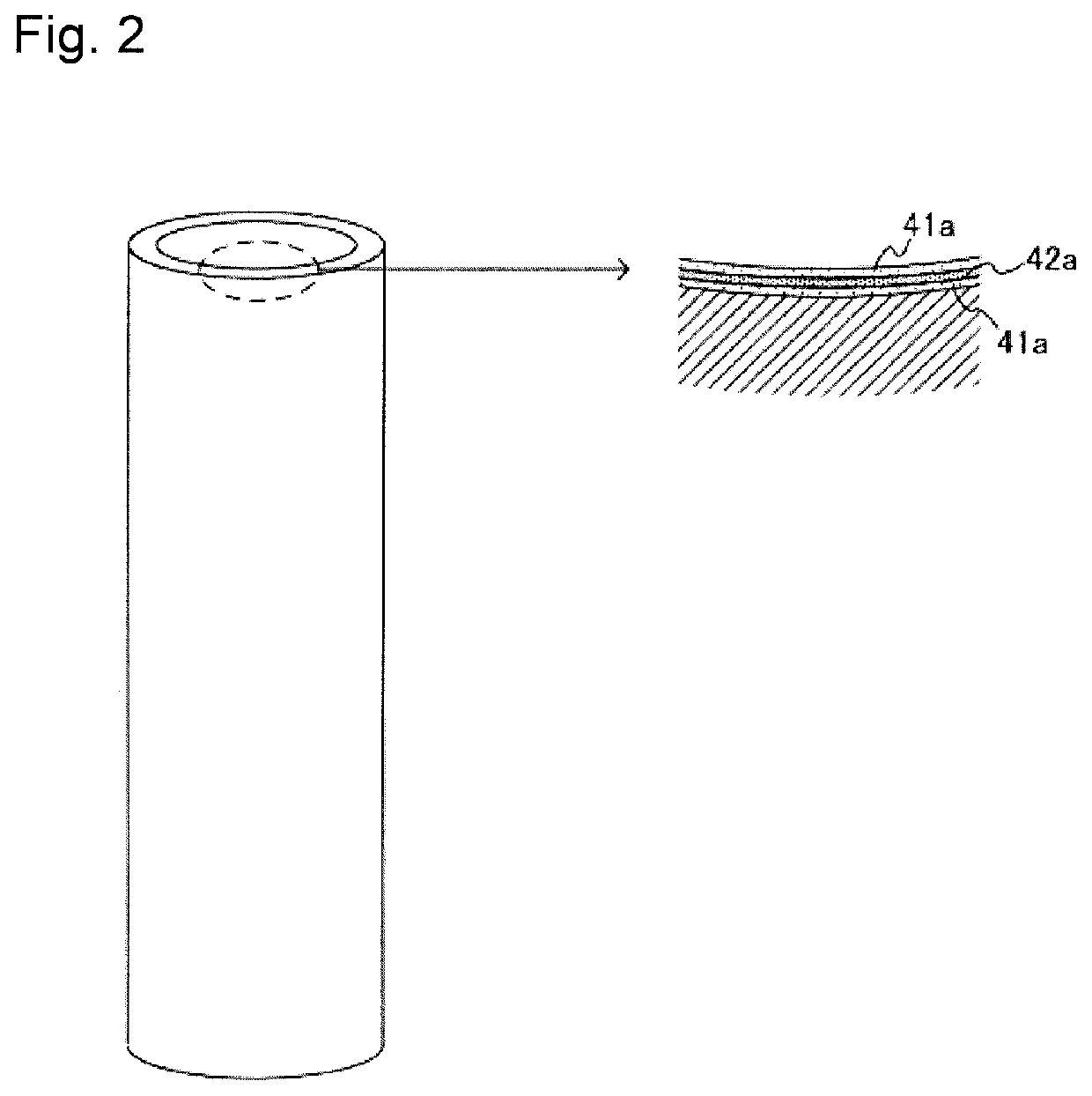
Figure 2 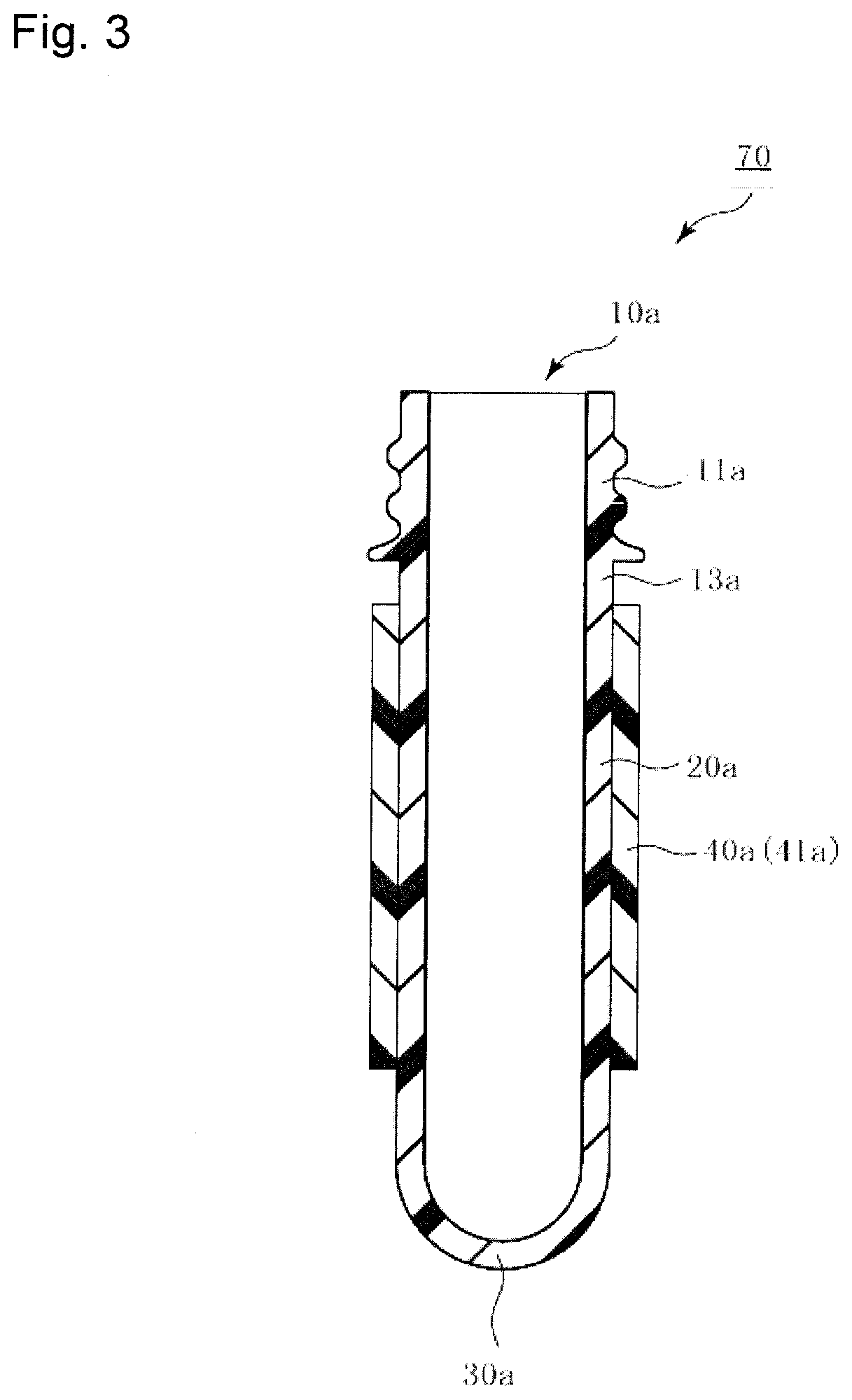
Figure 3
Abstract
Description
TECHNICAL FIELD
[0001] The present invention relates to a heat-shrinkable plastic element, a composite preform including the heat-shrinkable plastic element, and a composite container that is a blow-molded product of the composite preform.BACKGROUND ART
[0002] A plastic container has come into common use recently as a container for keeping fluid of food and drink etc. therein.
[0003] Such a plastic container for keeping fluid therein can be produced by inserting a preform into a metal mold, and then biaxial stretch—blow molding this preform (biaxial stretch blow molding).
[0004] For example, preforms including a monolayer material, a multilayer material, or a blend material of polyethylene terephthalate (PET), polypropylene (PP), etc. are conventionally used for production of plastic containers.
[0005] Commonly, a preform is just molded into a container in conventional biaxial stretch—blow molding, which limits means for obtaining a container having various functions and characteristics (such...
Examples
example 1
[0147]A mixture of 95 mass % Himilan 1706 (manufactured by DU PONT-MITSUI POLYCHEMICALS CO., LTD., MFR: 0.9 g / 10 min., storage modulus at 25° C.: 3.8×10⁸ Pa) as (A) an ionomer resin, and 5 mass % WINTEC WFX4TA (manufactured by Japan Polypropylene Corporation, metallocene polypropylene, MFR: 7.0 g / 10 min., storage modulus at 25° C.: 1.0×10⁹ Pa) as (B) an olefin resin was melt-extruded by a single screw extruder using an annular die, to be molded into a non-elongated tube having an inner diameter of 16.6 mm, and next this non-elongated tube was heated by hot water, and pressurized by compressed gas from the inside thereof, to be elongated, and thus a heat-shrinkable plastic element having a cylindrical shape without a bottom was made. The heat-shrinkable plastic element had an inner diameter of 28.7 mm, and a thickness of 307 μm.
example 2
[0148]A mixture of 95 mass % Himilan 1706 as (A) the ionomer resin, and 5 mass % WINTEC WFX4TA as (B) the olefin resin used for outermost layers, a 100 mass % polyolefin adhesive resin (ADMER SF731 manufactured by Mitsui Chemicals, Inc) as adhesive layers, and a mixture of a 100 mass % ethylene-vinyl alcohol copolymer (EVAL SP482B manufactured by Kuraray Co., Ltd) as a gas-barrier layer for a middle layer were each melt-extruded by a single screw extruder using a three-kind five-layer annular die, and were molded into a non-elongated tube having an inner diameter of 18.3 mm, and next this non-elongated tube was heated by hot water, and pressurized by compressed gas from the inside thereof, to be elongated, and thus a heat-shrinkable plastic element having a cylindrical shape without a bottom was made. The heat-shrinkable plastic element had an inner diameter of 28.7 mm, and a thickness of 345 μm (each outermost layer: 132 μm, each adhesive layer: 17 μm, middle layer: 47 μm).