
Humidifier and motor vehicle
a technology for humidifiers and motor vehicles, applied in the direction of electrochemical generators, battery/fuel cell control arrangements, lighting and heating apparatus, etc., to achieve the effect of reducing the design space required for humidifiers with integrated intercoolers, reducing the cost of motor vehicles, and increasing efficiency
Patent Information
- Authority / Receiving Office
- US · United States
- Patent Type
- Applications(United States)
- Current Assignee / Owner
- Publication Date
- 2021-12-09
Smart Images
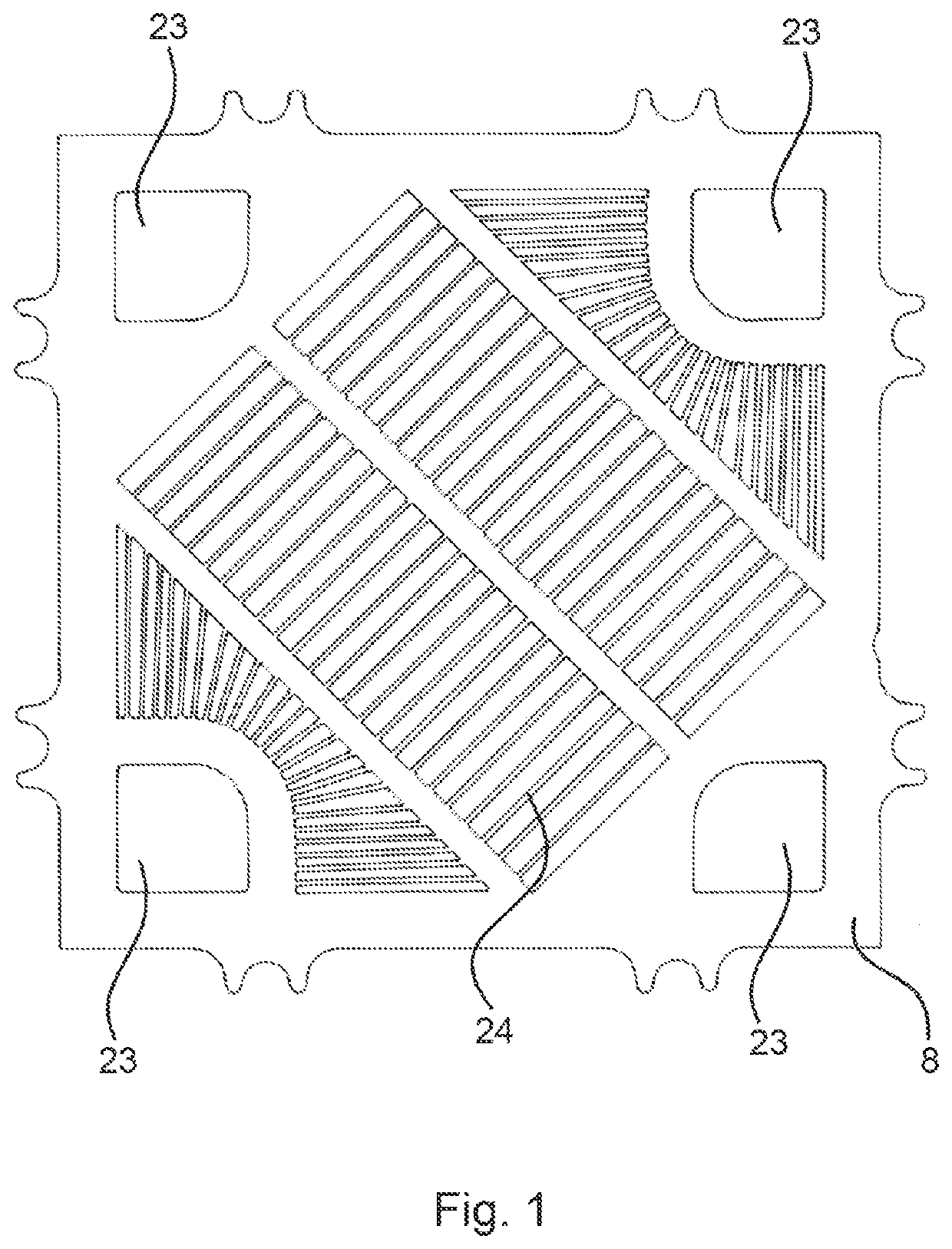
Figure 1 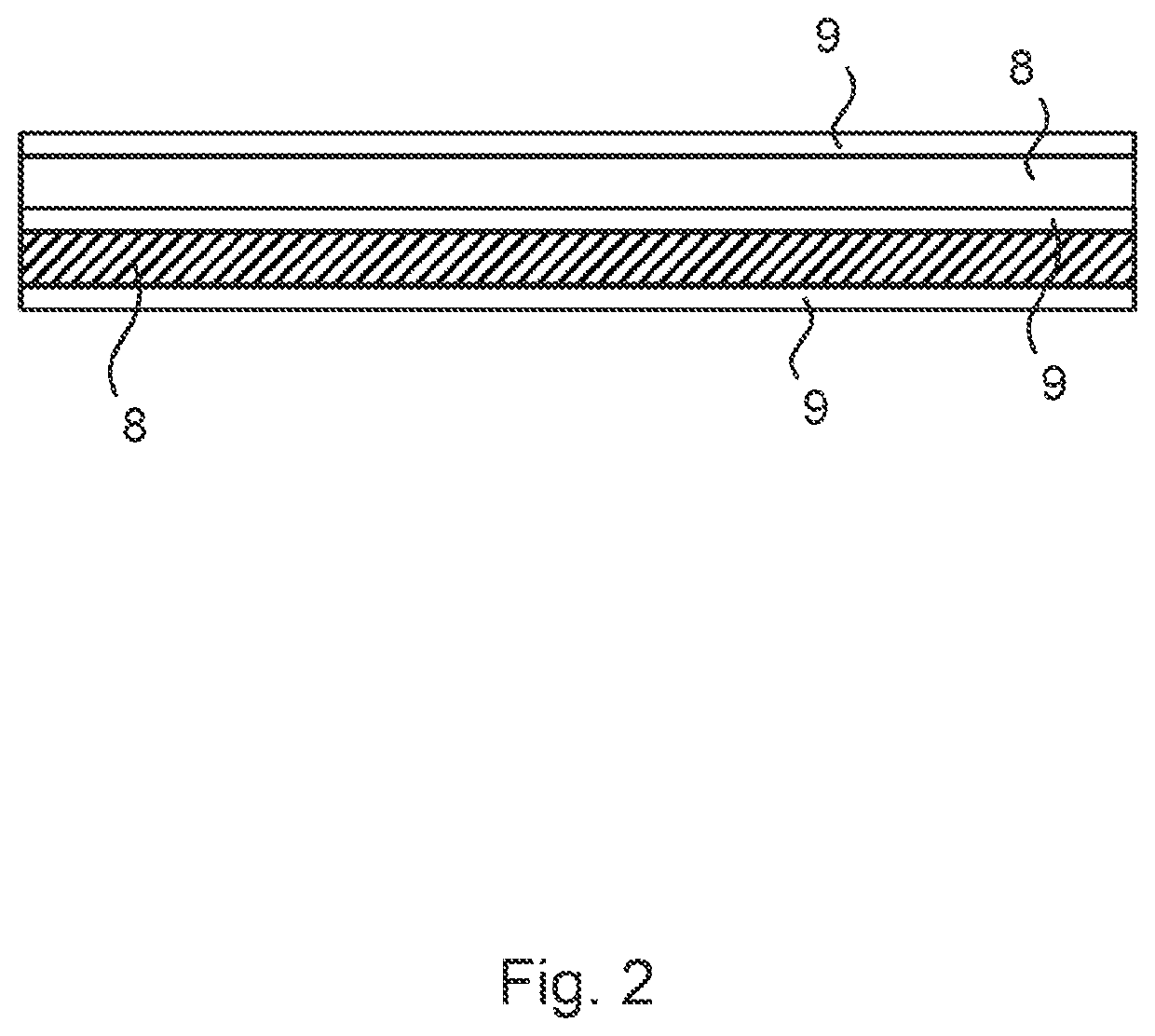
Figure 2 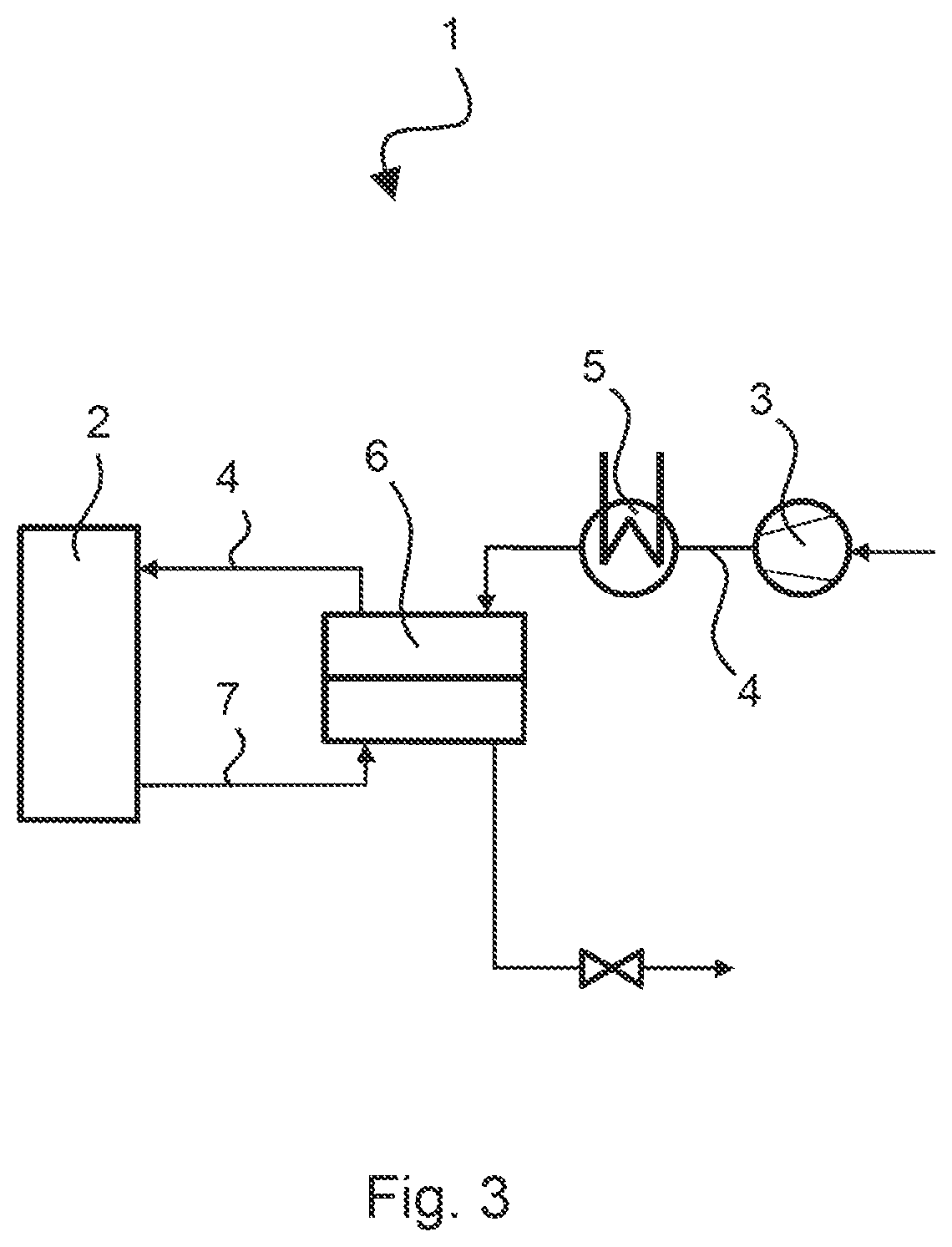
Figure 3
Abstract
Description
BACKGROUNDTechnical Field
[0001] Embodiments of the invention relate to a humidifier for a fuel cell device, having a plurality of flow field frames, between each of which there is arranged a humidifier membrane. Embodiments of the invention furthermore relate to a motor vehicle.Description of the Related Art
[0002] Humidifiers are generally used to bring about a transfer of moisture in the case of two gaseous media having a different moisture content to the dryer medium. Such gas / gas-humidifiers find use in particular in fuel cell device in which air with the oxygen contained therein is compressed in the cathode circuit in order to supply the cathode spaces of the fuel cell stack, so that relatively warm and dry compressed air is present whose humidity is not sufficient for use in the fuel cell stacks for the membrane electrode unit. The dry air for the fuel cell stack which is provided by the compressor is humidified by moving it past the membrane, which is permeable to water vapor, t...
Examples
Embodiment Construction
[0027]In FIG. 3 there is shown a portion of a fuel cell device 1 known in the prior art, where the fuel cell device 1 has a device for regulating the humidity of a plurality of fuel cells assembled into a fuel cell stack 2.
[0028]Fuel cells are used to provide electrical energy in a chemical reaction between a fuel, generally hydrogen, and an oxygen-containing oxidizing agent, generally air. Insofar as the power demand is greater than the power furnished by the fuel cell, the possibility exists of hooking up multiple fuel cells in series to form a fuel cell stack 2, although this increases the demand on the reactants taking part in the chemical reaction and there is a need on the cathode side to compress the cathode gas in a compressor 3. Due to this compression, greatly heated dry cathode gas is present in the cathode feed line 4 after the compressing, which is not suitable for immediate use in the fuel cell stack 2, because a sufficient humidity is required for the proton exchange ...