
Machine learning driven gene discovery and gene editing in plants
a technology of applied in the field of machine learning driven gene discovery and gene editing in plants, can solve the problems of time and resource consumption, qtl analysis, and weak modeling complex nonlinear interactions, and achieve the effect of maximizing, minimizing, or modulating the phenotyp
Patent Information
- Authority / Receiving Office
- US · United States
- Patent Type
- Applications(United States)
- Current Assignee / Owner
- Publication Date
- 2022-09-22
Smart Images
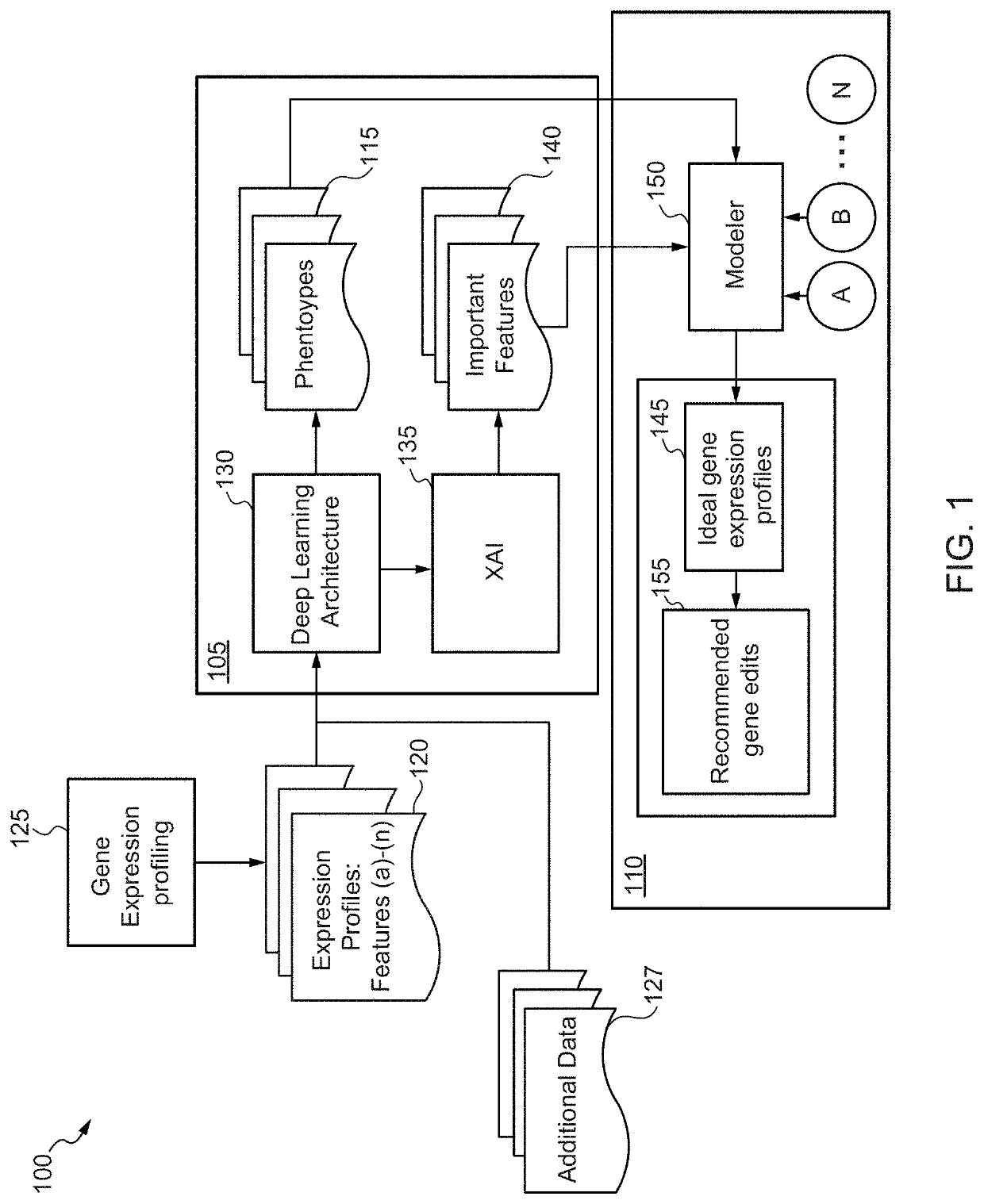
Figure 1 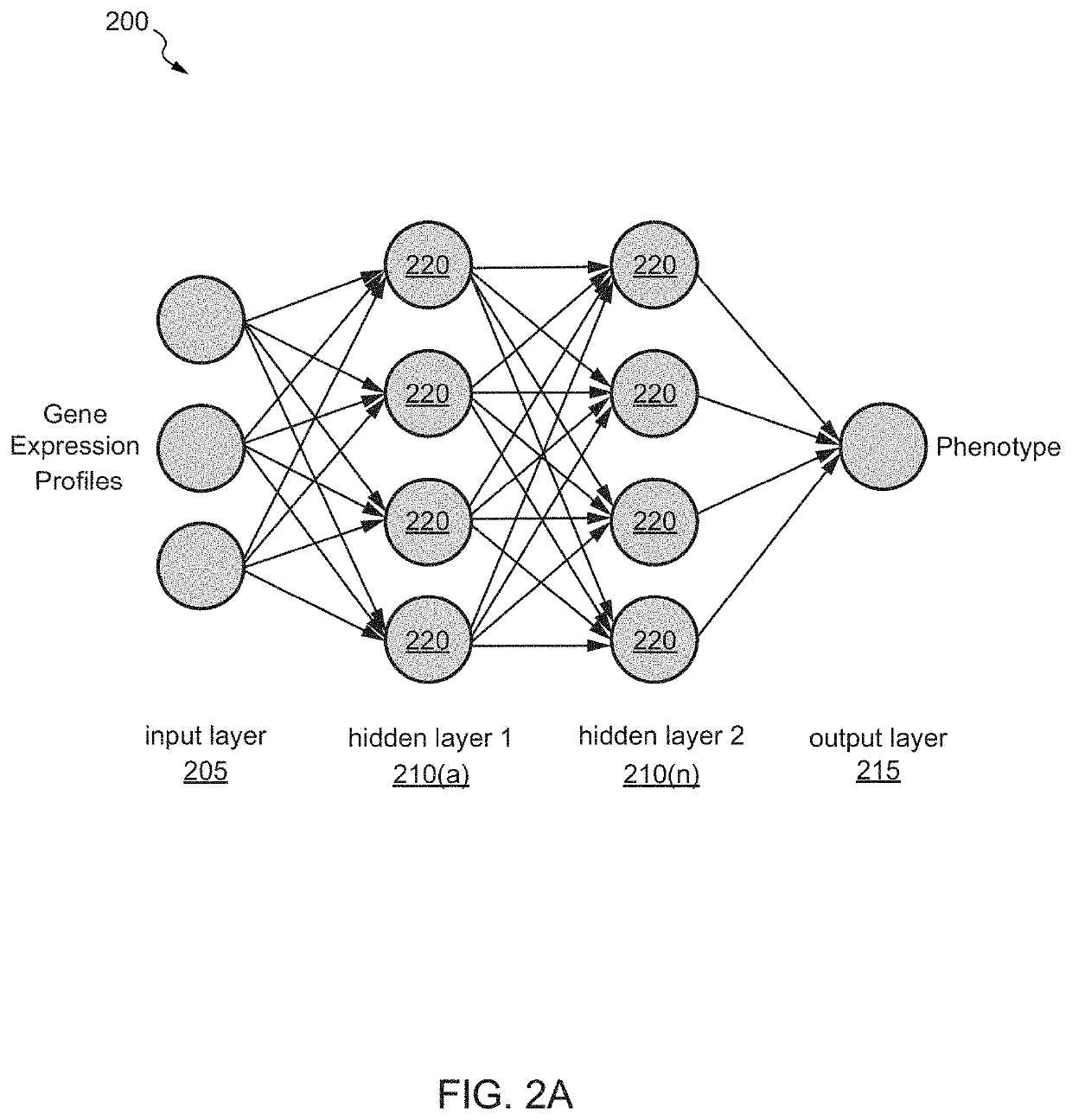
Figure 2 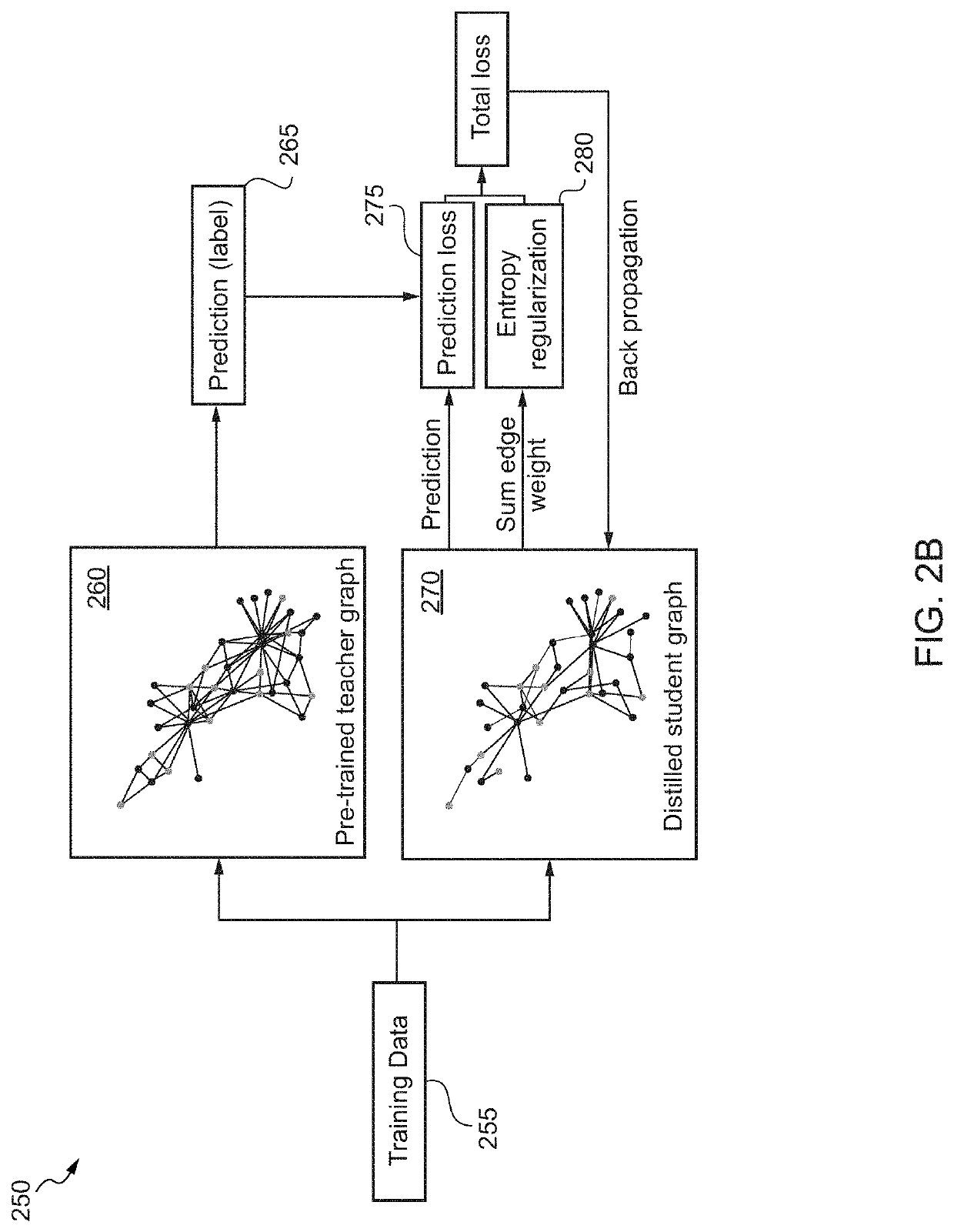
Figure 3
Abstract
Description
FIELD
[0001] The present disclosure relates to plant genome editing, and in particular to leveraging explainable machine learning methods and feature importance mechanisms (both on neural networks and other nonlinear models) as a mechanism for gene discovery and furthermore leveraging the outputs of these gene discovery models to recommend ideal gene expression profiles, including the requisite genome edits, that are conducive to a desired phenotype.BACKGROUND
[0002] Genetic diversity is primarily a function of sexual recombination and mutagenesis, and is an important means for trait improvement in plants. For example, genetic diversity in plant genetic resources provides opportunity for plant breeders to develop new and improved cultivars with desirable characteristics, which include both farmer-preferred traits (e.g., high yield potential, large seed, etc.) and breeder-preferred traits (e.g., pest and disease resistance and photosensitivity, etc.). For thousands of years, plant domest...
Examples
Embodiment Construction
[0028]The ensuing description provides preferred exemplary embodiments only, and is not intended to limit the scope, applicability or configuration of the disclosure. Rather, the ensuing description of the preferred exemplary embodiments will provide those skilled in the art with an enabling description for implementing various embodiments. It is understood that various changes may be made in the function and arrangement of elements without departing from the spirit and scope as set forth in the appended claims.
[0029]Specific details are given in the following description to provide a thorough understanding of the embodiments. However, it will be understood that the embodiments may be practiced without these specific details. For example, circuits, systems, networks, processes, and other components may be shown as components in block diagram form in order not to obscure the embodiments in unnecessary detail. In other instances, well-known circuits, processes, algorithms, structures,...