
Method and apparatus for reducing leakage power in a cache memory by using a timer control signal that removes power to associated cache lines
a cache memory and power dissipation technology, applied in the direction of memory adressing/allocation/relocation, instruments, liquid/fluent solid measurement, etc., can solve the problem that leakage power is expected to become a significant factor in the total power dissipation of the chip, and achieve the effect of reducing power consumption, reducing leakage power dissipation, and reducing leakage power
Patent Information
- Authority / Receiving Office
- US · United States
- Patent Type
- Patents(United States)
- Current Assignee / Owner
- Publication Date
- 2006-01-03
- Estimated Expiration
- Not applicable · inactive patent
Smart Images
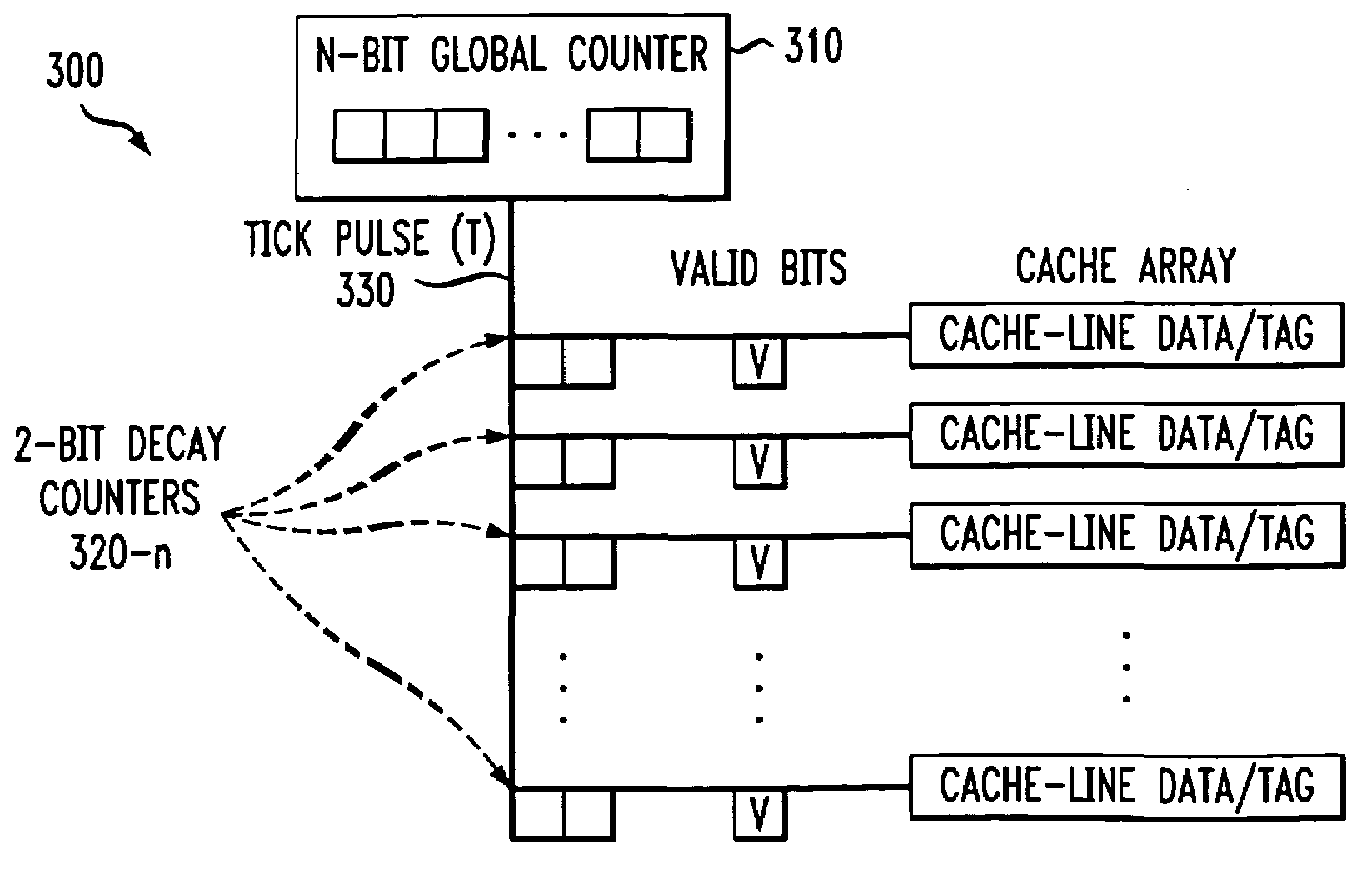
Figure 1 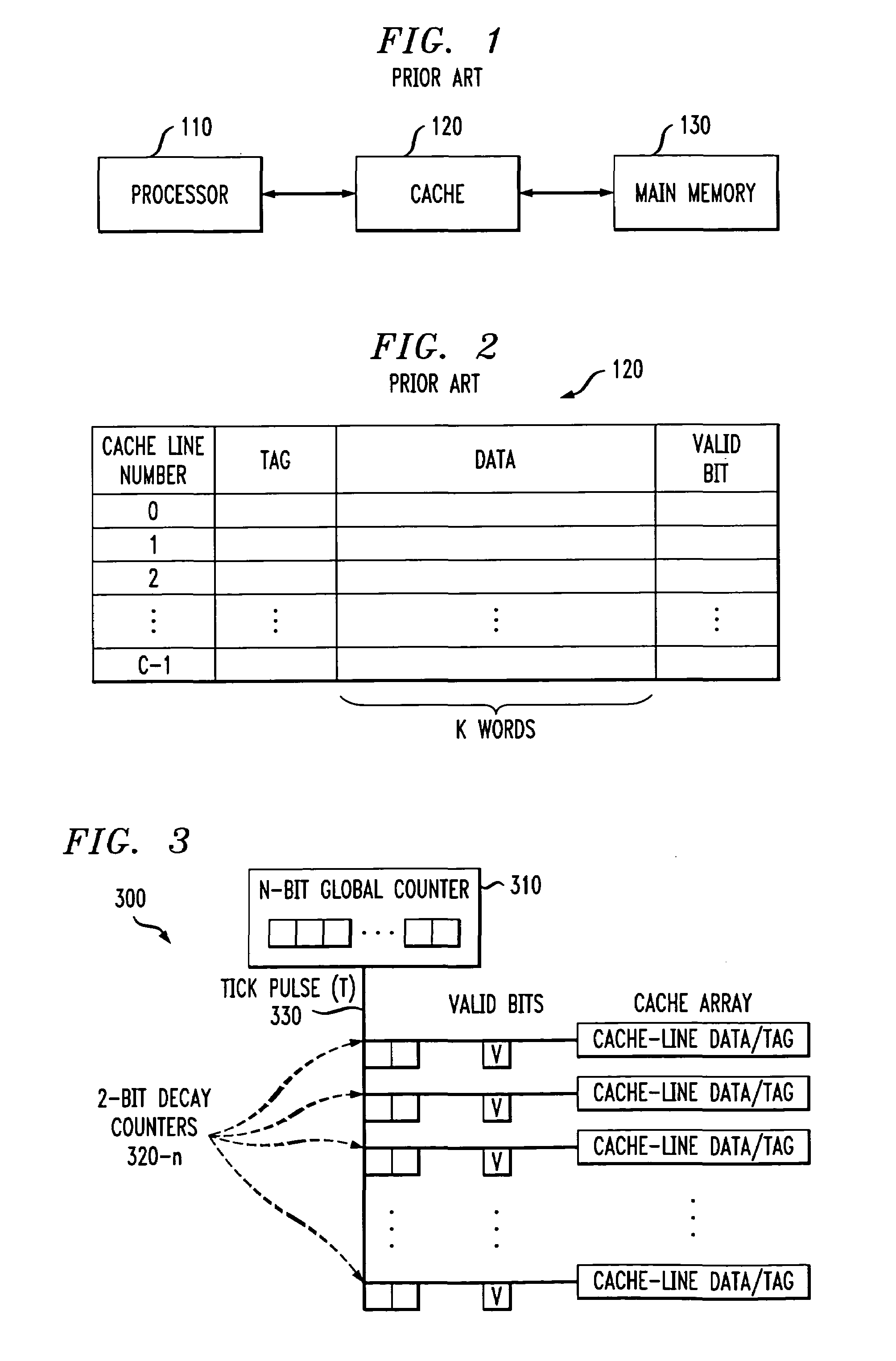
Figure 2 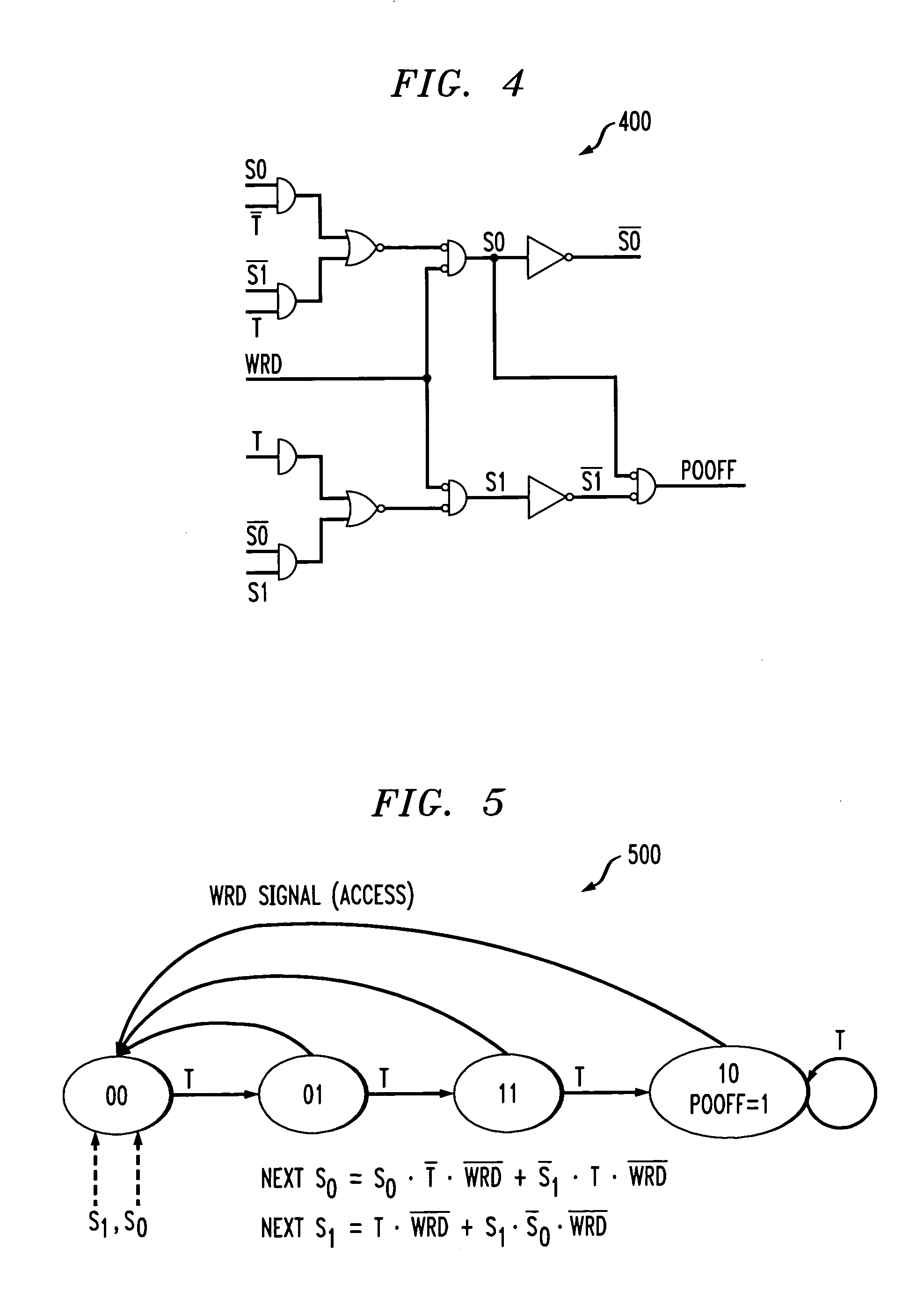
Figure 3
Abstract
Description
CROSS-REFERENCE TO RELATED APPLICATION
[0001] This application claims the benefit of U.S. Provisional Application No. 60 / 243,173, filed Oct. 25, 2000.FIELD OF THE INVENTION
[0002] The present invention relates generally to cache memory devices, and more particularly, to methods and apparatus for reducing the leakage power in such cache memories.BACKGROUND OF THE INVENTION
[0003] Cache memories reduce memory access times of large external memories. FIG. 1 illustrates a conventional cache architecture where a cache memory 120 is inserted between one or more processors 110 and a main memory 130. Generally, the main memory 130 is relatively large and slow compared to the cache memory 120. The cache memory 120 contains a copy of portions of the main memory 130. When the processor 110 attempts to read an area of memory, a check is performed to determine if the memory contents are already in the cache memory 120. If the memory contents are in the cache memory 120 (a cache “hit”), the contents ar...
Examples
Embodiment Construction
[0020]FIG. 2 illustrates the structure of the conventional cache memory 120 of FIG. 1 in further detail. As shown in FIG. 2, the cache memory 120 consists of C cache lines of K words each. The number of lines in the cache memory 120 is generally considerably less than the number of blocks in main memory 130. At any time, a portion of the blocks of main memory 130 resides in lines of the cache memory 120. An individual line in the cache memory 120 cannot be uniquely dedicated to a particular block of the main memory 130. Thus, as shown in FIG. 2, each cache line includes a tag indicating which particular block of main memory 130 is currently stored in the cache 120. In addition, each cache line includes a valid bit indicating whether the stored data is valid.
[0021]The present invention provides a cache decay technique that removes power from cache lines that have not been accessed for a predefined time interval, referred to as the decay interval. The decay interval may be variable to...