
System cache with fine grain power management
a power management and system cache technology, applied in the field of data caches, can solve the problems of reducing the service limiting the battery life of the device, and reducing the number of requests, so as to reduce the leakage power of the system cache and reduce the number of requests
Patent Information
- Authority / Receiving Office
- US · United States
- Patent Type
- Applications(United States)
- Current Assignee / Owner
- Publication Date
- 2014-04-03
Smart Images
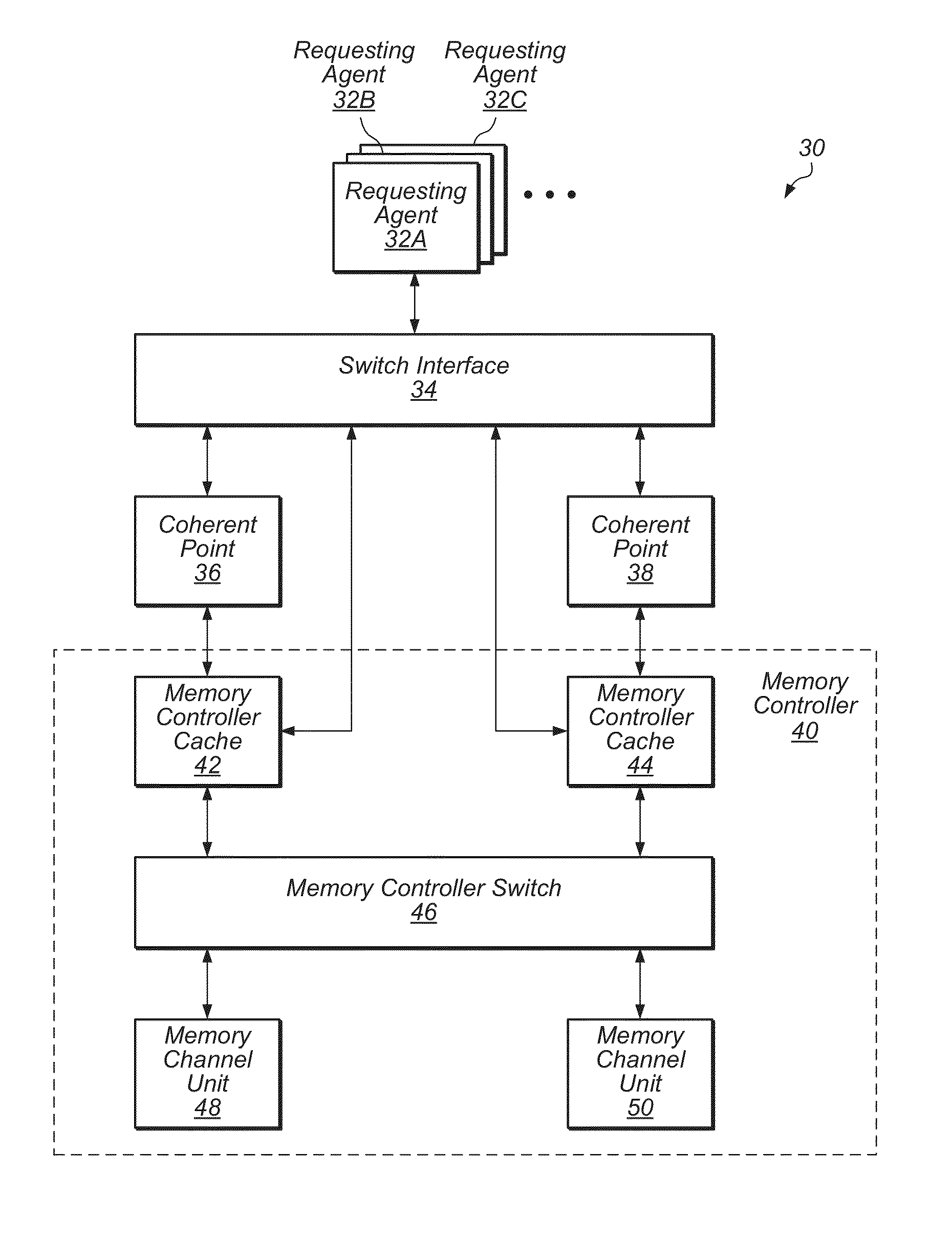
Figure 1 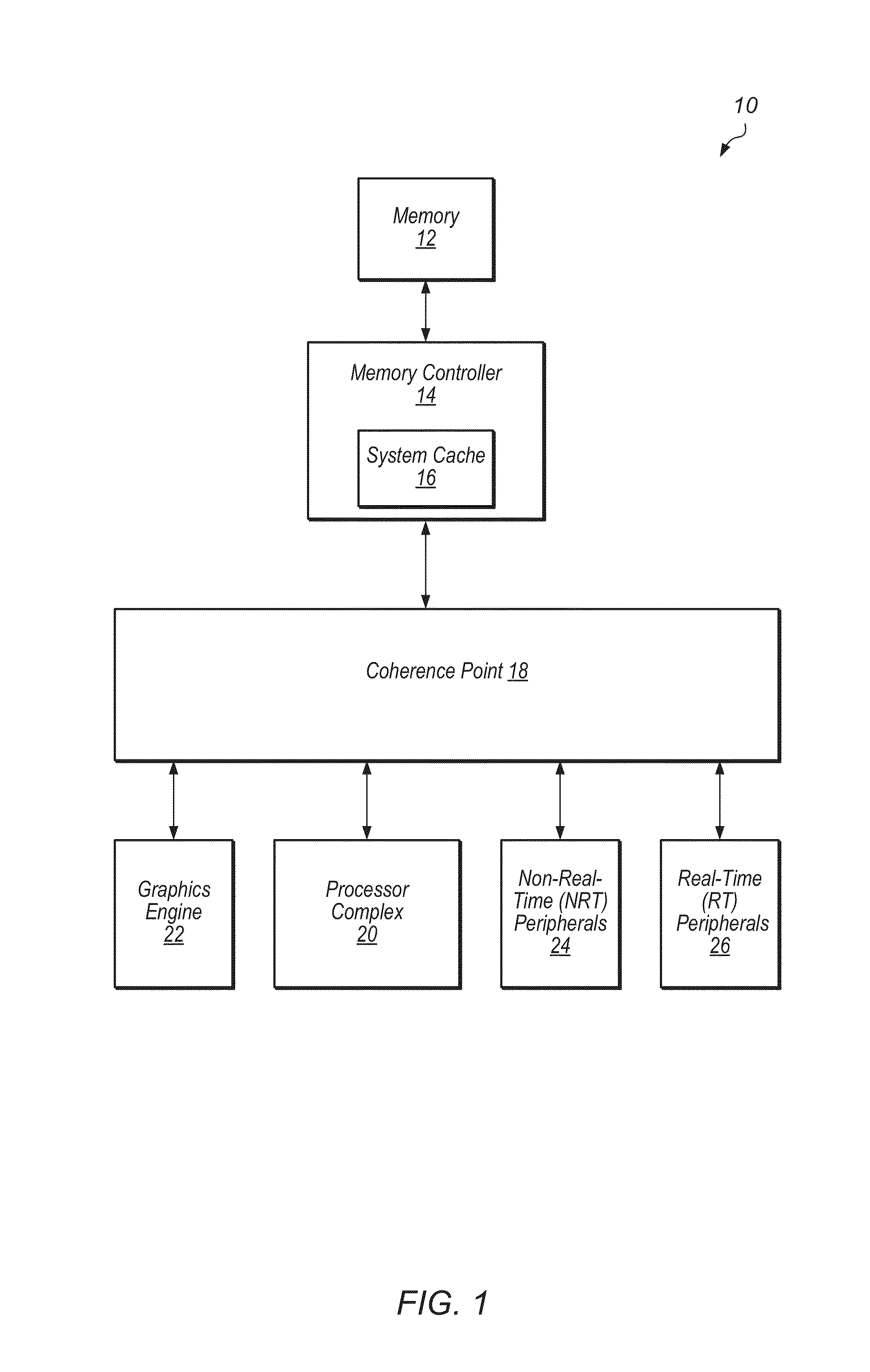
Figure 2 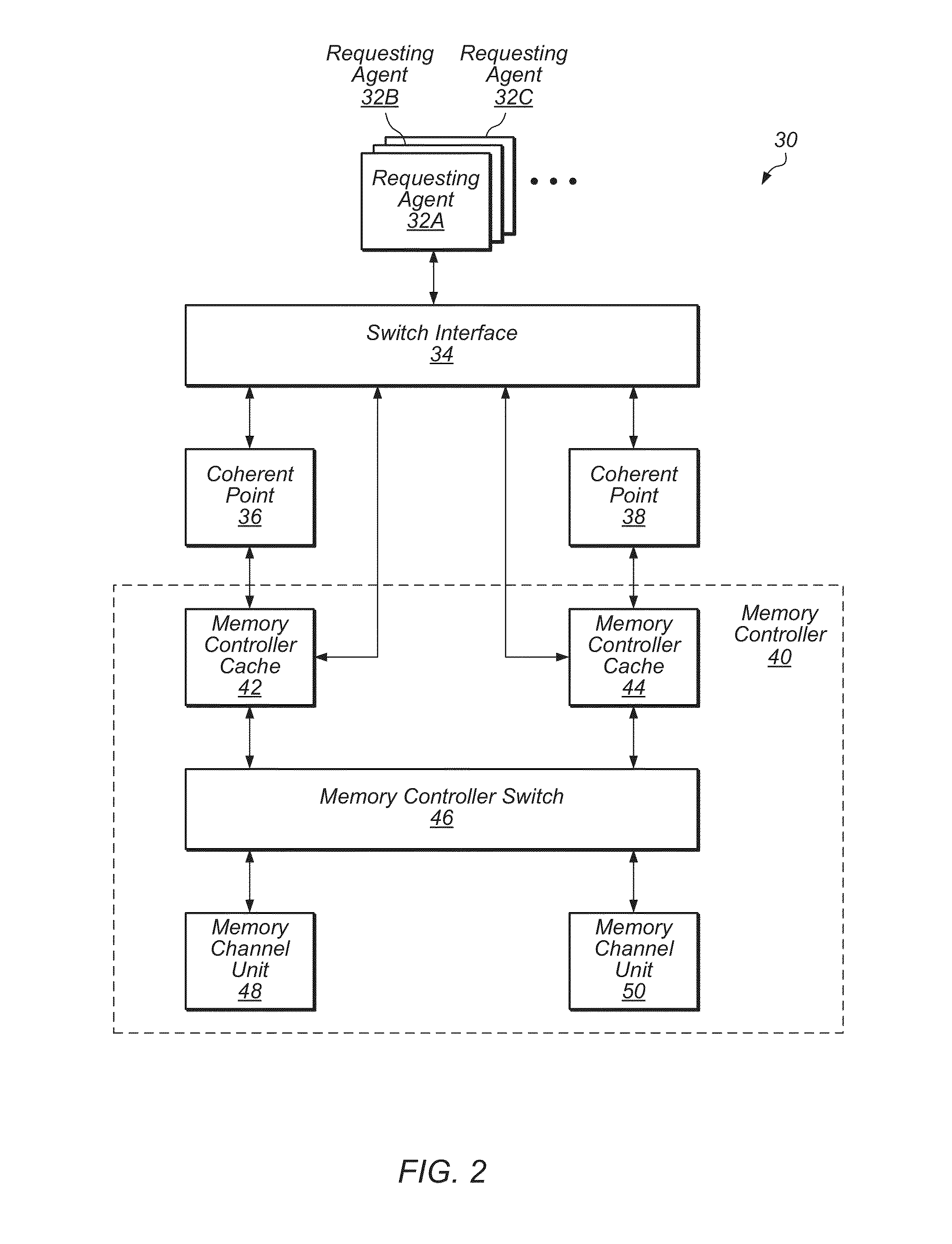
Figure 3
Abstract
Description
BACKGROUND
[0001] 1. Field of the Invention
[0002] The present invention relates generally to data caches, and in particular to methods and mechanisms for optimizing a system cache located in a memory controller.
[0003] 2. Description of the Related Art
[0004] Modern day mobile electronic devices often include multiple components or agents sharing access to one or more memory devices. These multiple agents may make large numbers of requests to memory, and as the number of these requests increases, the power consumption of the device increases, which limits the battery life of the device. One approach for reducing power consumption is to try to reduce the number of times that off-chip memory is accessed by caching data in or near the processor.
[0005] Conventional caches are typically coupled to or nearby a processor and store data that is frequently accessed by the processor to reduce latency. In a conventional cache, data may be retained in the cache based on the temporal locality of accesse...
Examples
Embodiment Construction
[0021]In the following description, numerous specific details are set forth to provide a thorough understanding of the methods and mechanisms presented herein. However, one having ordinary skill in the art should recognize that the various embodiments may be practiced without these specific details. In some instances, well-known structures, components, signals, computer program instructions, and techniques have not been shown in detail to avoid obscuring the approaches described herein. It will be appreciated that for simplicity and clarity of illustration, elements shown in the figures have not necessarily been drawn to scale. For example, the dimensions of some of the elements may be exaggerated relative to other elements.
[0022]This specification includes references to “one embodiment”. The appearance of the phrase “in one embodiment” in different contexts does not necessarily refer to the same embodiment. Particular features, structures, or characteristics may be combined in any ...