
Method of manufacturing a filament formed reinforcement member and a run flat tire support therewith
a technology of filament formation and filament reinforcement, which is applied in the field of pneumatic tires, can solve the problems of increased manufacturing complexity, inability to meet the requirements of the customer, so as to maintain the needed structural rigidity and ensure the effect of rigidity
Patent Information
- Authority / Receiving Office
- US · United States
- Patent Type
- Patents(United States)
- Current Assignee / Owner
- Publication Date
- 2006-01-24
- Estimated Expiration
- Not applicable · inactive patent
Smart Images
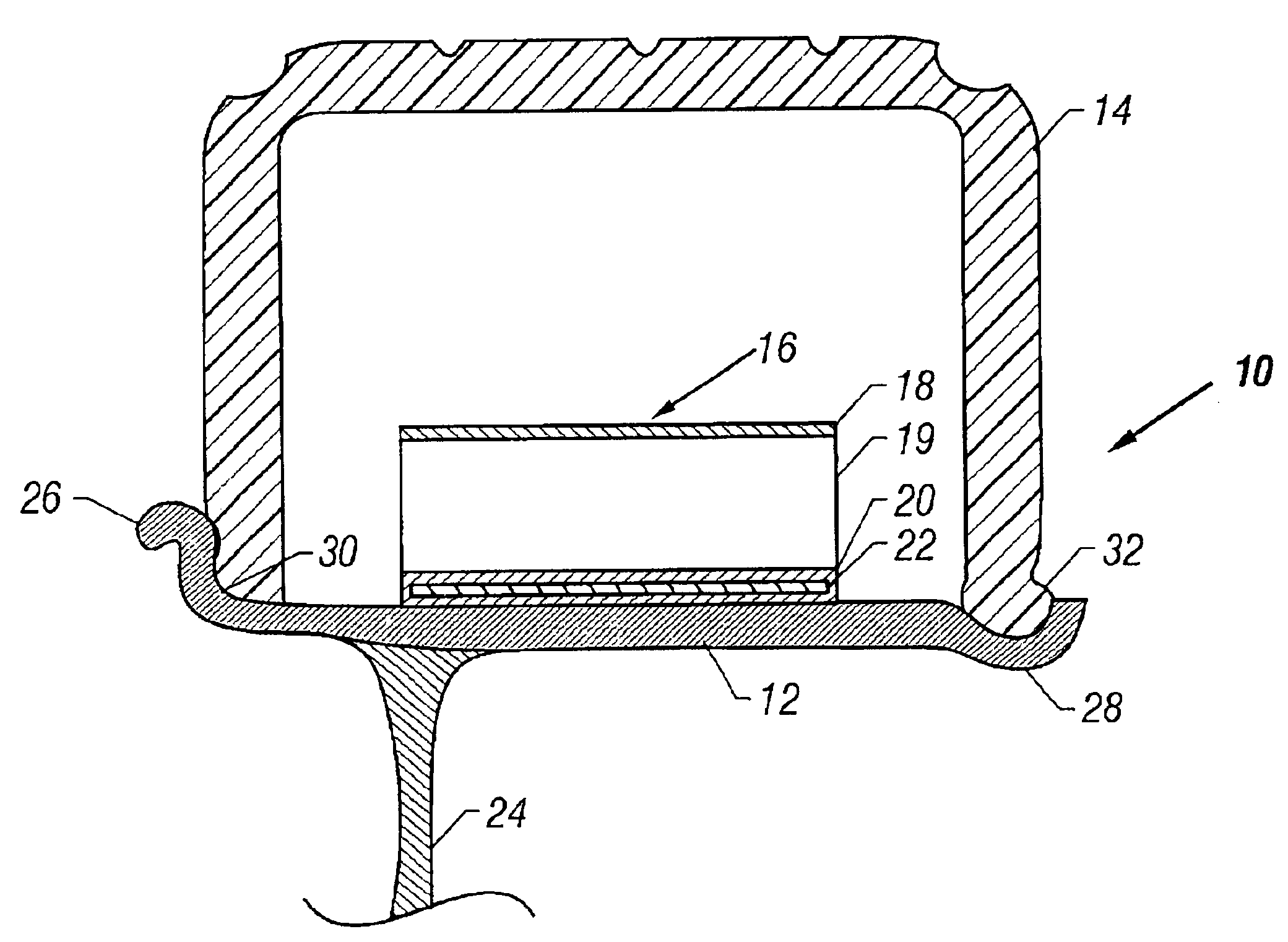
Figure 1 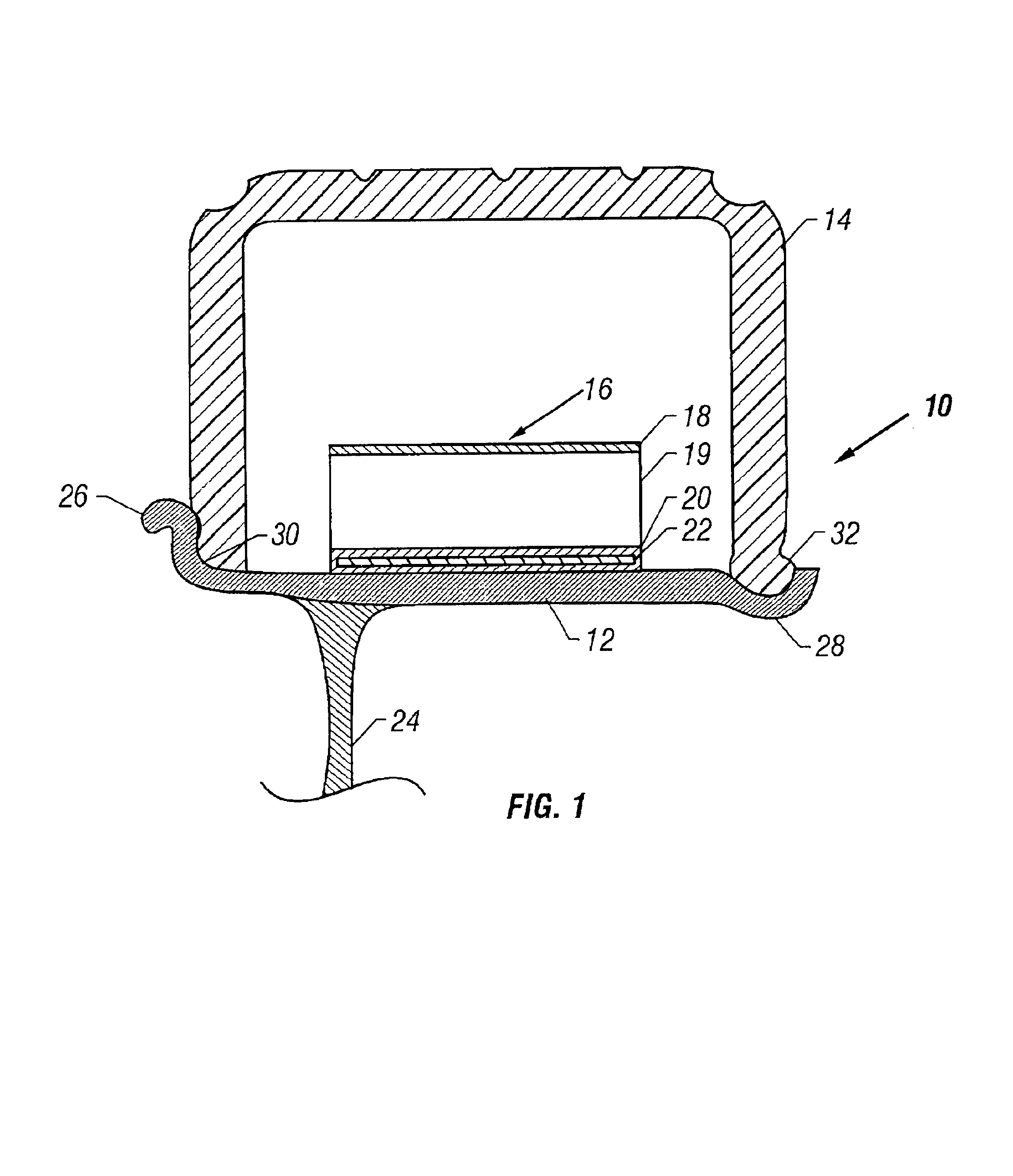
Figure 2 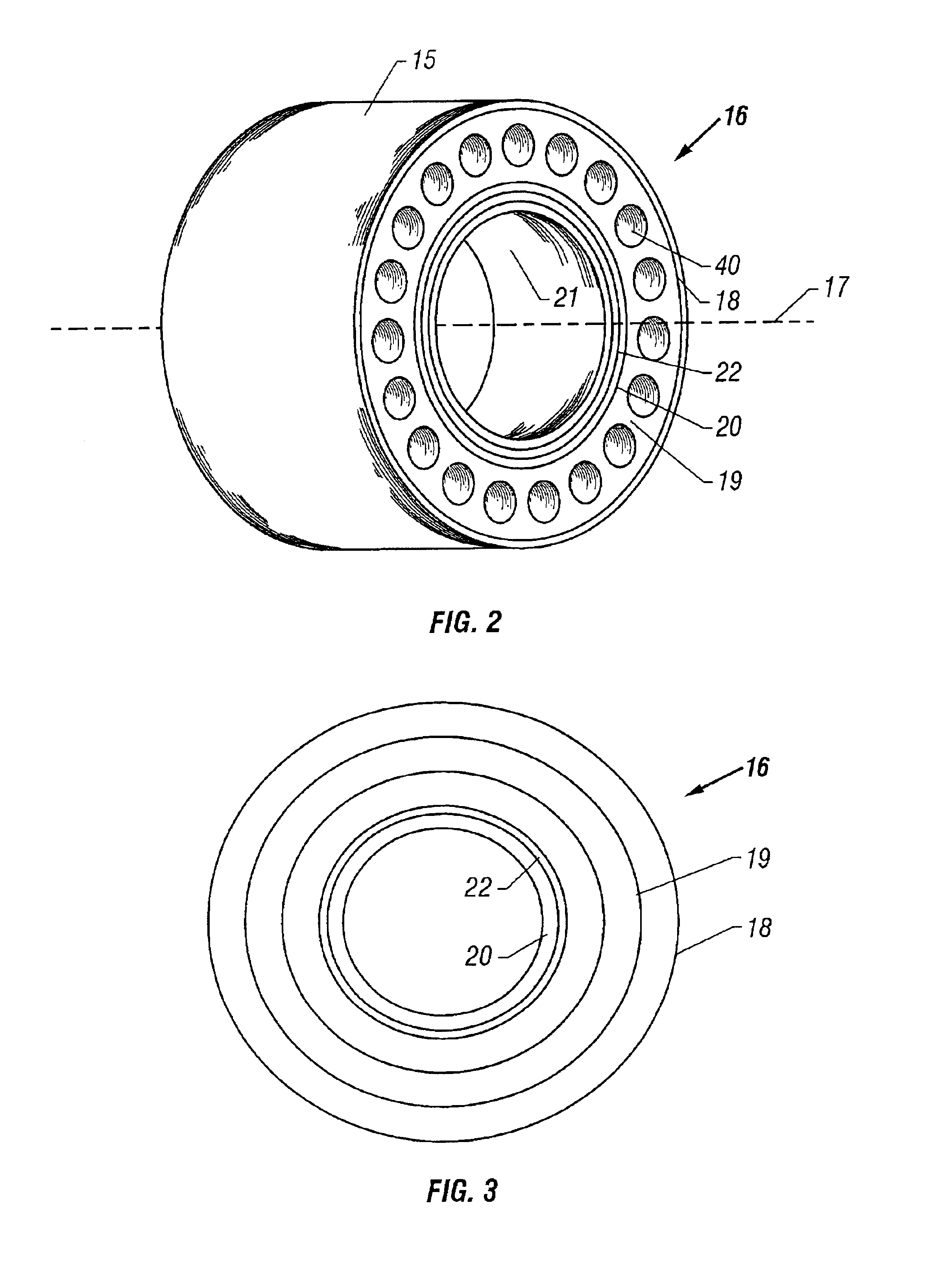
Figure 3
Abstract
Description
[0001] This application claims the benefit of U.S. Provisional Application Ser. No. 60 / 231,658, filed Sep. 11, 2000; Ser. No. 60 / 289,958, filed May 10, 2001; and Ser. No. 60 / 300,887, filed Jun. 25, 2001, all incorporated herein by reference.FIELD OF THE INVENTION
[0002] The field of invention relates to pneumatic tires. The invention particularly relates to run flat tire supports for pneumatic tires.BACKGROUND OF THE INVENTION
[0003] In past years, the automotive industry has provided spare tires for replacement of punctured or blown out tires while traveling. However, efforts have been made to eliminate the need for the spare tire by providing improved designs for tires. Specifically, efforts have been made to provide a stable and economical tire that can run with little or no pressure when, for example, the tire is flat. The term for the efforts has become known as “run flat tire” (RFT) technology. The RFT concept allows an operator to continue driving or rolling for an extended period...
Examples
example 1
RFT Reinforcement Formation and Rigidity Test Filament Wound RFT Reinforcement with Coating
[0135]A unitary, rigid RFT reinforcement was prepared using a filament winding system. The filament wound RFT reinforcement was constructed similar to the construction shown in FIG. 4 having transverse members and circumferential members. Generally, the filaments were wound around about a 50 cm diameter mandrel, a binder coating applied to the filaments and cured to form a tubular member having one effective layer, and the tubular member cut into one or more RFT reinforcements.
[0136]More particularly, the filament wound RFT reinforcement was made from 450 yield, that is, about 450 yards per pound, fiberglass and a binder, such as an epoxy Derakane® resin was applied. The binder and fiberglass yield can vary. The RFT reinforcement tubular member was made on a filament winding machine that utilizes a computer program to wind the fiberglass filament around a steel mandrel. For this example, the m...
example 2
RFT Reinforcement Formation and Rigidity Test Filament Wound Reinforcement with Coating
[0142]An RFT reinforcement was prepared from fiberglass filament by passing the filament through an epoxy resin bath and then winding the filament onto a 48 cm diameter mandrel using a computer-controlled filament winding machine. The mandrel was placed in an oven at about 70° C. for one hour to cure to form one effective layer. The resulting filament wound tube was removed from the mandrel and cut into about 8 cm long sections using a band saw. The fiberglass content of the resulting RFT reinforcement was about 62% and about 35% binder applied to the fiberglass filament. The RFT reinforcement had a weight of about 550 grams per square meter. In at least one embodiment, the manufactured RFT reinforcement has a mass of about 160 grams to about 200 grams with about 180 grams being an average. The values of density, mass, and other parameters are exemplary and non-limiting and can vary as appropriate...