
Single-use manifold for automated, aseptic transfer of soulutions in bioprocessing applications
a single-use manifold and aseptic technology, applied in the field of aseptic, can solve the problems of reducing the cleaning effort and cleaning validation expense, requiring the mandated cleaning process and procedures, and often long and costly validation procedures, so as to reduce the need for validation procedures and reduce the expenditure of time and resources devoted
Patent Information
- Authority / Receiving Office
- US · United States
- Current Assignee / Owner
- Publication Date
- 2006-05-30
- Estimated Expiration
- Not applicable · inactive patent
Smart Images
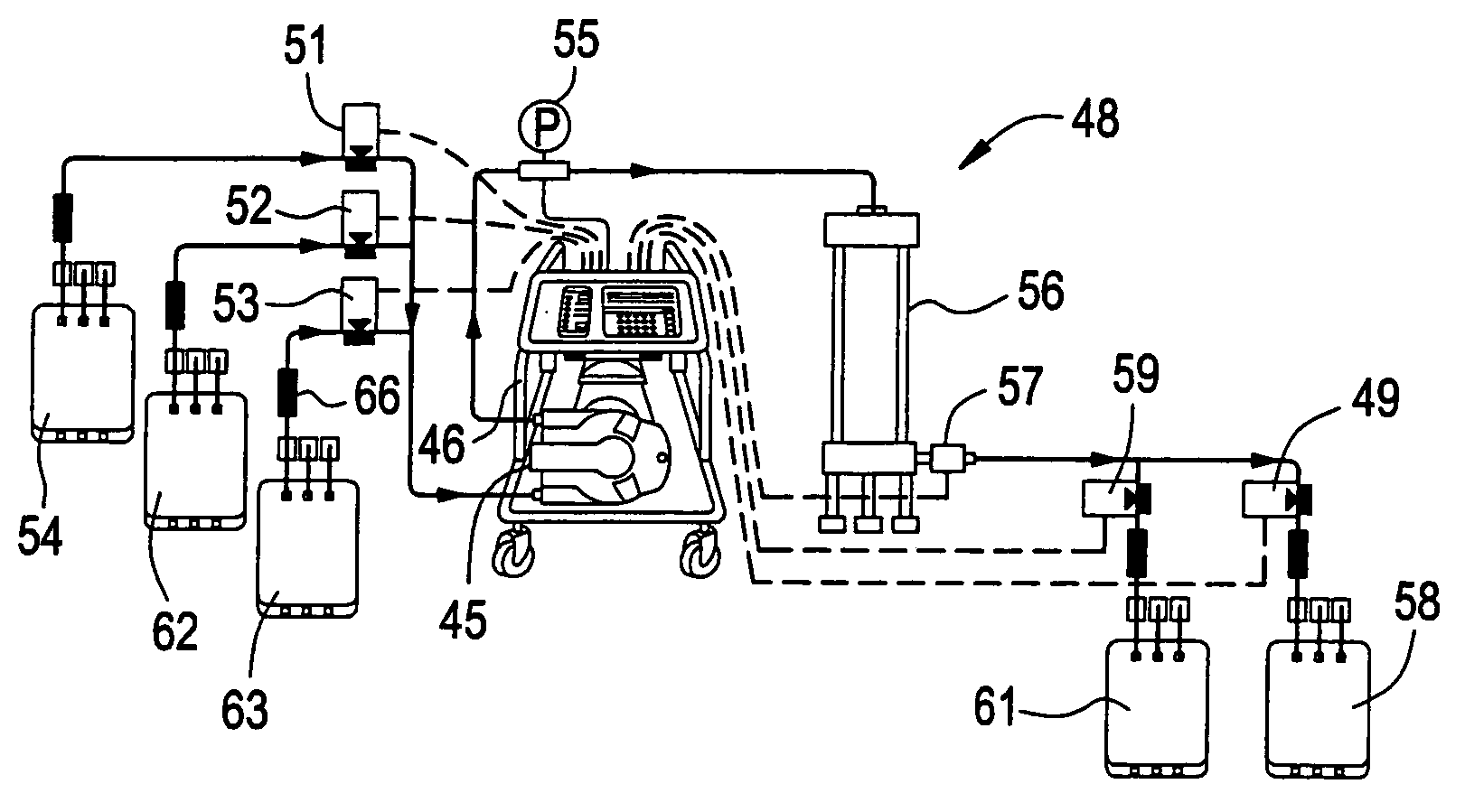
Figure 1 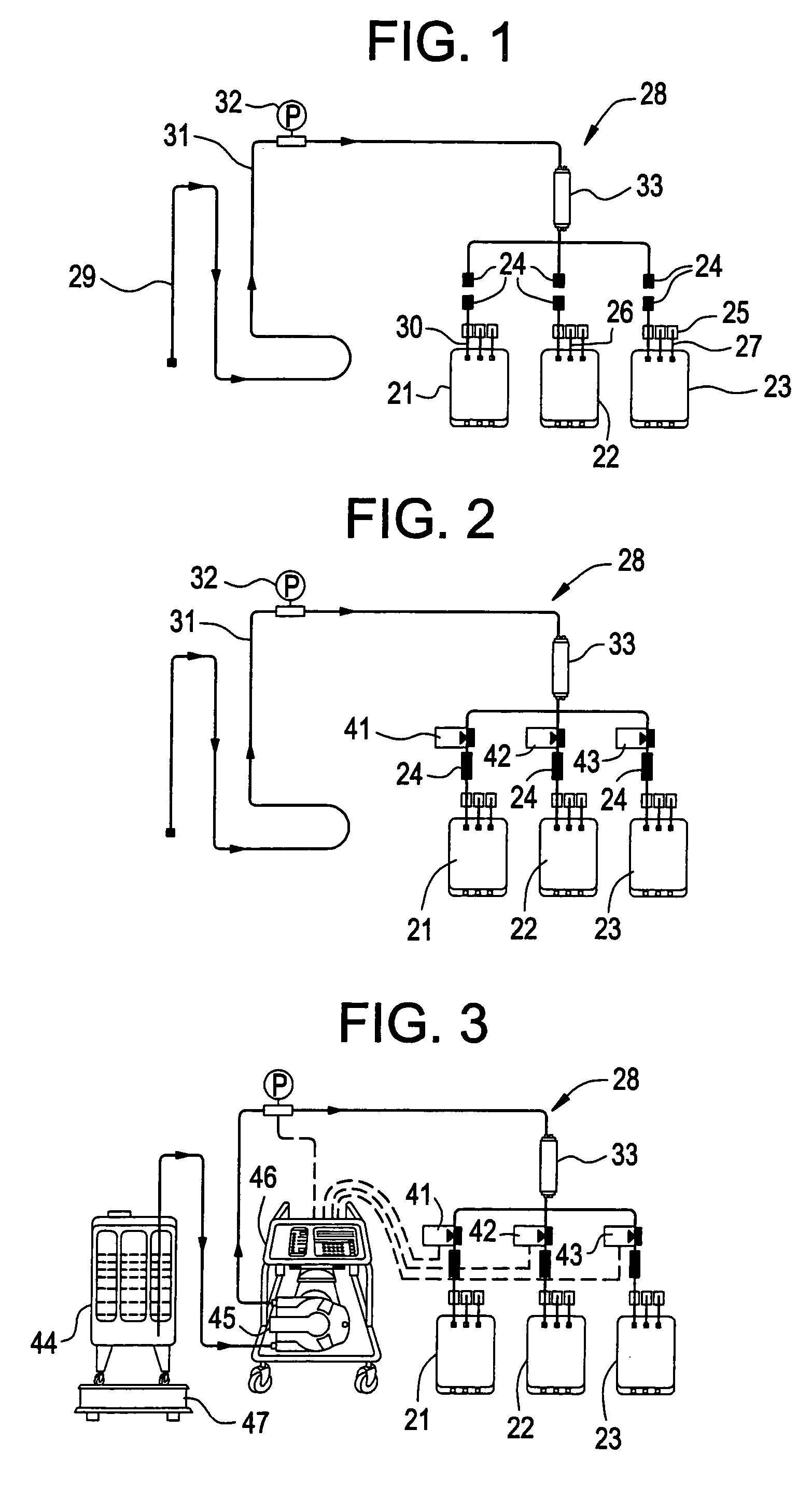
Figure 2 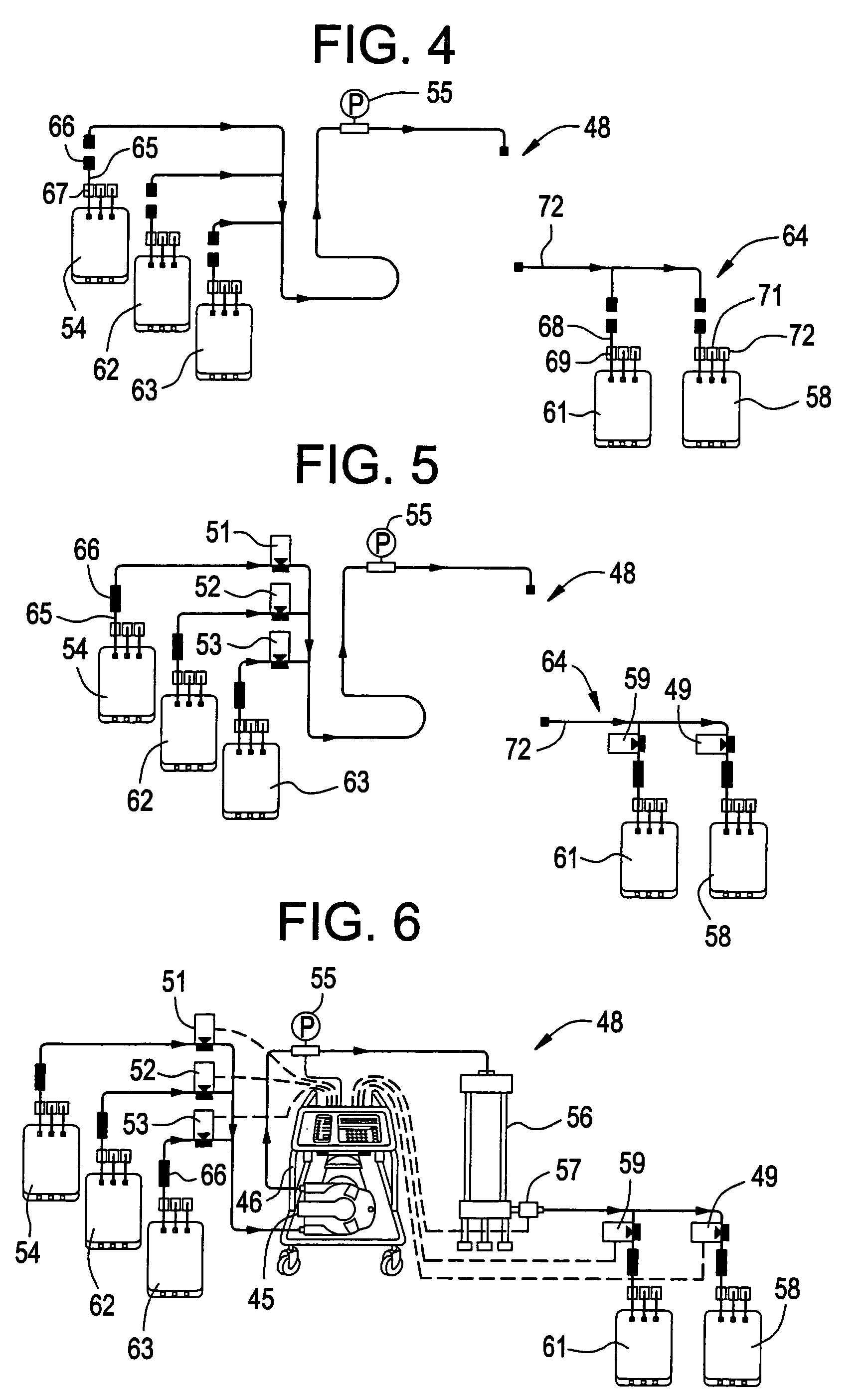
Figure 3
Abstract
Description
RELATED APPLICATIONS
[0001] This application is a division of application No. 10 / 172,082, filed Jun. 14, 2002, now U.S. Pat. No. 6,712,963.FIELD OF THE INVENTION
[0002] The invention generally relates to the aseptic transfer of solutions out of one or more biological fluid and / or process fluid storage or supply containers. Single-use manifold systems carry out transfers needed in bioprocessing applications. With the invention, automated dispensing is accomplished, preferably in association with one or more remotely controlled pinch valves.BACKGROUND OF THE INVENTION
[0003] Good manufacturing practices and governmental regulations are at the core of any pharmaceutical, biotechnology and bio-medical manufacturing process or procedure. Such manufacturing processes and procedures as well as associated equipment must undergo mandated, often lengthy and costly validation procedures.
[0004] For example, the equipment used for the separation and purification of biomedical products must, for obvious...
Examples
second embodiment
[0041]A second embodiment, which is generally illustrated in FIGS. 4–6, achieves automated preparative chromatography. In preparative chromatography, process solution containing the bio-molecule of interest is pumped through a column of gel-like particles (stationary phase) suspended in a liquid. The bio-molecule of interest specifically interacts (via ion-ion interactions, hydrophobic interactions, size exclusion, affinity, for example) with the stationary phase thereby retarding the progress of the bio-molecule through the column. Ideally, other dissolved biomaterials will interact only weakly with the stationary phase and thus will exit the column quickly.
[0042]The result is a concentration as well as a separation of the bio-molecule from the rest of the process solution matrix. The introduction of an elution buffer will change the local chemical environment of the stationary phase, thereby causing the bio-molecule to be released and thus able to be collected outside the column i...
third embodiment
[0060]In a third embodiment, automated tangential flow filtration is carried out using a modified system designed for this use. Previously referenced U.S. Pat. No. 5,947,689 and U.S. Pat. No. 6,350,382 and U.S. Published Patent Application No. 2002 / 0043487 disclose the automation of tangential flow filtration (TFF) procedures. These are combined with the use of disposable, single-use manifolds, which also include disposable pressure sensors and single-use, collapsible storage bags and the use of remotely operated pinch valve(s).
[0061]A typical TFF application that utilizes a single-use, pre-sterilized manifold is shown in FIGS. 7–9. FIG. 7 shows the disposable, pre-sterilized components, including a tubing filtered fluid section having a permeate collection bag 81 as well as a process solution bag 82 within a filtration flow-through section of the tubing. These are aseptically sealed and in a pre-sterilized (for example, irradiated) package. At the beginning of the TFF application, ...