
Piston coolant gallery
a coolant gallery and piston technology, applied in the direction of engine components, mechanical equipment, foundry moulding equipment, etc., can solve the fundamental limit of the compression ratio of a spark-ignition, gasoline engine, and the material used in the construction of such engines is under severe stress, so as to reduce the thickness of the section, the effect of introducing distortions of the stress field and facilitating stress analysis
Patent Information
- Authority / Receiving Office
- US · United States
- Patent Type
- Patents(United States)
- Current Assignee / Owner
- Publication Date
- 2007-10-16
- Estimated Expiration
- Not applicable · inactive patent
Smart Images
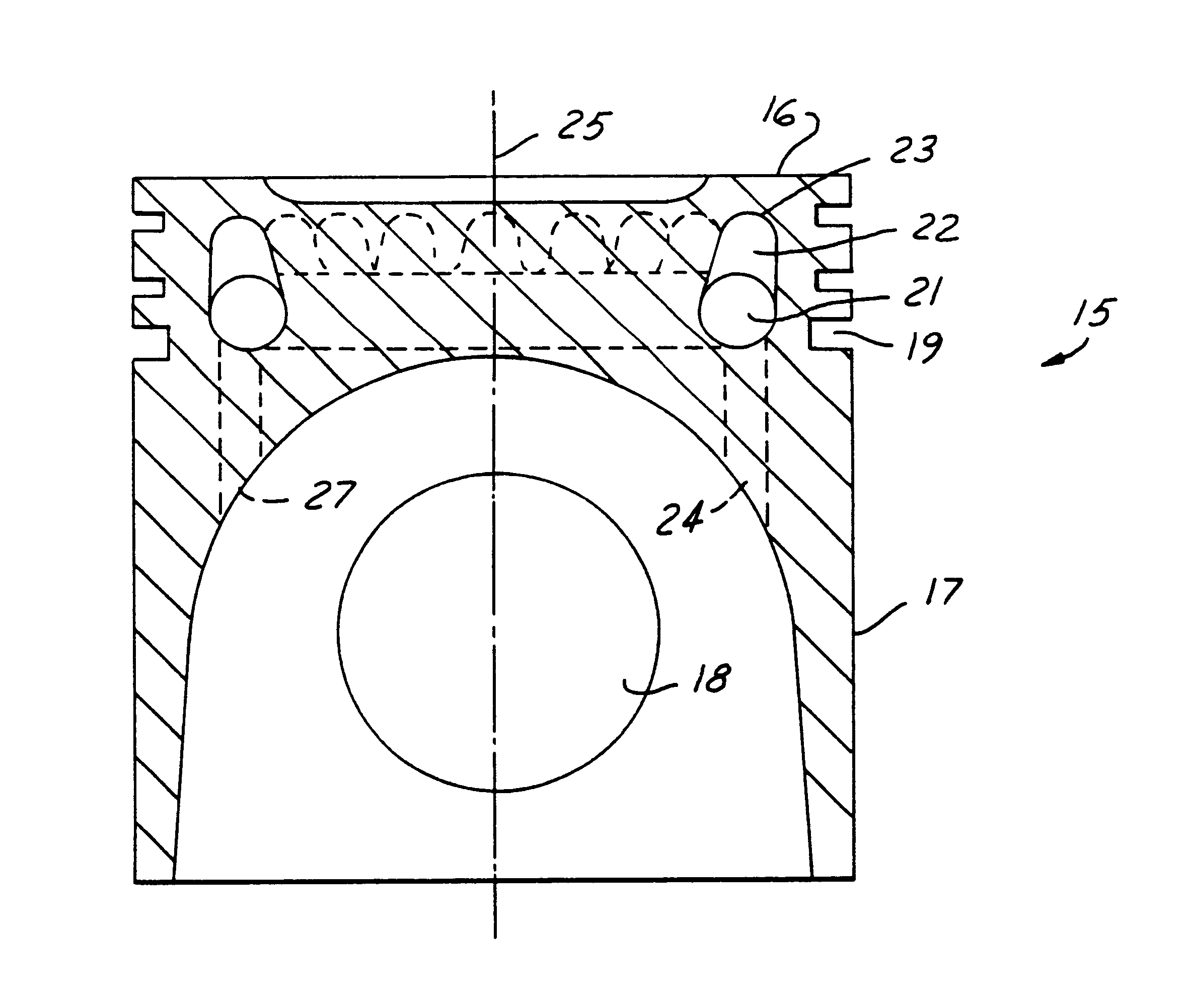
Figure 1 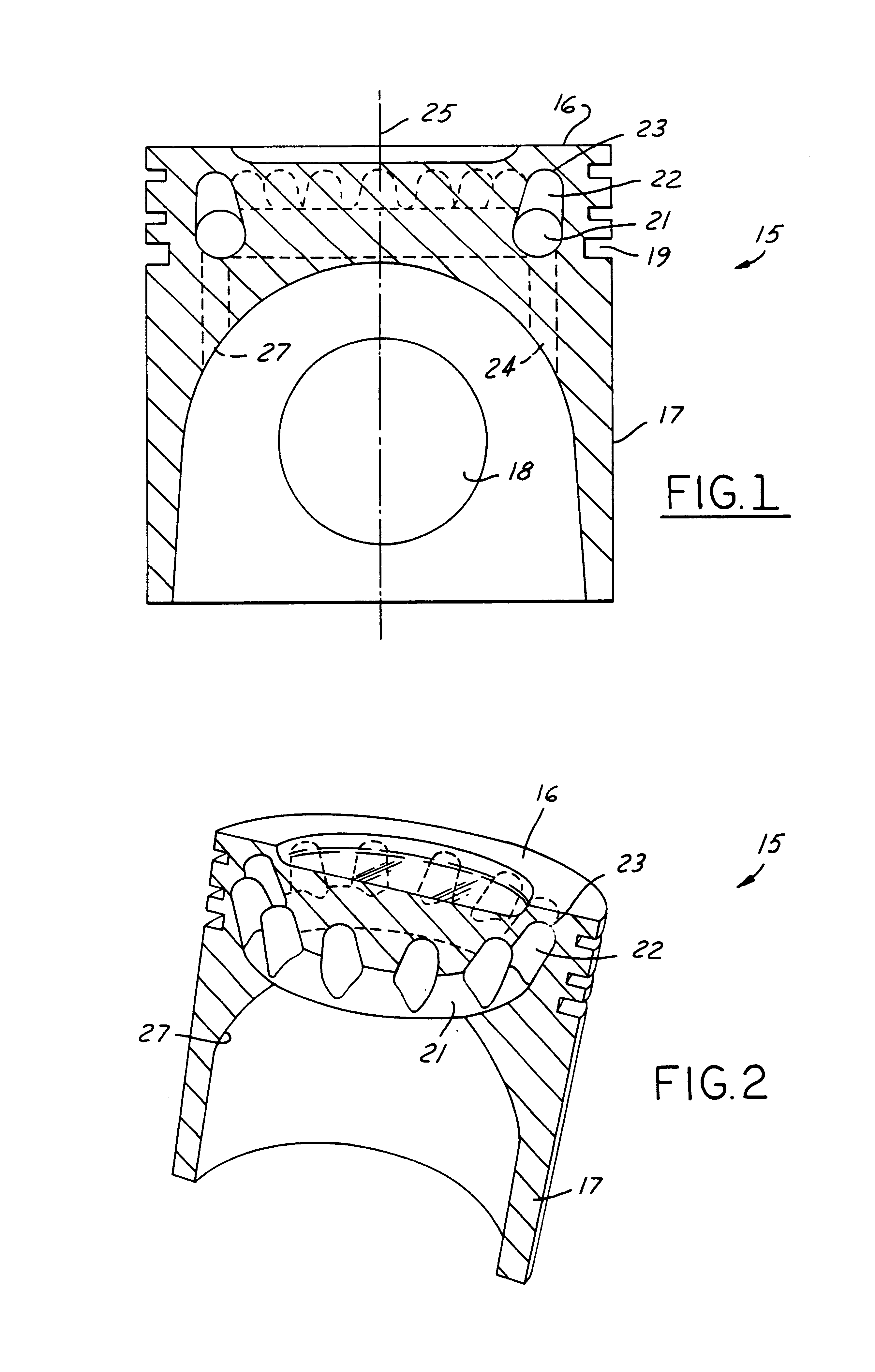
Figure 2 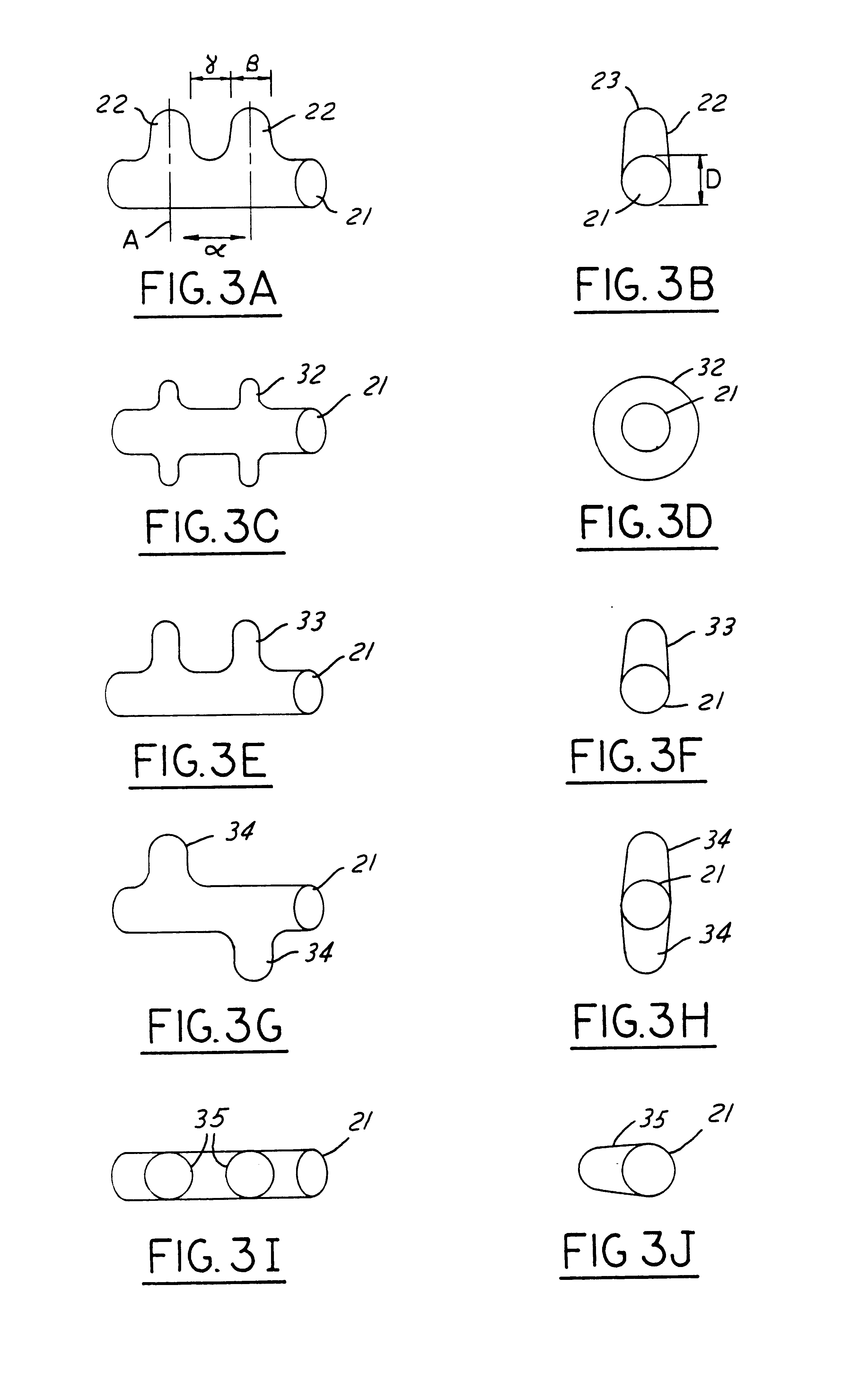
Figure 3
Abstract
Description
TECHNICAL FIELD
[0001] The present invention relates to cooling systems for piston mechanisms, and more particularly to pistons with coolant gallery configurations.BACKGROUND
[0002] In a piston for a positive-displacement, reciprocating piston-in-cylinder device, such as an internal combustion engine prime mover or a pump, the (upper) part of the piston nearest the working fluid commonly incorporates a coolant gallery, for a coolant, or more specifically (fluid) heat transfer medium, typically a liquid, such as a lubricating oil. For a cast piston, such a coolant gallery can be integrally cast within it. This is typical of current aluminum alloy pistons for medium-duty diesel engines.
[0003] In striving for (energy conversion and thermodynamic) efficiency, reduced emissions and enhanced “user satisfaction”, internal combustion engine design must balance conflicting requirements. The materials used in the construction of such engines are under severe stress and there is little margin betwe...
Examples
Embodiment Construction
)
[0055]The terms “upper” and “lower” as used herein relate only to relative positions of components shown in the diagram. In a working engine, or pump, the components may be arranged in any appropriate orientation consistent with provision for lubrication, cooling, fuel feed and combustion intake and exhaust flows.
[0056]Referring to the drawing(s), and in particular FIG. 1, a (cast) piston 15, is of generally cylindrical form, with a hollow underside 27, to house the small end of a connecting rod (not shown), through a transverse pin 18. In a conventional piston, with a gudgeon or wrist pin, bearing is taken at the piston walls.
[0057]Alternatively, a spherically-jointed piston configuration (not shown), with a part-spherical bearing surface on the piston underside, interfacing with a complementary, part-spherical bearing surface upon a connecting rod small end, and located by a retaining ring, also with a part-spherical bearing surface, and fitted to the piston internal wall, is com...