
Packet combiner for a packetized bus with dynamic holdoff time
a technology of dynamic holdoff time and combiner, applied in the field of communication, can solve the problems of reducing performance, many modern graphics processors are bandwidth-limited, and their performance is limited
Patent Information
- Authority / Receiving Office
- US · United States
- Patent Type
- Patents(United States)
- Current Assignee / Owner
- Publication Date
- 2009-04-28
Smart Images
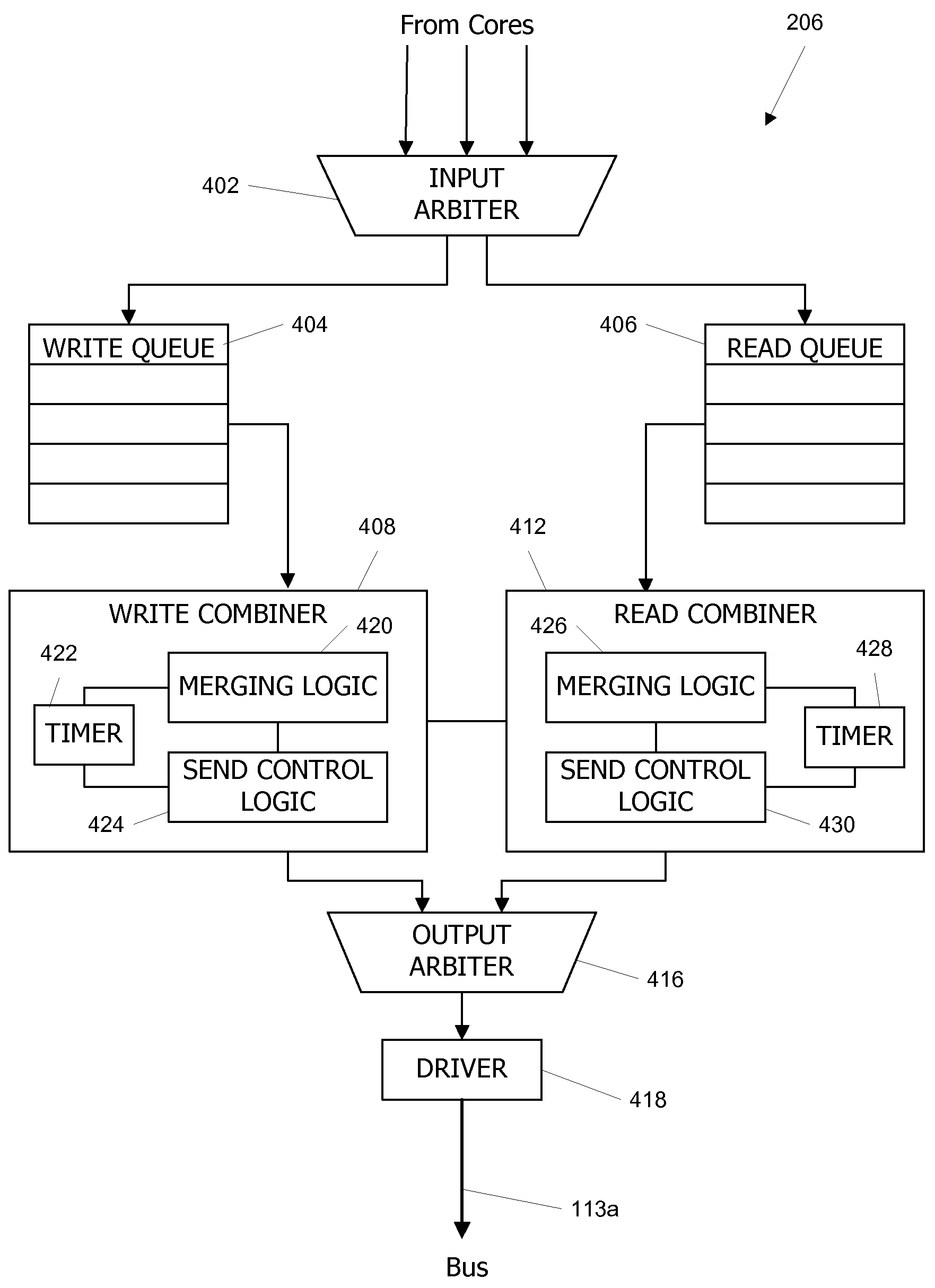
Figure 1 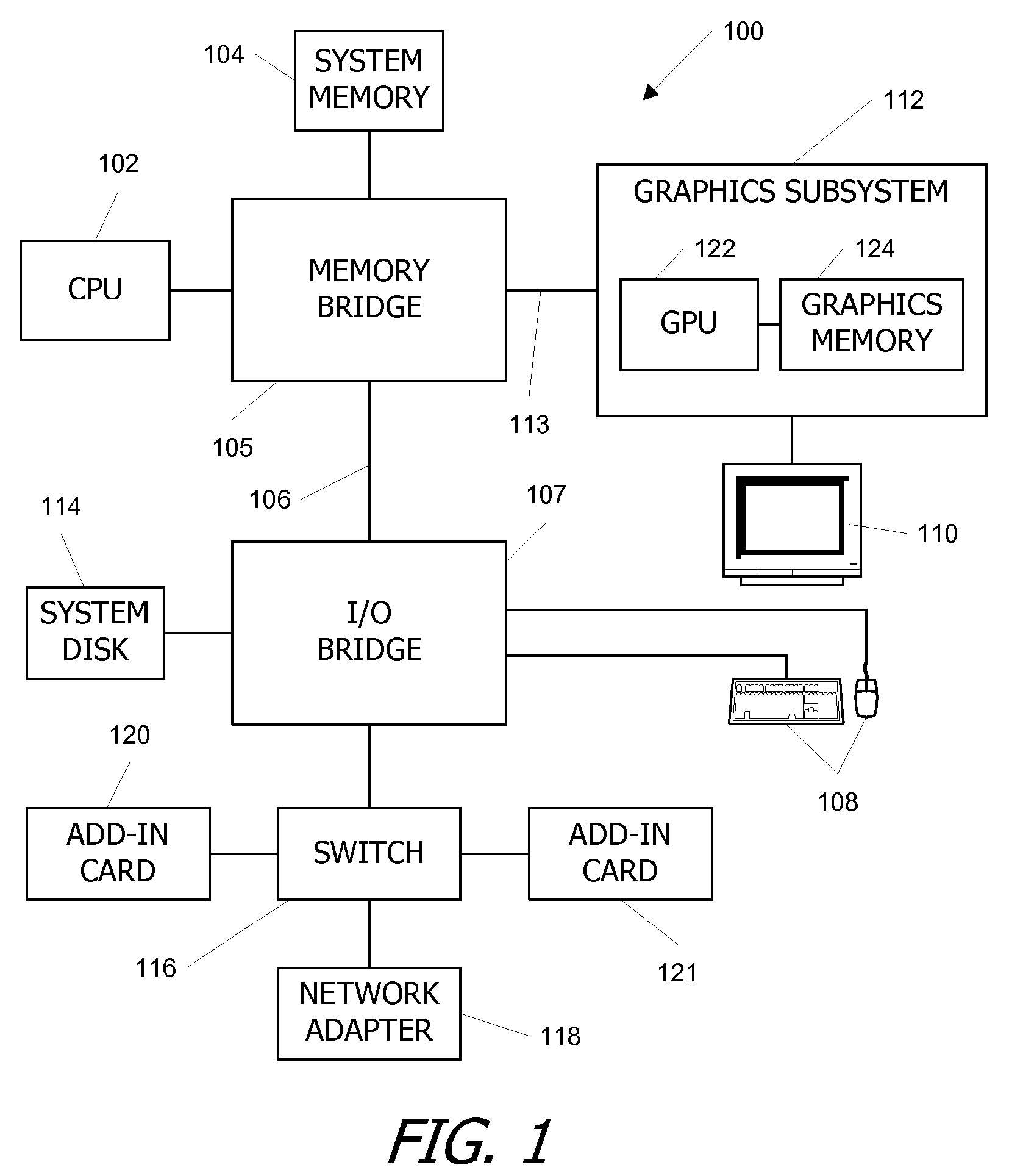
Figure 2 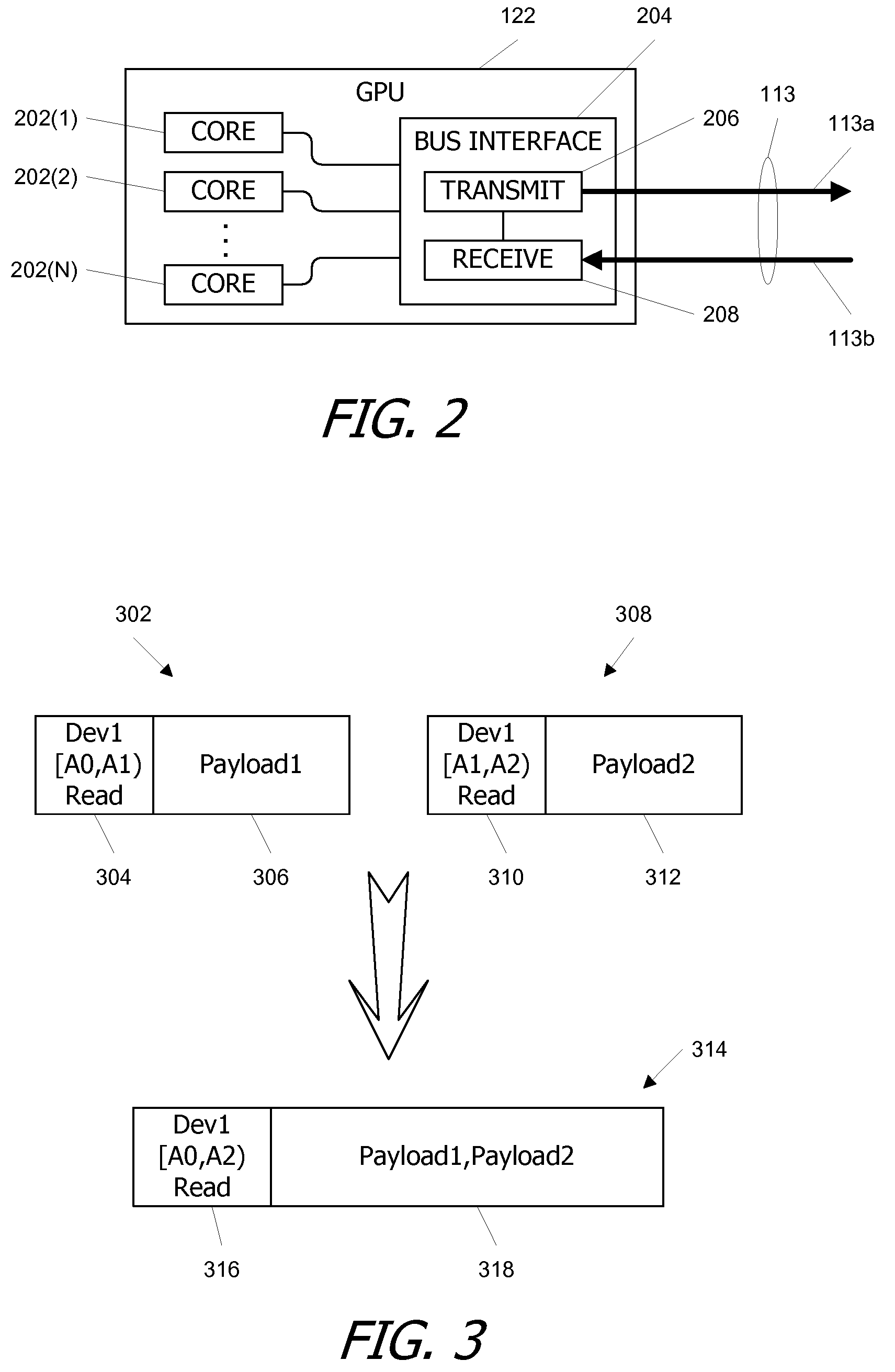
Figure 3
Abstract
Description
BACKGROUND OF THE INVENTION
[0001] This application is a continuation-in-part of application Ser. No. 11 / 179,266, filed Jul. 11, 2005, titled “Combining Packets for a Packetized Bus,” which disclosure is incorporated herein by reference for all purposes.BACKGROUND OF THE INVENTION
[0002] The present invention relates in general to communication on a bus, and in particular to combining packets for transmission onto a bus that uses a packetized protocol.
[0003] Modern personal computer systems generally include a number of different devices, including processors, memory, data storage devices using magnetic or optical media, user input devices such as keyboards and mice, output devices such as monitors and printers, graphics accelerators, and so on. All of these devices communicate with each other via various buses implemented on a motherboard of the system. Numerous bus protocols are known, including PCI (Peripheral Component Interconnect), PCI-E (PCI Express), AGP (Advanced Graphics Proces...
Examples
Embodiment Construction
[0025]Embodiments of the present invention provide devices and methods for combining two or more data transfer requests into a single packet for transmission onto a packetized bus such as a PCI Express (PCI-E) bus. As used herein, a “packetized” bus includes any bus via which data transfer requests are transmitted using packets with a header (generally although not necessarily of fixed size) and a payload of variable size. The header advantageously identifies the requesting device and the target address range. Target address ranges can be identified by starting and ending addresses, by starting address and size, or the like. In some instances, the target device may be expressly identified; in other instances, the target address range adequately identifies the target device in accordance with address mapping rules, and an explicit identification of a target device is not required. Requests can be combined by the bus interface unit of an integrated device that includes multiple reques...