
Separator for desalting petroleum crude oils having rag layer withdrawal
a technology of petroleum crude oil and separation device, which is applied in the direction of hydrocarbon oil refining control/regulation, hydrocarbon oil treatment, dewatering/demulsification regulation/control, etc., can solve the problems of low brine phase, too much brine, and special difficulties of solids-stabilized emulsions, etc., to achieve the effect of minimal downtim
Patent Information
- Authority / Receiving Office
- US · United States
- Patent Type
- Patents(United States)
- Current Assignee / Owner
- Publication Date
- 2016-11-15
Smart Images
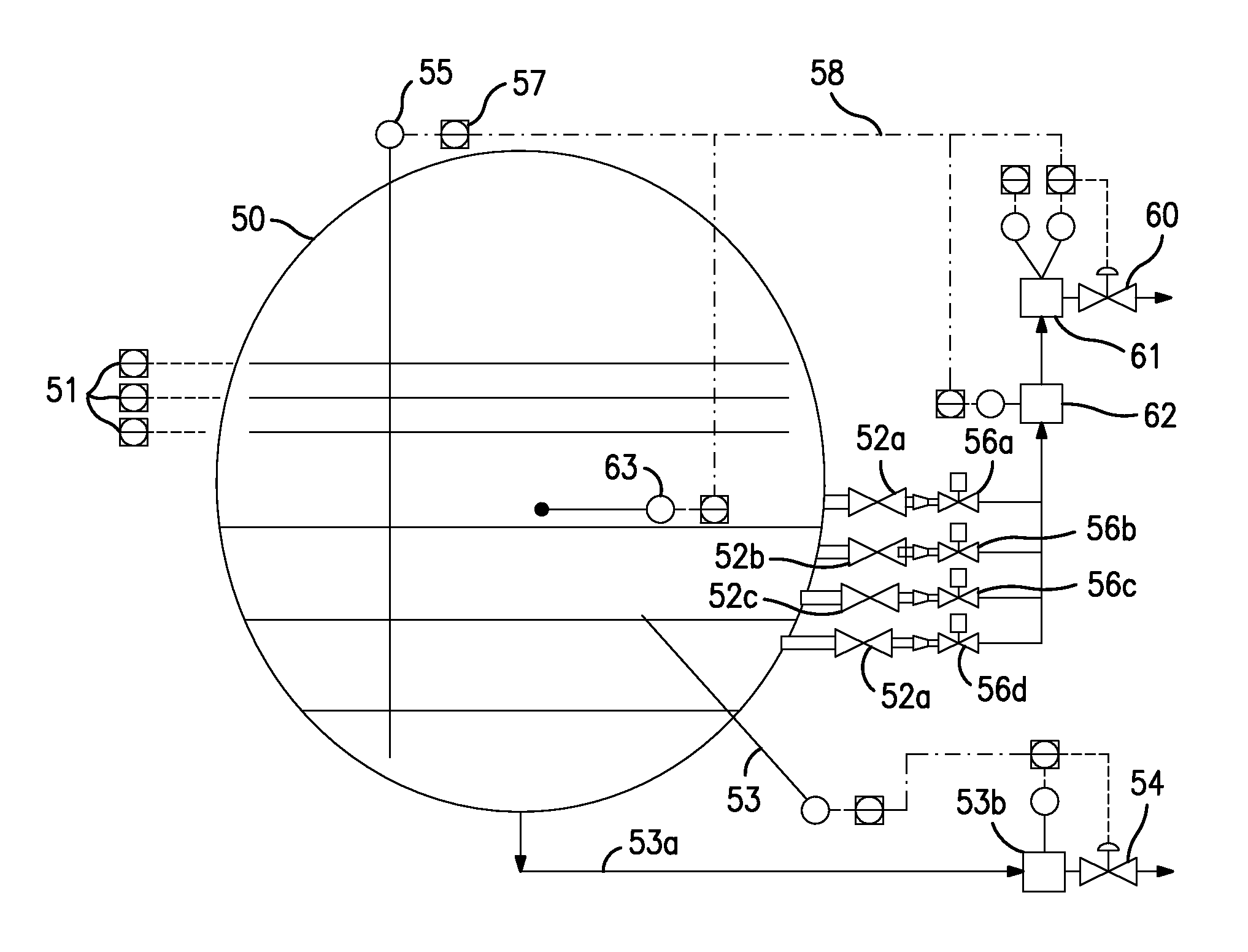
Figure 1 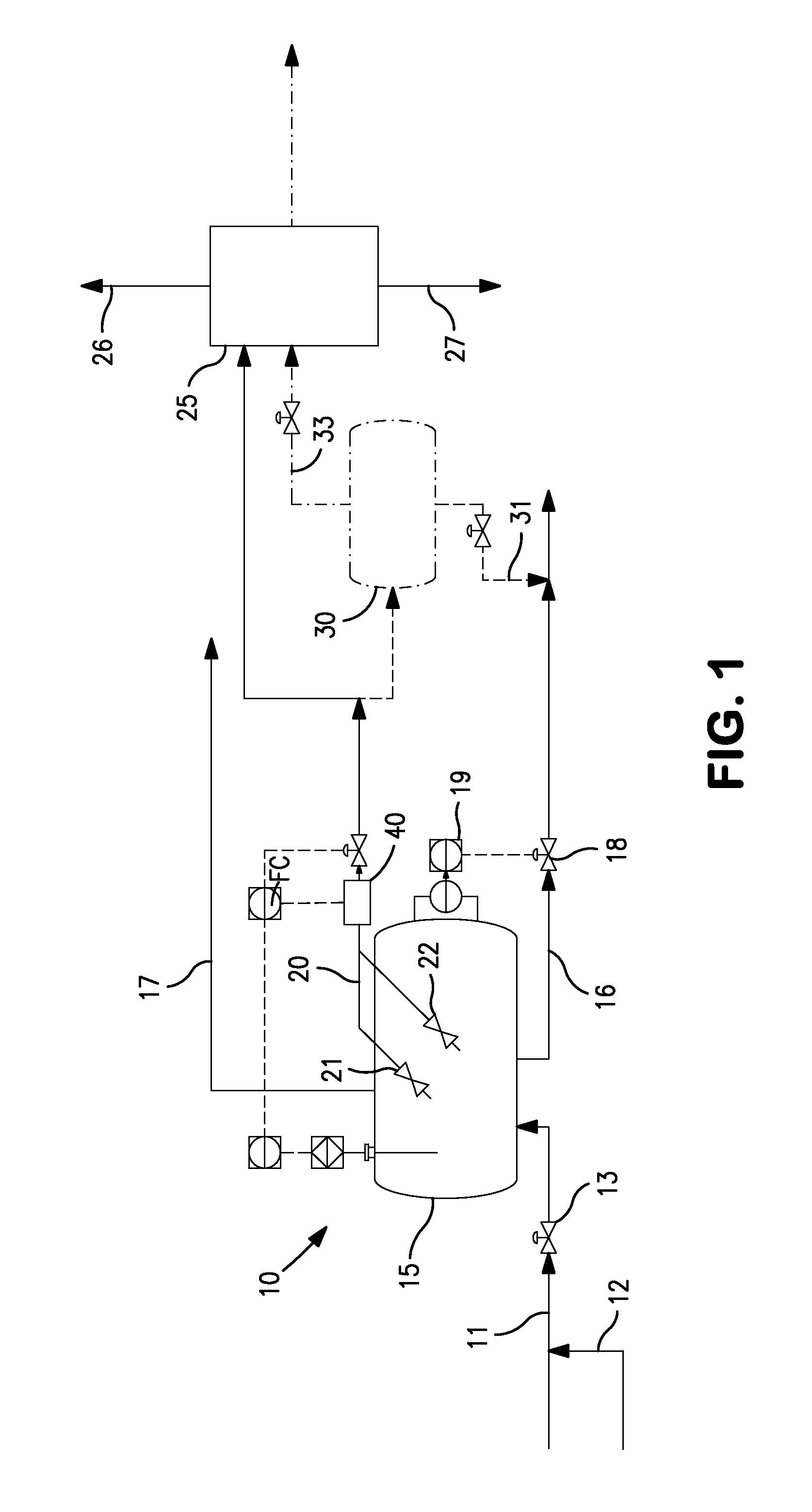
Figure 2 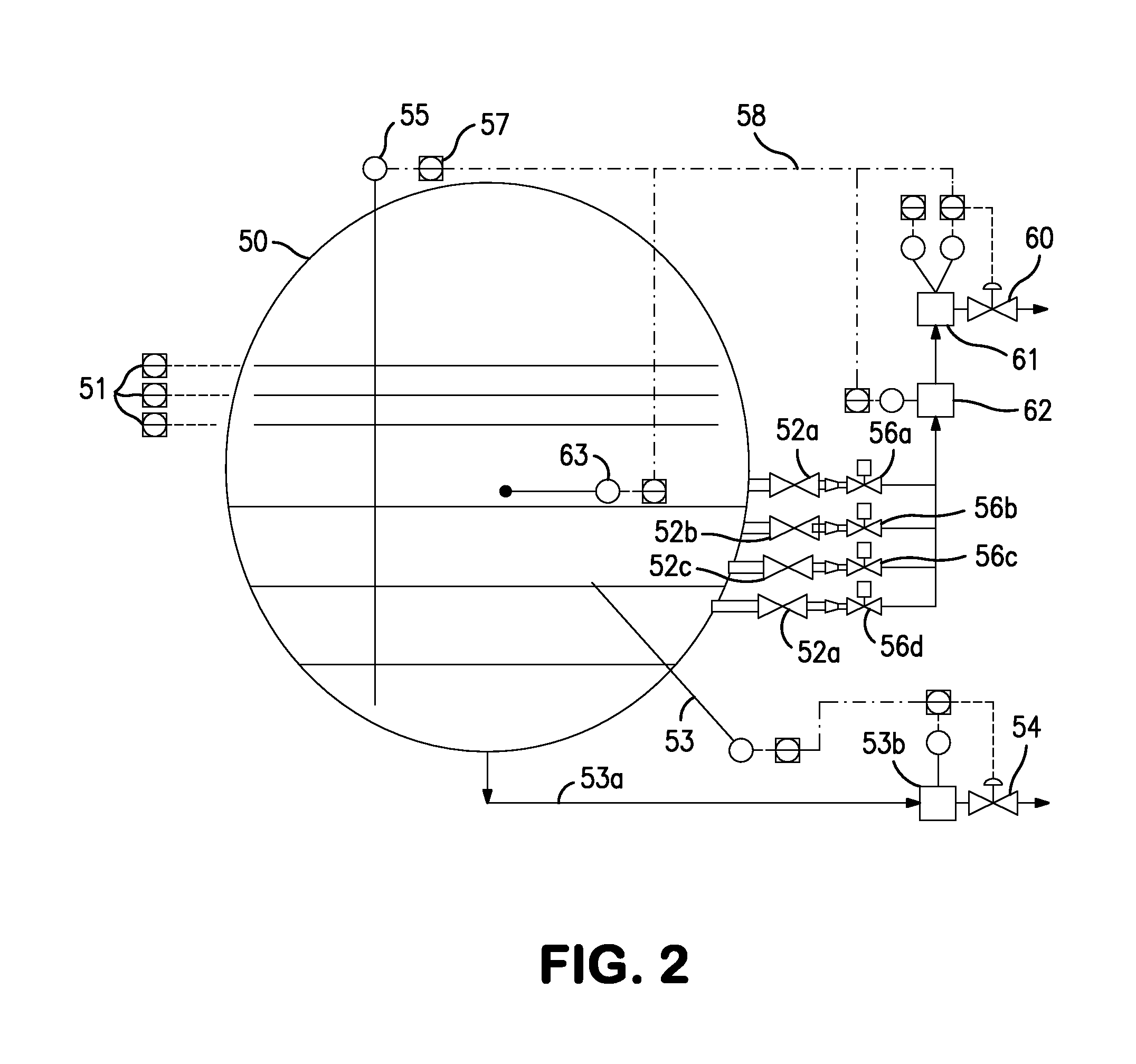
Figure 3
Abstract
Description
CROSS REFERENCE TO RELATED APPLICATION
[0001] This application relates and claims priority to U.S. Provisional Patent Application No. 61 / 774,937, filed on Mar. 8, 2013.FIELD OF THE INVENTION
[0002] This invention relates to petroleum desalters and their operation.BACKGROUND OF THE INVENTION
[0003] Crude petroleum contains impurities which include water, salts in solution and solid particulate matter that may corrode and build up solid deposits in refinery units; these impurities must be removed from the crude oil before the oil can be processed in a refinery. The impurities are removed from the crude oil by a process known as “desalting”, in which hot crude oil is mixed with water and a suitable demulsifying agent to form a water-in-oil emulsion which provides intimate contact between the oil and water so that the salts pass into solution in the water. The emulsion is then passed into a high voltage electrostatic field inside a closed separator vessel. The electrostatic field coalesces an...
Examples
operational example
[0041]An experimental refinery field test was carried out to test the ability to control the volume of the emulsion layer in the desalter by continuous withdrawal, to understand how the emulsion layer properties (solids and oil content) change when continuous withdrawal of the emulsion layer is in operation and to quantify the growth rate of the emulsion layer under experimental conditions. Test results demonstrated that emulsion layer was consistently withdrawn at an estimated flow rate of 191 to 207 m3 / day (1.2 to 1.3 KBD) and the emulsion layer height was reduced from 150 cm. to about 90 cm (from about 5 ft. to 3 ft.) in approx. 36 hours. The emulsion layer growth rate was estimated to be 40 m3 / day (250 BPD), therefore the required withdrawal rate to maintain emulsion layer volume is likely to be lower than the tested rate for that particular commercial desalter. The emulsion growth rate after withdrawal was terminated brought the emulsion layer back to the original level after 6...