

Treating renal and liver dysfunction with TLR4 antagonists
a technology of renal and liver dysfunction and antagonists, which is applied in the direction of drug compositions, peptide/protein ingredients, instruments, etc., can solve the problems of liver failure of individuals to be treated, brain dysfunction and brain swelling, and renal failure in liver disease, and achieve the effect of reducing the expression of tlr4, reducing the activity of tlr4, and reducing the expression of tlr4
Patent Information
- Authority / Receiving Office
- US · United States
- Patent Type
- Patents(United States)
- Current Assignee / Owner
- Publication Date
- 2018-02-13
Smart Images
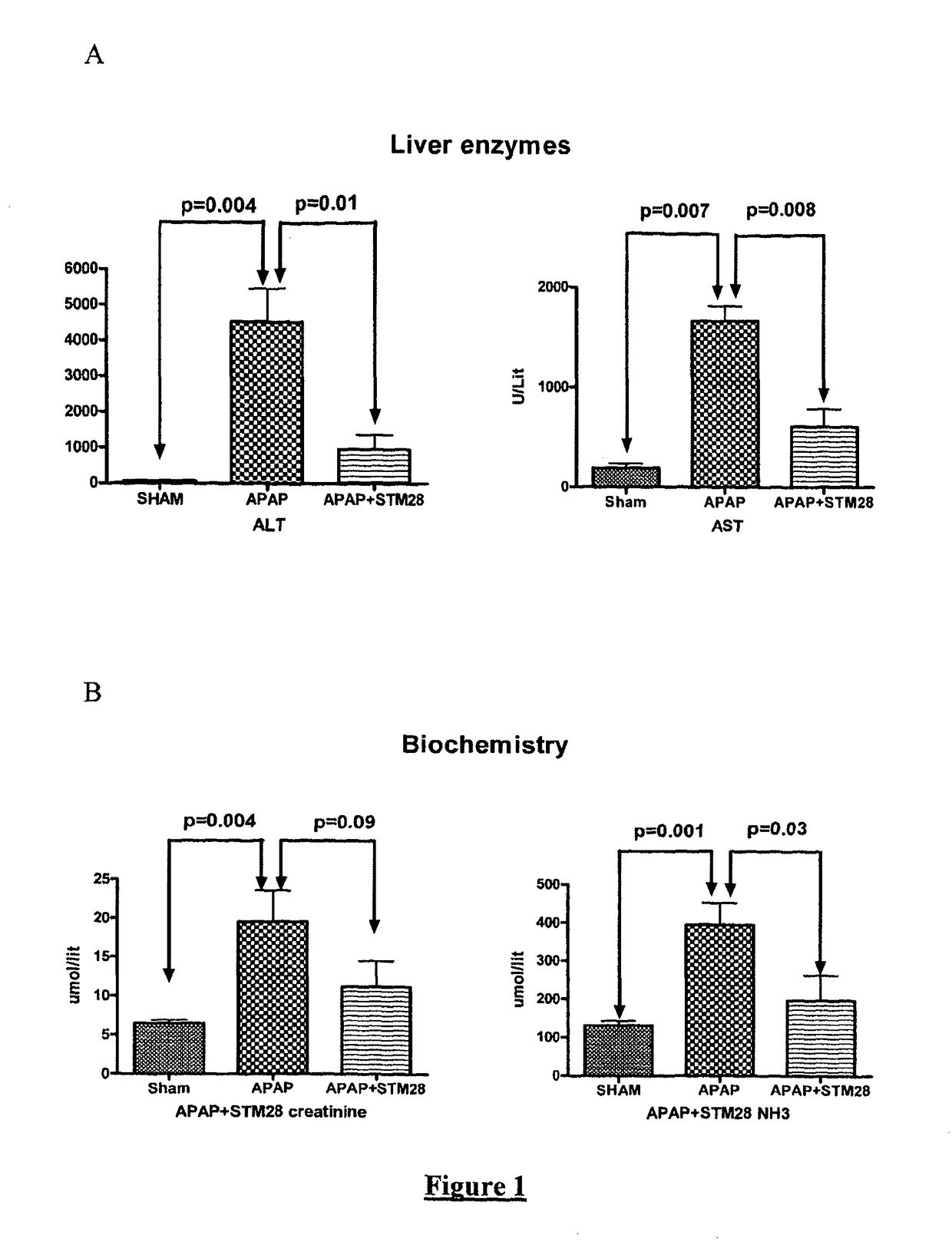
Figure 1 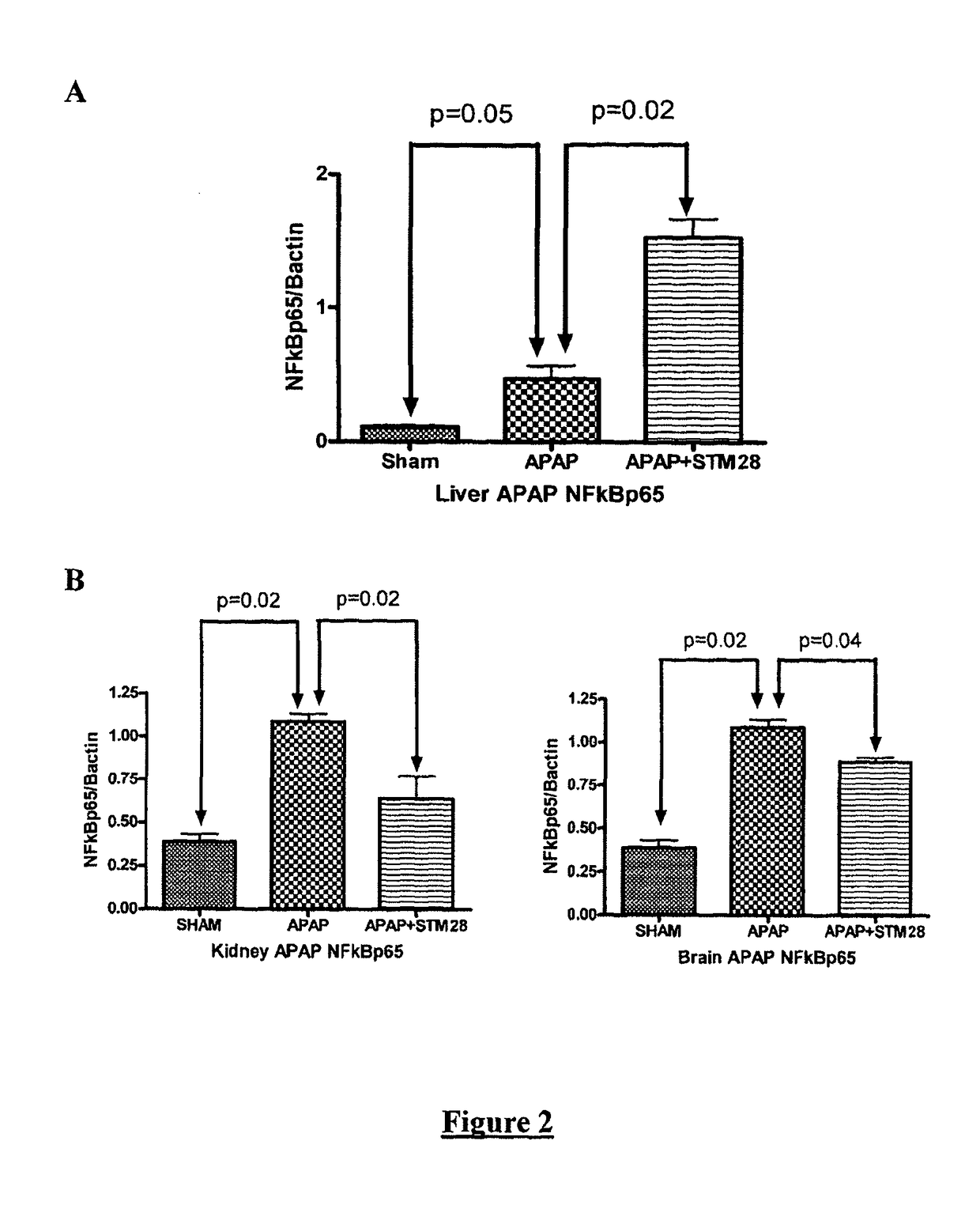
Figure 2 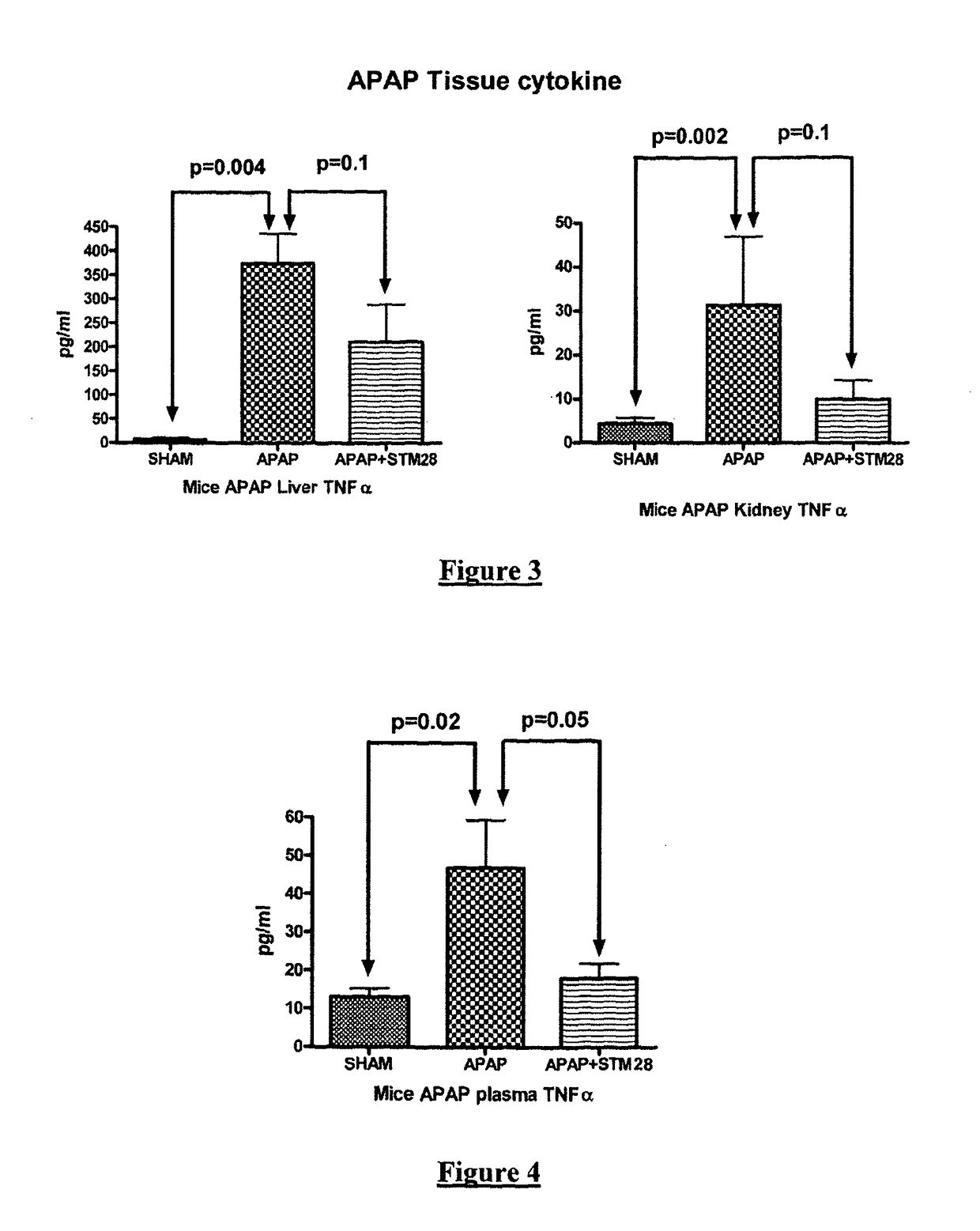
Figure 3
Abstract
Description
CROSS REFERENCE TO RELATED APPLICATIONS
[0001] This application is a U.S. National Stage of International Application No. PCT / GB2011 / 001227, filed on Aug. 17, 2011, which claims the benefit of Great Britain Patent Application No. 1013785.9 filed on Aug. 17, 2010, the disclosures of which are hereby incorporated by reference.FIELD OF THE INVENTION
[0002] The present invention derives from the unexpected finding that expression of Toll like receptor (TLR4) in the kidney and brain is increased in bile duct ligated rats (a model for cirrhosis). TLR4 expression is also increased in the renal tubules of cirrhotic patients having renal failure and TLR4 levels are also increased in the urine of such patients. Furthermore, by antagonising TLR4, many of the unwanted consequences or symptoms of renal dysfunction in liver disease or liver failure may be reduced. The present invention utilises these findings to identify and provide TLR4 antagonists that may be used in the treatment or prevention of ...
Examples
example 1
Role of TLR4 in Acute Liver Failure
[0157]3 groups of Cd1 male mice were studied. Sham, APAP (acetaminophen, 500 mg / kg single dose IP after overnight fasting), APAP+TLR4 antagonist (STM28; 20 ug, 1 hour prior to the administration of APAP and 6 hours later). Blood was collected for biochemistry and cytokine assay. Liver, Kidney and Brain were collected for western blot and cytokine analyses and the brain frontal cortex for brain water. Animals were sacrificed at 12 hours after APAP administration.
[0158]Acetaminophen (APAP) toxicity is manifested by rapid acute liver injury, severe brain edema and renal failure. Unregulated inflammation in such an instance leads to the release of cytokines along with activation of NFkB and progressive liver injury. Administration of APAP (500 mg / kg) to the mice led to an increase in liver enzymes ALT (p=0.004) and AST (p=0.007) (FIG. 1A). Administration of a novel TLR4 antagonist (STM28) significantly reduced the [ALT (p=0.01) and AST (p=0.008) (FIG. ...
example 2
Role of TLR4 in Renal Dysfunction in Liver Disease
[0159]These experiments utilised an established animal model of cirrhosis, the bile duct ligated (BDL) rat. BDL rats may be generated by methods known in the art. For example, male Sprague-Dawley rats (200-250 g) may be used for this procedure. Following anaesthetisation, a mid-line laparotamy may be performed, the bile duct exposed, triply ligated with 4.0 silk suture, and severed between the second and third ligature. The wound is then closed in layers with absorbable suture, and the animal allowed to recover in a quiet room before being returned to the animal storage facility.
[0160]6 groups of Sprague-Dawley rats were studied: n=6 in each group. Sham operated (these were used as a control group who had an abdominal laparotomy). Sham operated+LPS, (control group with and additional dose of Lipopolysaccharide (LPS). Bile Duct Ligation (BDL): 4 weeks, a chronic model of BDL at 4 weeks has been used to study Hepatorenal syndrome. BDL+...
example 3
Increased Renal Tubular Expression of TLR4 in Cirrhosis
[0164]Kidney biopsies were studied from 7 cirrhotic patients who presented with renal failure. Various measures were recorded for these patients as set out in Table 1 below. Transjugular Renal biopsies were performed on patients who presented with proteinuria>0.5 gm / day and / or microscopic haematuria and / or unexplained high levels of serum creatinine. Clinical data on the demographics, etiology and the biochemical parameters were collected retrospectively. Paraffin embedded Kidney sections were stained immunohistochemically with antimouse primary TLR4 (1:100, Life span bioscience, cat no LS-B2070) antibody following deparaffinisation and dehydration using the citrate Antigen retrieval method. Liver biopsy cores from patients with decompensated alcohol liver disease and patients with alcoholic hepatitis were stained for antimouse TLR4 antibody using the protocol above. The results are presented in Table 1 below and in FIGS. 17 and...