
Method for constructing and distributing training sequence with zero interference window and channel estimator thereof
A technology of channel estimator and training sequence, applied in baseband system components, electrical components, transmission systems, etc., can solve the problems of complex channel estimation, no consideration, and no consideration of how to simplify channel estimation, etc., to achieve simple channel estimation, Effect of Efficient Channel Estimation
- Summary
- Abstract
- Description
- Claims
- Application Information
AI Technical Summary
Problems solved by technology
Method used
Image

Examples
Embodiment Construction
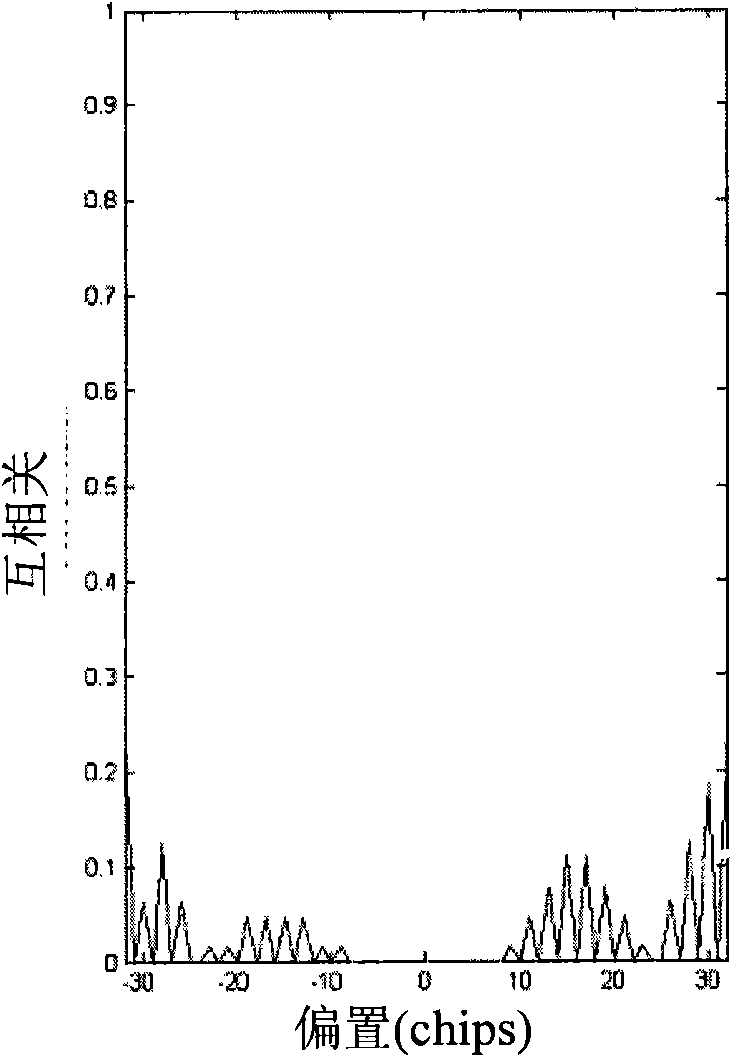
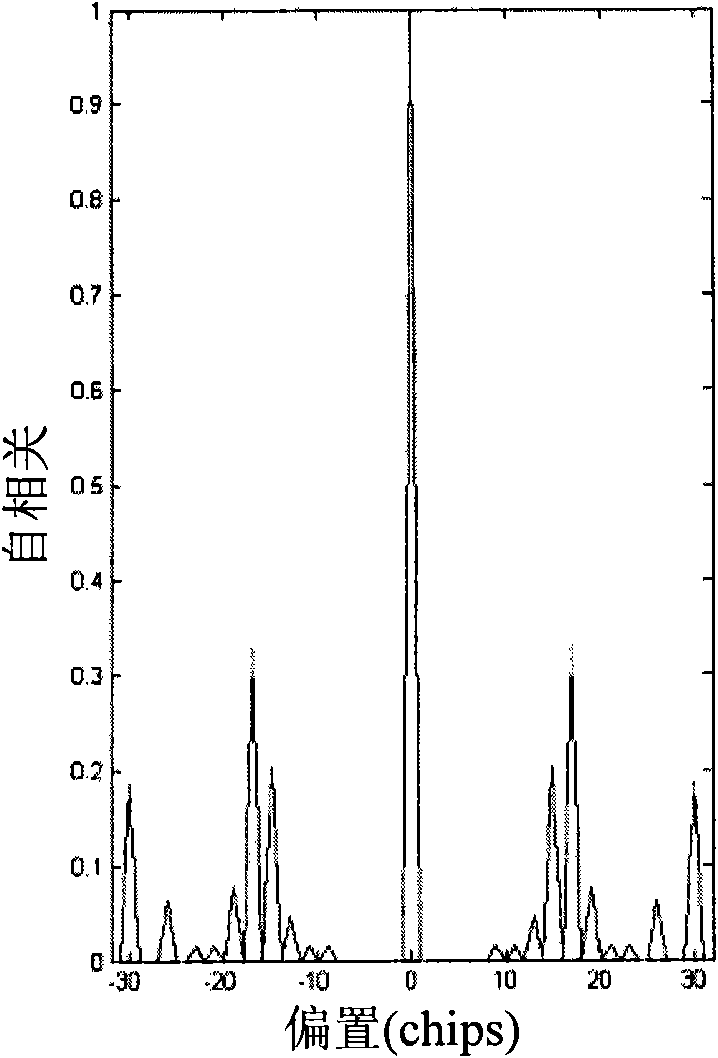
[0039] The following embodiments of the present invention will illustrate how to construct a binary spread spectrum sequence with zero interference window characteristics and use it as a training sequence. The autocorrelation and cross correlation of this training sequence are within a certain delay offset Both are 0.
[0040] First, the definition of the zero-interference window is explained. We define N spreading sequences [C 0 , C 1 ...C N ], where C n =[c n,0 , c n,1 ... c n,N-1 ] of length N, we say that we obtain zero-interference windows of length Z if these spreading sequences satisfy the following conditions:
[0041] ρ jk ( τ ) = Σ l = 0 N - 1 c j , l ...
PUM
 Login to View More
 Abstract
Description
Claims
Application Information
 Login to View More