Blind window with longitudinal vanes

A technology of blinds and blades, applied in the field of blinds, which can solve the problem of not being able to completely block rainwater

CN102121345AInactive Publication Date: 2011-07-13CHONGQING UNIV
4 Cites 3 Cited by

Patent Information

Authority / Receiving Office
CN · China
Current Assignee / Owner
Publication Date
2011-07-13
Estimated Expiration
Not applicable · inactive patent

Smart Images

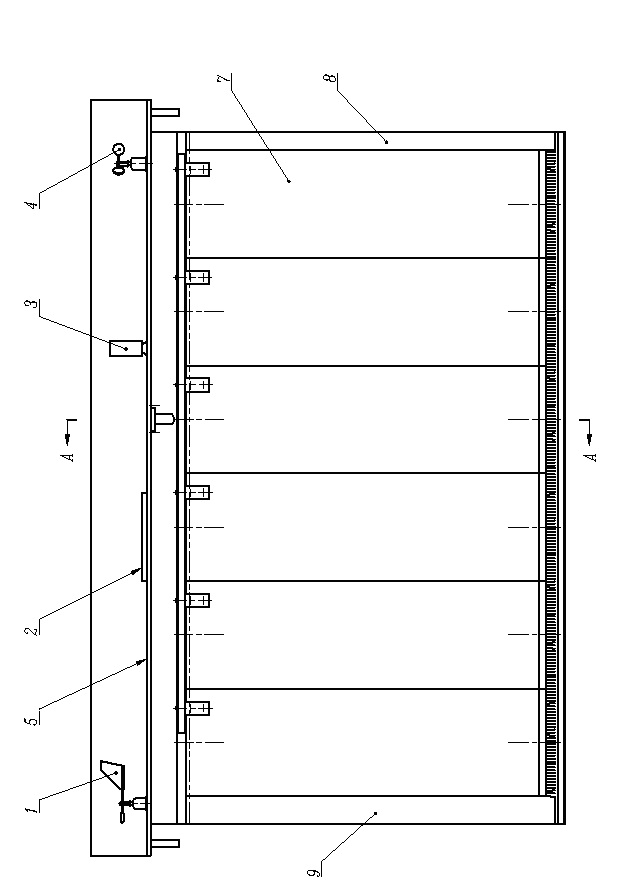
  • Figure 1
    Figure 1
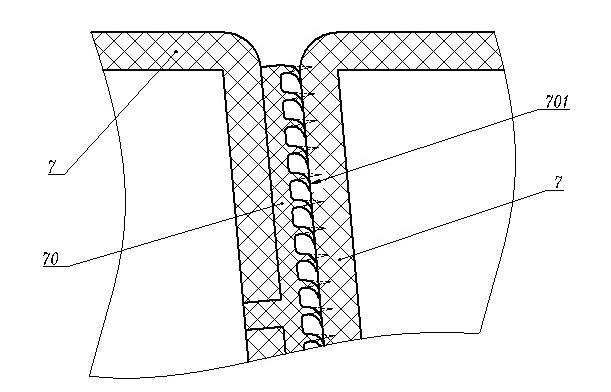
  • Figure 2
    Figure 2
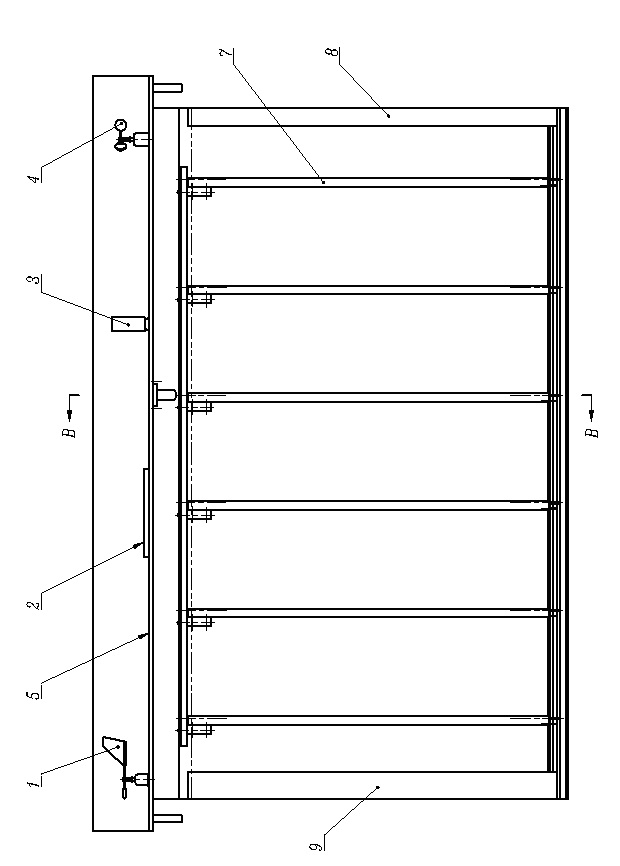
  • Figure 3
    Figure 3
Patent Text Reader

Abstract

The invention relates to a blind window with longitudinal vanes, which comprises a plurality of vanes which rotate synchronously and are positioned in the same plane when rotating to a position where the window is be closed, rotating shafts fixedly arranged on the vanes and upper and lower bearings for supporting the rotating shafts. In the blind window, a gap filling strip which is made of rubber or artificial rubber and is used for filling a gap between two opposite lateral surfaces of the two adjacent vanes is entrained between the two lateral surfaces; one surface of the gap filling strip is adhered to the lateral surface of one of the vanes, and a longitudinal extrusion strip of which the cross section is in a comb shape is arranged on the other surface of the gap filling strip; all lateral surfaces of the vanes incline in the same direction to ensure all vanes are not interfered upon closing under the condition of the seamless opposite collision of the opposite lateral surfaces; and an internally-high and externally-low inclined additional windowsill which is in a two-stage step shape is fixedly arranged on a windowsill, wherein a two-stage step surface is high internally and low externally. The blind window has a rainproof function, and on the basis of the blind window, the blind window also can be improved further to form a structure capable of being controlled automatically.
Need to check novelty before this filing date? Find Prior Art

Description

technical field

[0001] The invention relates to a blind with blades arranged longitudinally and the opening angle of the blades can be adjusted. Background technique

[0002] The louvers have the function of shading and ventilation; just like the shutters of the weather observation station, the louvers with horizontal blades also have the function of blocking rainwater. When installing shutters on office or residential indoor windows, the requirements are different. In order to enjoy the outdoor sunshine, or to improve indoor ventilation, if more cool wind or fresh air is needed to blow into a stuffy room or a room with turbid air, people need to make the blinds so that they can turn their blades to adjust the blades. Angled blinds too. Among the blinds with adjustable blade inclination angle, the blade width is wider (usually about less than the thickness of the wall at the window), and the blinds with vertical blades are better-the blade can be adjusted almost in the ran...

Examples

Embodiment Construction

[0018] A shutter with longitudinal blades (reference figure 1 , 2 , 3, 4, 10), the shutters include a number of synchronously rotating blades 7 with cavities inside or filled with thermal insulation materials in the cavities, and are located on the same plane when turned to the closed state, fixedly installed on these The rotating shaft 71 on the blade 7 overlapping the center line of the blade width is fixed relative to the window sill to support the upper and lower bearings (73, 72) of the rotating shaft 71. In the present invention, when the blades 7 turn to the closed window state, there is a rubber or artificial rubber caulking strip 70 that fills the gap between the two sides between the opposite sides of the two adjacent vanes 7. One side of 70 is close to the side of wherein a blade 7, and its cross-section that is arranged vertically on the other side is the extrusion bar 701 that is comb-tooth shape, and under the unextruded state of this extrusion bar 701, its comb...