Synchronous control method and synchronous control system for dual-camera exposure

A dual-camera, synchronous control technology, which is applied to the components of the TV system, image communication, TV, etc., can solve the problems of poor synchronization of dual-cameras, unfavorable performance and advantages of dual-cameras, and limitations of dual-cameras, so as to improve the use effect Effect

CN107872625AActive Publication Date: 2018-04-03TRULY OPTO ELECTRONICS
5 Cites 4 Cited by

Patent Information

Authority / Receiving Office
CN · China
Patent Type
Applications(China)
Current Assignee / Owner
Publication Date
2018-04-03

Smart Images

  • Figure 1
    Figure 1
  • Figure 2
    Figure 2
  • Figure 3
    Figure 3
Patent Text Reader

Abstract

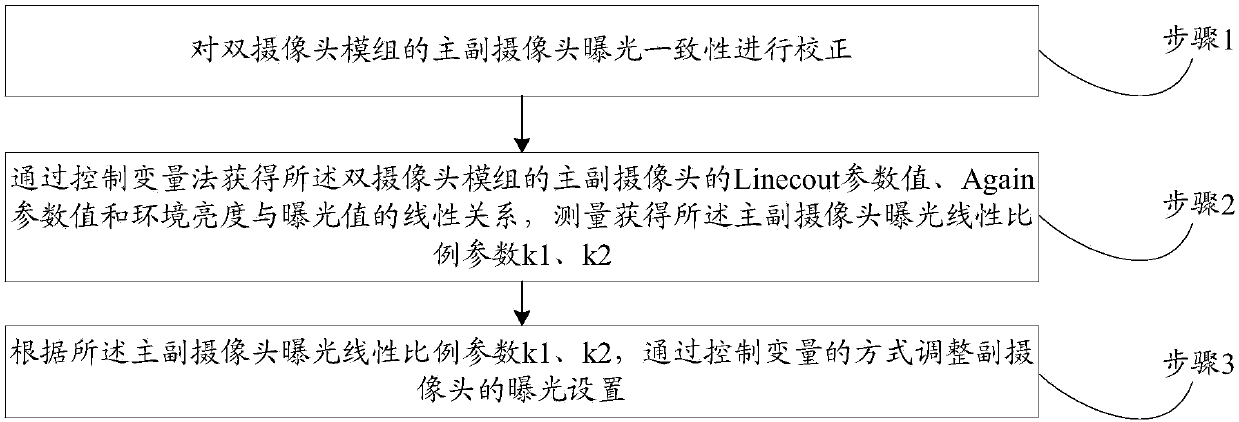
The invention discloses a synchronous control method and a synchronous control system for dual-camera exposure. The method includes step 1, correcting exposure uniformity of a primary camera and a secondary camera of a dual-camera module; step 2, acquiring Linecout parameter values and Again parameter values of the primary camera and the secondary camera of the dual-camera module as well as linearrelation between ambient brightness and exposure values according to a control variable method, and acquiring exposure linear scale parameters K1 and K2 of the primary camera and the secondary camerathrough measurement; step 3, adjusting exposure settings of the secondary camera according to the exposure linear scale parameters K1 and K2 of the primary camera and the secondary camera through variable control. The synchronous control method and the synchronous control system have the advantages that after the exposure uniformity of the primary camera and the secondary camera of the dual-camera module is acquired through judgment, the Linecout parameter values, the Again parameter values and the linear relation between the ambient brightness and the exposure values are acquired through measurement, the exposure linear scale parameters K1 and K2 are acquired, the exposure settings of the secondary camera are acquired through adjustment according to the relationship between the K1 and the K2, and accordingly, exposure synchronization is realized.
Need to check novelty before this filing date? Find Prior Art

Description

technical field

[0001] The present invention relates to the technical field of dual-camera applications, in particular to a dual-camera AE synchronization control method and system. Background technique

[0002] As users have higher and higher requirements for mobile phone photography, and even require imaging capabilities comparable to SLR, but the current single camera cannot meet customer requirements. The solution is generally to use a higher pixel camera, but this will increase the number of responses. The cost of use is not conducive to improving the competitiveness of products.

[0003] The dual camera can achieve fast focus, low light compensation, zoom and other functions very well. However, the synchronization of the current dual cameras is poor, which limits the development of the dual camera functions and is not conducive to maximizing the performance and advantages of the dual cameras. Contents of the invention

[0004] The invention discloses a dual camera ...

Examples

Embodiment Construction

[0043] The following will clearly and completely describe the technical solutions in the embodiments of the present invention with reference to the accompanying drawings in the embodiments of the present invention. Obviously, the described embodiments are only some, not all, embodiments of the present invention. Based on the embodiments of the present invention, all other embodiments obtained by persons of ordinary skill in the art without making creative efforts belong to the protection scope of the present invention.

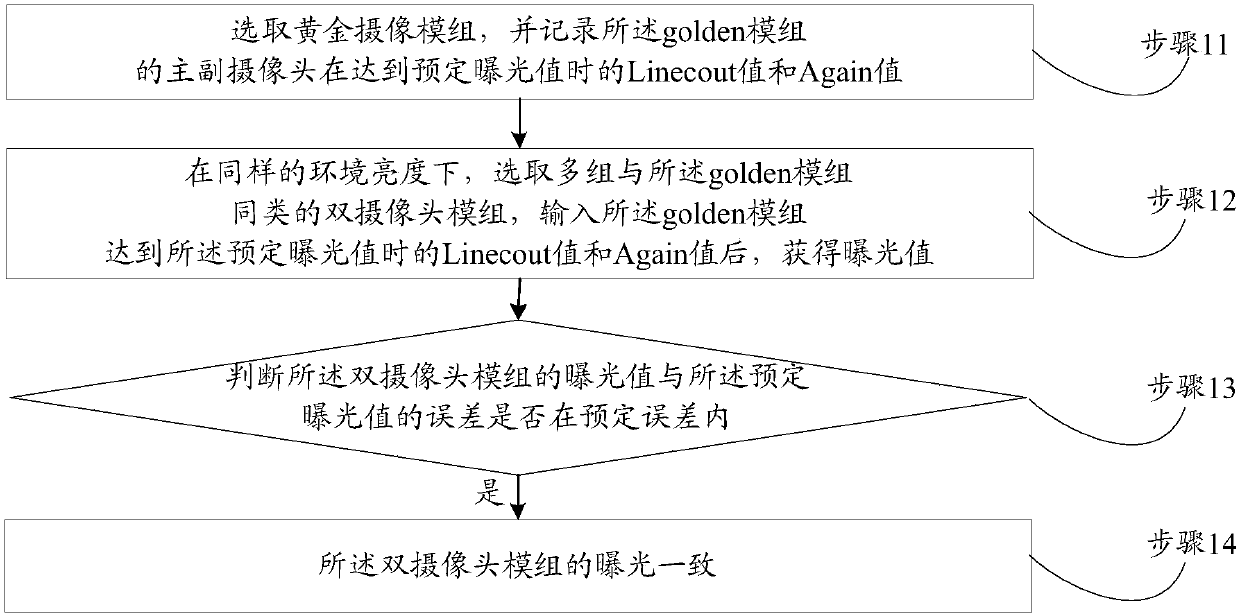
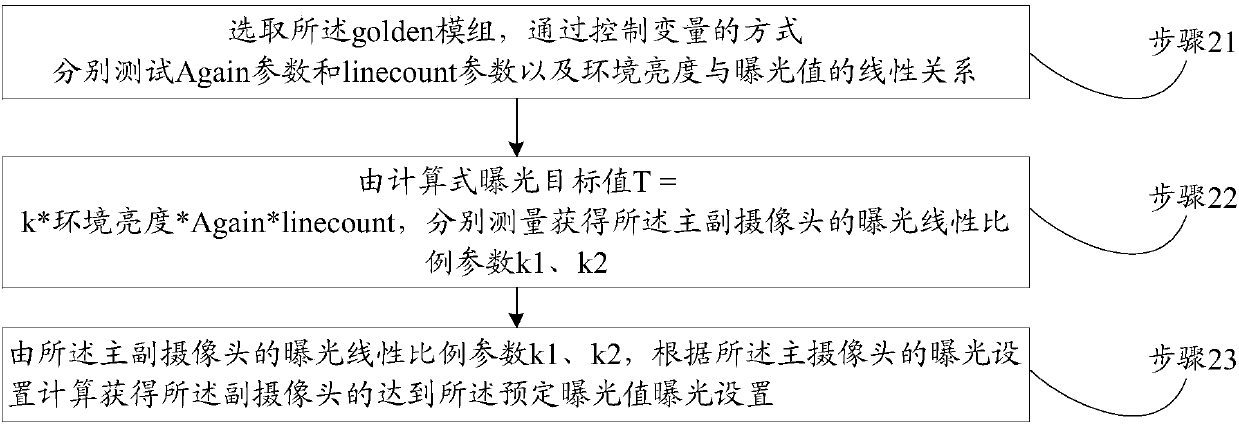
[0044] Please refer to Figure 1~5 , figure 1 It is a schematic flow diagram of the steps of a specific implementation mode of the dual-camera exposure synchronization control method provided by the embodiment of the present invention; figure 2 It is a schematic flow diagram of the steps for correcting the exposure consistency of the main and secondary cameras in a specific implementation of the dual camera exposure synchronization control method provided by...