Dual-purpose combined medical bed for nursing and transfer

A combined nursing bed technology, applied in the field of medical beds, can solve the problems of large manpower consumption, avoid secondary damage, and facilitate operation

CN110433045APending Publication Date: 2019-11-12黄欣
0 Cites 4 Cited by

Patent Information

Authority / Receiving Office
CN · China
Patent Type
Applications(China)
Current Assignee / Owner
Publication Date
2019-11-12

Smart Images

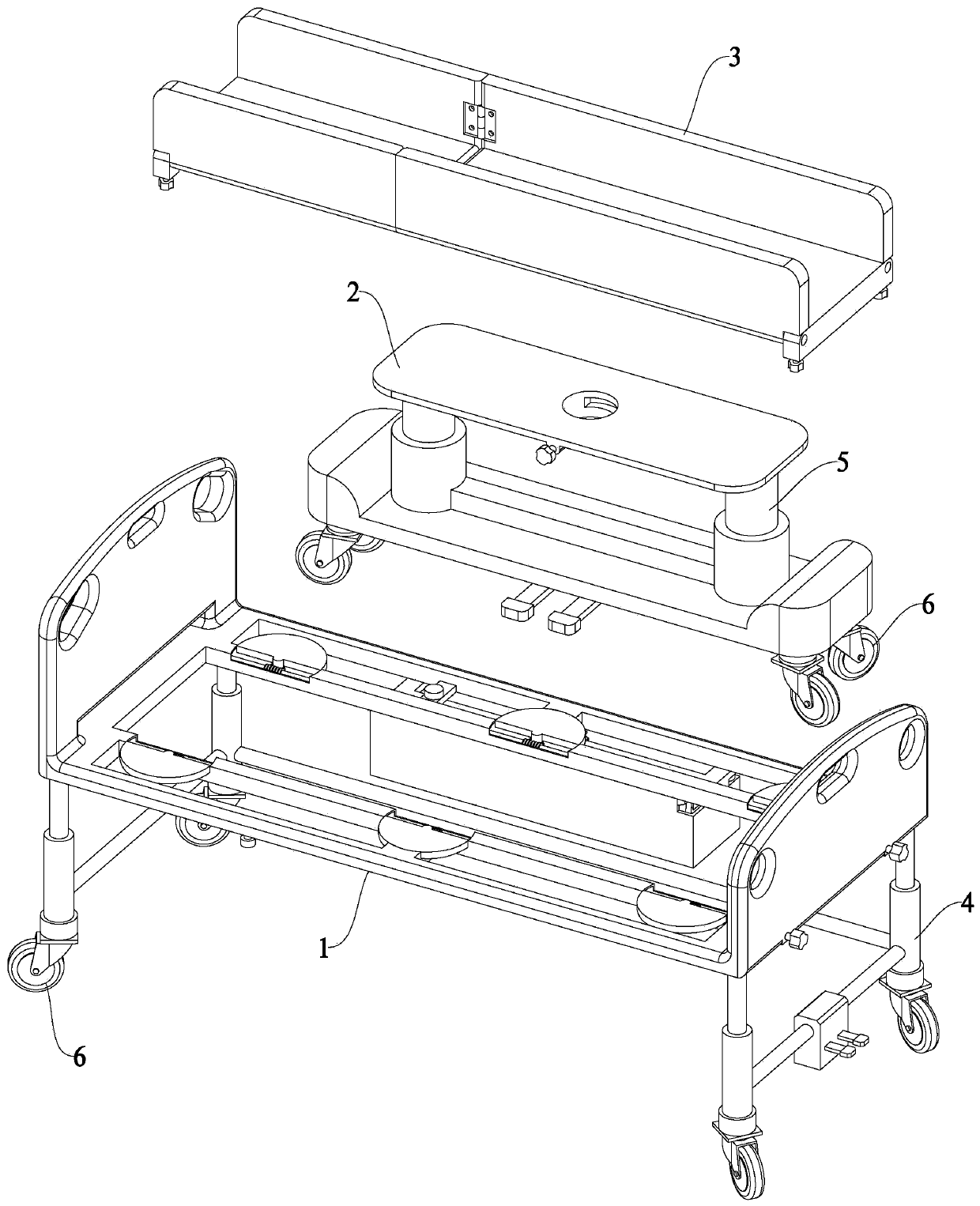
  • Figure 1
    Figure 1
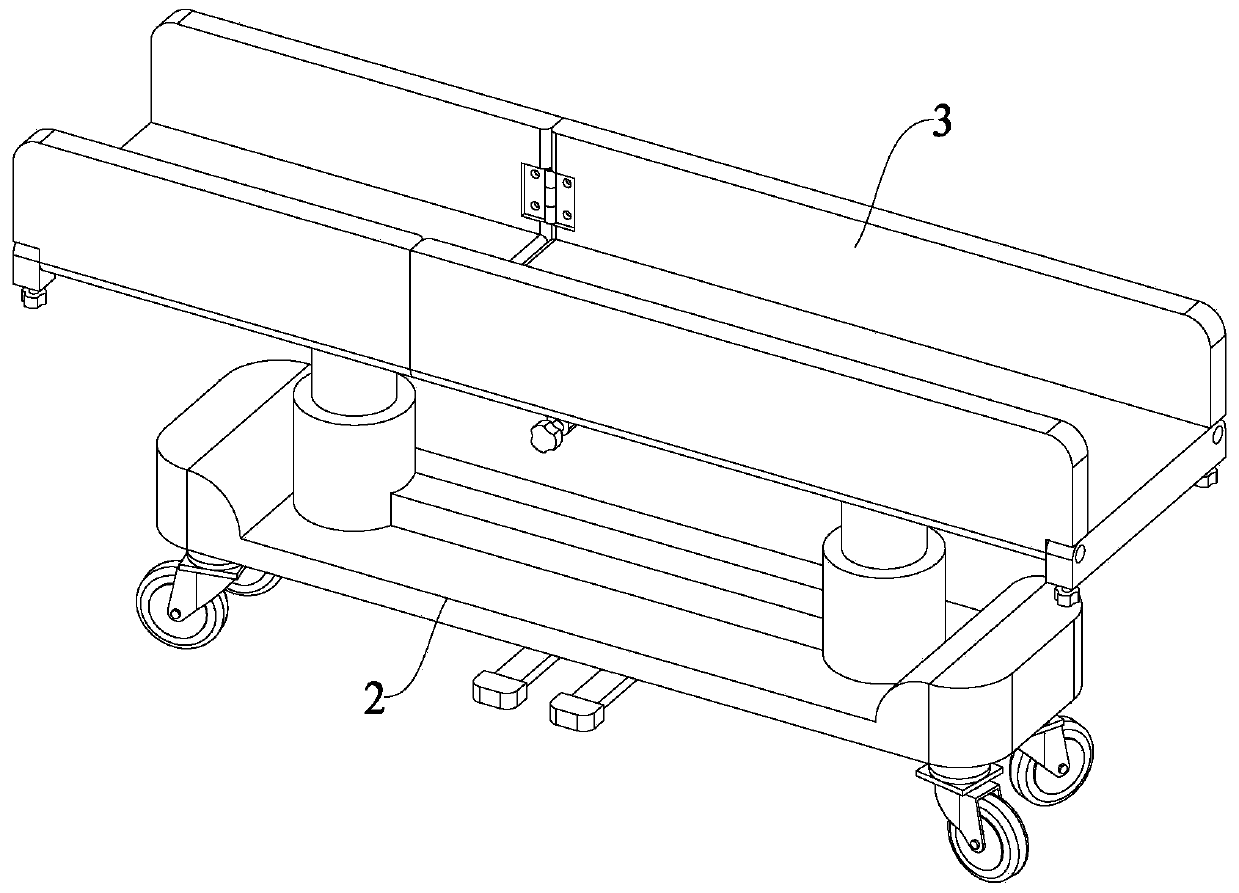
  • Figure 2
    Figure 2
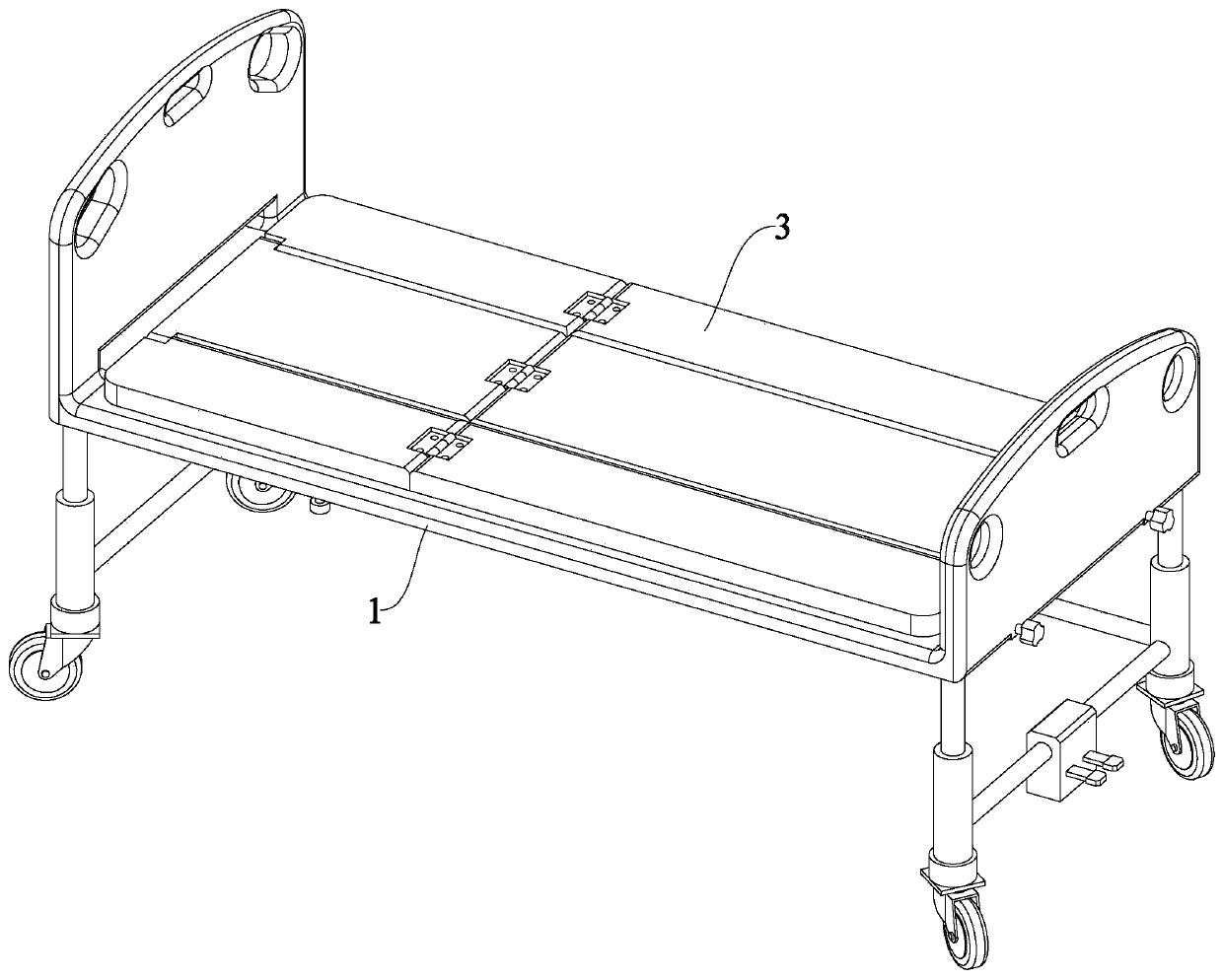
  • Figure 3
    Figure 3
Patent Text Reader

Abstract

A dual-purpose combined medical bed for nursing and transfer comprises a nursing bed body, a transfer vehicle body and a multifunctional bed board. At least one of the nursing bed body and the transfer vehicle body can be raised and lowered in a vertical direction, the multifunctional bed board can be placed on the nursing bed body, and the multifunctional bed board can be separably disposed on the transfer vehicle body; the multifunctional bed board includes a main bed board and a sub-bed board, the sub-bed board is two pieces, the two pieces are respectively hinged to two sides of the main bed board, a first locking piece is arranged between the main bed board and the sub-bed board, and the first locking piece is used to define the turning angle of the sub-bed board relative to the mainbed board; and the nursing bed body is provided with a passage opening, the bottom of the nursing bed body is provided with a support board assembly, and the support board assembly can extend to the passage opening and support the multifunctional bed board. According to the present invention, the dual-purpose combined medical bed for nursing and transfer has the advantages of not changing the posture of patients at all, multiple functions and convenient transportation.
Need to check novelty before this filing date? Find Prior Art

Description

technical field

[0001] The invention relates to the field of medical equipment, in particular to a medical bed. Background technique

[0002] In the process of patient treatment, patient transfer is an indispensable link in the process of examination, diagnosis and treatment, including moving the patient from the hospital bed to the stretcher, or from the operating room or examination room to the hospital bed. The need to not change the patient's position is extremely common. However, in the traditional transfer process, the actions of the carrier, such as hugging and lifting, will change the body parts of the patient, such as bending, stretching, sideways, etc. This series of passive actions will affect the patient, making its posture change. Changes, aggravated pain, and inadvertent operation are more likely to cause secondary damage and threaten life. Especially for patients whose body posture should not be changed too much in the early stage of cerebral hemorrhage, spi...

Examples

Embodiment Construction

[0040] The following description serves to disclose the present invention to enable those skilled in the art to carry out the present invention. The preferred embodiments described below are only examples, and those skilled in the art can devise other obvious variations.

[0041] In the description of the present invention, it should be noted that for orientation words, such as the term "center", "horizontal", "longitudinal", "length", "width", "thickness", "upper", "lower" , "Front", "Back", "Left", "Right", "Vertical", "Horizontal", "Top", "Bottom", "Inner", "Outer", "Clockwise", "Counterclockwise " and other indication orientations and positional relationships are based on the orientations or positional relationships shown in the drawings, and are only for the convenience of describing the present invention and simplifying the description, rather than indicating or implying that the device or element referred to must have a specific orientation, or in a specific orientation...