
System, method and device for correcting malocclusion
一种牙齿、牙齿移动的技术,应用在矫正牙齿咬合不齐的系统、和设备领域
- Summary
- Abstract
- Description
- Claims
- Application Information
AI Technical Summary
Problems solved by technology
Method used
Image

Examples
Embodiment Construction
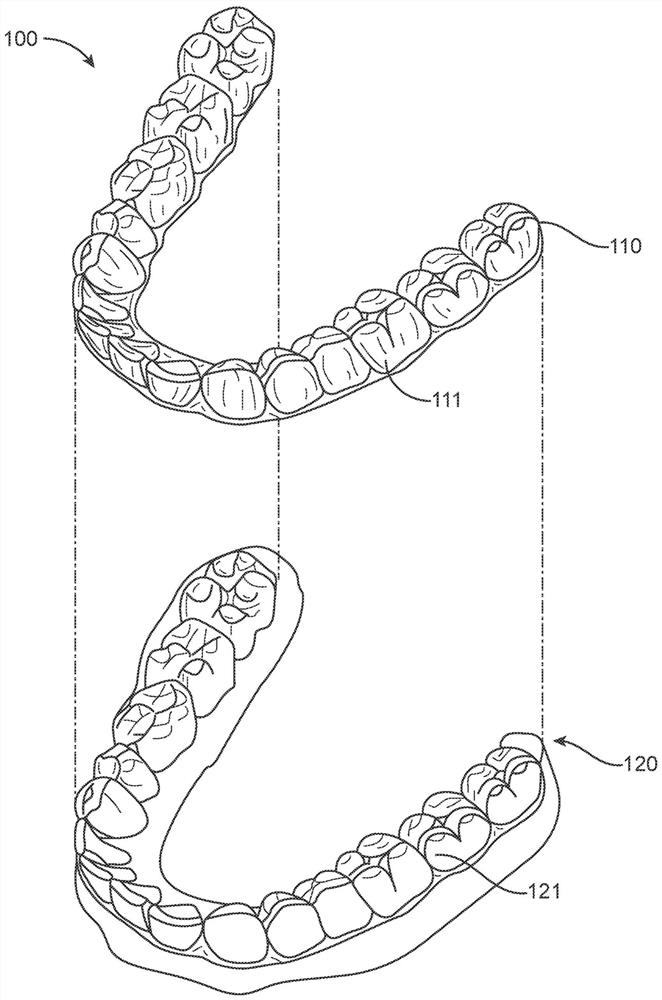
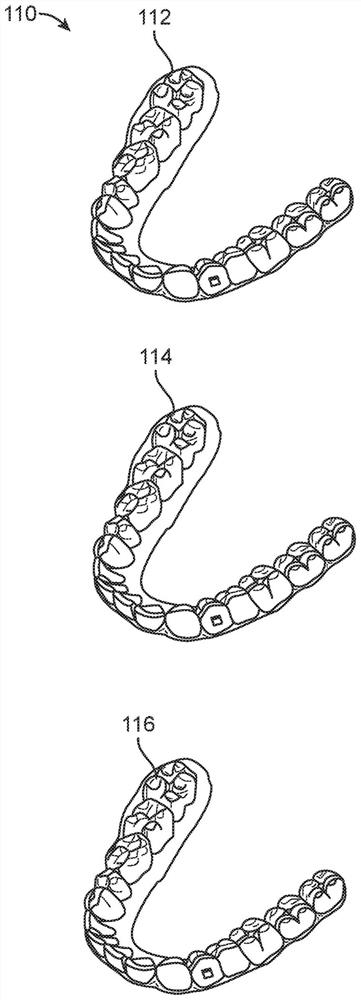
[0043] Figure 1A An exemplary tooth repositioning appliance or aligner 100 is shown that may be worn by a patient to achieve incremental repositioning of a single tooth 121 in the jawbone. The appliance may include a housing 110 (eg, a continuous polymer shell or a segmented shell) having tooth-receiving chambers 111 that accommodate and resiliently reposition teeth 121 . Appliances or parts thereof can be manufactured indirectly using a physical model of the teeth. For example, an appliance (eg, a polymer appliance) can be formed using a physical model of the tooth and suitable layers of polymeric material. In some embodiments, the physical appliance is fabricated directly from a digital model of the appliance, eg, using cumulative fabrication techniques. Appliances may fit on all of the teeth present in the upper or lower jaw, or less than all of the teeth. The appliance may be specifically designed to accommodate the patient's teeth (eg, the topography of the tooth recei...
PUM
 Login to View More
 Abstract
Description
Claims
Application Information
 Login to View More