Method and system for M-QAM detection in communication systems

A technology for decision-making and signal reception. It is applied in baseband systems, digital transmission systems, electrical components, etc., and can solve problems such as increased memory overhead, slow estimation speed, and complexity.

CN1817017AActive Publication Date: 2006-08-09TELEFON AB LM ERICSSON (PUBL)
1 Cites 3 Cited by

Patent Information

Authority / Receiving Office
CN · China
Patent Type
Applications(China)
Current Assignee / Owner
Publication Date
2006-08-09

Smart Images

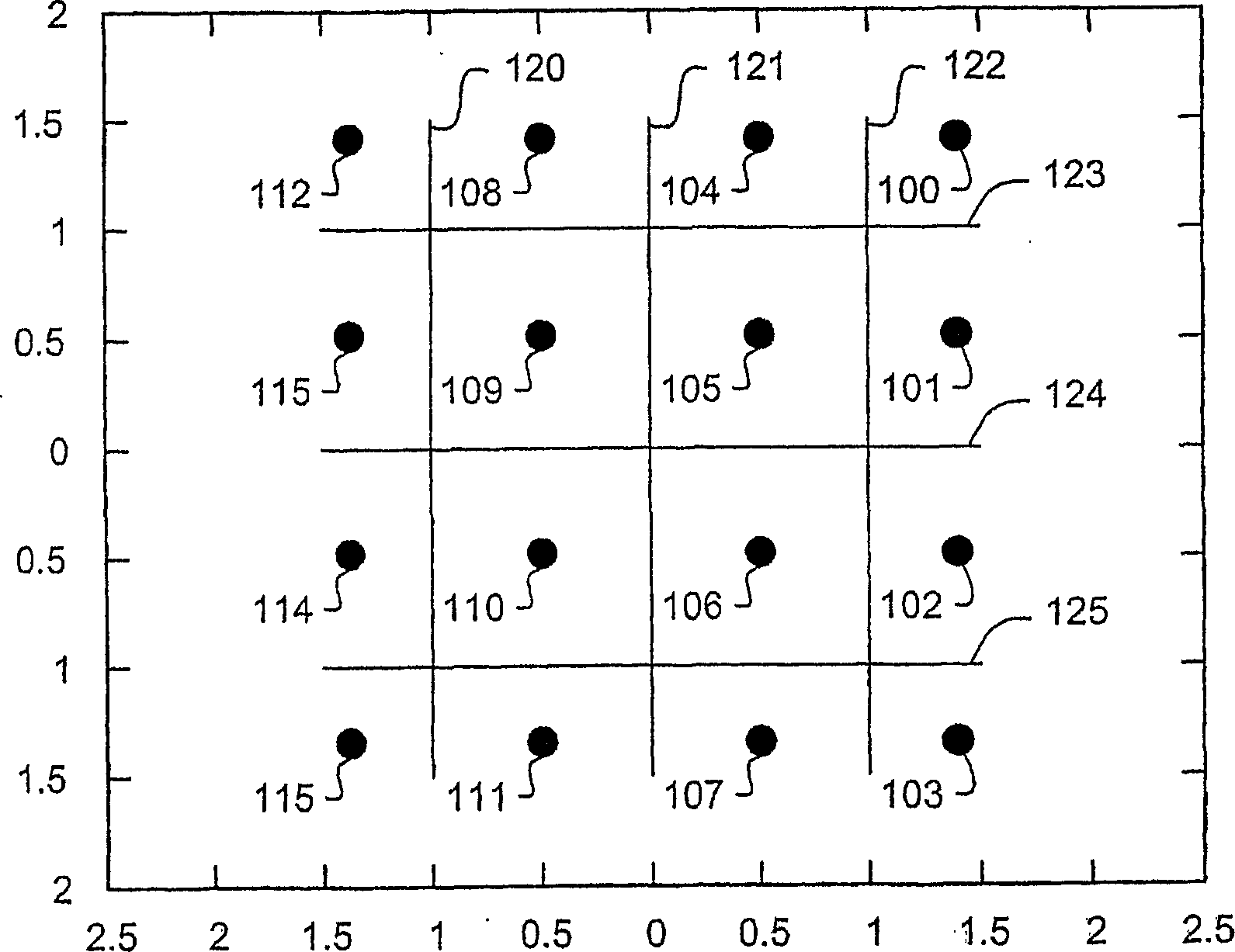
  • Figure 1
    Figure 1
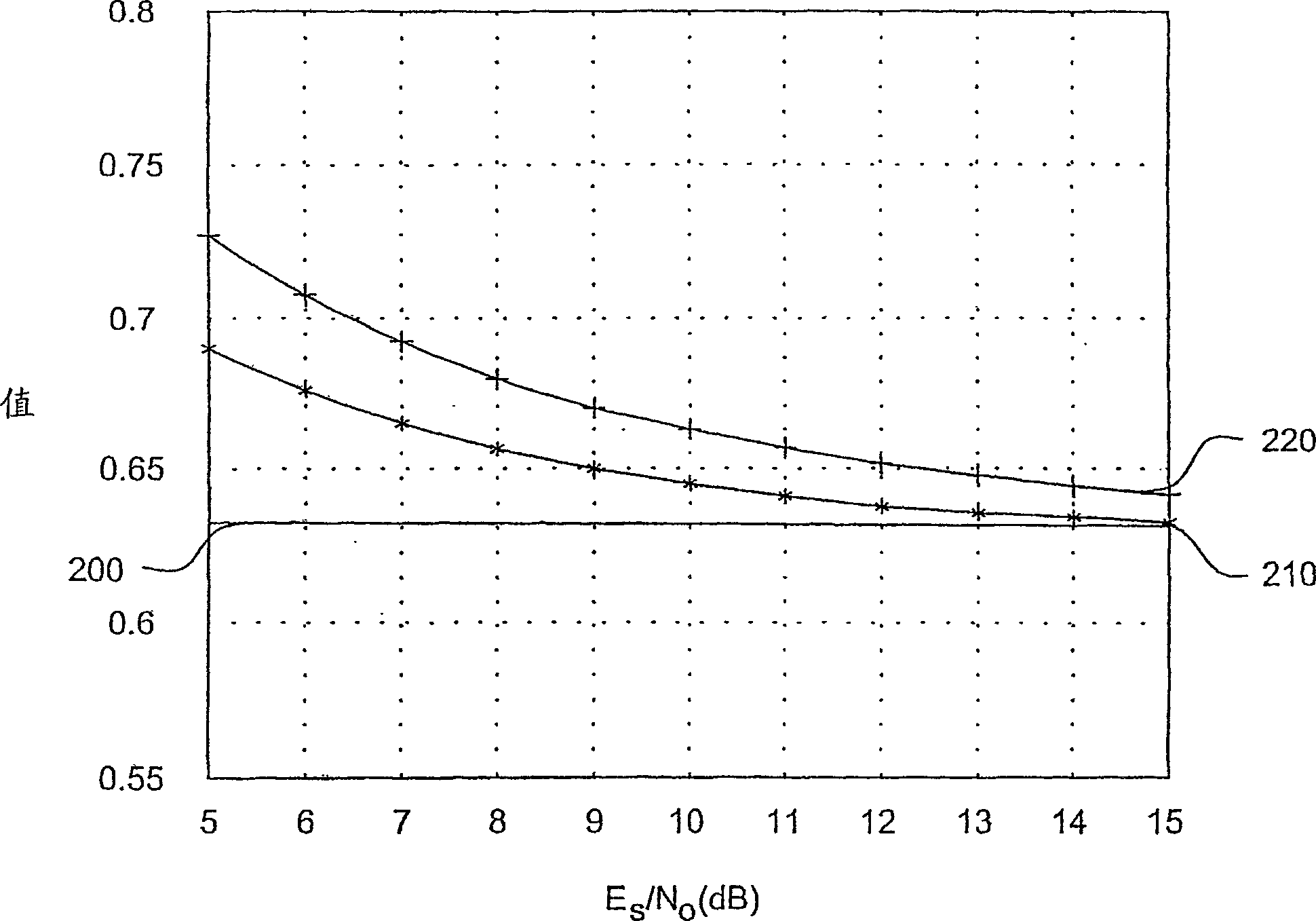
  • Figure 2
    Figure 2
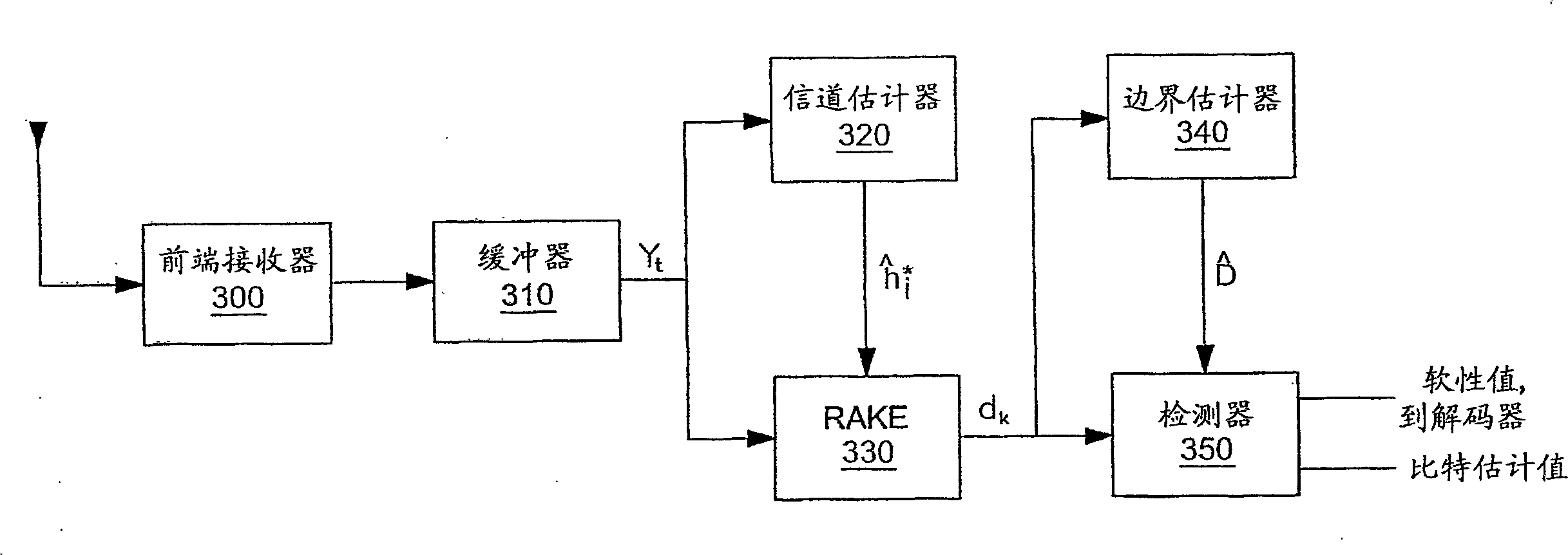
  • Figure 3
    Figure 3
Patent Text Reader

Abstract

A method and system are described for performing fast and simple M-QAM detection on received signals, such as a 16-QAM signal, by estimating M-QAM symbol constellation decision boundaries. Amplitude information is collected for in-phase and quadrature phase components of the received signal over a number of symbols. An average of the absolute value of the amplitude information of the in-phase components and of the quadrature phase components is determined over the number of symbols. The determined average absolute values of the in-phase and quadrature phase components provide a reference to produce the decision boundary estimates. Bias compensation may optionally be applied to the decision boundary estimates based on the estimated signal-to-interference ratio (''SIR'') of the received signal to produce bias corrected decision boundary estimates.
Need to check novelty before this filing date? Find Prior Art

Description

technical field

[0001] The present invention relates to the detection of modulated signals used in wireless communications. More particularly, the present invention relates to multi-level quadrature amplitude modulation ("M-QAM") detection in communication systems. Background technique

[0002] In digital communication systems, digital symbols representing information are transferred between different nodes (eg, base stations, mobile phones) to exchange information.

[0003] Communication systems are typically described using a layered model known as the Open Systems Interconnection ("OSI") model. The lowest layer in this model, where a stream of information consisting of multiple bits is conveyed, is often referred to as the physical layer, and the information is usually conveyed on different physical channels. According to this structure, the physical channel provides a service with a predetermined quality. In a simplified description, a physical channel includes formin...

Examples

Embodiment Construction

[0030] Various aspects will now be described in conjunction with exemplary embodiments in terms of sequences of acts that may be performed by elements of a computer system. For example, it will be appreciated that, in various embodiments, the logic may be implemented via dedicated circuits or circuitry (e.g., discrete logic gates interconnected to perform specific functions), by program instructions executed by one or more processors, or by A combination of the two is used to perform the individual actions. Accordingly, the various aspects may be embodied in a number of different forms, and all of which are considered within the scope of what has been described. For each of the various aspects, any such form of embodiment may refer herein to "logic configured to perform a described action," or alternatively, to "logic that performs or is capable of performing a described action." logic".

[0031] The various sequences of acts can be implemented in any computer-readable mediu...