
Automatic and seamless vertical roaming between wireless local area network (WLAN) and wireless wide area network (WWAN) while maintaining an active voice or streaming data connection: systems, methods and program products
a wireless local area network and wireless wide area network technology, applied in the field of automatic and seamless vertical roaming, can solve the problems of no one has yet developed a technology, and none of the prior art discloses
- Summary
- Abstract
- Description
- Claims
- Application Information
AI Technical Summary
Problems solved by technology
Method used
Image

Examples
Embodiment Construction
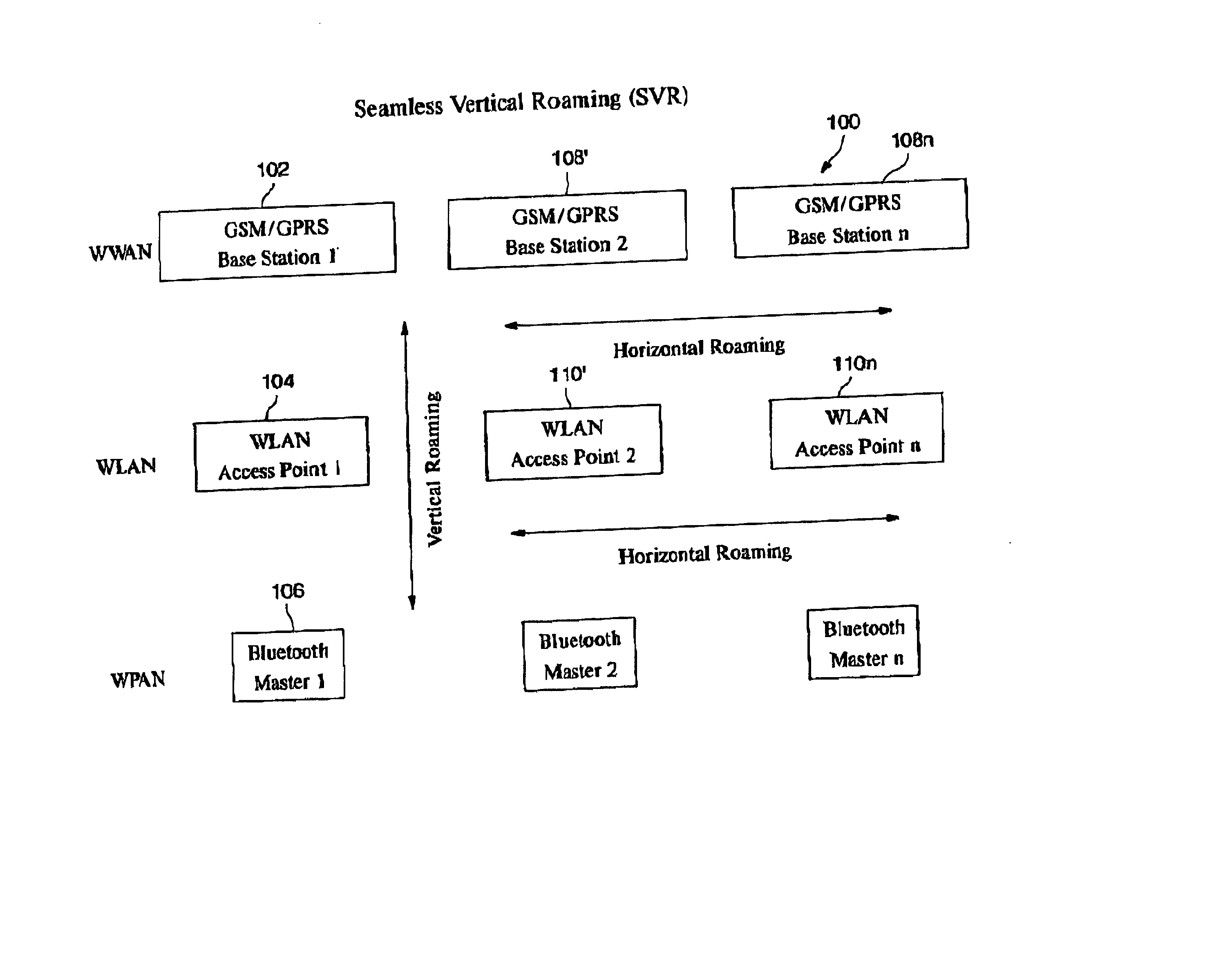
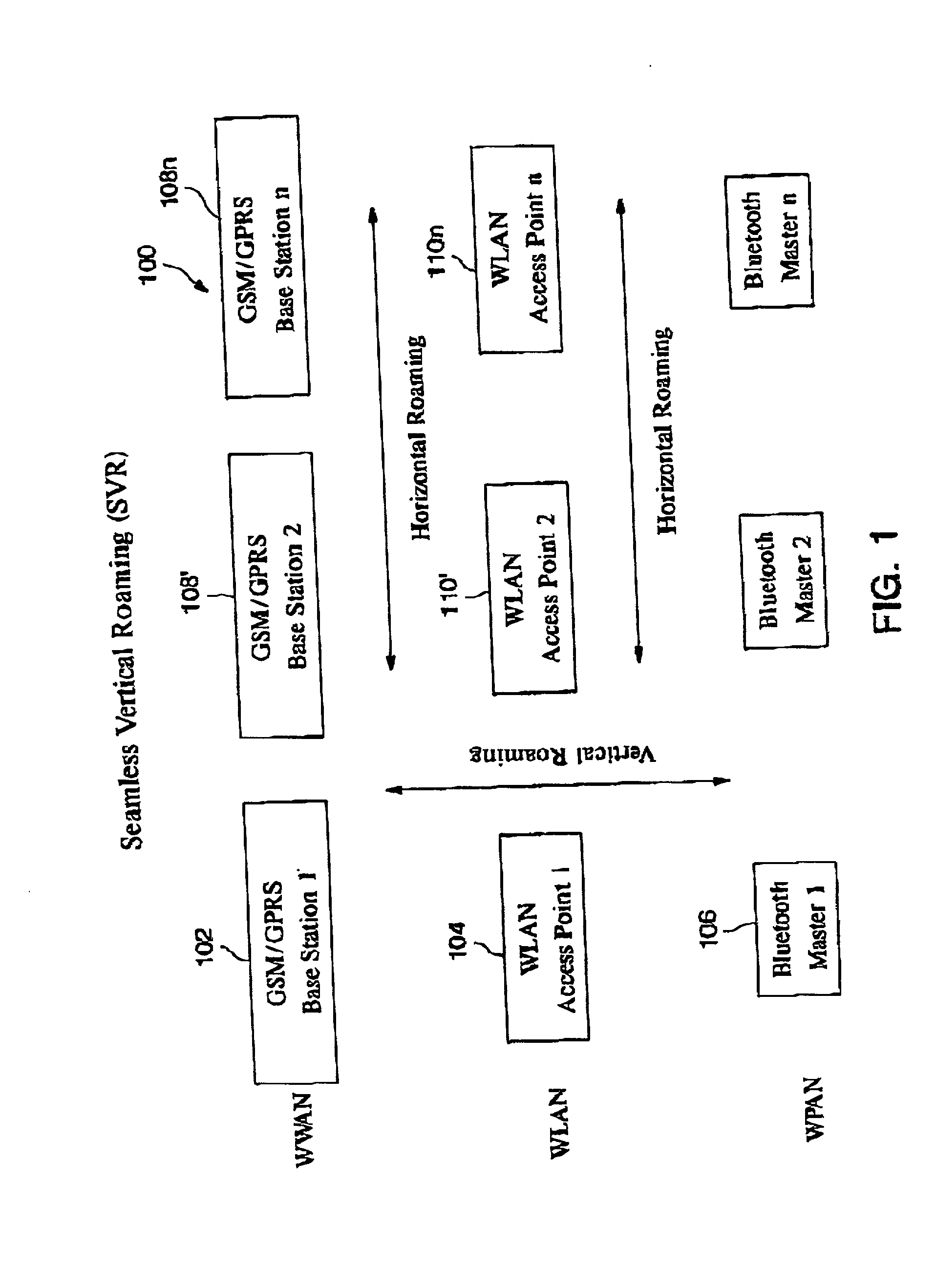
[0026] FIG. 1 describes Seamless Vertical Roaming (SVR) 100 as the automatic transfer of a logical connection between a Wireless Wide Area Network (WAN) 102; Wireless Local Area Network (WLAN) 104 and Wireless Personal Assistant (WPAN) 106 for integrated voice / data communication. The WPAN wireless network known as Blue Tooth was developed by industry working groups including the Home RF Working Group (HRFWG) and the Blue Tooth (SIG). The transfer of a logical connection between the networks 102, 104 and 106 is seamless to a user maintaining voice communication or a data transfer while a Radio sub-system automatically switches between the two substantially different networks, as will be described hereinafter. SVR also includes enabling an application / user to switch or roam to a specific network when more than one network is available based on the physical knowledge of the physical location of a specific network, as described hereinafter.
[0027] When more than one network is available,...
PUM
 Login to View More
 Abstract
Description
Claims
Application Information
 Login to View More