
Apparatus and method for creating PDF documents
a portable document and apparatus technology, applied in the direction of instruments, program control, multi-programming arrangements, etc., can solve the problems of not being able to prepare data, requiring significant encoding effort of processors of this type, and little value in creating documents
- Summary
- Abstract
- Description
- Claims
- Application Information
AI Technical Summary
Problems solved by technology
Method used
Image

Examples
Embodiment Construction
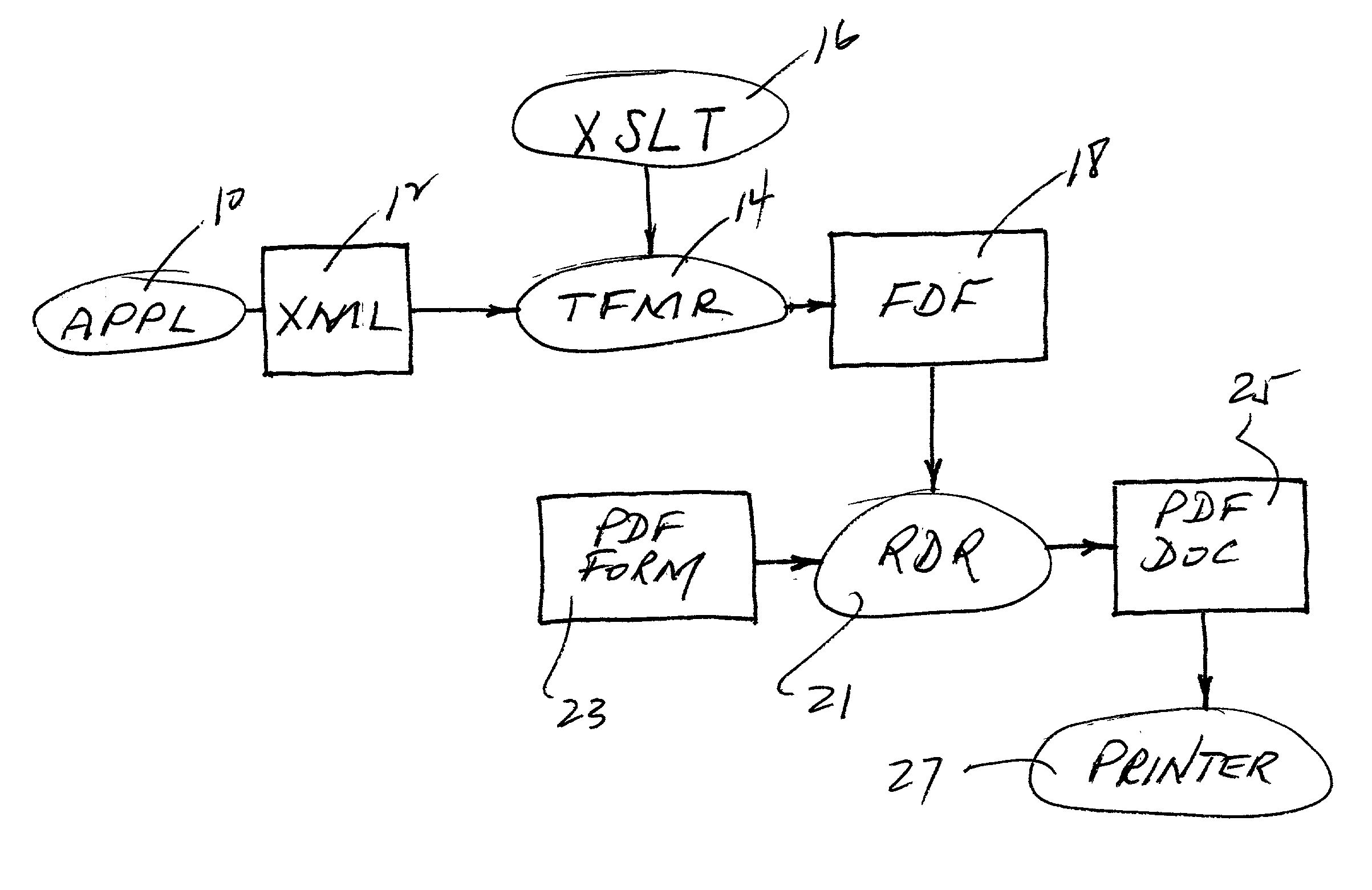
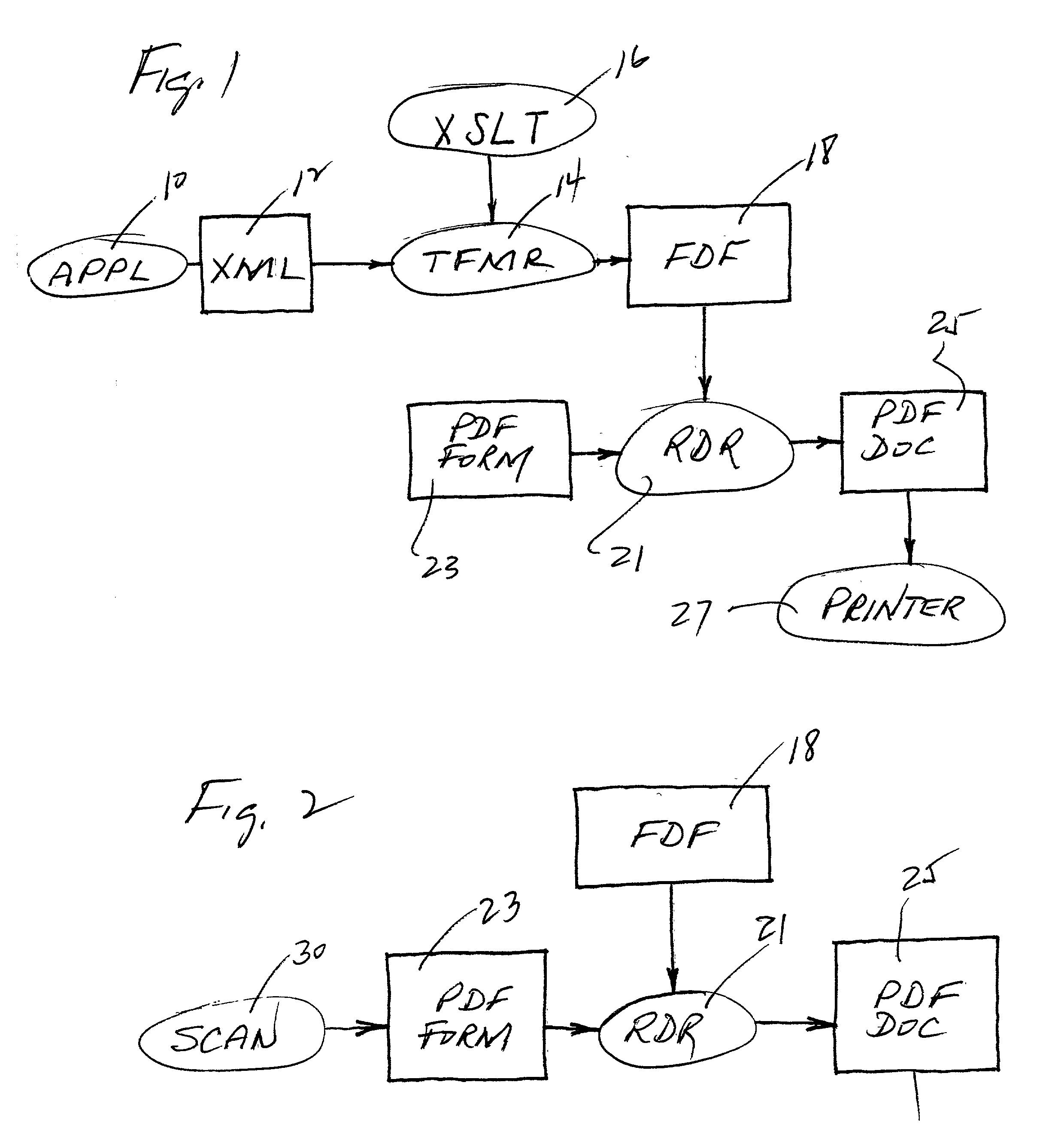
[0018] In the following description, reference will be made to schematic diagrams wherein elements of structure are generally shown in circles or ovals. These elements will generally represent structure or otherwise signify the accomplishment of some function. These elements are to be distinguished from those labels which are shown in boxes and merely indicate the language, format, or form which is present at that point in the schematic. With this understanding it will be noted that a computer application is illustrated in FIG. 1 and designated by a reference numeral 10. This application 10 could be any computer program adapted to perform a computer function. In its most common sense, the application 10 might be a word processor, for example.
[0019] The computer application 10 will typically provide an output in the form of XML data as shown by the box 12. This box 12 provides an input to an XSLT transformer 14 which also receives instructions from an XSLT template 16. The transforme...
PUM
 Login to View More
 Abstract
Description
Claims
Application Information
 Login to View More