
Automated directory assistance system for a hybrid TDM/VoIP network
a directory assistance and hybrid technology, applied in the field of telecommunications systems, can solve problems such as the expected explosion of messaging use in the coming years
- Summary
- Abstract
- Description
- Claims
- Application Information
AI Technical Summary
Problems solved by technology
Method used
Image

Examples
Embodiment Construction
[0020] In view of the foregoing, the present invention, through one or more of its various aspects, embodiments and / or specific features or sub-components, is thus intended to bring out one or more of the advantages that will be evident from the description. The present invention is described with frequent reference to Directory Assistance. It is understood, however, that Directory Assistance is merely an example of a specific embodiment of the present invention, which is directed generically to automated voice-activated information retrieval within the scope of the invention. Information retrieval refers to obtaining the requested information and providing the obtained information to the requesting party. The terminology, examples, drawings and embodiments, therefore, are not intended to limit the scope of the invention.
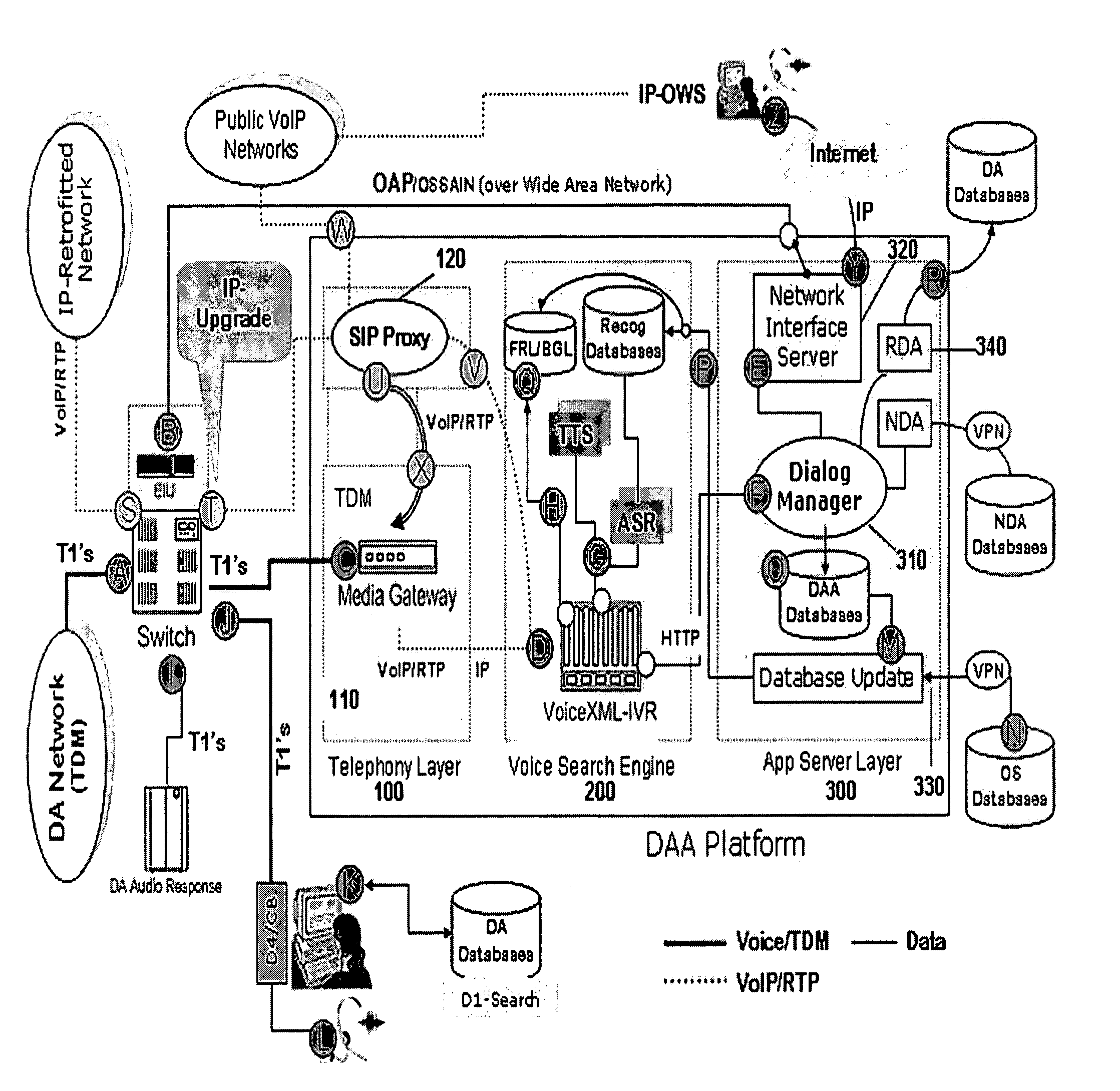
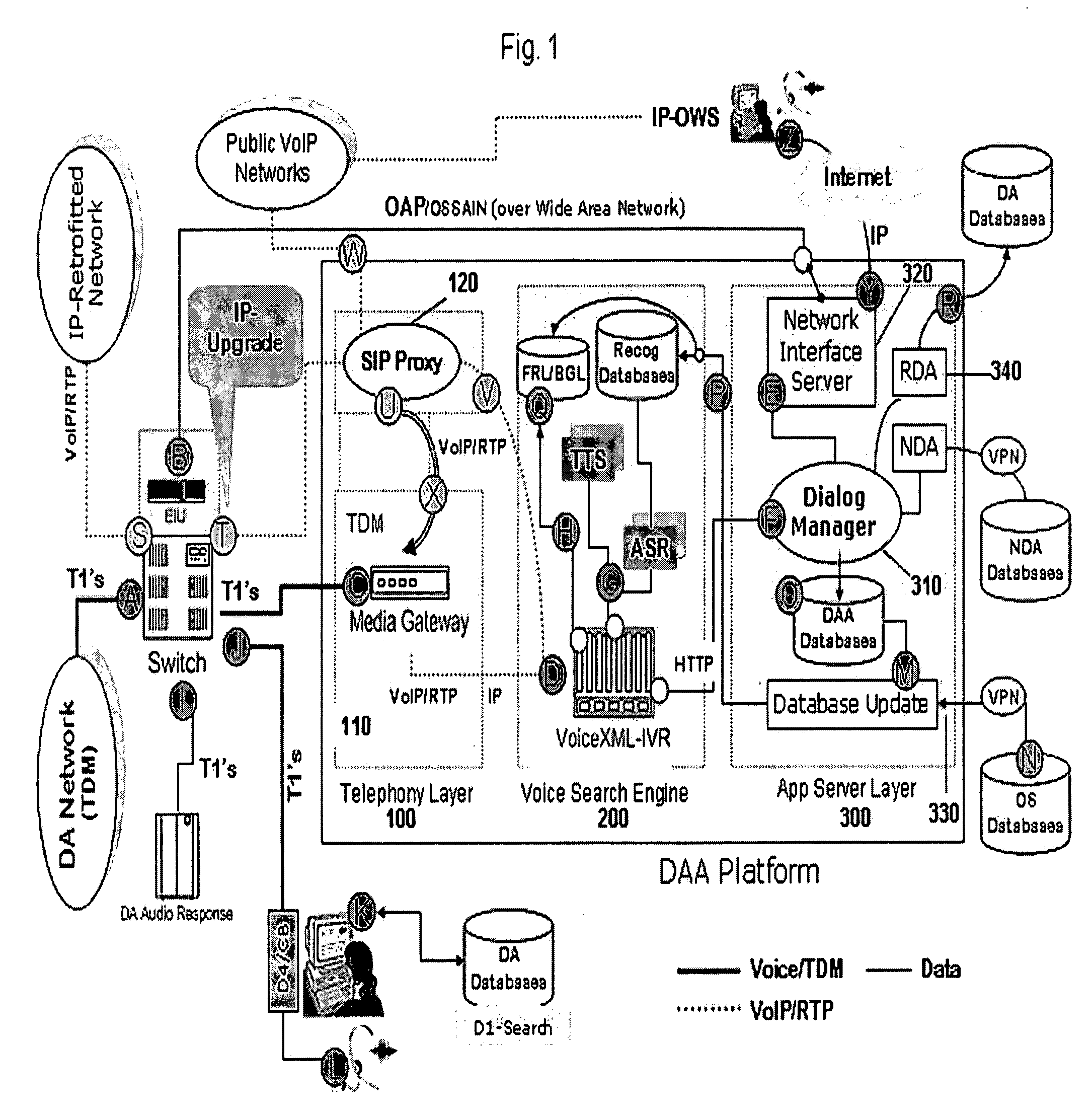
[0021] This invention describes an ADA platform architecture that is capable of handling 411 calls from the existing and traditional TDM-based telephone network, a...
PUM
 Login to View More
 Abstract
Description
Claims
Application Information
 Login to View More