
Tourniquet
a technology of tourniquets and pressure bands, applied in the field of tourniquets, can solve the problems of inability to apply the normal application of the wounded person to himself, presence of a second person, and non-regulated pressure of all known field tourniquets, and achieve the effect of accurate regulation of pressure applied and simple us
- Summary
- Abstract
- Description
- Claims
- Application Information
AI Technical Summary
Benefits of technology
Problems solved by technology
Method used
Image

Examples
Embodiment Construction
[0021] As described above, it is an aim of the present invention to provide a self-regulating tourniquet which accurately regulates the pressure applied to a wound, which is simple to use, may be self-applied by a subject, and which is fully portable so as to be suitable for use in the field.
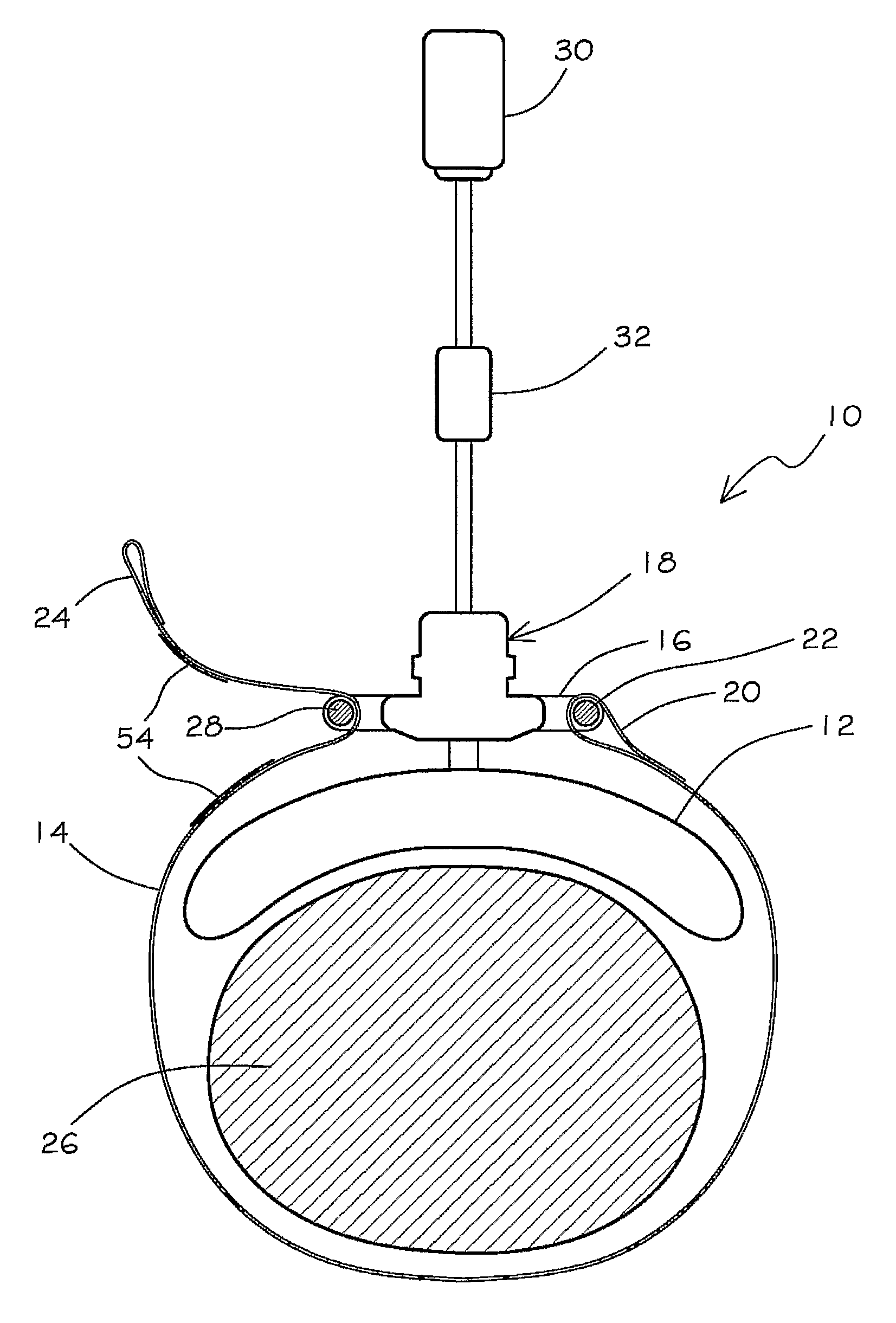
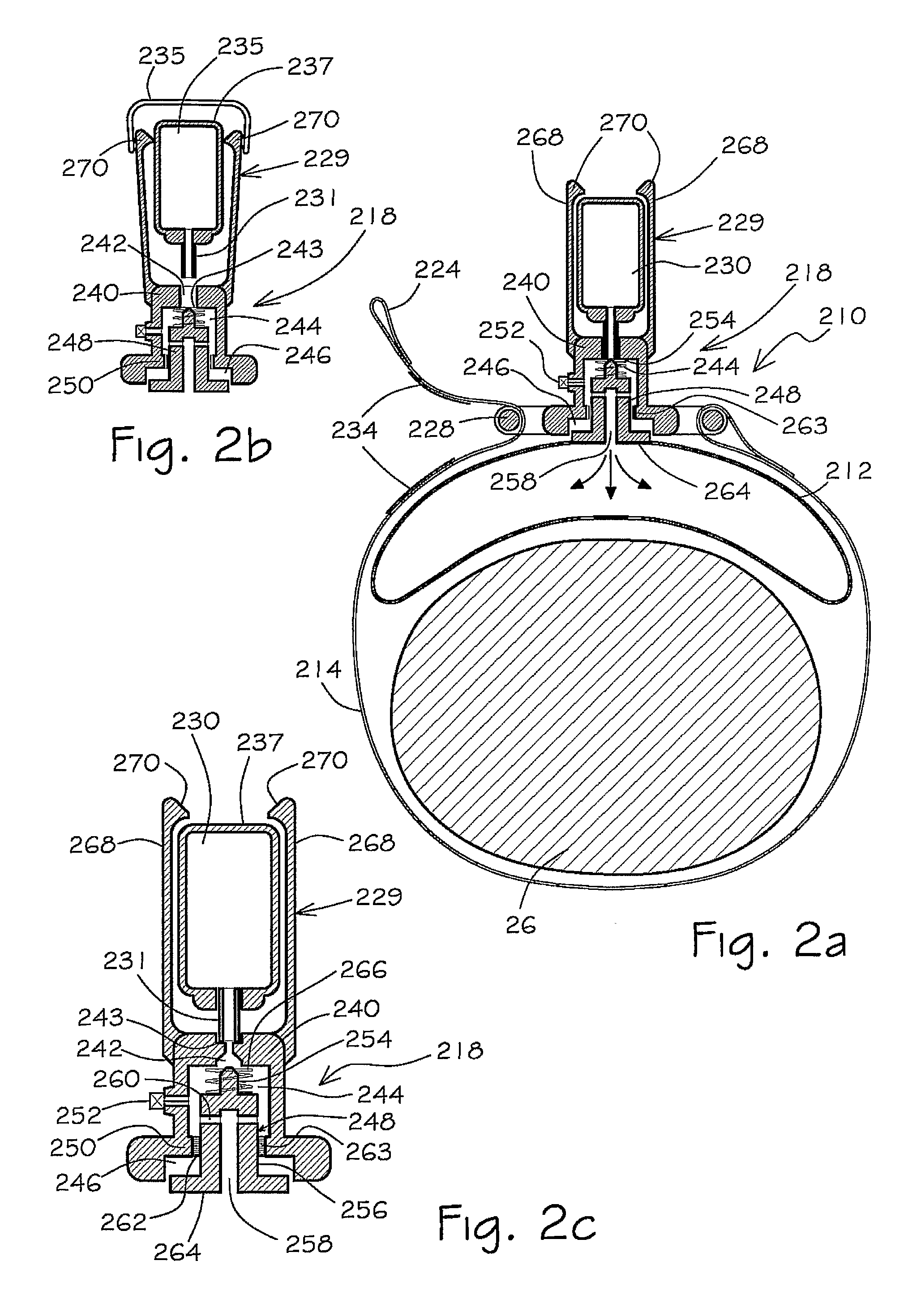
[0022] In the present application, a number of different types of self-regulating tourniquet are exemplified. Specifically, one type is a self-regulating inflatable tourniquet, such as exemplified in FIGS. 1-6B and 9-14, while a non-inflatable type is exemplified in FIGS. 7-8B.
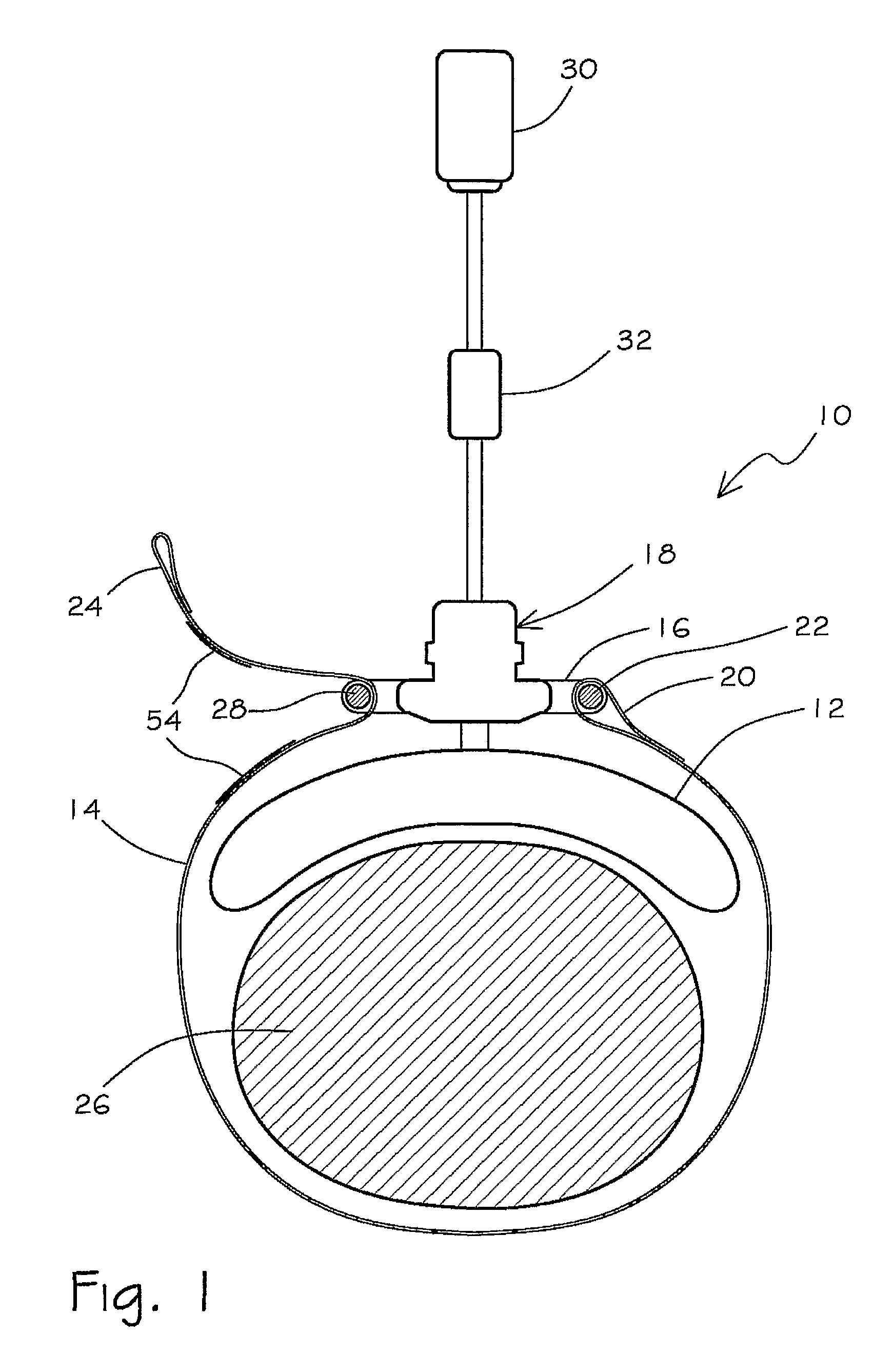
[0023] Referring now initially to FIG. 1, there is illustrated a self-regulating inflatable tourniquet, referenced generally 10, which includes an inflatable pressure member 12 and a contra member 14, which cooperate so as to form pressure applicator apparatus.
[0024] Pressure member 12 and contra member 14 are connected via a yoke 16. Pressure member 12 is floatingly supported via a pressure regulator 18 to which yoke 1...
PUM
 Login to View More
 Abstract
Description
Claims
Application Information
 Login to View More