
Image processing apparatus and image processing method
a technology of image processing and image quality, applied in the field of image processing apparatus and image processing method, can solve the problem of not being able to obtain high-contrast image with fine image quality according to the conventional art, and achieve the effect of fine image quality and high-contrast imag
- Summary
- Abstract
- Description
- Claims
- Application Information
AI Technical Summary
Benefits of technology
Problems solved by technology
Method used
Image

Examples
embodiment
OPERATION AND EFFECT OF EMBODIMENT
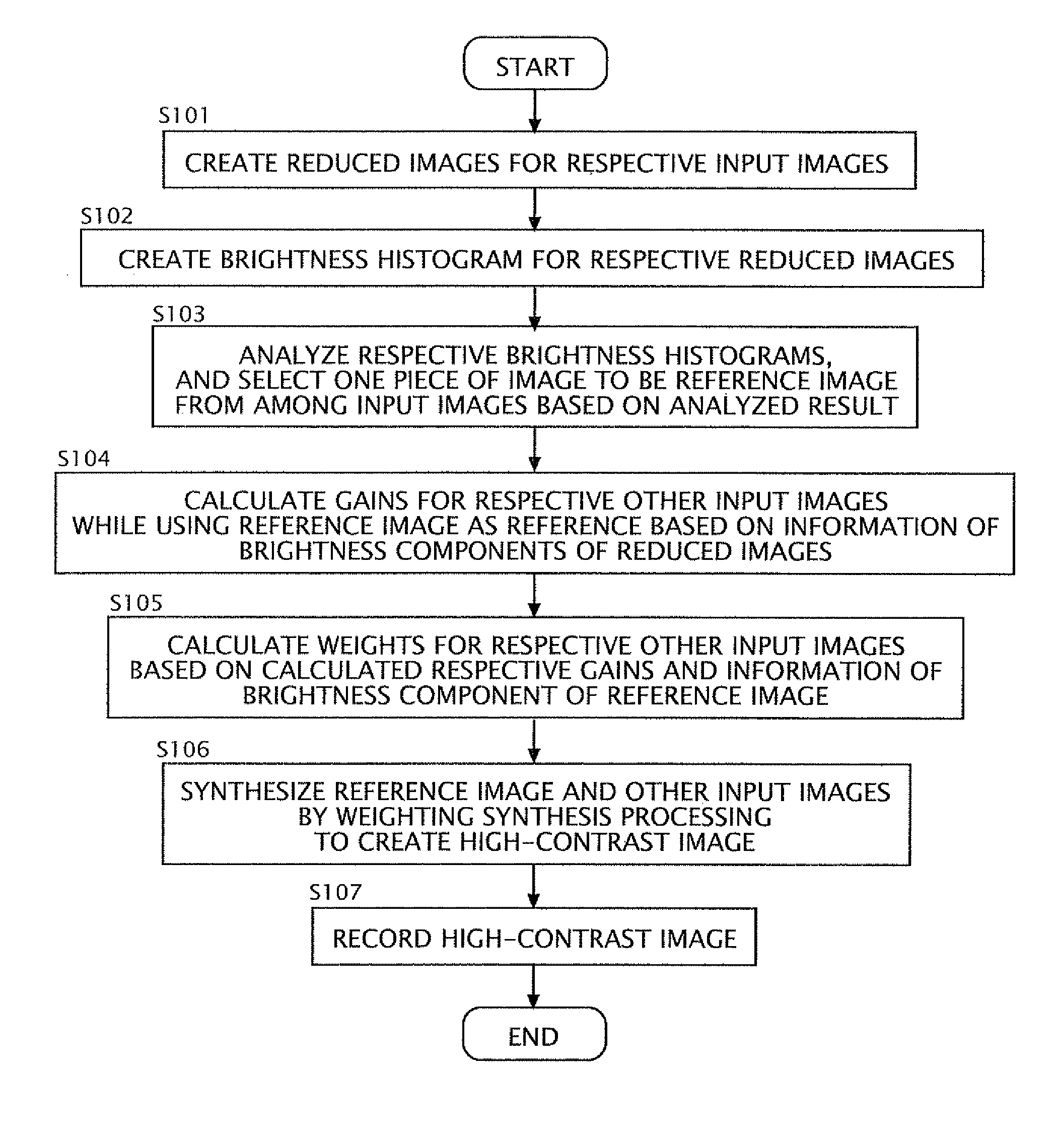
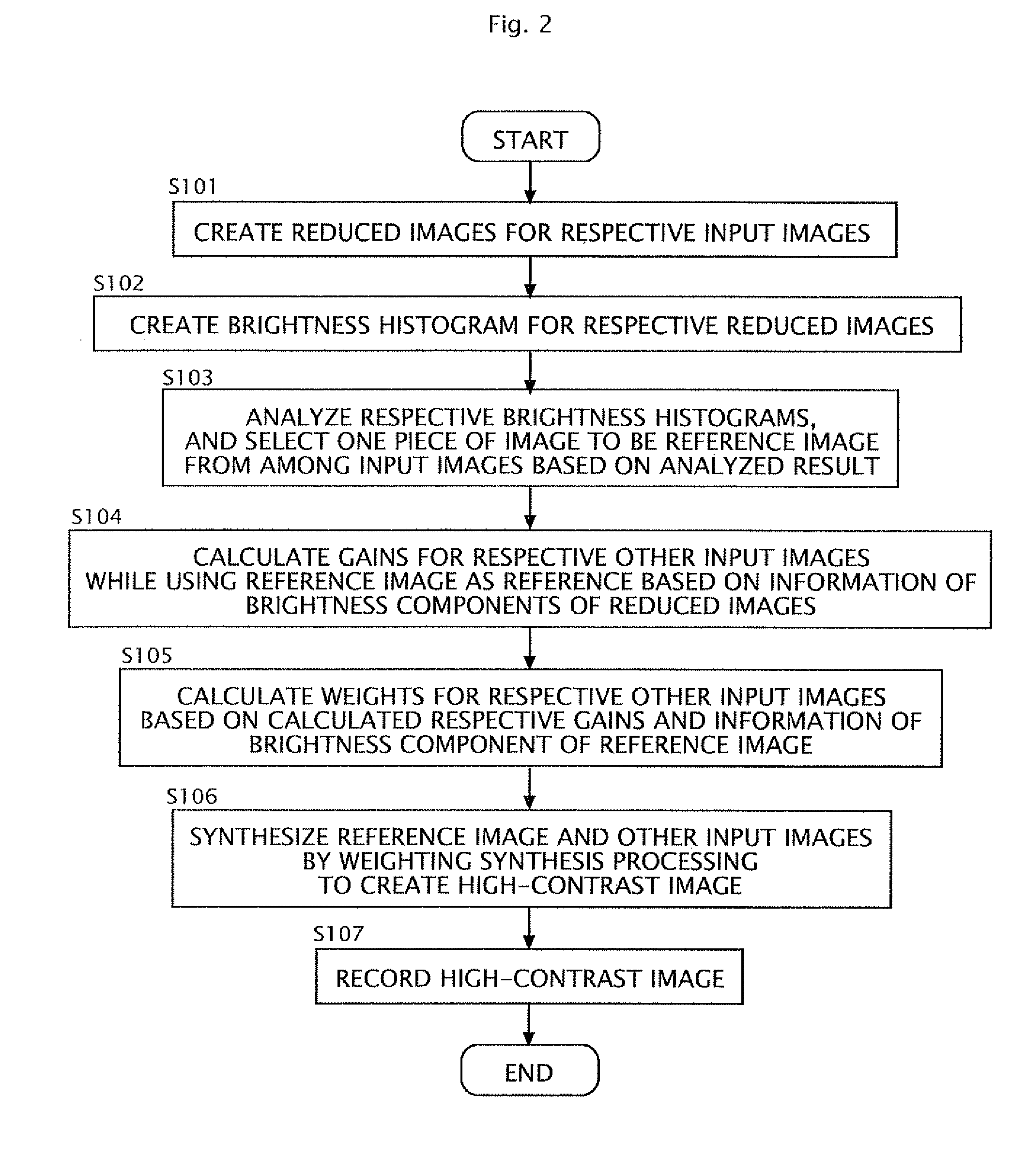
[0062]The reduced images are created as for the respective input images (1 to N) in the image processing apparatus of the present embodiment. The reduced image is created by, for example, taking an average of pixel values of n×n (n≧2) pixels in a spatial direction of each input image.
[0063]Next, one piece of image of which effective range of the brightness distribution is the widest is selected as the reference image from among the input images based on the result analyzing the brightness histograms of the respective reduced images.
[0064]The brightness ratios of the other input images (the remaining one or more pieces of the input images excluding the reference image) to the reference image are calculated as gains of the other input images based on the information of the brightness components of the reduced images.
[0065]The weights applied for the respective other input images are calculated based on the calculated respective gains and the informati...
PUM
 Login to View More
 Abstract
Description
Claims
Application Information
 Login to View More