Optimized efficient lpar capacity consolidation

US20110106922A1Active Publication Date: 2011-05-05SERVICENOW INC
53 Cites 21 Cited by

Patent Information

Authority / Receiving Office
US · United States
Current Assignee / Owner
Publication Date
2011-05-05

Smart Images

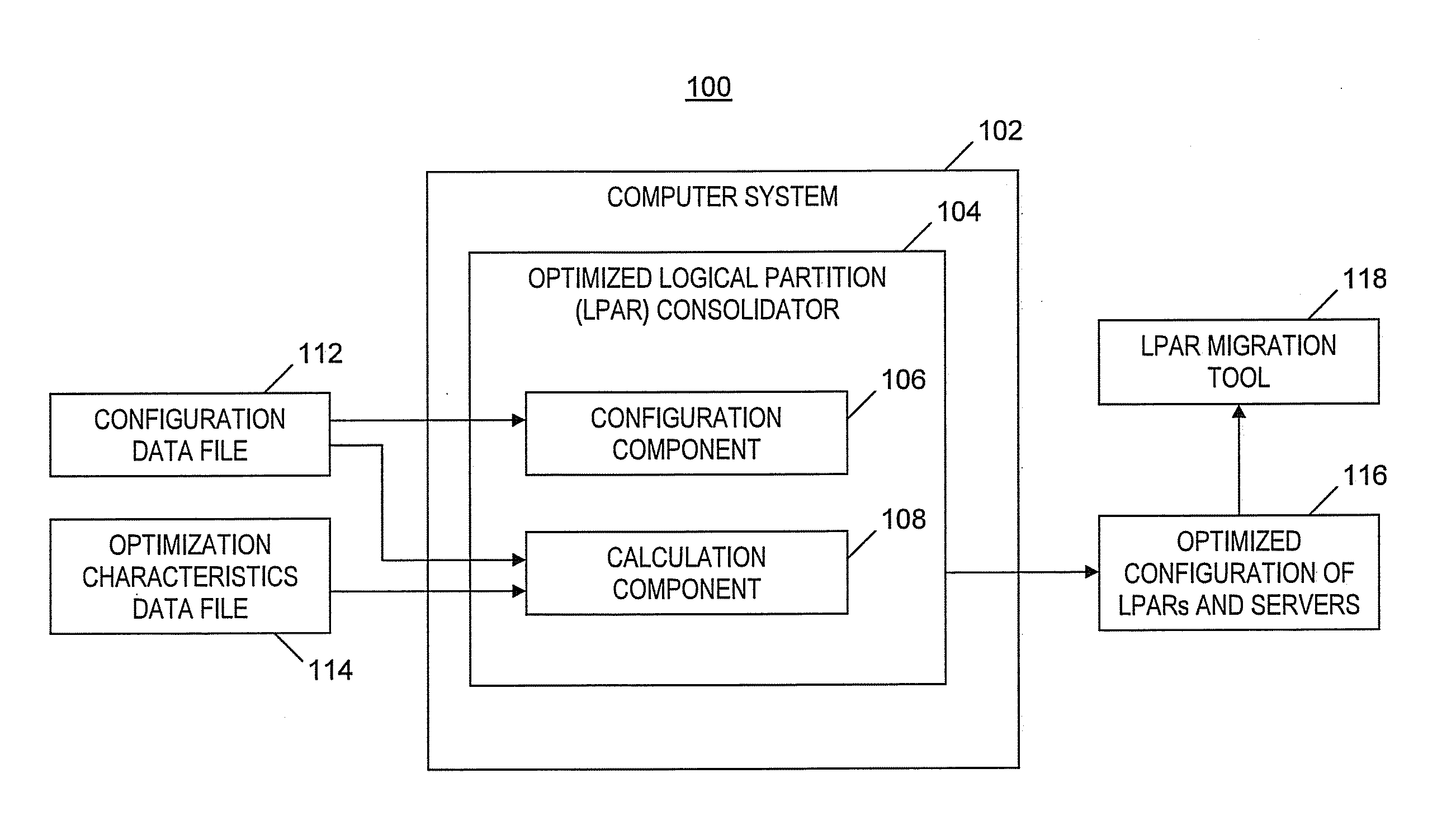
  • Figure 1
    Figure 1
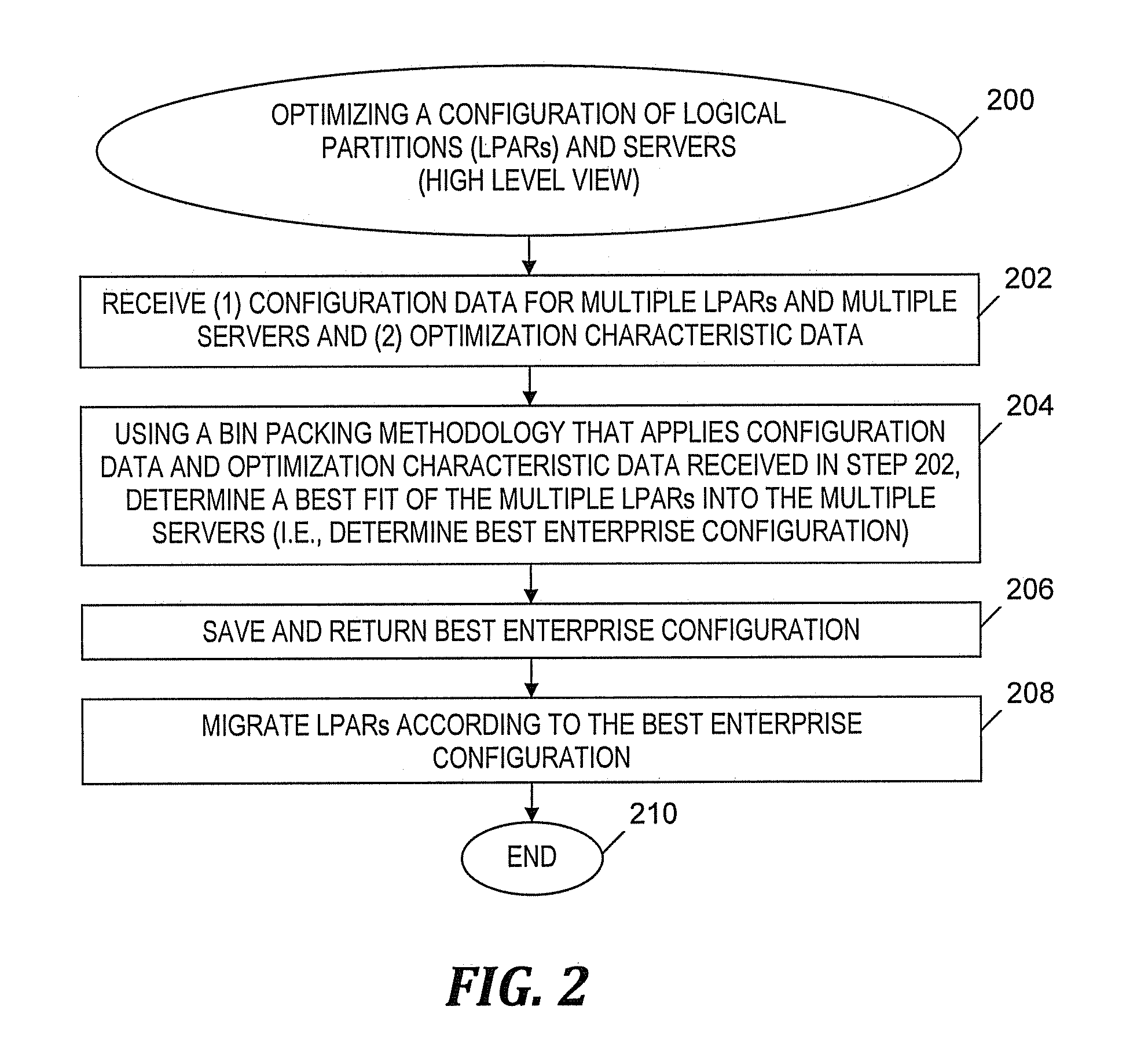
  • Figure 2
    Figure 2
  • Figure 3
    Figure 3
Patent Text Reader

Abstract

A method and system for optimizing a configuration of a set of LPARs and a set of servers that host the LPARs. Configuration data and optimization characteristics are received. By applying the configuration data and optimization characteristics, a best fit of the LPARs into the servers is determined, thereby determining an optimized configuration. The best fit is based on a variant of bin packing or multidimensional bin packing methodology. The optimized configuration is stored. In one embodiment, comparisons of shadow costs are utilized to determine an optimal placement of the LPARs in the servers. LPAR(s) in the set of LPARs are migrated to other server(s) in the set of servers, which results in the LPARs and servers being configured in the optimized configuration.
Need to check novelty before this filing date? Find Prior Art

Description

FIELD OF THE INVENTION

[0001] The present invention relates to a data processing method and system for efficient logical partition (LPAR) capacity consolidation, and more particularly to a technique for determining an optimized configuration of LPARs and physical servers that host the LPARs.BACKGROUND OF THE INVENTION

[0002] Conventional LPAR capacity consolidation systems inefficiently rely exclusively on processor utilization as a metric, thereby failing to account for other properties and allowing an insufficient number of LPARs or an excessive number of LPARs to be included in a virtualization of a computing system (i.e., an undersubscription or an oversubscription, respectively, of the physical properties of the computing system from an architectural point of view). When undersubscribed, the server is underutilized and is wasted. When oversubscribed, the server is overutilized and the customer's service is negatively impacted. Thus, there exists a need to overcome at least one of t...

Examples

Embodiment Construction

[0023]Embodiments of the present invention determine a physical server inventory that accommodates LPARs (i.e., all LPARs in a system) in an optimized configuration so that a total resource utilization of the LPARs collocated on any of the physical servers does not exceed a total capacity of the physical server in any time interval. The optimization may take place in multiple dimensions (e.g., processor, memory, power requirements, footprint (i.e., floor space), equipment cost, etc.), each dimension optimized and prioritized to identify the best fit of available resources for the resources required by the LPARs. The multi-dimensional optimization may employ an N-dimensional cube, where the optimal configuration is the intersection of the N dimensions in prioritized order. In one embodiment, the present invention uses shadow costs to identify the real costs of LPAR reconfiguration and to allow identification of the optimized configuration.

[0024]A set of LPARs whose configuration is o...