
Surgical stapler having haptic feedback
a surgical stapler and haptic feedback technology, applied in the field of surgical staplers, can solve the problems of creating challenges, minimally invasive surgery can still create challenges for surgeons, and limitations in visual and haptic perception
- Summary
- Abstract
- Description
- Claims
- Application Information
AI Technical Summary
Problems solved by technology
Method used
Image

Examples
Embodiment Construction
[0016]Specific embodiments of the present invention are now described with reference to the figures, wherein like reference numbers indicate identical or functionally similar elements. The terms “distal” and “proximal” are used in the following description with respect to a position or direction relative to the treating clinician. “Distal” or “distally” refer to a position distant from or in a direction away from the clinician. “Proximal” and “proximally” refer to a position near or in a direction toward the clinician.
[0017]The following detailed description is merely exemplary in nature and is not intended to limit the invention or the application and uses of the invention. Furthermore, there is no intention to be bound by any expressed or implied theory presented in the preceding technical field, background, brief summary or the following detailed description.
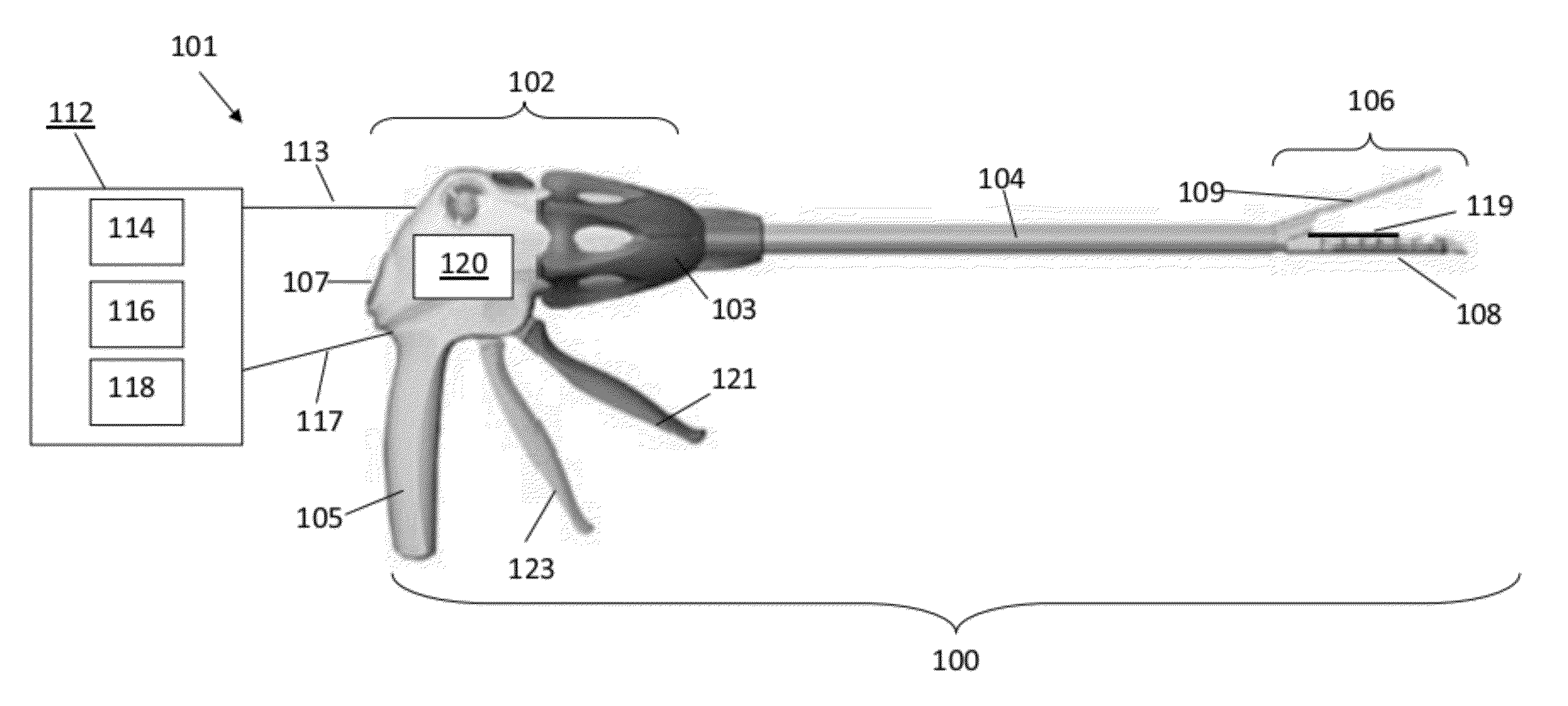
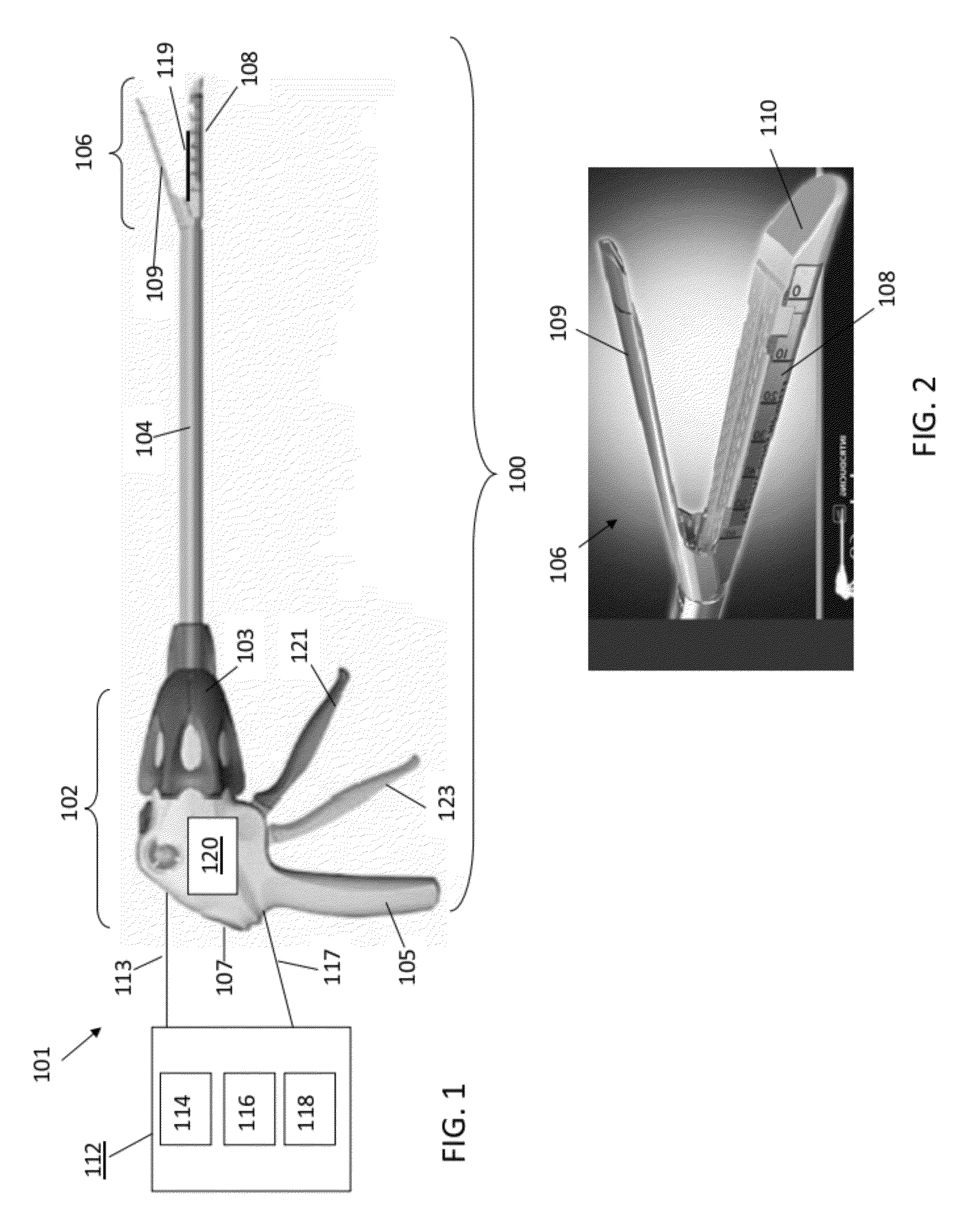
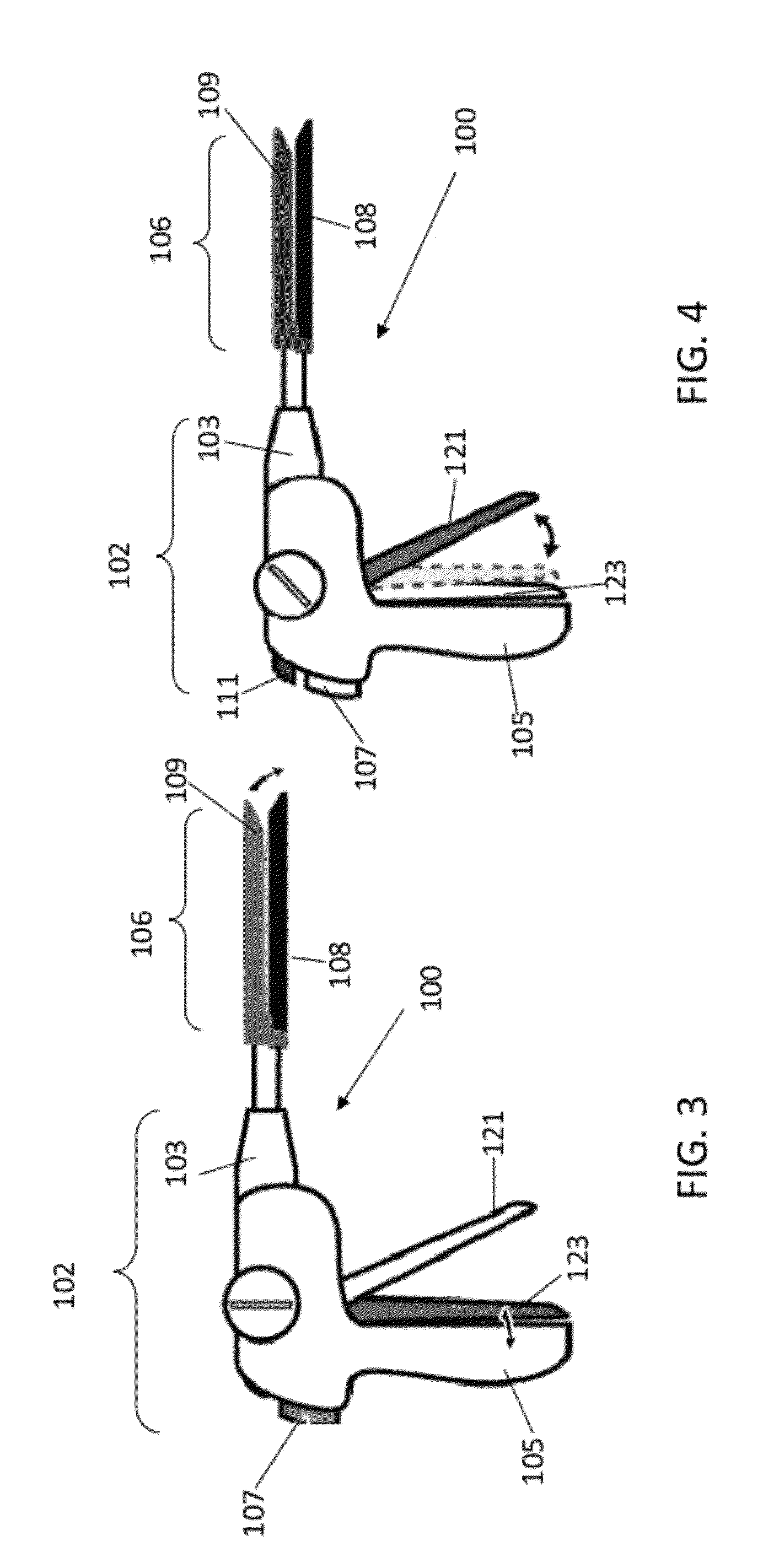
[0018]Embodiments hereof relate to a surgical tool system 101 that includes a laparoscopic stapler 100 for cutting and stap...
PUM
| Property | Measurement | Unit |
|---|---|---|
| Length | aaaaa | aaaaa |
| Thickness | aaaaa | aaaaa |
| Electrical resistance | aaaaa | aaaaa |
Abstract
Description
Claims
Application Information
 Login to View More