
Illuminating dental instrument, coupling and method of use
a technology of dental instruments and couplings, applied in the field of dental instruments and/or couplings, can solve problems such as practical difficulties of dentists, and achieve the effect of enhancing visual discrimination
- Summary
- Abstract
- Description
- Claims
- Application Information
AI Technical Summary
Benefits of technology
Problems solved by technology
Method used
Image

Examples
Embodiment Construction
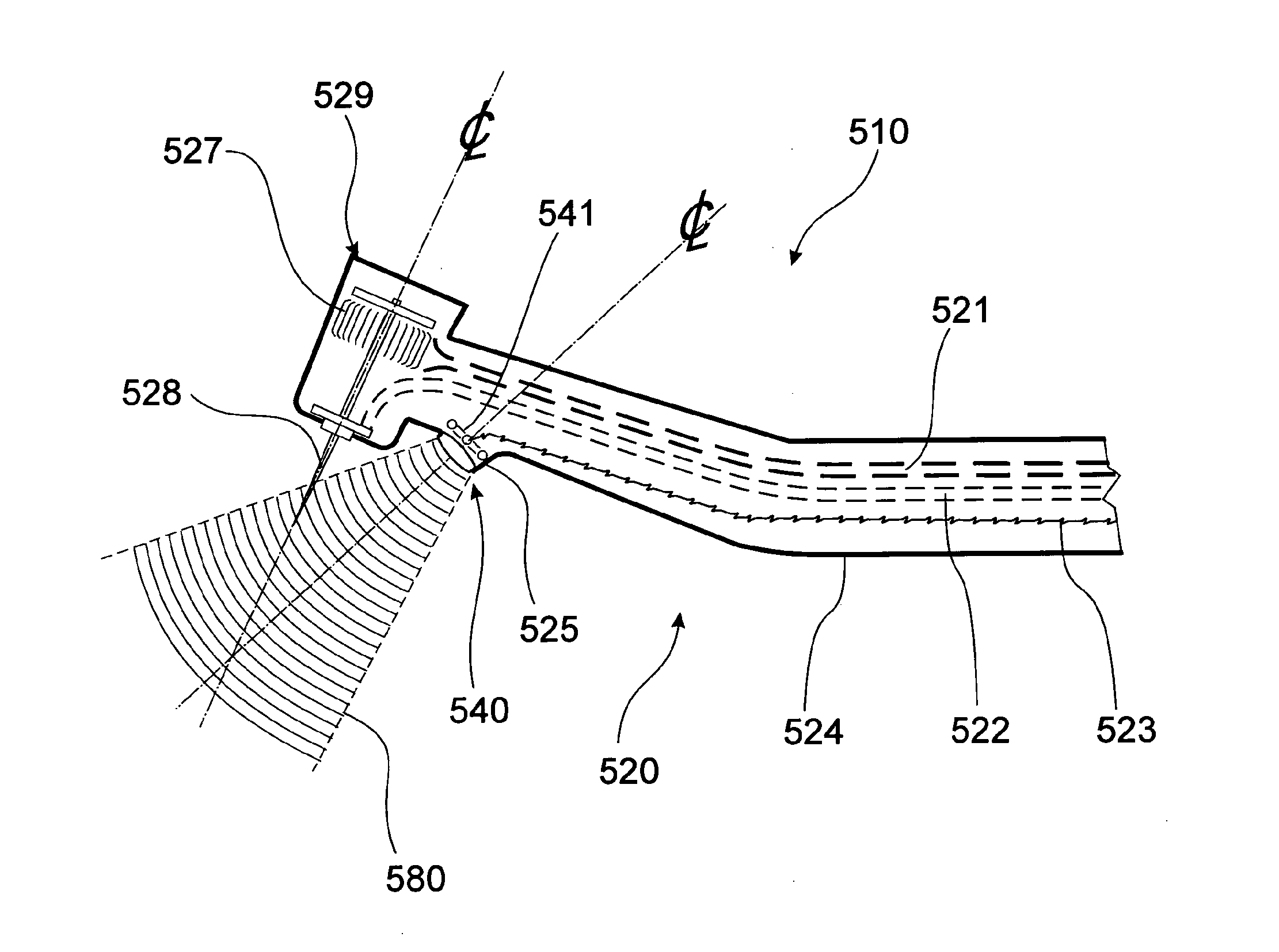
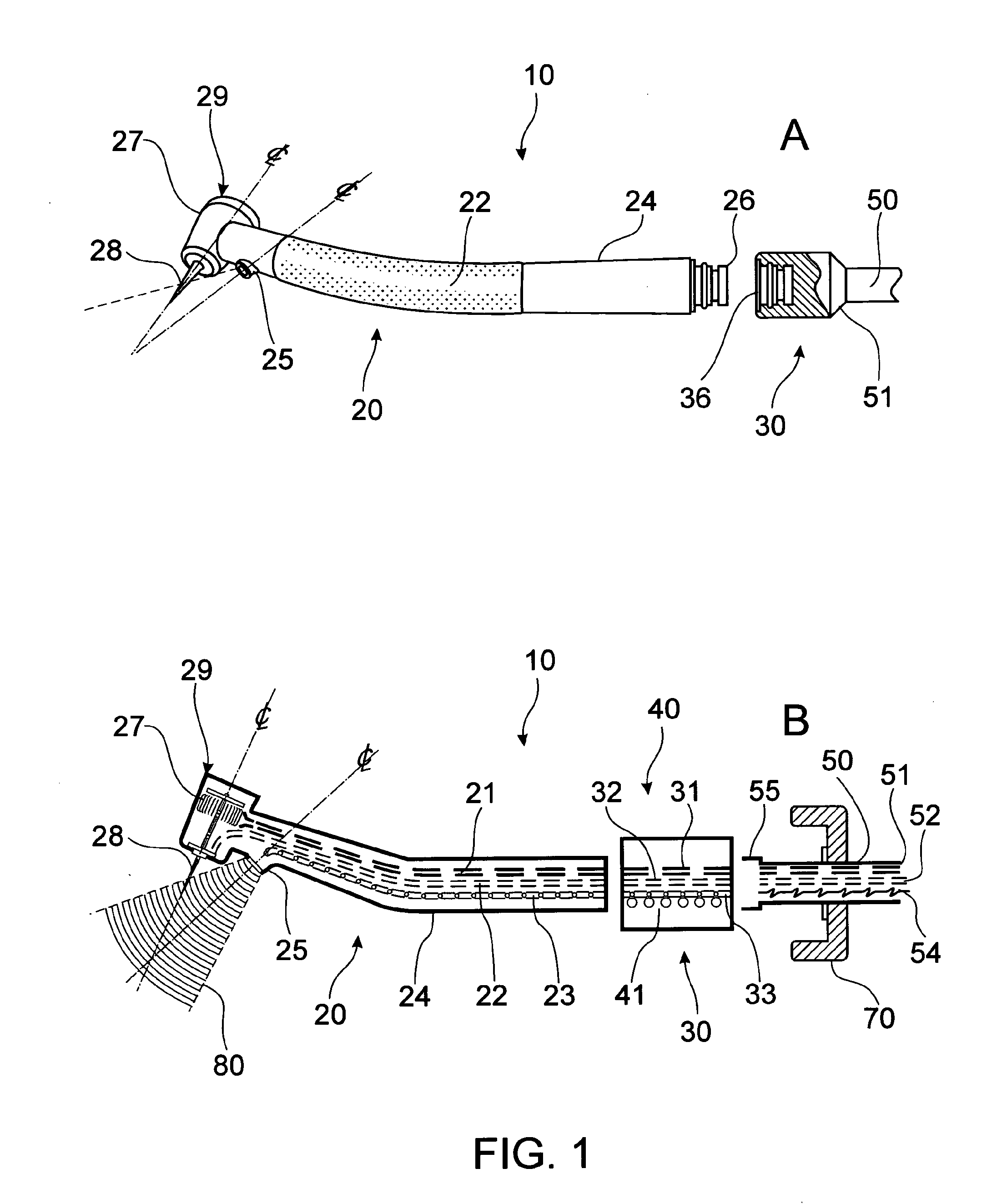
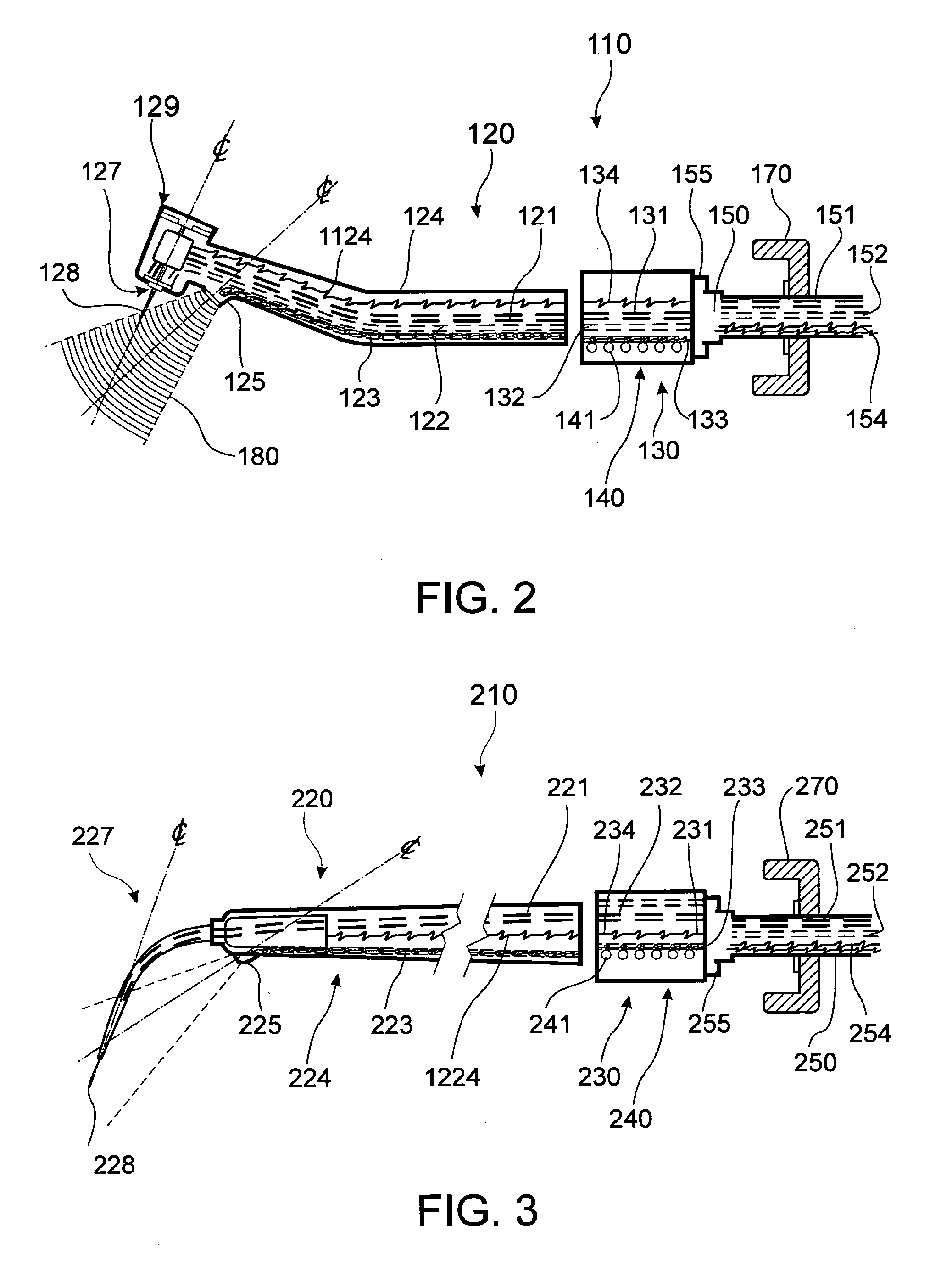
[0057]Referring to FIGS. 1A and 1B, dental instrument 10 comprises drill 20, that comprises handle 24 having grip 22, head 29 comprising drill turbine 27 and drill bit 28 and moveable lens 25. Coupling 30 includes illuminator 40 that comprises plurality of LEDs 41. Coupling 30 and dental instrument 20 are releasably, operatively connectable by way of respective mating portions 36 and 26. For convenience, coupling 30 may be retained in holder 70 which is typically provided on a dental tray (not shown). Referring particularly to FIG. 1B, coupling 30 is connectable to connector 55 of conduit housing 50 that houses separate compressed air conduit 51 and water conduit 52, which are respectively connected to sources of compressed air and water (not shown). Coupling 30 comprises air conduit 31 connectable to air conduit 51 and water conduit 32 connectable to water conduit 52. Coupling 30 further comprises fibre-optic conduit 23 which transmits light emitted by plurality of LEDs 41.
[0058]Ha...
PUM
 Login to View More
 Abstract
Description
Claims
Application Information
 Login to View More