
RPM Controlled Wind Power Generation System
a wind power generation system and rpm control technology, applied in the direction of electric generator control, machines/engines, mechanical equipment, etc., can solve the problems of complex maintenance in such a configuration, inability to operate at low or high wind speeds, and inability to maintain the entire traditional wind power generation system, etc., to achieve efficient and optimal electrical output, constant generator rpm regardless of wind speed, and sufficient electrical output
- Summary
- Abstract
- Description
- Claims
- Application Information
AI Technical Summary
Benefits of technology
Problems solved by technology
Method used
Image

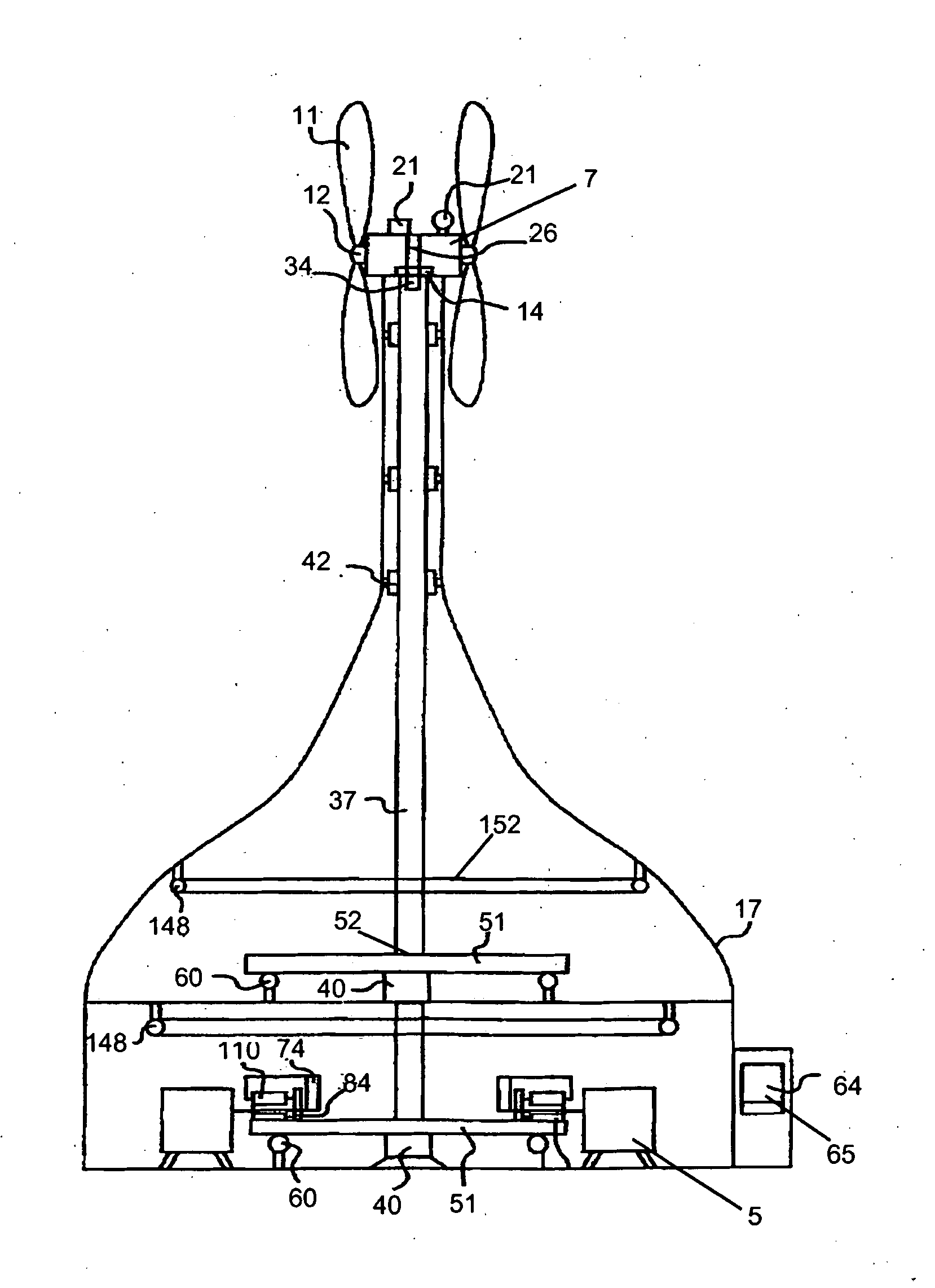
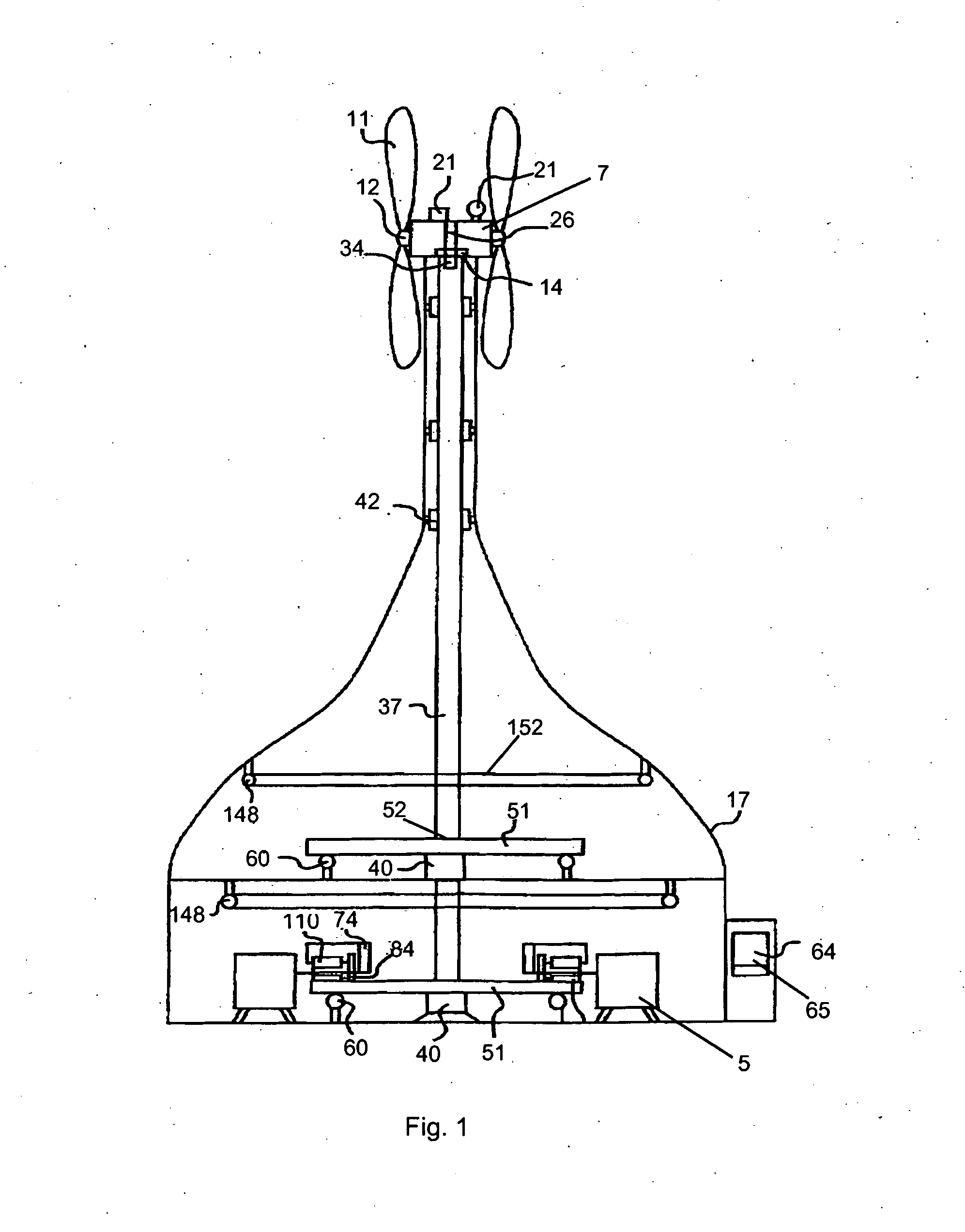
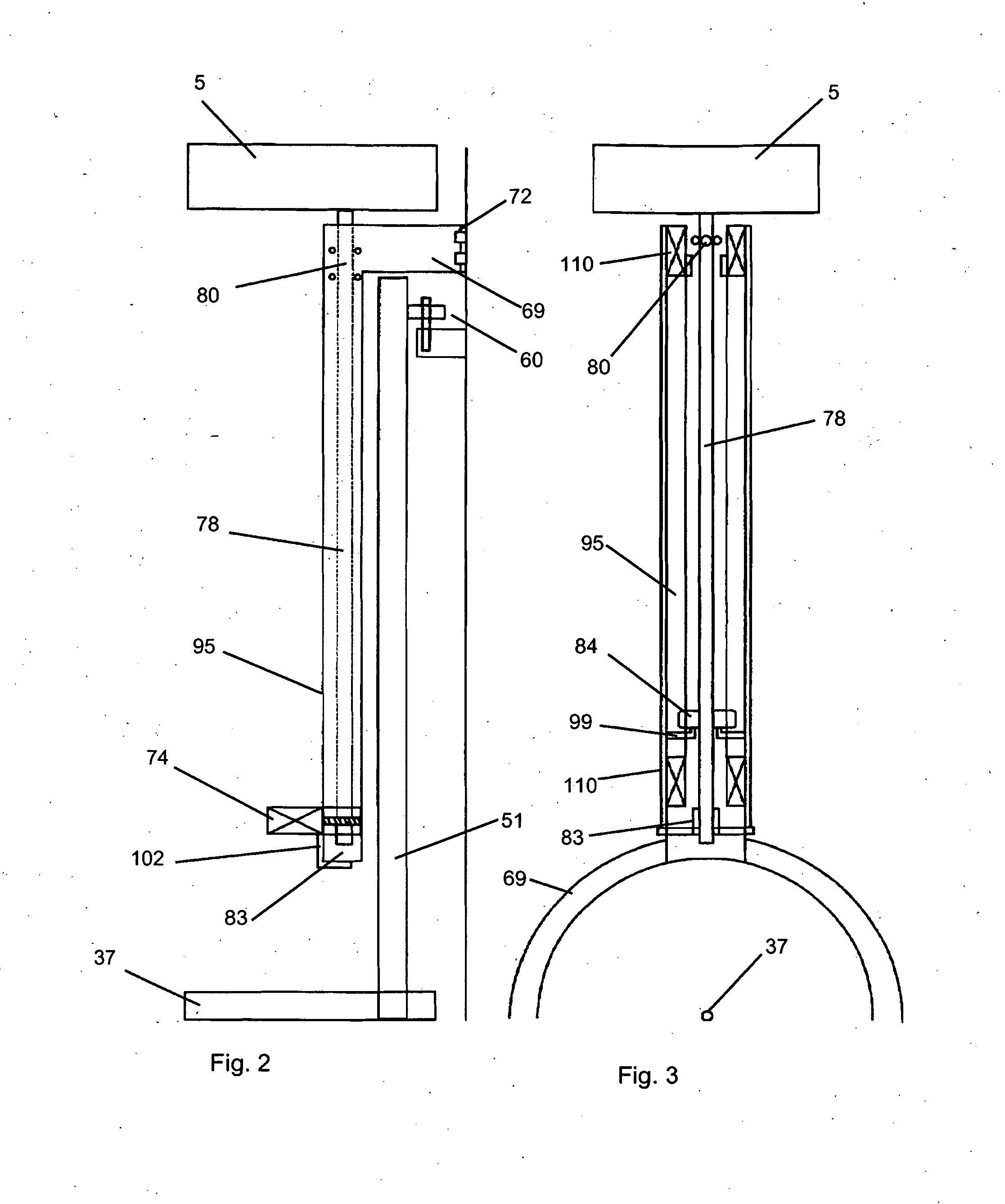
Examples
Embodiment Construction
)
[0043]As mentioned earlier, the present invention includes a variety of aspects, which may be combined in different ways. The following descriptions are provided to list elements and describe some of the embodiments of the present invention. These elements are listed with initial embodiments, however it should be understood that they may be combined in any manner and in any number to create additional embodiments. The variously described examples and preferred embodiments should not be construed to limit the present invention to only the explicitly described systems, techniques, and applications. Further, this description should be understood to support and encompass descriptions and claims of all the various embodiments, systems, techniques, methods, devices, and applications with any number of the disclosed elements, with each element alone, and also with any and all various permutations and combinations of all elements in this or any subsequent application. With all embodiment (...
PUM
 Login to View More
 Abstract
Description
Claims
Application Information
 Login to View More