
Camera calibration
a technology for calibration and cameras, applied in the field of camera calibration, can solve the problems of difficult to achieve a consistent level of calibration accuracy, untrained people will likely have trouble accurately calibrating cameras,
- Summary
- Abstract
- Description
- Claims
- Application Information
AI Technical Summary
Benefits of technology
Problems solved by technology
Method used
Image

Examples
Embodiment Construction
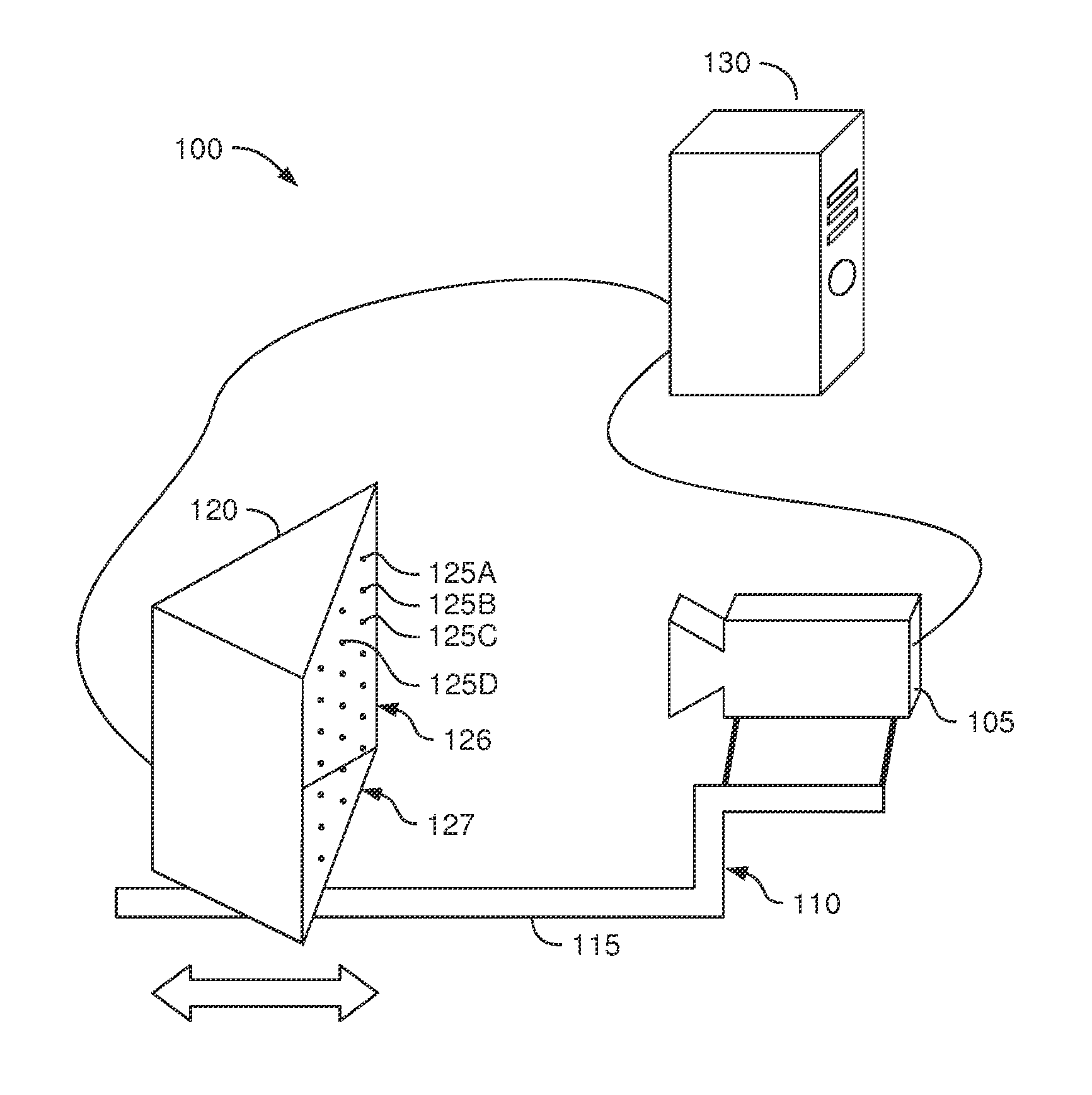
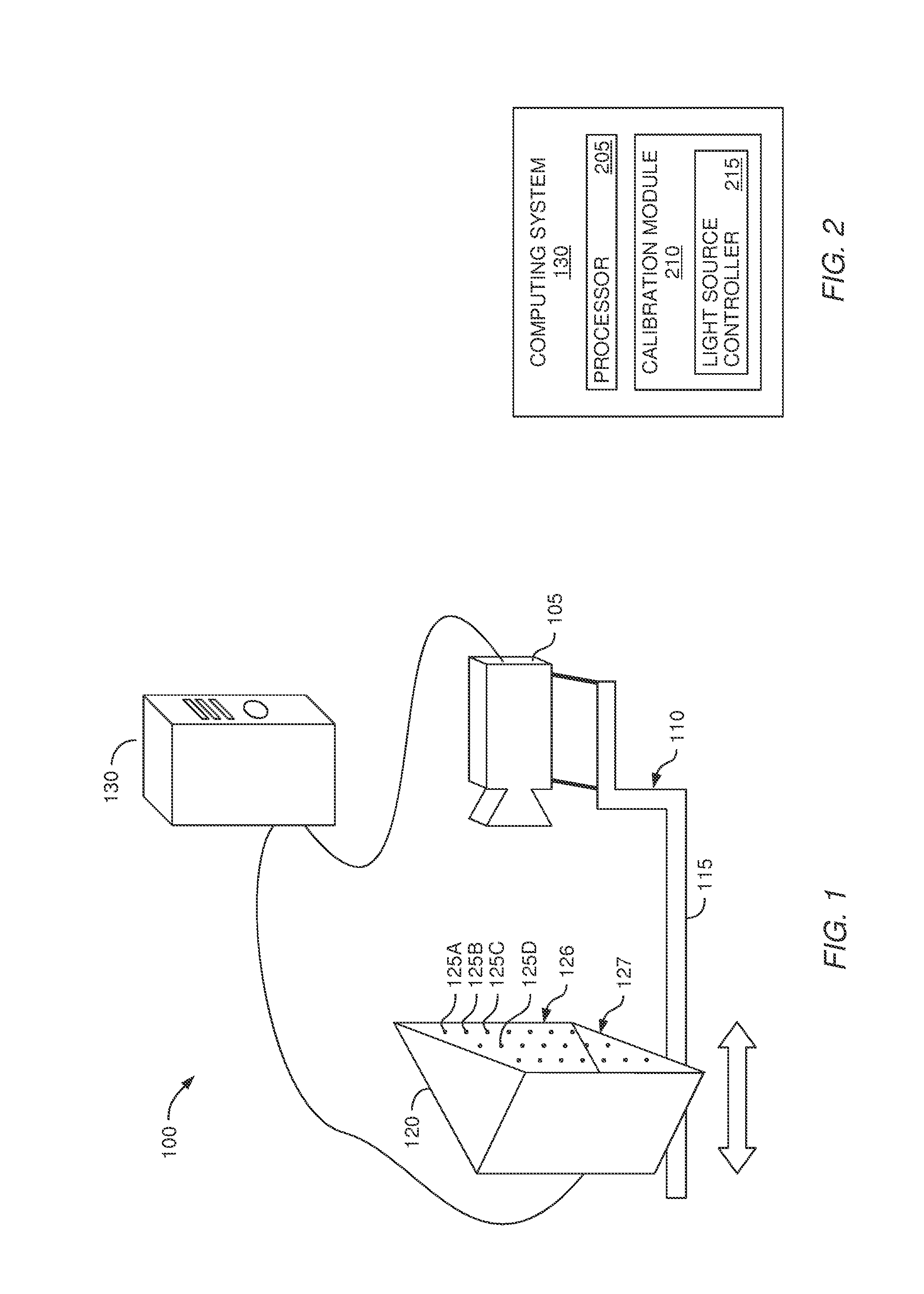
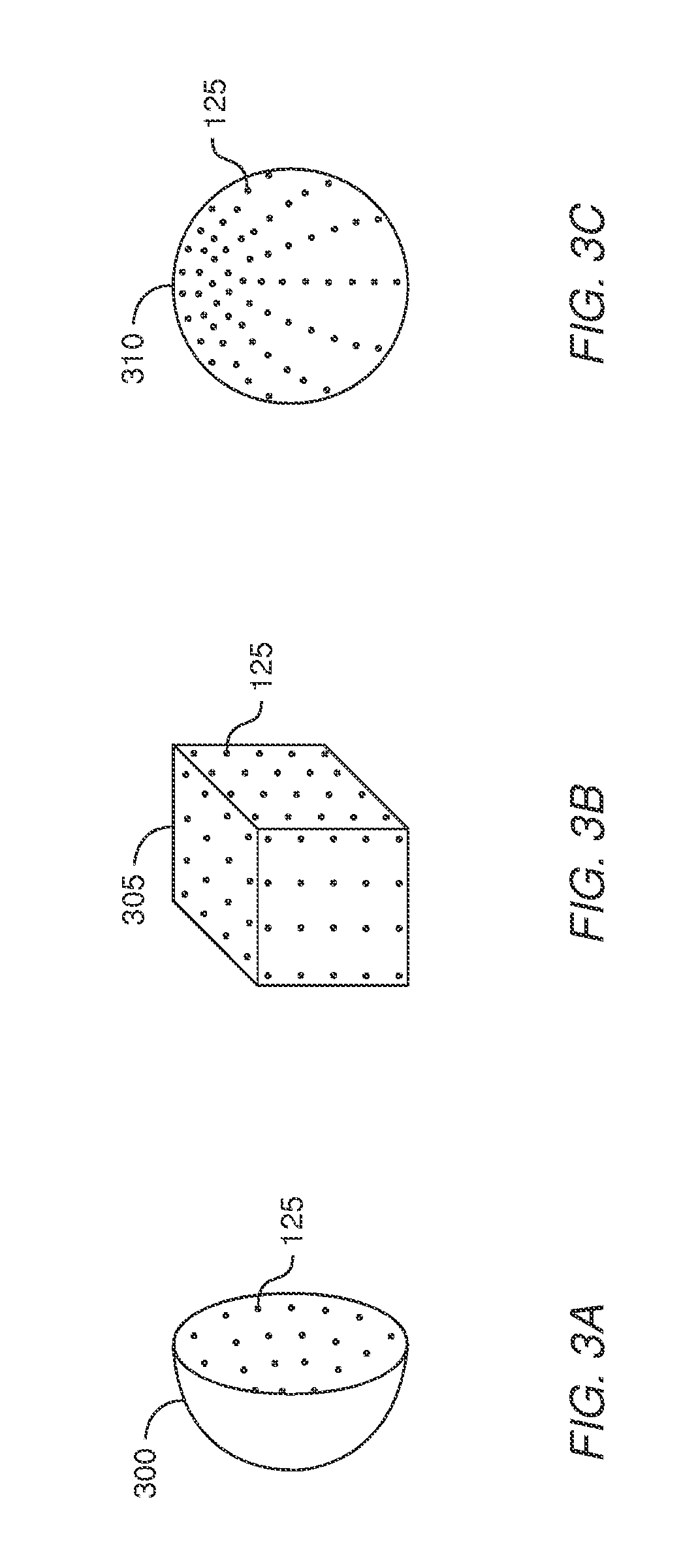
[0022]Embodiments described herein provide an automated system for measuring the intrinsics of a camera. The system includes a calibration apparatus which has a fixed spatial relationship relative to the camera. In one embodiment, once the calibration apparatus is moved into the field of view of the camera, the calibration is performed without the calibration apparatus having to be repositioned or reoriented whether by a human or mechanical means. The calibration apparatus includes a plurality of light sources (e.g., LEDs) which are controlled by a computing system. By selectively activating one or more of the light sources, the computing system determines the 2D location of the light sources in the images captured by the camera. Using this information, the computing system identifies correspondences that relate the known 3D positions of the light sources in space to the 2D locations in the image captured by the camera (referred to herein as 3D to 2D correspondences). The computer s...
PUM
 Login to View More
 Abstract
Description
Claims
Application Information
 Login to View More