
Broadcast Network
a broadcast network and network technology, applied in the field of broadcast networks, can solve the problems of inefficient use of available spectrum by broadcast networks using different frequencies for adjacent regions, and achieve the effect of improving spectral efficiency
- Summary
- Abstract
- Description
- Claims
- Application Information
AI Technical Summary
Benefits of technology
Problems solved by technology
Method used
Image

Examples
Embodiment Construction
[0017]The invention may be embodied in a method of broadcasting and receiving data, a transmitter, receiver and system comprising transmitter and multiple receivers such as in an audio-video broadcast network and an encoder or decoder. In this regard, a receiver includes a television, set top box or other device that includes capability to receive broadcast television channels.
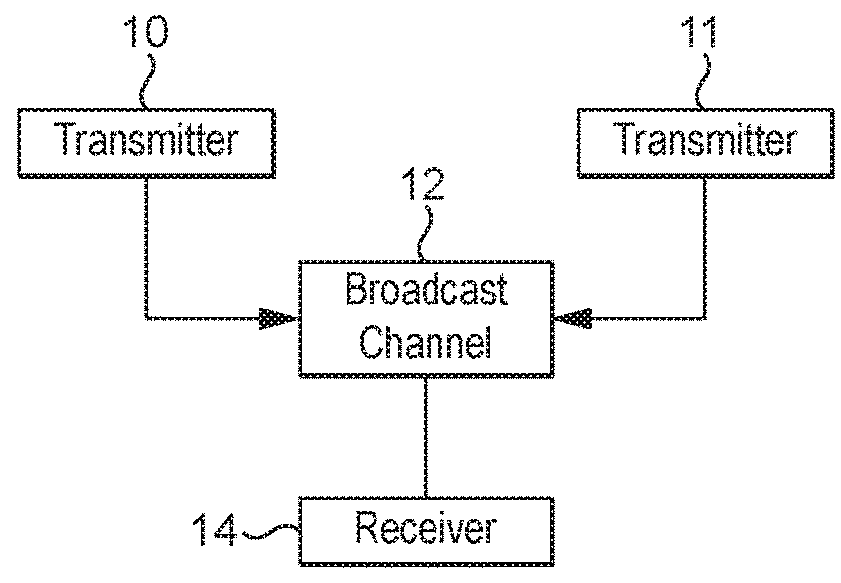
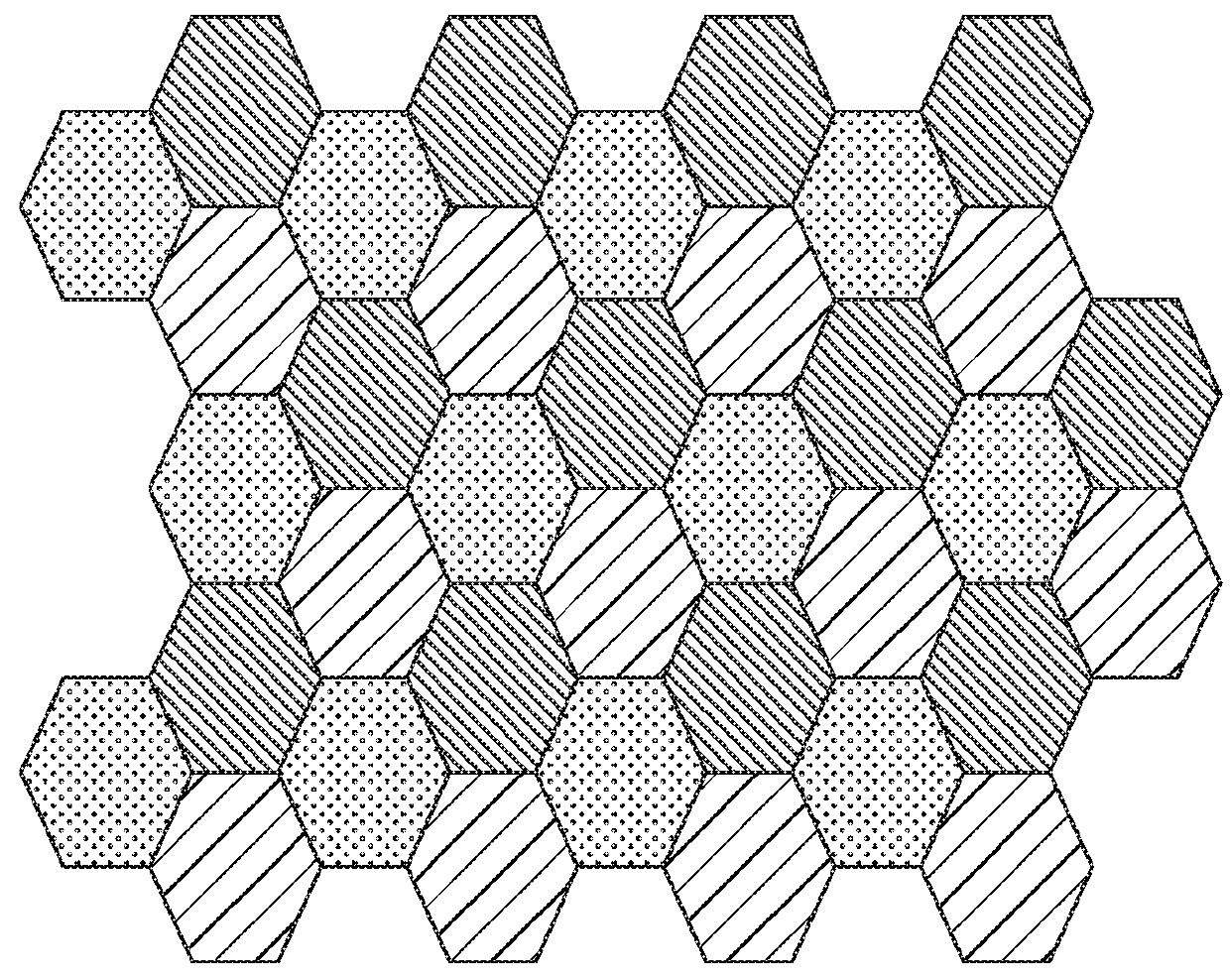
[0018]FIG. 1a shows a system which may embody the invention and which schematically shows the reception at a receiver 14 of signals from two transmitters 10, 11 via a broadcast channel 12. The transmitters may be of adjacent regions such that the signals potentially interfere at the receiver. In a system having notionally hexagonal regions, signals from three such transmitters may be received at a given receiver potentially interfering with one another. In general, the greater the number of regions that meet at a given point or node, the greater the number of potential interferers. In a system having a uniform...
PUM
 Login to View More
 Abstract
Description
Claims
Application Information
 Login to View More