Handover method and user equipment

a user equipment and handover technology, applied in the field of wireless communication systems, to achieve the effect of improving the overall throughput of a radio communication system and efficient transmission/receiving

US20190289506A1Active Publication Date: 2019-09-19LG ELECTRONICS INC
0 Cites 24 Cited by

Patent Information

Authority / Receiving Office
US · United States
Patent Type
Applications(United States)
Current Assignee / Owner
Publication Date
2019-09-19

Smart Images

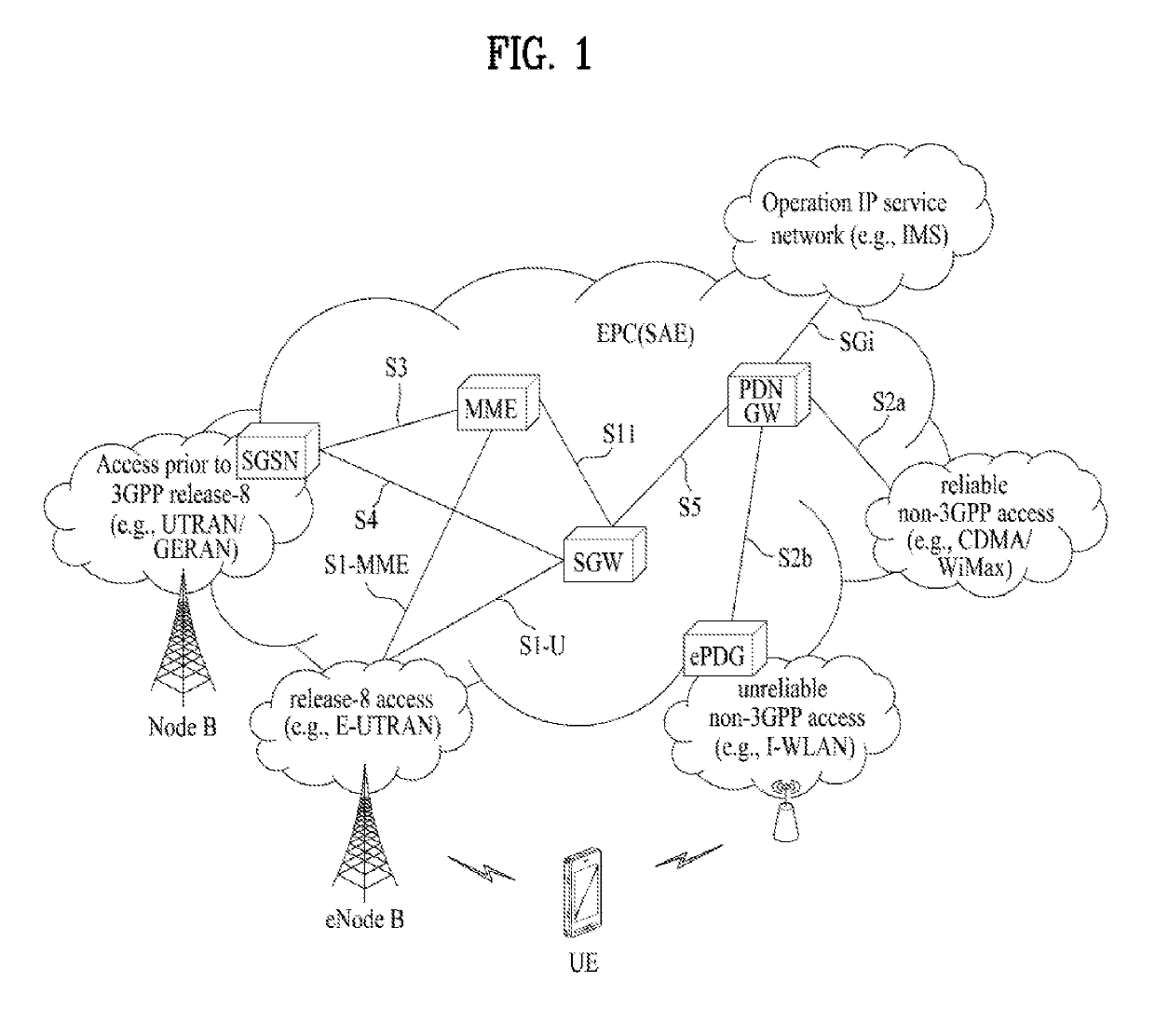
  • Figure 1
    Figure 1
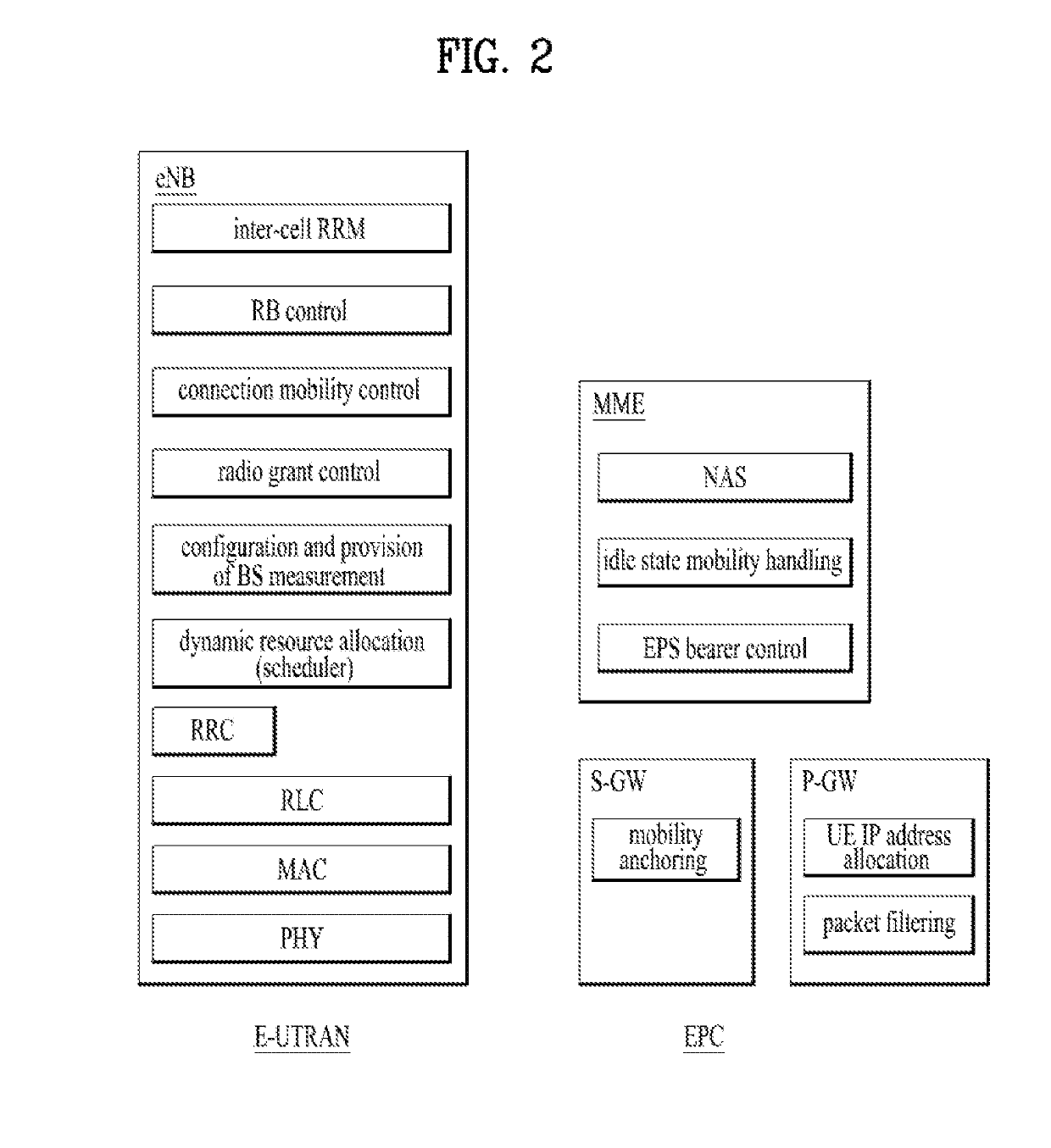
  • Figure 2
    Figure 2
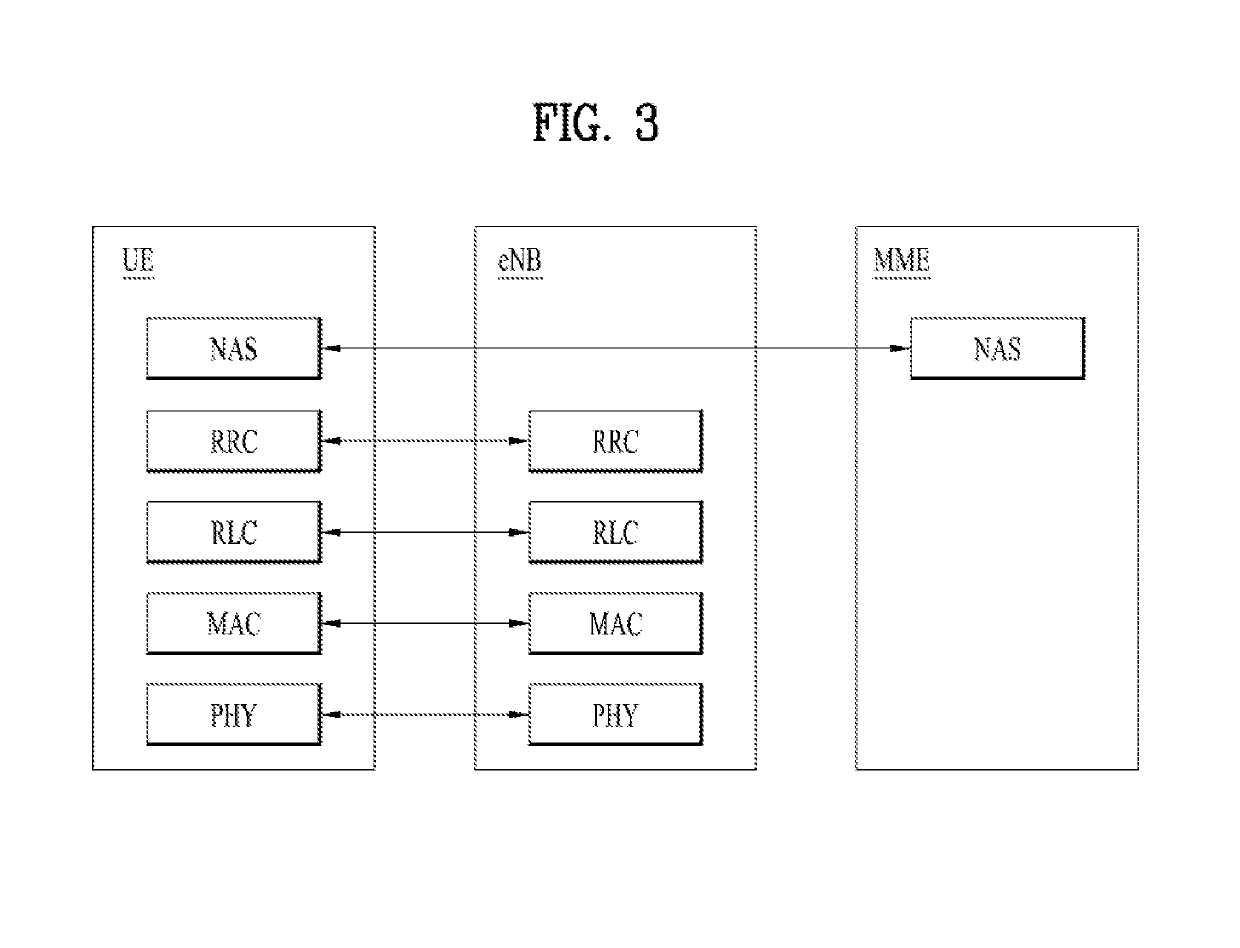
  • Figure 3
    Figure 3
Patent Text Reader

Abstract

A user equipment according to the present invention performs a handover from a first system to a second system. When a user equipment receives a command to hand over to the second system, while using a plurality of protocol data unit (PDU) sessions for the same data network (DN) in the first system, the user equipment transmits first session information of a firstPDU session among the plurality of PDU sessions, establishes a packet data network (PDN) connection with the second system, on the basis of the first session information, and maps the first PDU session to the PDN connection. When the user equipment is required to establish a dedicated bearer for a PDU session (second PDU session) other than the first PDU session among the plurality of PDU sessions, the user equipment transmits a bearer generation request message requesting to generate a dedicated bearer for the PDN connection.
Need to check novelty before this filing date? Find Prior Art

Description

TECHNICAL FIELD

[0001] The present invention relates to a wireless communication system and, more particularly, to a handover method between systems and an apparatus therefor.BACKGROUND ART

[0002] Wireless communication systems have been widely deployed to provide various types of communication services such as voice or data. In general, the wireless communication system corresponds to a multiple access system capable of supporting communication between multiple users by sharing available system resources (e.g., bandwidth, transmission power, etc.). For example, the multiple access system includes a code division multiple access (CDMA) system, a frequency division multiple access (FDMA) system, a time division multiple access (TDMA) system, an orthogonal frequency division multiple access (OFDMA) system, a single carrier frequency division multiple access (SC-FDMA) system, etc.

[0003] With appearance and spread of machine-to-machine (M2M) communication and a variety of devices such as sma...

Examples

case 1

[0229] Two Sessions are all SSC Mode 1.

case 2

[0230] One session is SSC mode 1 and the other session is SSC mode 2 or SSC mode 3.

case 3

[0231] Two sessions are all SSC mode 2 or SSC mode 3.

[0232]In each case, a primary PDU session having a higher priority among two or more sessions and the other secondary PDU session(s) may be determined. Criteria are as follows.

[0233]In Case 2, the session with SSC mode 1 has a higher priority. In Case 1 and Case 3, the UE and the network may select a session which should be processed first or a more important session, by various criteria, among sessions having the same SSC mode. This information may be memorized in the UE and a memory of the network. For example, a PDU session which has been established first after the UE attaches to the network may have the highest priority. Alternatively, a session in which the least service interruption should occur according to a service characteristic of the UE (e.g., a session for urgent communication) may have the highest priority.

[0234]1-2. Case in which Multiple PDU Sessions Move

[0235]A session of SSC mode 1 may perform intersystem change...