
Adaptive processing for read threshold voltage calibration
a threshold voltage and reading technology, applied in the field of adaptive processing for read threshold voltage calibration, can solve the problem of long runtime of the controller b, achieve the effects of improving the efficiency of reading data, improving the speed and efficiency of data storage devices, and reducing latency
- Summary
- Abstract
- Description
- Claims
- Application Information
AI Technical Summary
Benefits of technology
Problems solved by technology
Method used
Image

Examples
Embodiment Construction
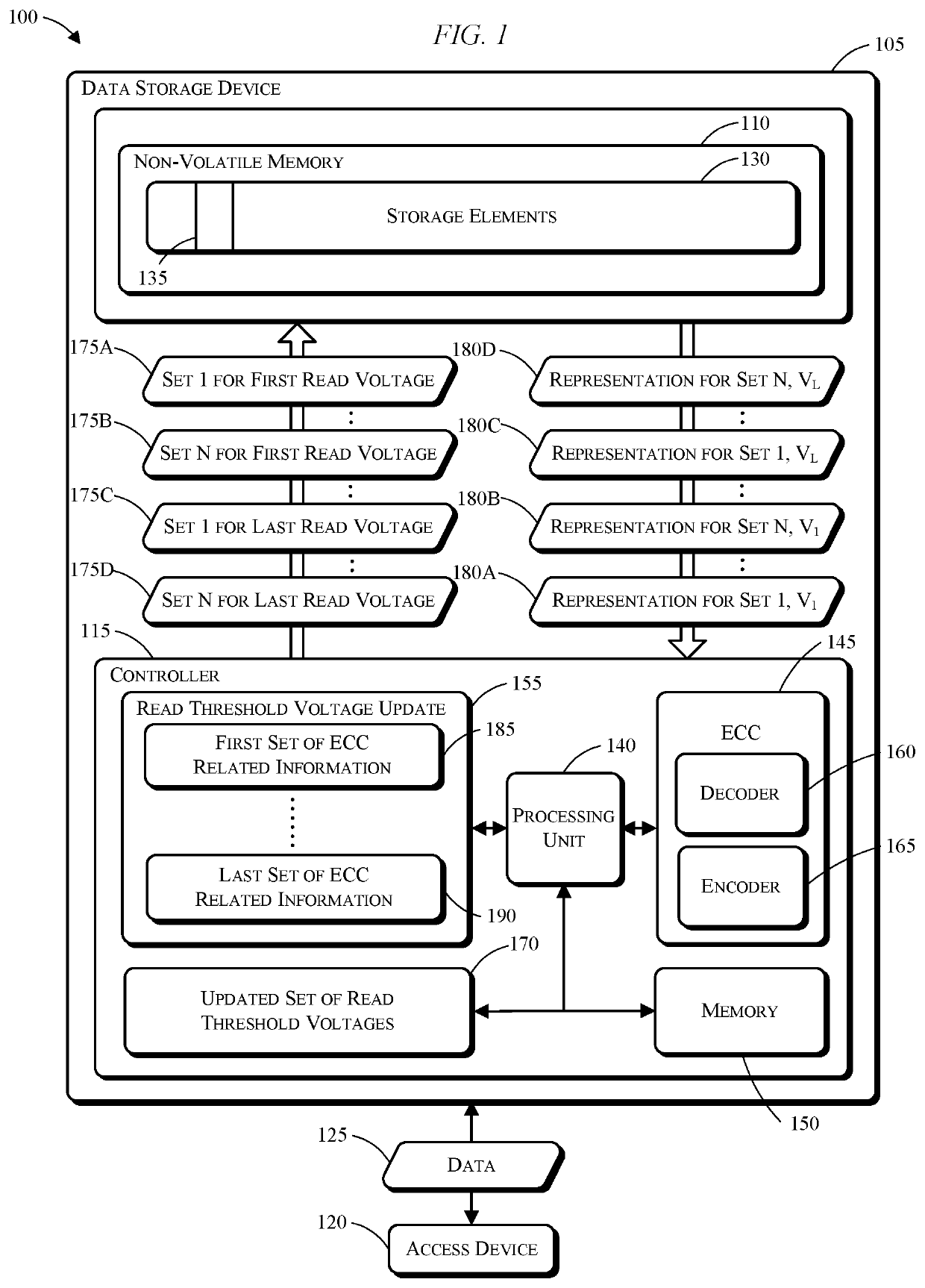
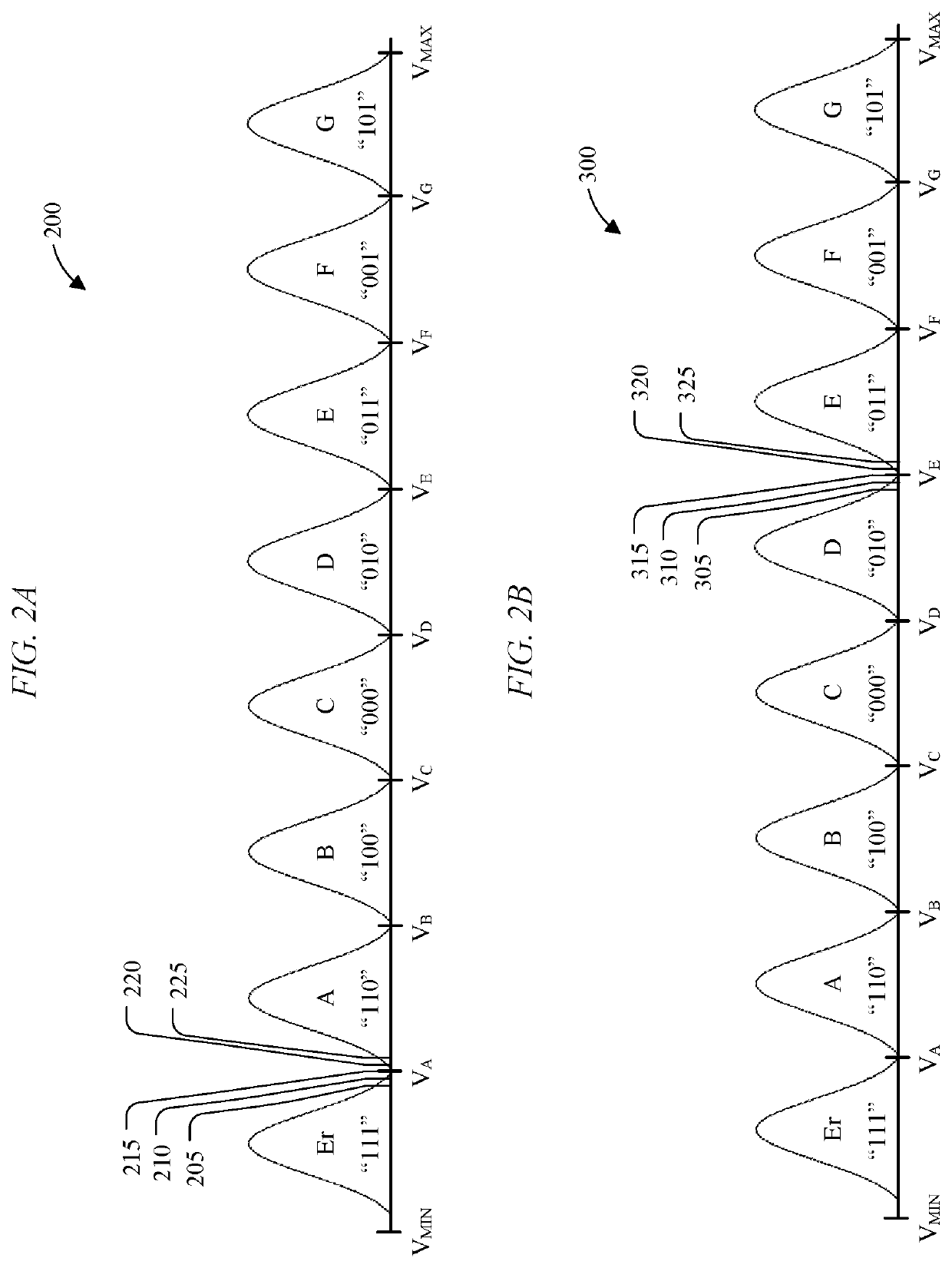
[0027]Embodiments described herein relate to reading data from a non-volatile memory, such as a flash memory, and an improved system and process for calibrating the read threshold voltages used to read the data from the non-volatile memory. A controller associated with a data storage device is configured to read data from the non-volatile memory. The data read from the non-volatile memory can be stored in memory cells that include more than a single bit of data per memory cell (i.e., they include multiple bits of data per memory cell). Such memory cells are known as multi-level cells (“MLCs”). The controller uses multiple read threshold voltages to read the data from the MLCs. For example, the controller may use four read threshold voltages to read the data from a four bits per cell (“4BPC”) memory cell. However, the read threshold voltages can shift from their expected values as the result of a variety of parameters of the non-volatile memory. As a result, to effectively read the d...
PUM
 Login to View More
 Abstract
Description
Claims
Application Information
 Login to View More