
Method of forming and adhesively bonded seam
a technology of adhesive bonding and seams, which is applied in the direction of photosensitive materials, instruments, transportation and packaging, etc., can solve the problems of fiber brittleness, less good with woven fabrics, and work well
- Summary
- Abstract
- Description
- Claims
- Application Information
AI Technical Summary
Benefits of technology
Problems solved by technology
Method used
Image

Examples
Embodiment Construction
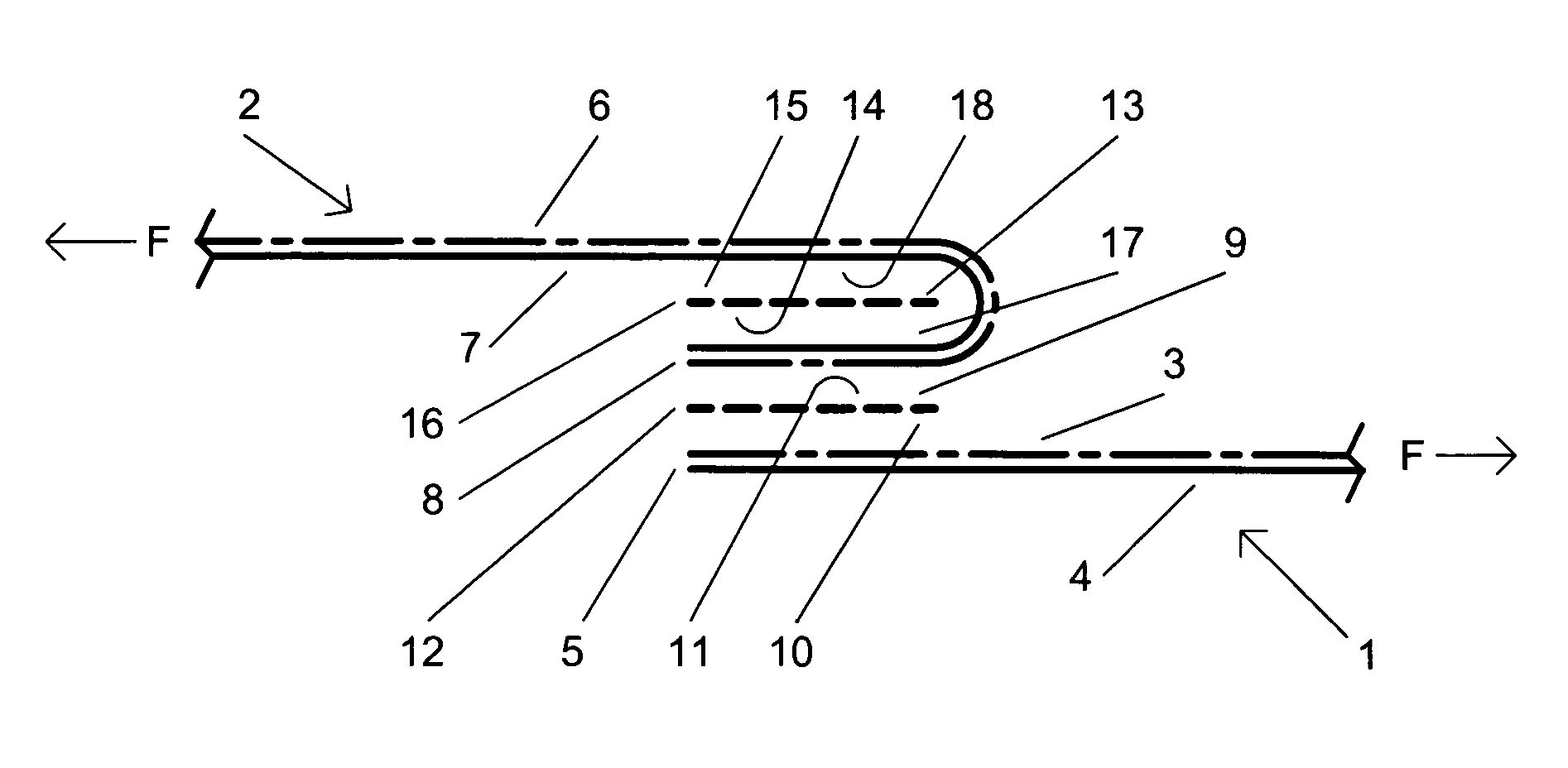
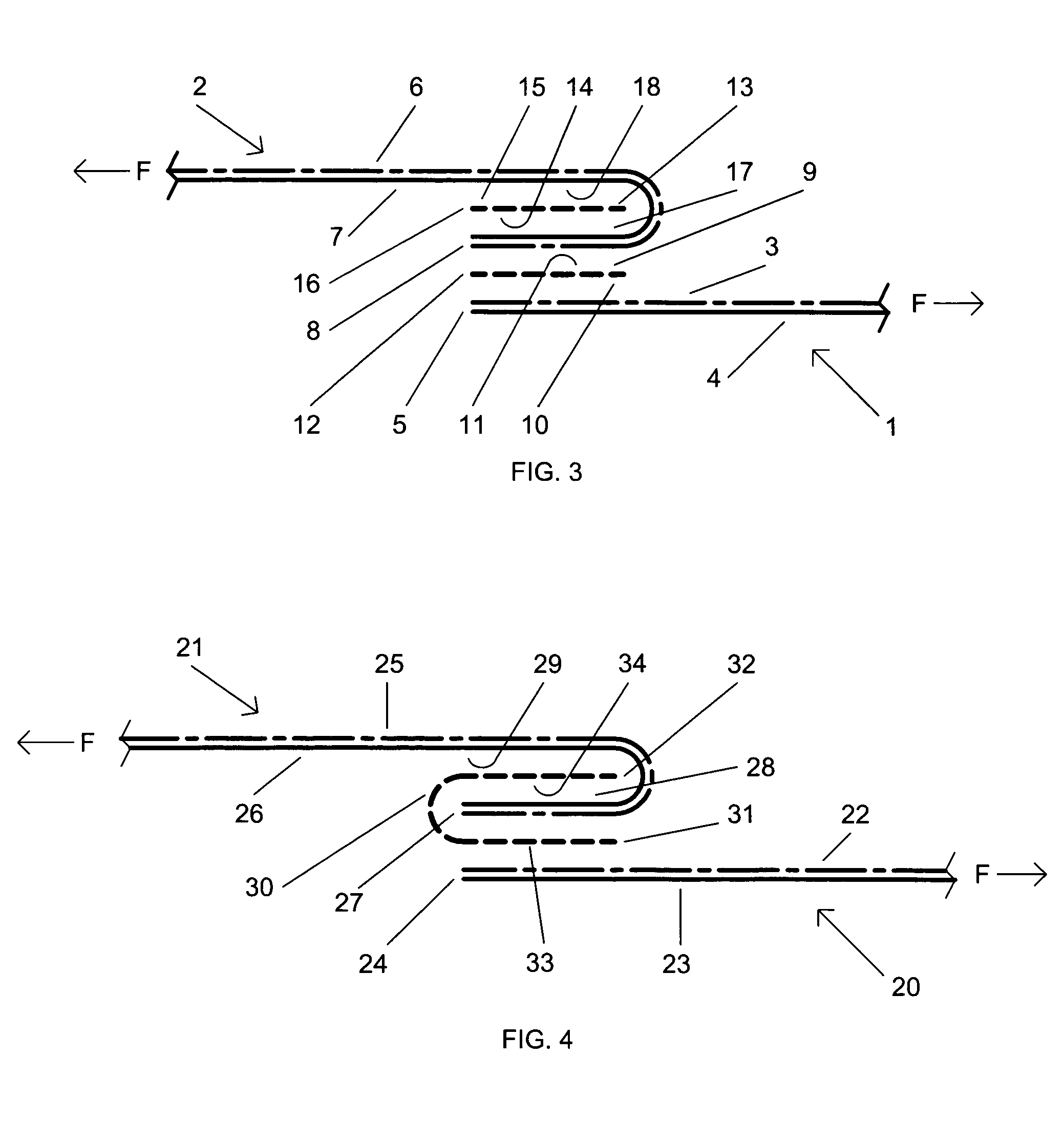
[0014]The present invention is now described by reference to the figures. FIG. 3 illustrates the present invention's preferred embodiment of the method of forming a stitchless, adhesively bonded seam for a garment. As used in this description, “stitchless” means a seam that is not sewn using stitches. A first sheet of fabric 1 has an outside or facing surface 3 (depicted as a solid and dashed line), an inside or backing surface 4 (depicted as a solid line), and an elongate edge 5. Similarly, a second sheet of fabric 2 has an outside or facing surface 6 (depicted as a solid and dashed line), an inside or backing surface 7 (depicted as a solid line), and an elongate edge 8. The outside surface 3 and edge 5 of the first sheet of fabric are positioned adjacent to the outside surface 6 and edge 8 of the second sheet of fabric, respectively. A first strip of elongate adhesive tape 9, having a first and second sides 10 and 11, respectively, and an edge 12, is positioned between the first a...
PUM
| Property | Measurement | Unit |
|---|---|---|
| angle | aaaaa | aaaaa |
| energy | aaaaa | aaaaa |
| tensile strength | aaaaa | aaaaa |
Abstract
Description
Claims
Application Information
 Login to View More