
System for enhancement of neurophysiological processes
- Summary
- Abstract
- Description
- Claims
- Application Information
AI Technical Summary
Benefits of technology
Problems solved by technology
Method used
Image

Examples
Embodiment Construction
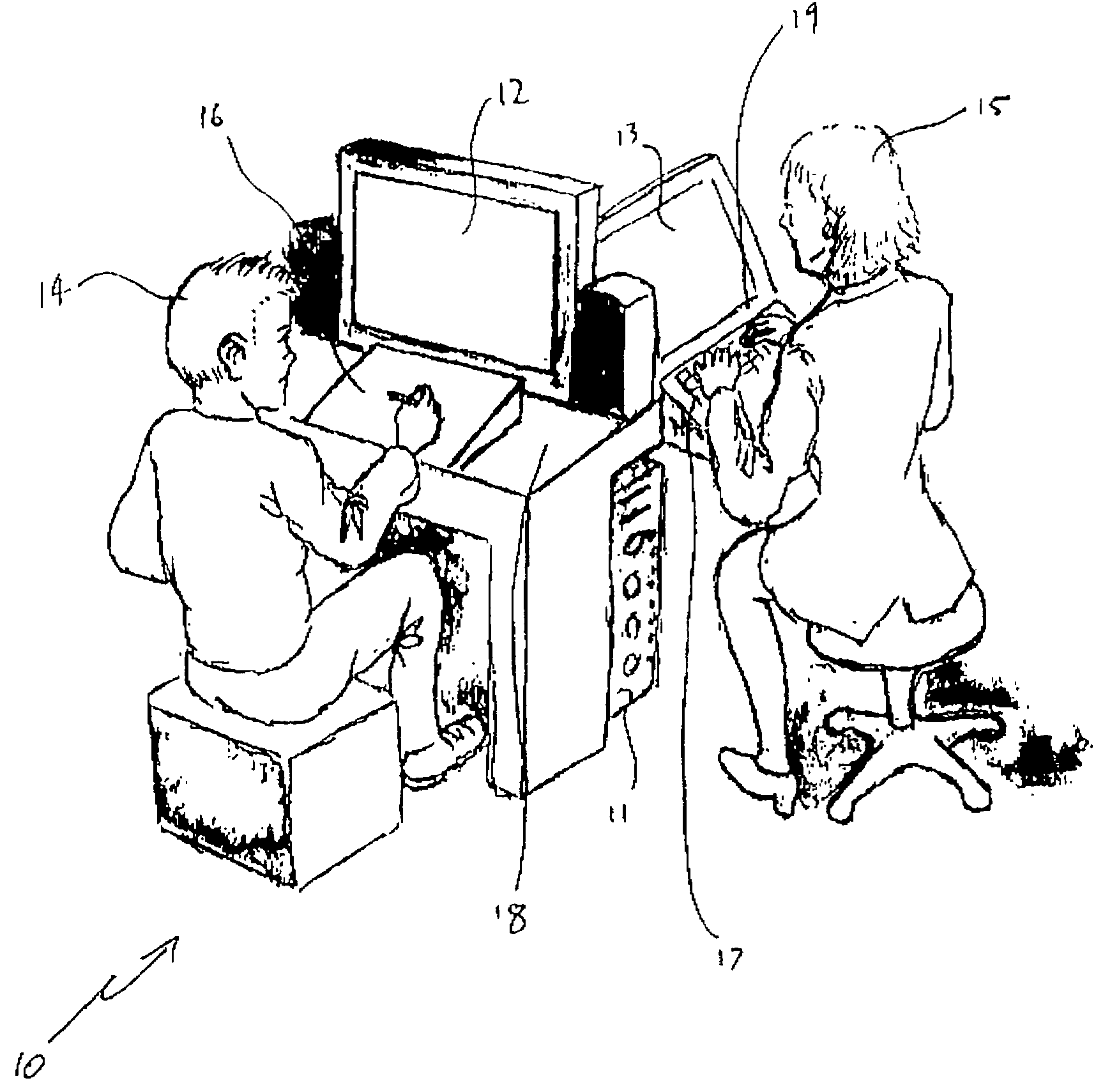
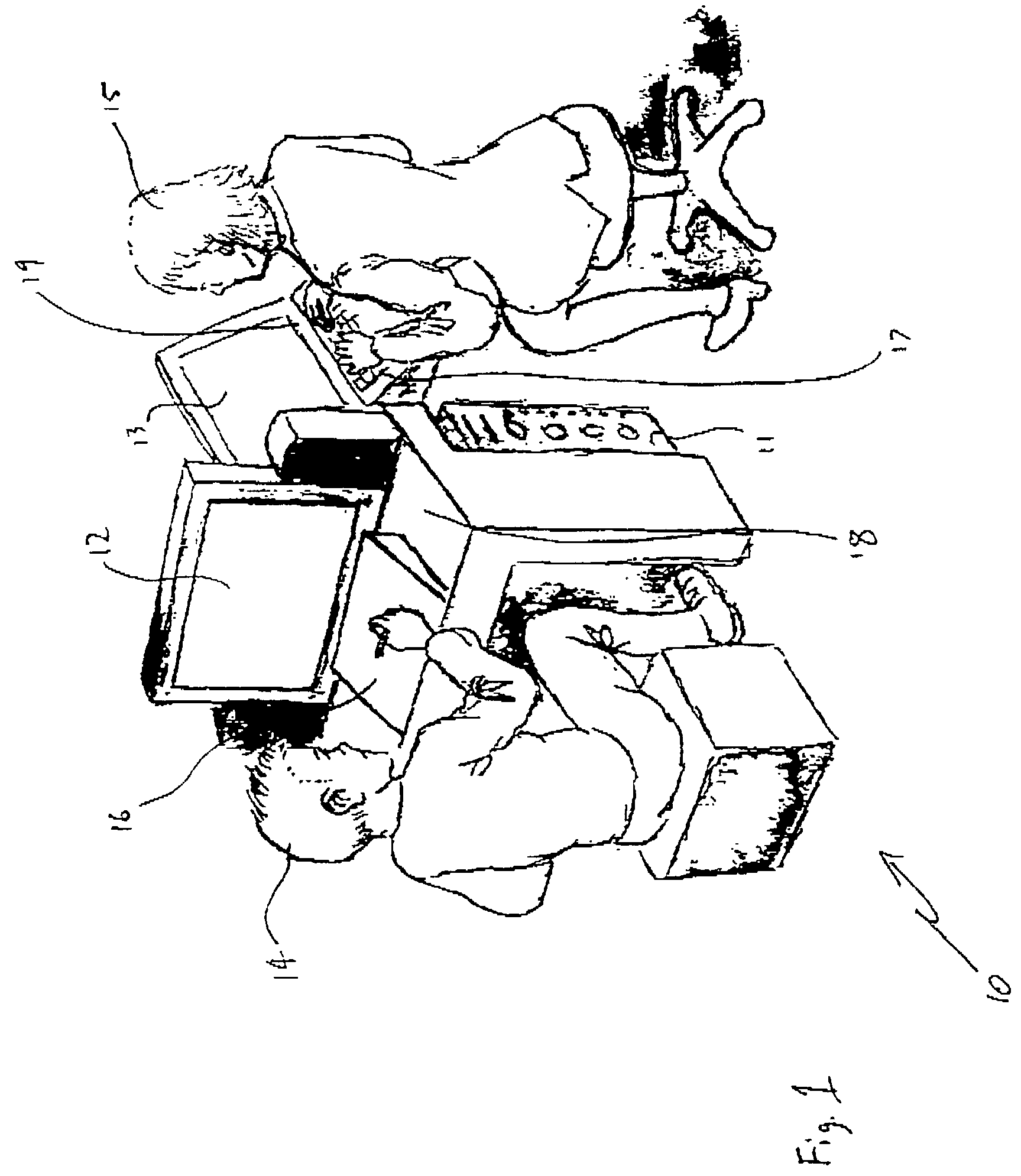
[0055]With reference to FIG. 1, apparatus according to the invention is shown generally at 10 and includes a computer processor 11, a patient console 18 including a patient visual display unit (VDU) 12 and patient input means 16, and a therapist console 19 including a therapist visual display unit 13 and therapist input means 17. A patient 14 is shown at the patient console 18 whilst a therapist 15 is shown at the therapist console 19. The position of the patient console 18 is such that a patient 14 is unable to view the VDU 13 of the therapist console whilst viewing the patient VDU 12. In the case of the patient console shown, the patient input means is an electronic writing pad whilst the therapist inputs information via a conventional keyboard 17.
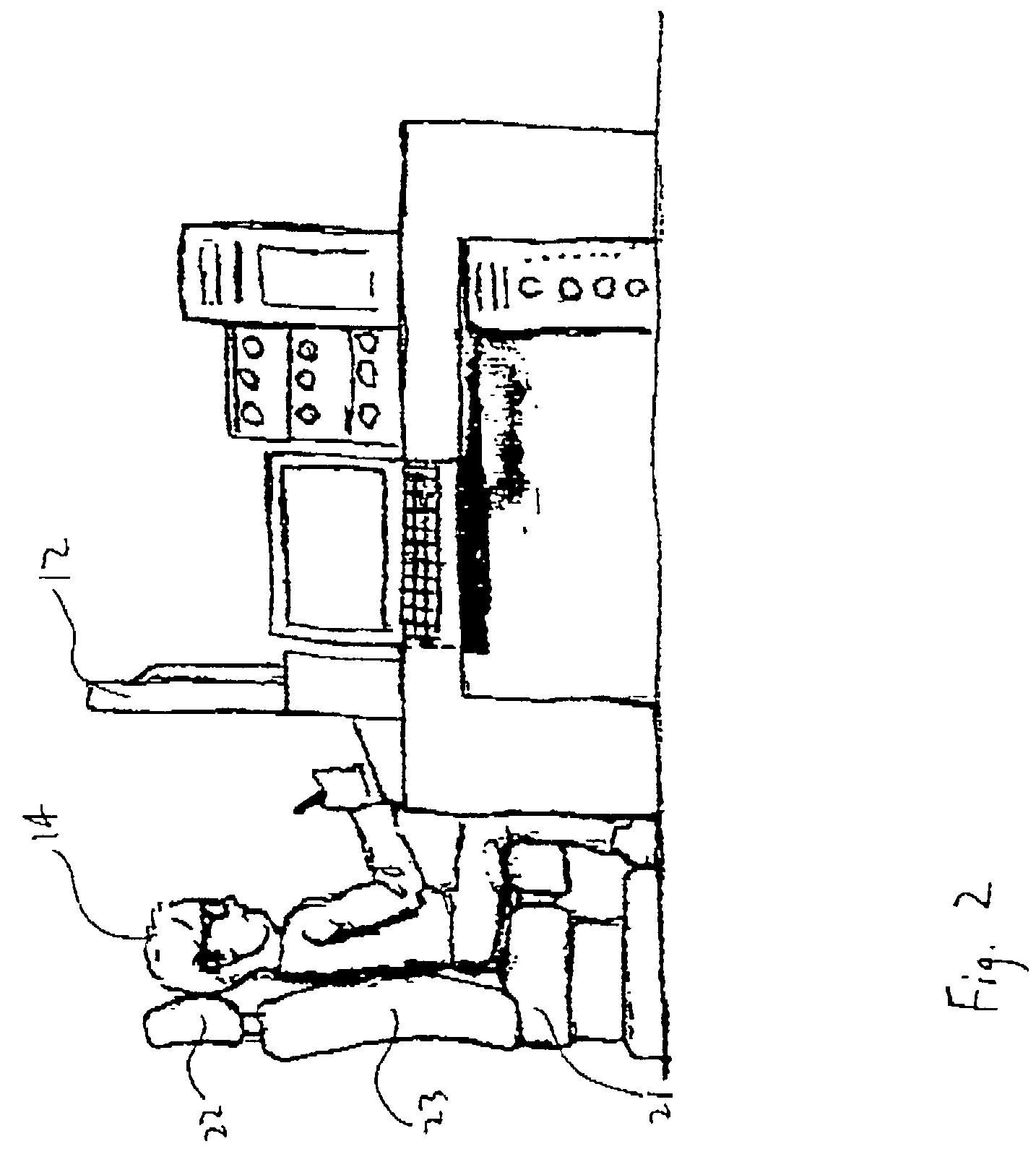
[0056]In FIG. 2 an alternative arrangement is shown wherein the patient 14 is seated on an electronically adjustable seat 21 that can be moved up and down as well as laterally. The headrest 22 and backrest 23 can also be controlled to en...
PUM
 Login to View More
 Abstract
Description
Claims
Application Information
 Login to View More