
Power control of network part transmitter in radio system
a technology of power control and network part, applied in power management, multiplex communication, wireless commuication services, etc., can solve the problem of not optimizing power control in any way according, and achieve the effect of increasing the downlink capacity of the network part to the user equipmen
- Summary
- Abstract
- Description
- Claims
- Application Information
AI Technical Summary
Benefits of technology
Problems solved by technology
Method used
Image

Examples
Embodiment Construction
[0019]The invention can be used in all radio systems in which downlink power control is required and in which different services are transferred over a radio connection. A transmission channel can be formed by means of a time division, frequency division or code division multiple access method, for example. The invention also covers systems utilizing combinations of different multiple access methods. The examples describe how the invention is used in a universal mobile telecommunication system employing a wideband code division multiple access method, however, without restricting the invention thereto.
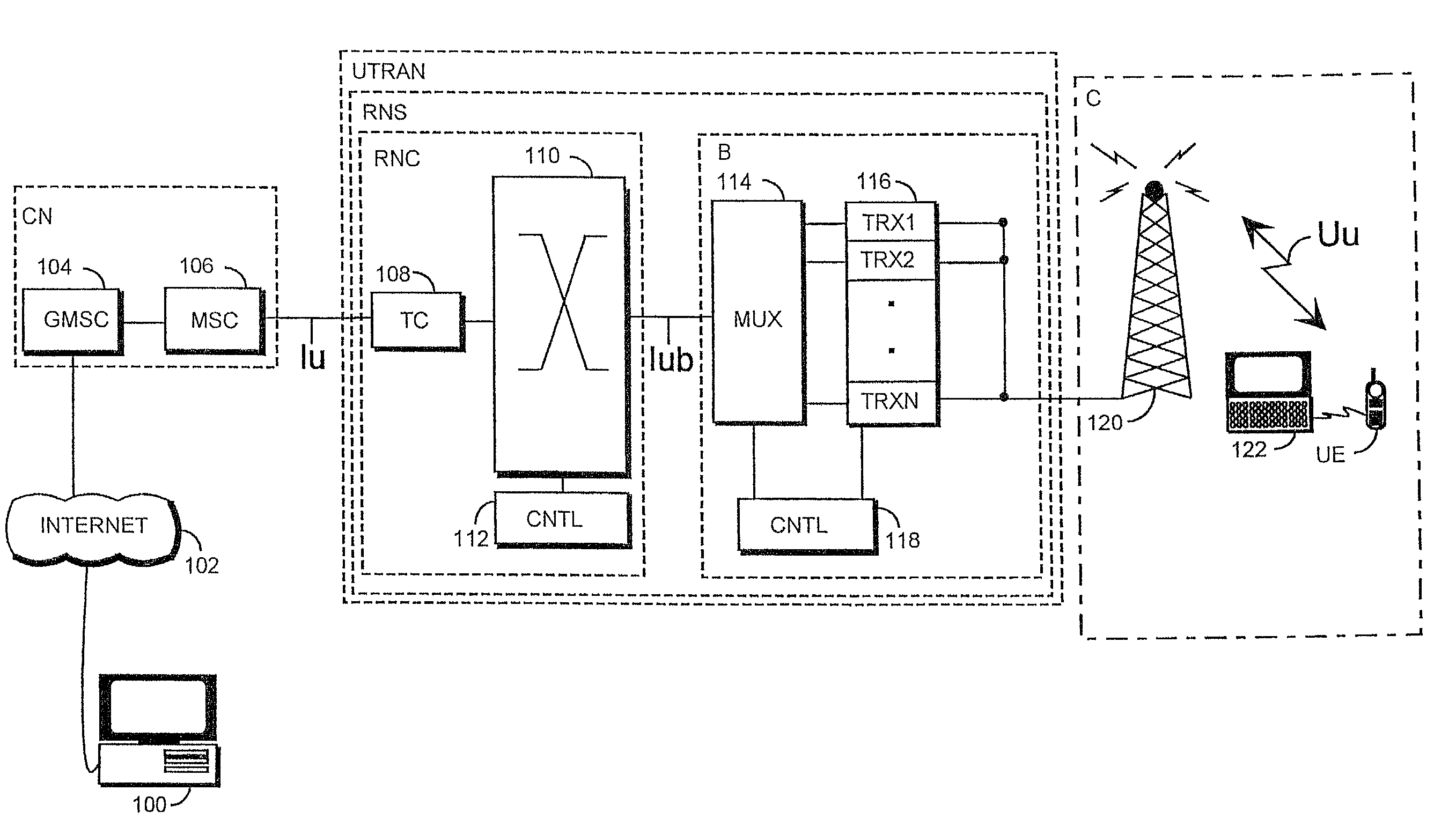
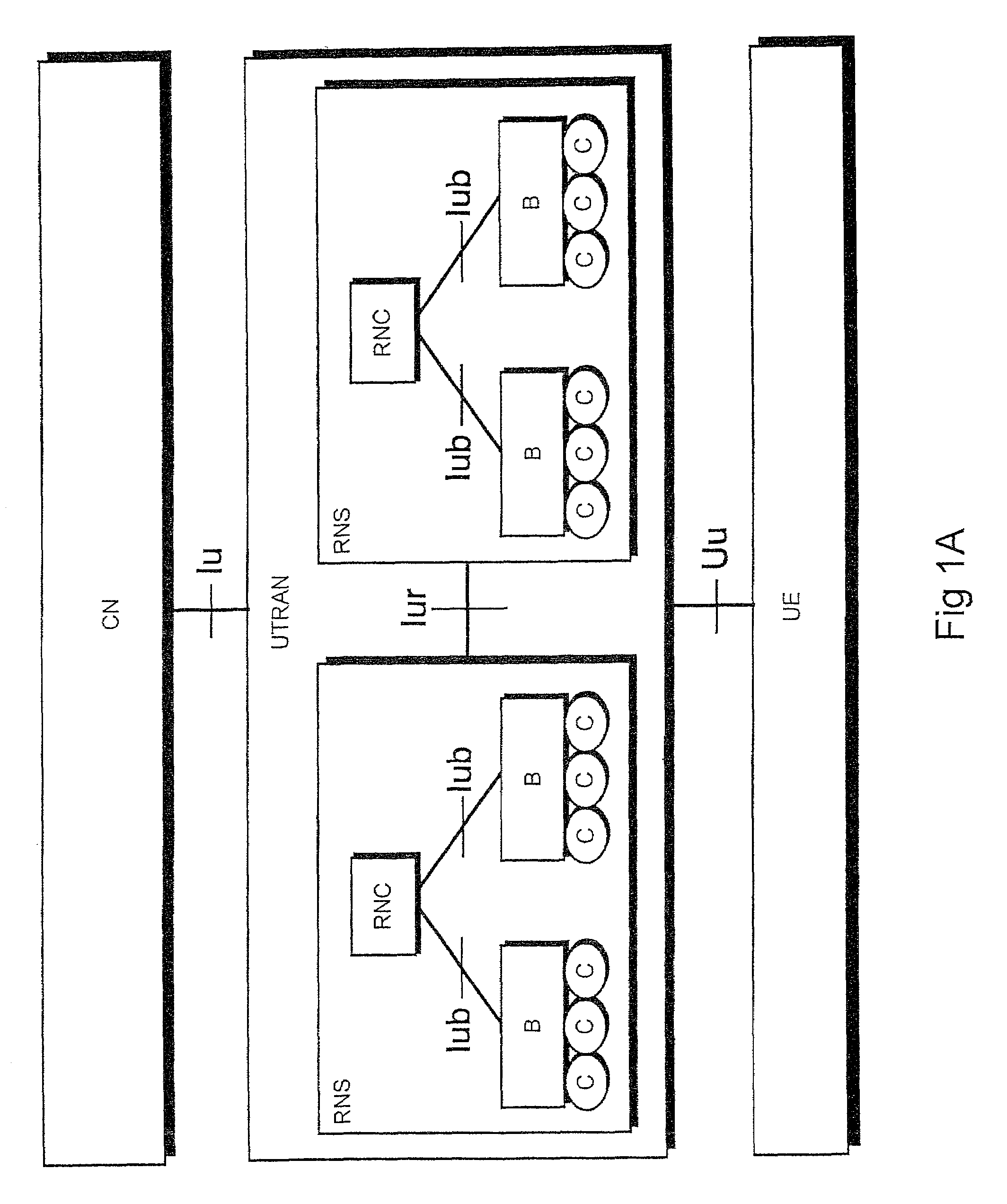
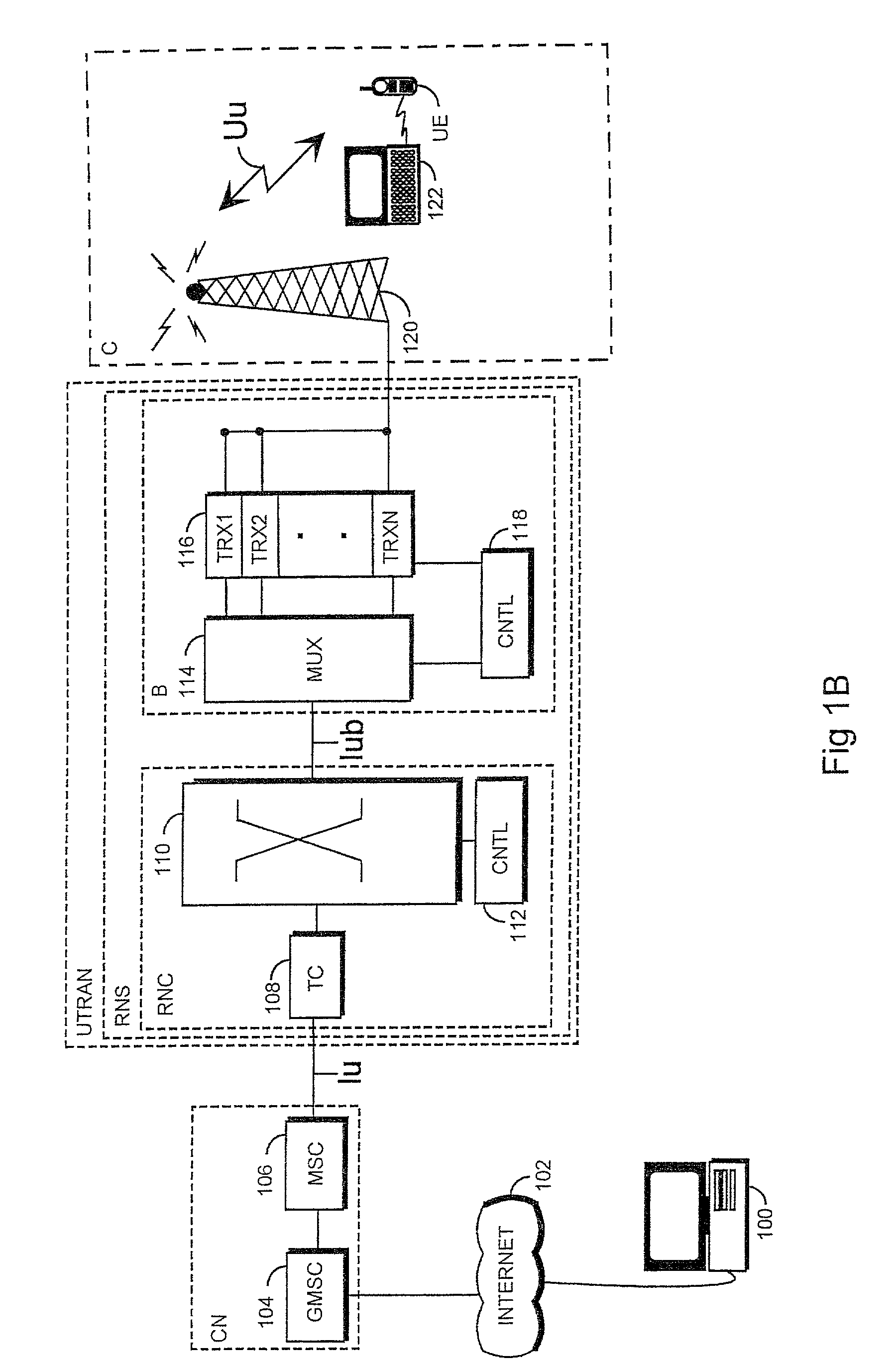
[0020]The structure of a universal mobile telecommunications system is described below with reference to FIGS. 1A and 1B. FIG. 1B shows only the blocks that are essential for illustrating the invention, but it is obvious to those skilled in the art that a conventional mobile system also includes other functions and structures which do not have to be described in greater detail herein. ...
PUM
 Login to View More
 Abstract
Description
Claims
Application Information
 Login to View More