Automatic capture verification using electrocardiograms sensed from multiple implanted electrodes

a technology of electrocardiogram and verification, applied in the field of implantable medical devices, can solve problems such as potential life-threatening events, bradycardia producing a heart rate that is too slow to maintain adequate circulation, and cardiac arrhythmia impairing cardiac efficiency

US7509170B2Inactive Publication Date: 2009-03-24CARDIAC PACEMAKERS INC
254 Cites 175 Cited by

Patent Information

Authority / Receiving Office
US · United States
Patent Type
Patents(United States)
Current Assignee / Owner
Publication Date
2009-03-24
Estimated Expiration
Not applicable · inactive patent

Smart Images

  • Figure 1
    Figure 1
  • Figure 2
    Figure 2
  • Figure 3
    Figure 3
Patent Text Reader

Abstract

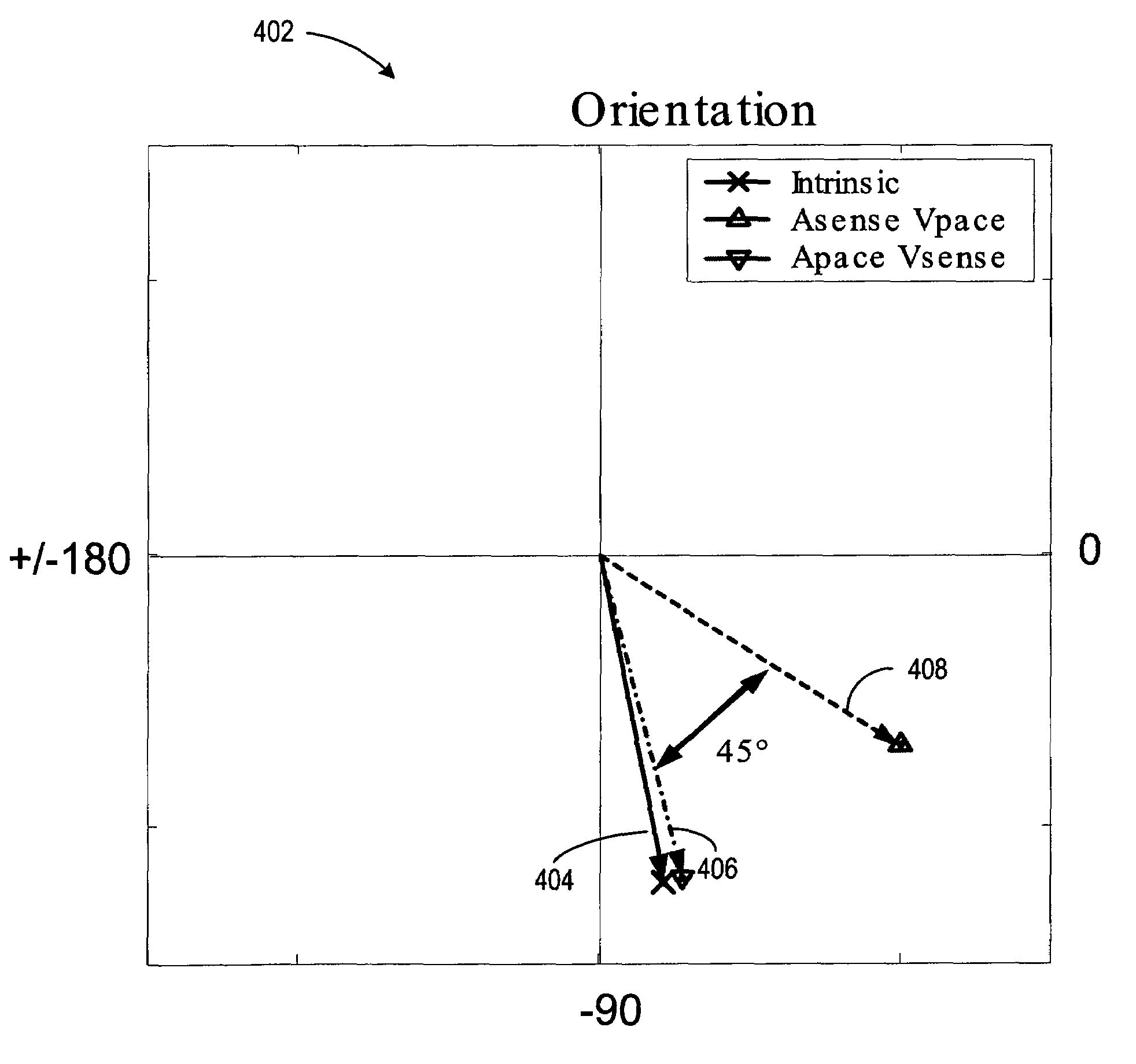
Cardiac monitoring and / or stimulation methods and systems that provide one or more of monitoring, diagnosing, defibrillation, and pacing. Cardiac signal separation is employed for automatic capture verification using cardiac activation sequence information. Devices and methods sense composite cardiac signals using implantable electrodes. A source separation is performed using the composite signals. One or more signal vectors are produced that are associated with all or a portion of one or more cardiac activation sequences based on the source separation. A cardiac response to the pacing pulses is classified using characteristics associated with cardiac signal vectors and the signals associated with the vectors. Further embodiments may involve classifying the cardiac response as capture or non-capture, fusion or intrinsic cardiac activity. The characteristics may include an angle or an angle change of the cardiac signal vectors, such as a predetermined range of angles of the one or more cardiac signal vectors.
Need to check novelty before this filing date? Find Prior Art

Description

FIELD OF THE INVENTION

[0001] The present invention relates generally to implantable medical devices employing cardiac signal separation and, more particularly, to cardiac sensing and / or stimulation devices employing cardiac activation sequence monitoring and tracking for automatic capture verification.BACKGROUND OF THE INVENTION

[0002] The healthy heart produces regular, synchronized contractions. Rhythmic contractions of the heart are normally initiated by the sinoatrial (SA) node, which is a group of specialized cells located in the upper right atrium. The SA node is the normal pacemaker of the heart, typically initiating 60-100 heartbeats per minute. When the SA node is pacing the heart normally, the heart is said to be in normal sinus rhythm.

[0003] If the heart's electrical activity becomes uncoordinated or irregular, the heart is denoted to be arrhythmic. Cardiac arrhythmia impairs cardiac efficiency and may be a potential life-threatening event. Cardiac arrhythmias have a number o...

Examples

Embodiment Construction

[0038]In the following description of the illustrated embodiments, references are made to the accompanying drawings, which form a part hereof, and in which is shown by way of illustration, various embodiments in which the invention may be practiced. It is to be understood that other embodiments may be utilized, and structural and functional changes may be made without departing from the scope of the present invention.

[0039]An implanted device according to the present invention may include one or more of the features, structures, methods, or combinations thereof described hereinbelow. For example, a cardiac monitor or a cardiac stimulator may be implemented to include one or more of the advantageous features and / or processes described below. It is intended that such a monitor, stimulator, or other implanted or partially implanted device need not include all of the features described herein, but may be implemented to include selected features that provide for unique structures and / or ...