
Method, apparatus and arrangement in a telecommunications network for providing control over and enabling advanced services and user interfaces in a mobile telephone
a mobile telephone and advanced technology, applied in the field of telecommunications network apparatus, methods and arrangements, can solve the problems of mobile telephone not being registered, pbx not having access, and losing the advantages of pbx, so as to improve the control of call setup, routing and other handling, and improve the control of call handling.
- Summary
- Abstract
- Description
- Claims
- Application Information
AI Technical Summary
Benefits of technology
Problems solved by technology
Method used
Image

Examples
Embodiment Construction
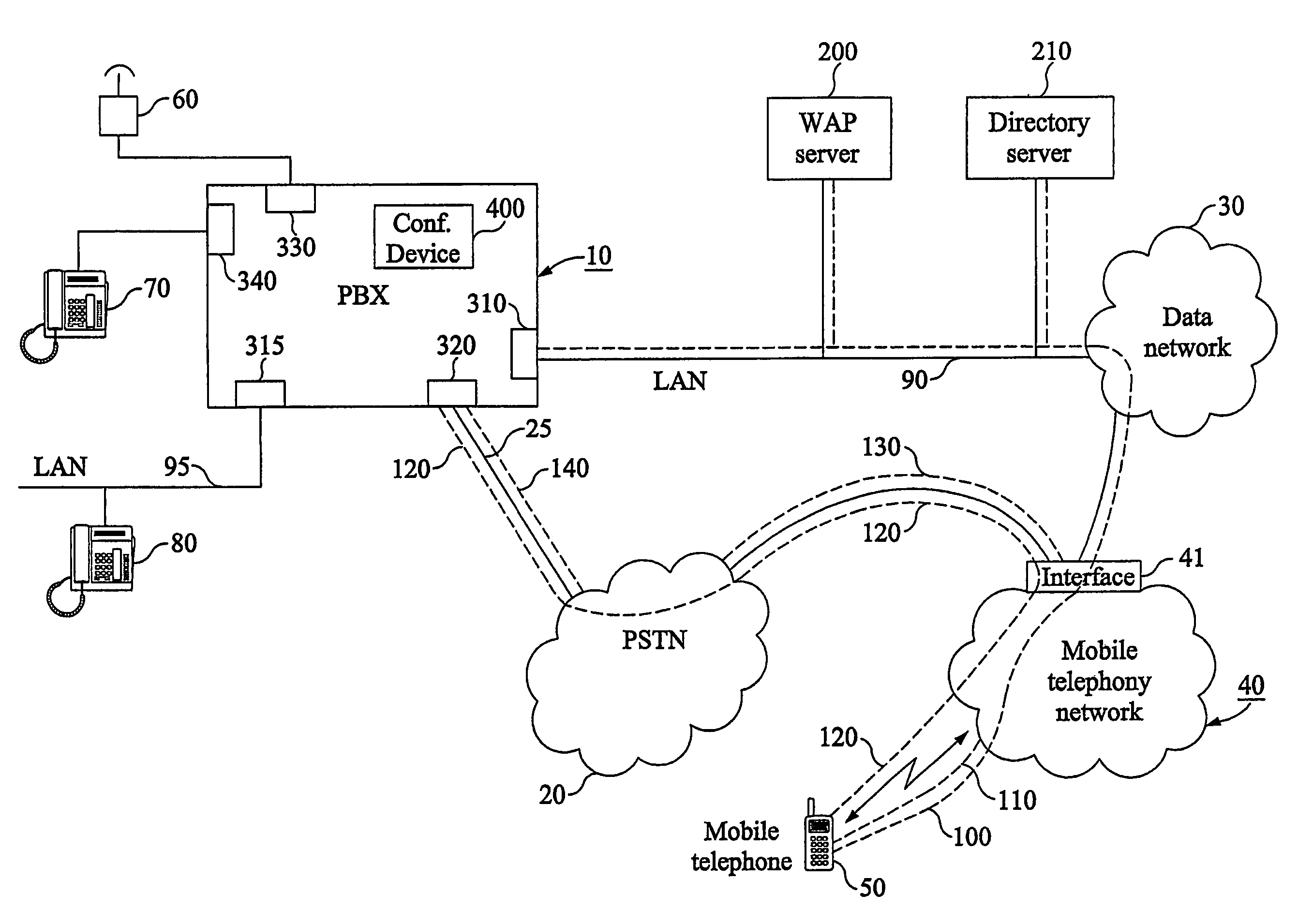
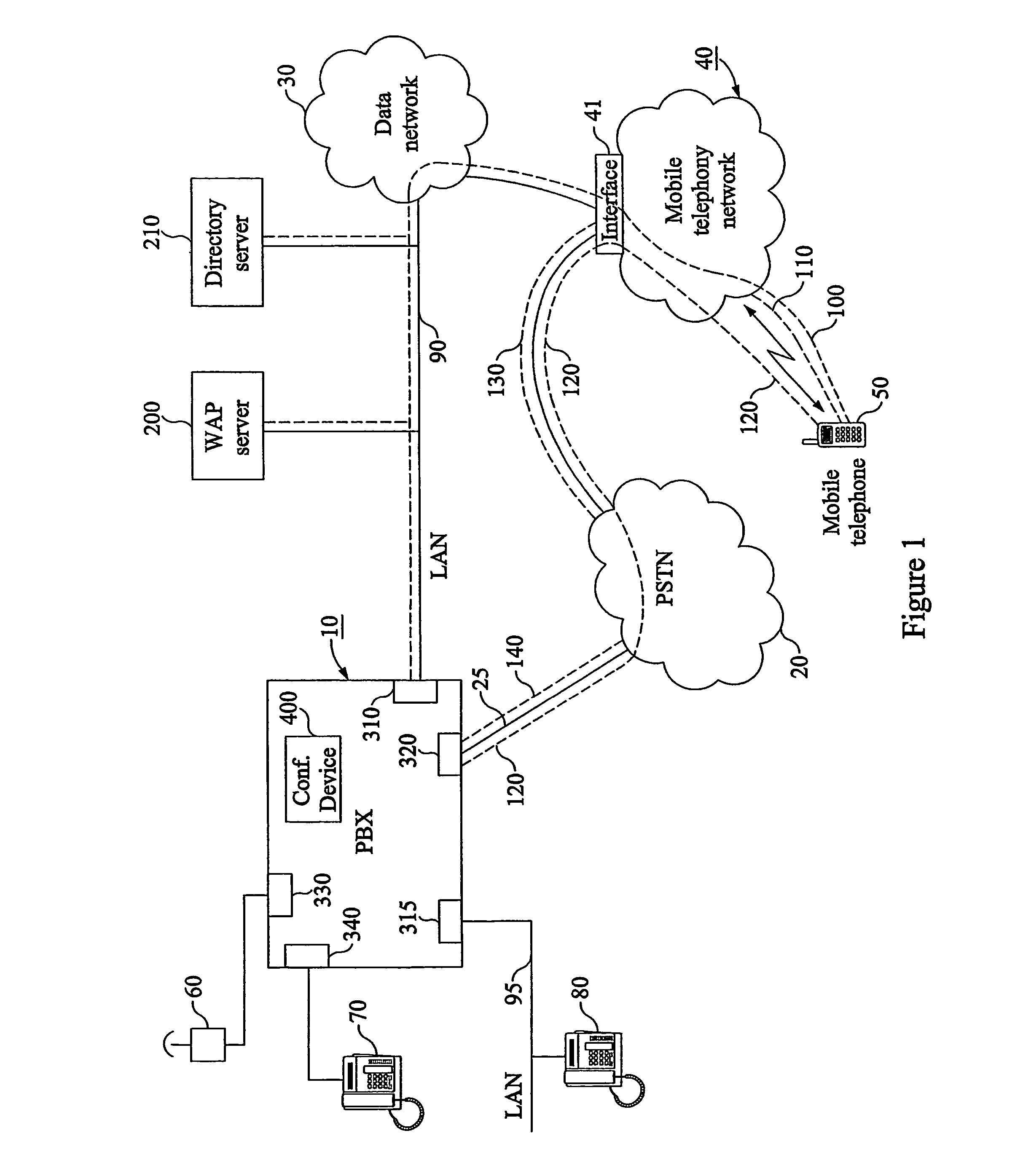
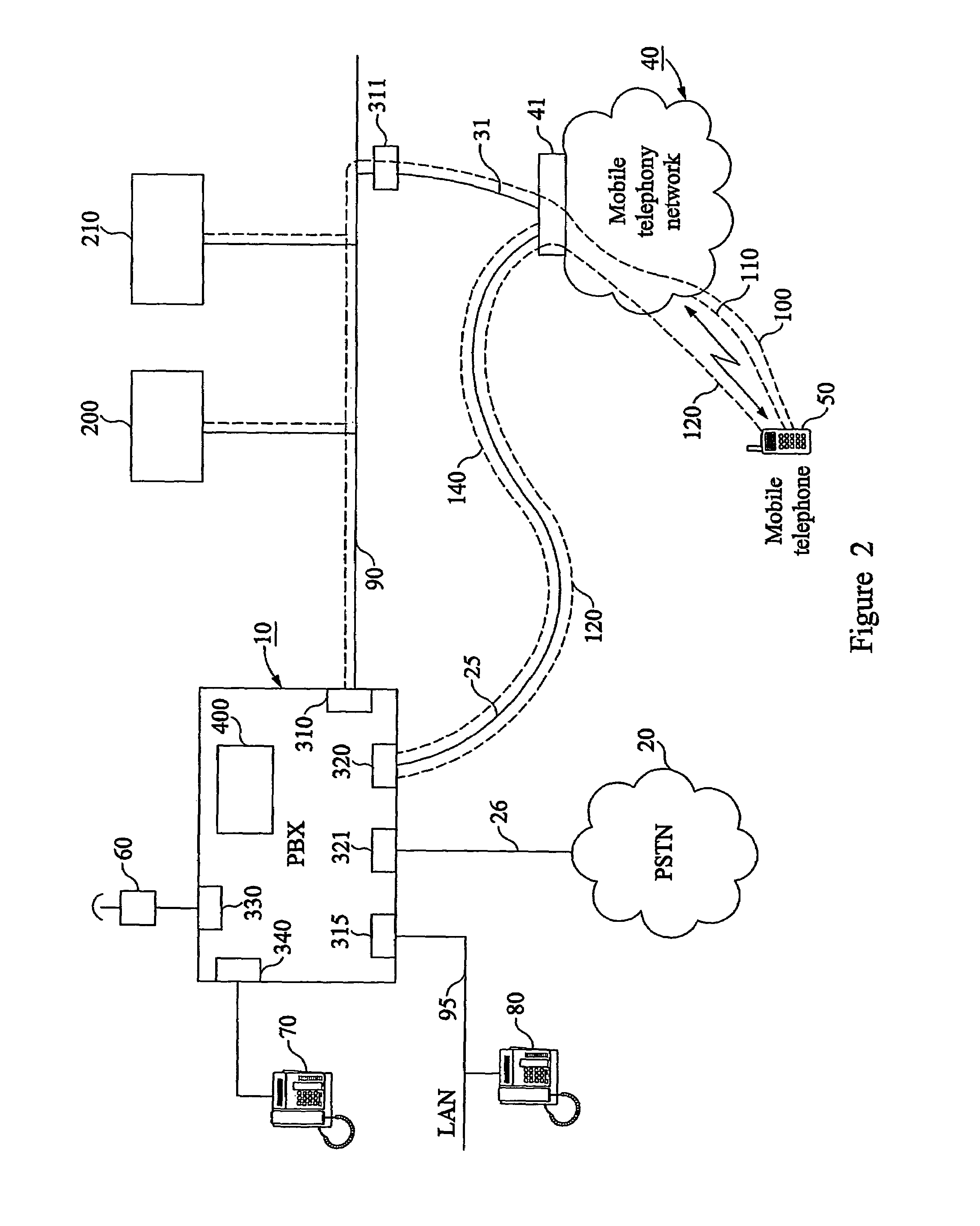
[0050]With reference to FIG. 1, the invention comprises a PBX 10, a public telephone network (PSTN) 20, a local area network (LAN)90, a data network 30, a mobile telephony network 40 and a mobile telephone 50.
[0051]The mobile telephony network 40 connects to other fixed networks such as the PSTN 20 and the data network 30 at an interface to fixed networks 41. Interface 41 may comprise multiple, distributed logical and physical interfaces.
[0052]The PBX 10 is typically a single entity, but may also be composed of a number of servers under common administration that share a common set of extension identities and collaborate to handle calls to and from these extensions (not shown).
[0053]The PBX 10 is connected to the PSTN 20 via a trunk interface 320. The interface 320 is a public network trunk access interface, for example the ISDN T reference point.
[0054]The PBX 10 may have ordinary wired extensions, analog 60 or digital 70, connected through line interfaces 330 and 340. It can also h...
PUM
 Login to View More
 Abstract
Description
Claims
Application Information
 Login to View More