Tire chock

a technology of chocks and wheels, applied in the direction of brake systems, transportation and packaging, transportation items, etc., can solve the problems of complex linkage assembly of components, easy to be stolen, and high manufacturing cos

US8365875B2Active Publication Date: 2013-02-05NORCO INDS
12 Cites 17 Cited by

Patent Information

Authority / Receiving Office
US · United States
Patent Type
Patents(United States)
Current Assignee / Owner
Publication Date
2013-02-05

Smart Images

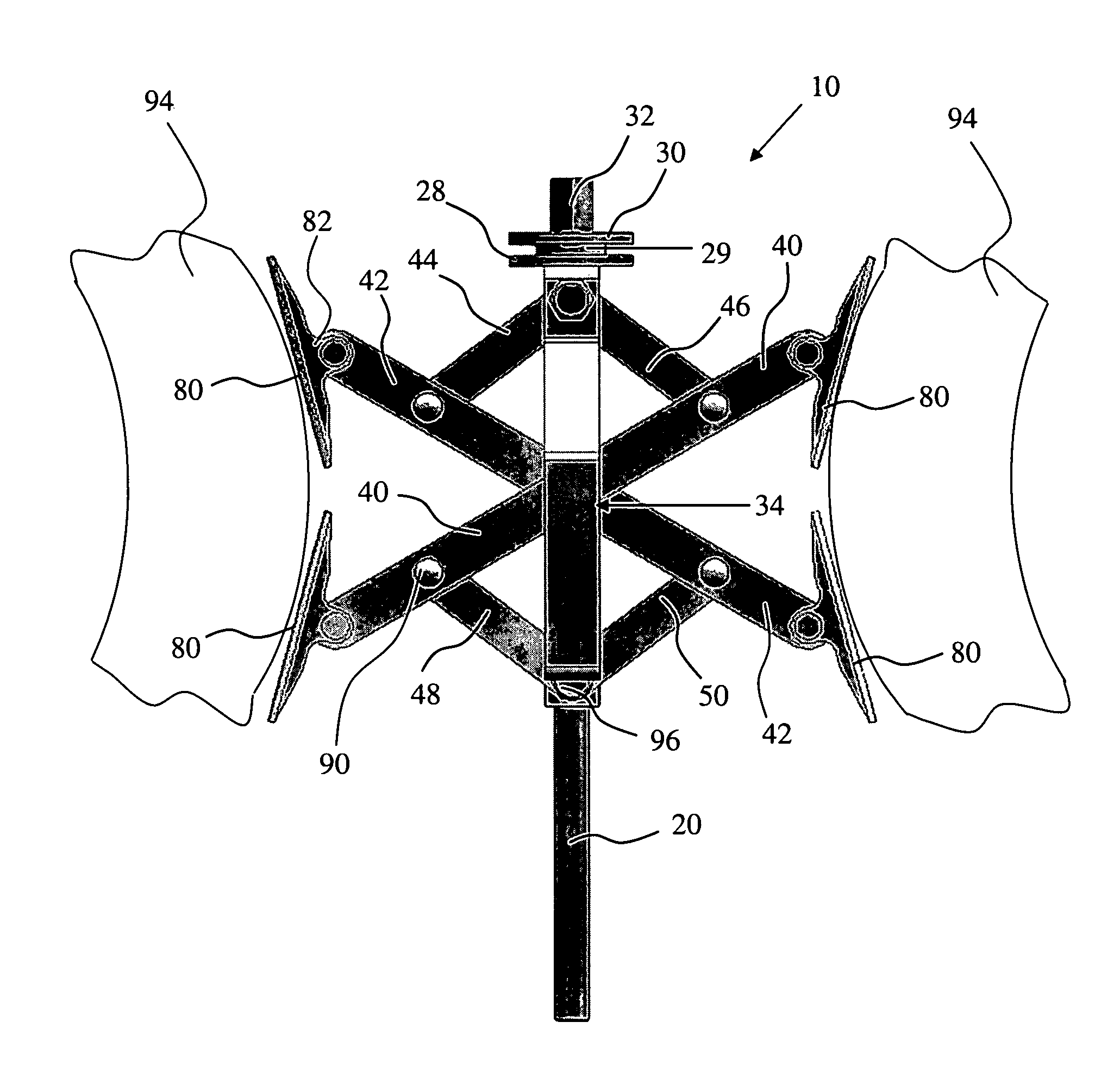
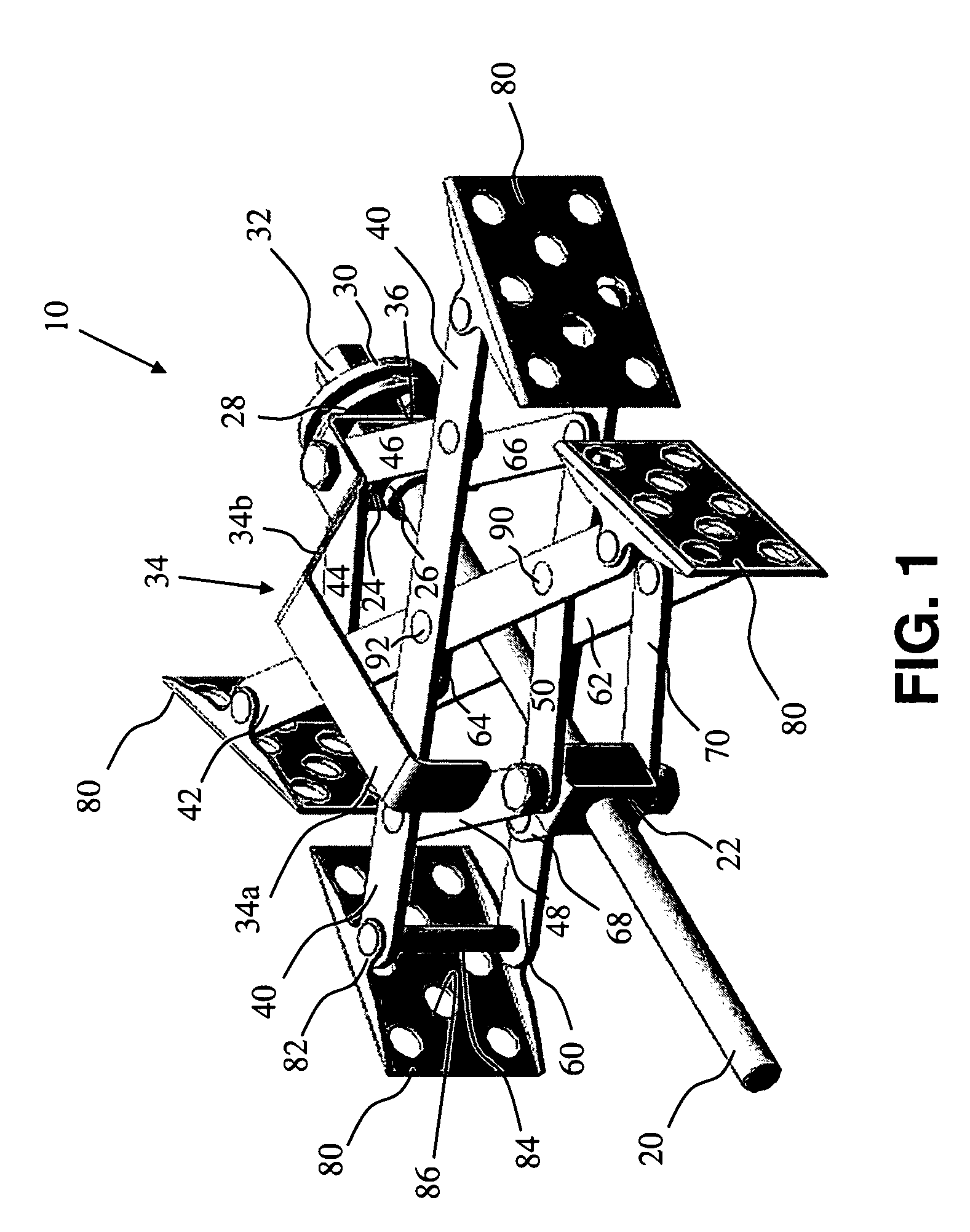
  • Figure 1
    Figure 1
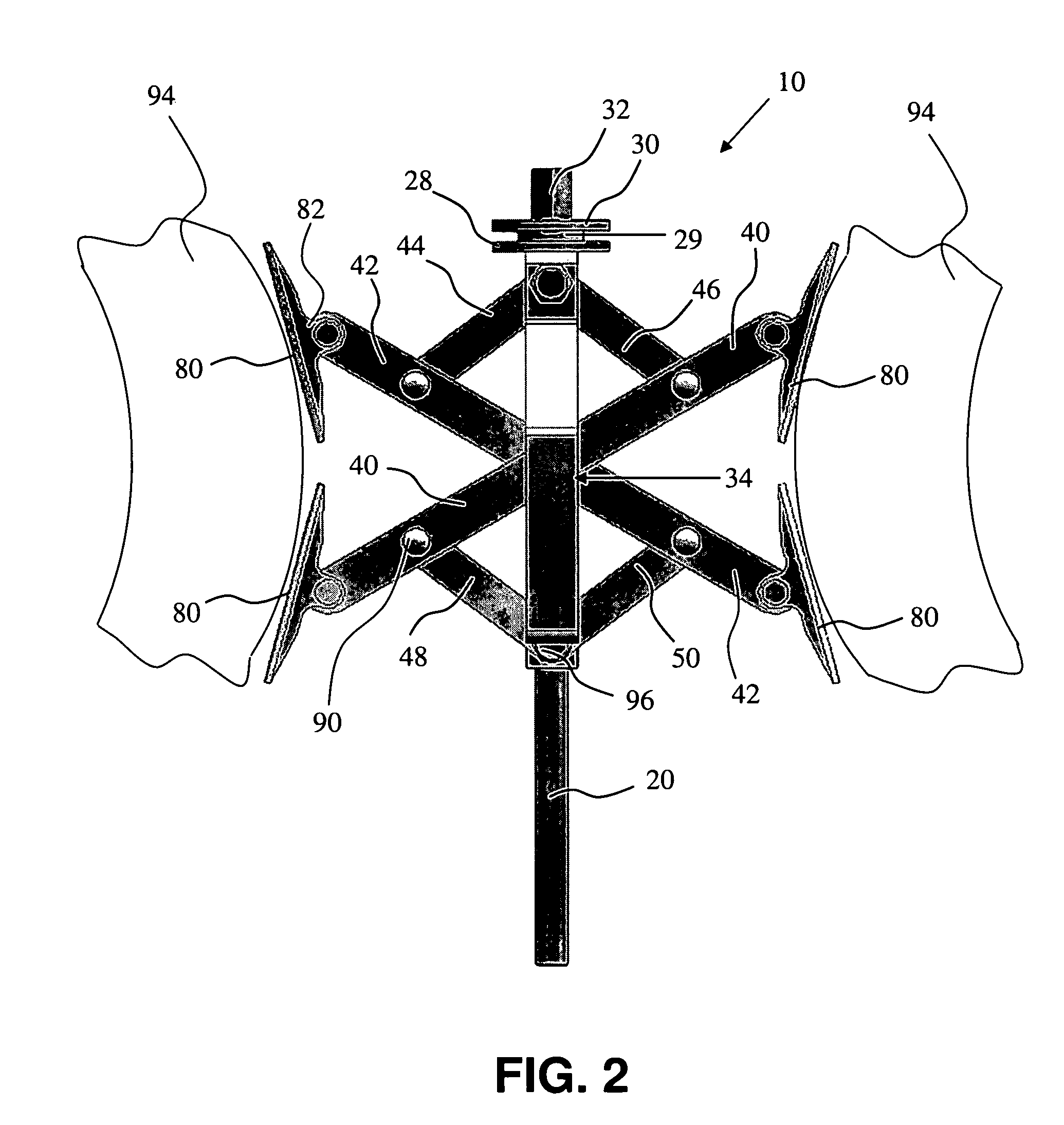
  • Figure 2
    Figure 2
  • Figure 3
    Figure 3
Patent Text Reader

Abstract

A tire chock having an at least partially threaded rod; a first trunnion having an aperture therethrough that receives the rod; first and second locking members, one locking member being rotatably fixed relative to the rod, the other locking member being rotatably fixed relative to the first trunnion. A tire chock may alternatively have an at least partially threaded rod; an upper trunnion rotatably attached to the rod; a lower trunnion threadedly attached to the rod, the lower trunnion translating axially relative to the rod upon rotation of the rod relative to the lower trunnion; a pair of linkage arms, the pair of linkage arms forming an X-shape, each linkage arm being connected to the lower trunnion by a drive arm and being connected to the upper trunnion by a support arm, wherein, as the rod is rotated relative to the lower trunnion, the linkage arms expand or contract.
Need to check novelty before this filing date? Find Prior Art

Description

TECHNICAL FIELD

[0001] The present invention relates generally to wheel or tire chocks for recreational vehicles and trailers. More specifically, the present application relates to wheel or tire chocks that are lockable in an engaged position to prevent theft, and chocks that have an improved linkage and engagement position.BACKGROUND OF THE INVENTION

[0002] Tire chocks are used to prevent a vehicle or trailer at rest from inadvertently rolling or moving. Tire chocks function by retarding the movement of the wheel, such that the wheel is effectively locked in place. One of the problems with current tire chocks is that they are susceptible to being stolen, as the tire chock can be removed by any person possessing an appropriately-sized wrench. Another problem with existing tire chocks is that the linkage assembly in the components is complicated and expensive to manufacture.

[0003] As such, there is a need for an improved tire chock that addresses one or more problems of the prior art. Acc...

Examples

Embodiment Construction

[0016]A preferred embodiment of a tire chock, generally identified by reference numeral 10, is illustrated in FIGS. 1-8. Tire chock 10 may comprise a longitudinally extending threaded bar or rod 20; a lower trunnion 22; an upper trunnion 24; one or more locking members or washers 28, 30; upper nut 32; handle 34; linkage arms 40, 42, 60, 62; a plurality of linkage supports 44, 46, 48, 50, 64, 66, 68, 70; and tire contact pads 80.

[0017]As illustrated in FIG. 1, an at least partially threaded rod 20 may extend through tire chock 10. Lower trunnion 22 may be threadedly connected to threaded rod 20 such that as the threaded rod 20 is rotated relative to lower trunnion 22, the trunnion 22 translates axially relative to the threaded rod 20. Tire chock 10 may additionally comprise upper trunnion 24 that is rotatably connected to the threaded bar 20. Upper trunnion 24 may overlie a non-threaded portion of the threaded bar 20 or may not comprise threads, such that as the threaded rod 20 rotat...