Dynamic diatonic instrument

a diatonic instrument and dynamic technology, applied in the field of dynamic diatonic instruments, can solve the problems of invariant diatonic and tuning, limitations of the piano layout, and takes years of practice to master, and achieves the effect of easy playing scales or chords and little musical training

US8822803B2Active Publication Date: 2014-09-02ABLETON
38 Cites 10 Cited by

Patent Information

Authority / Receiving Office
US · United States
Patent Type
Patents(United States)
Current Assignee / Owner
Publication Date
2014-09-02

Smart Images

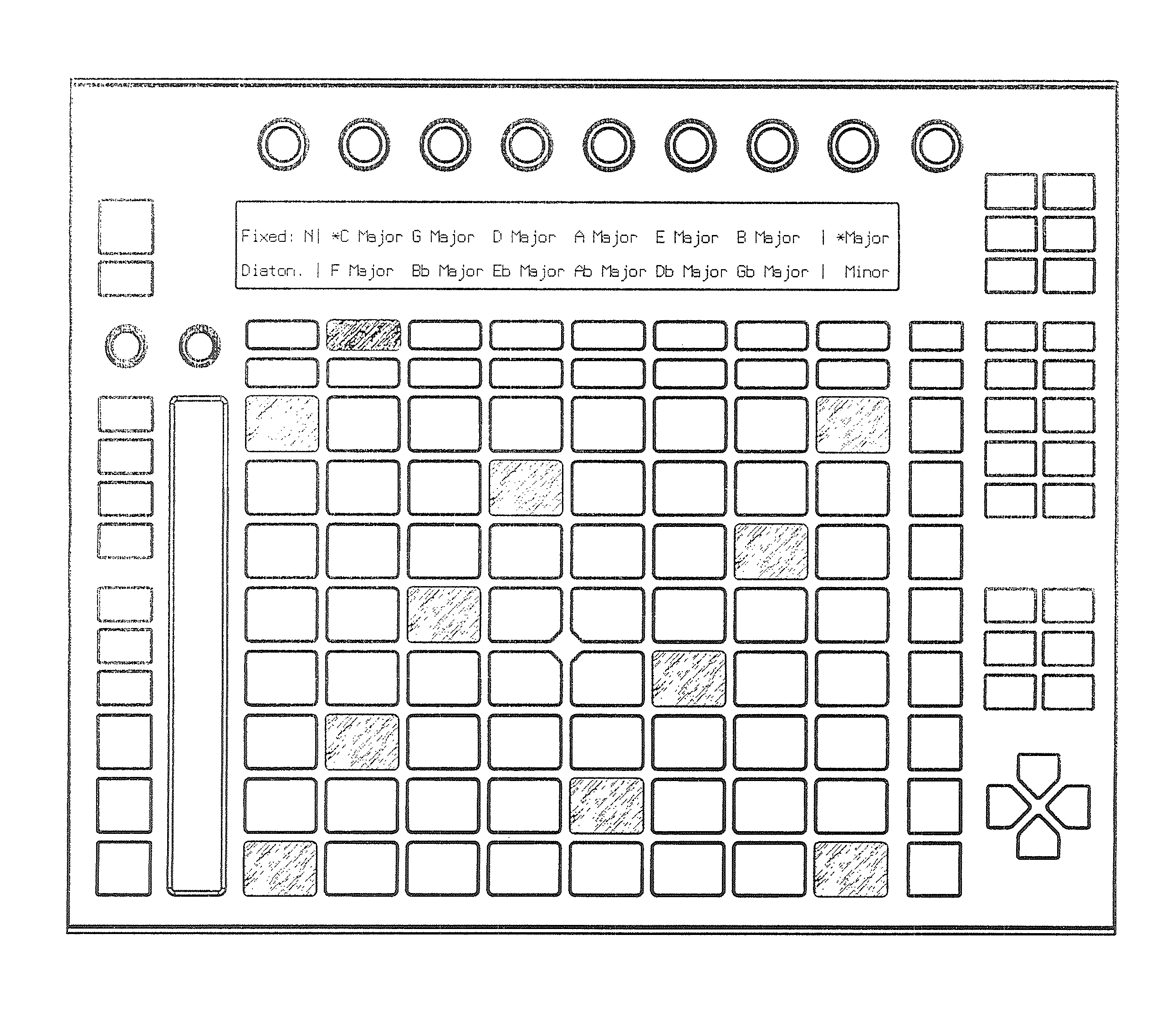
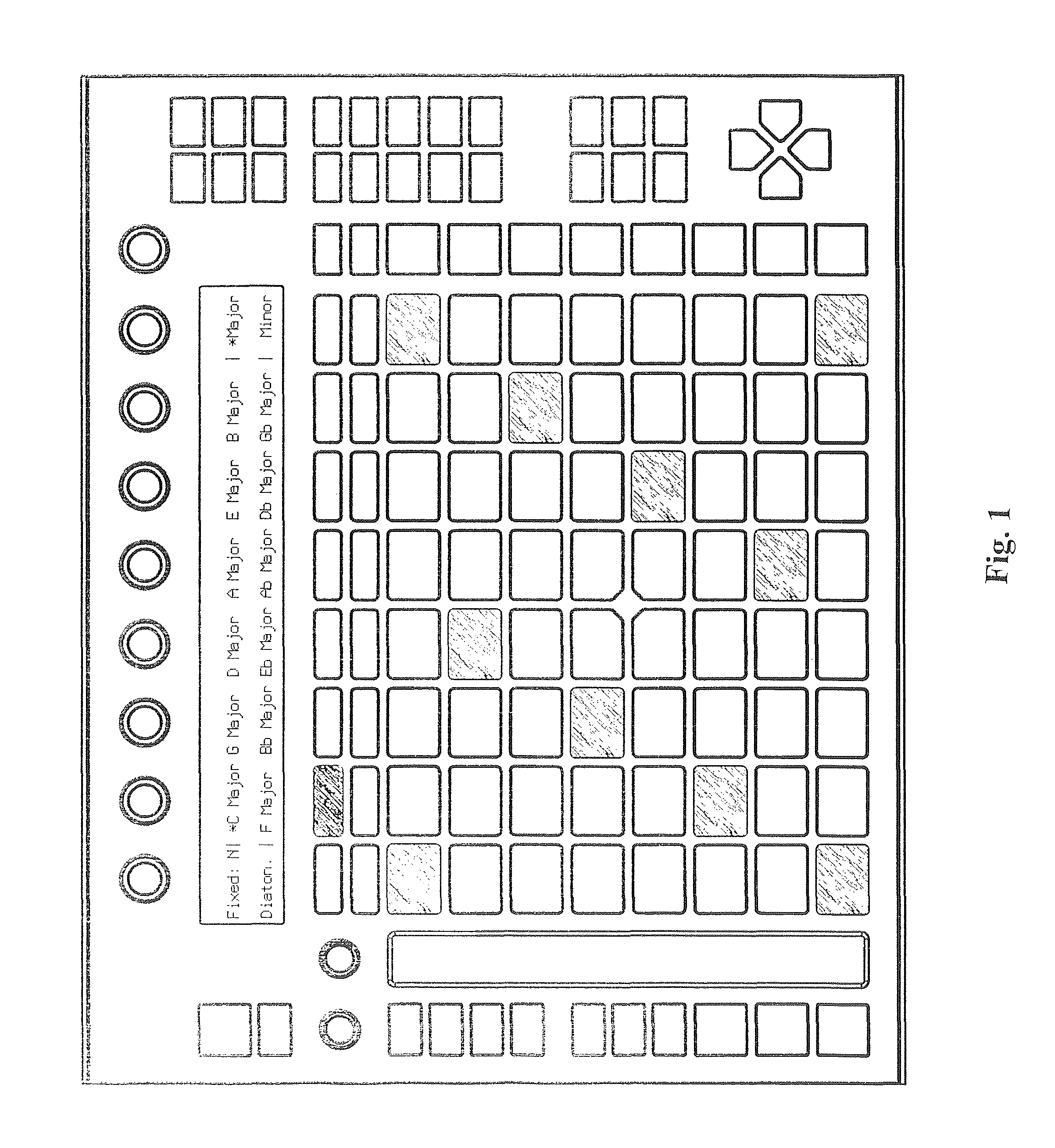
  • Figure 1
    Figure 1
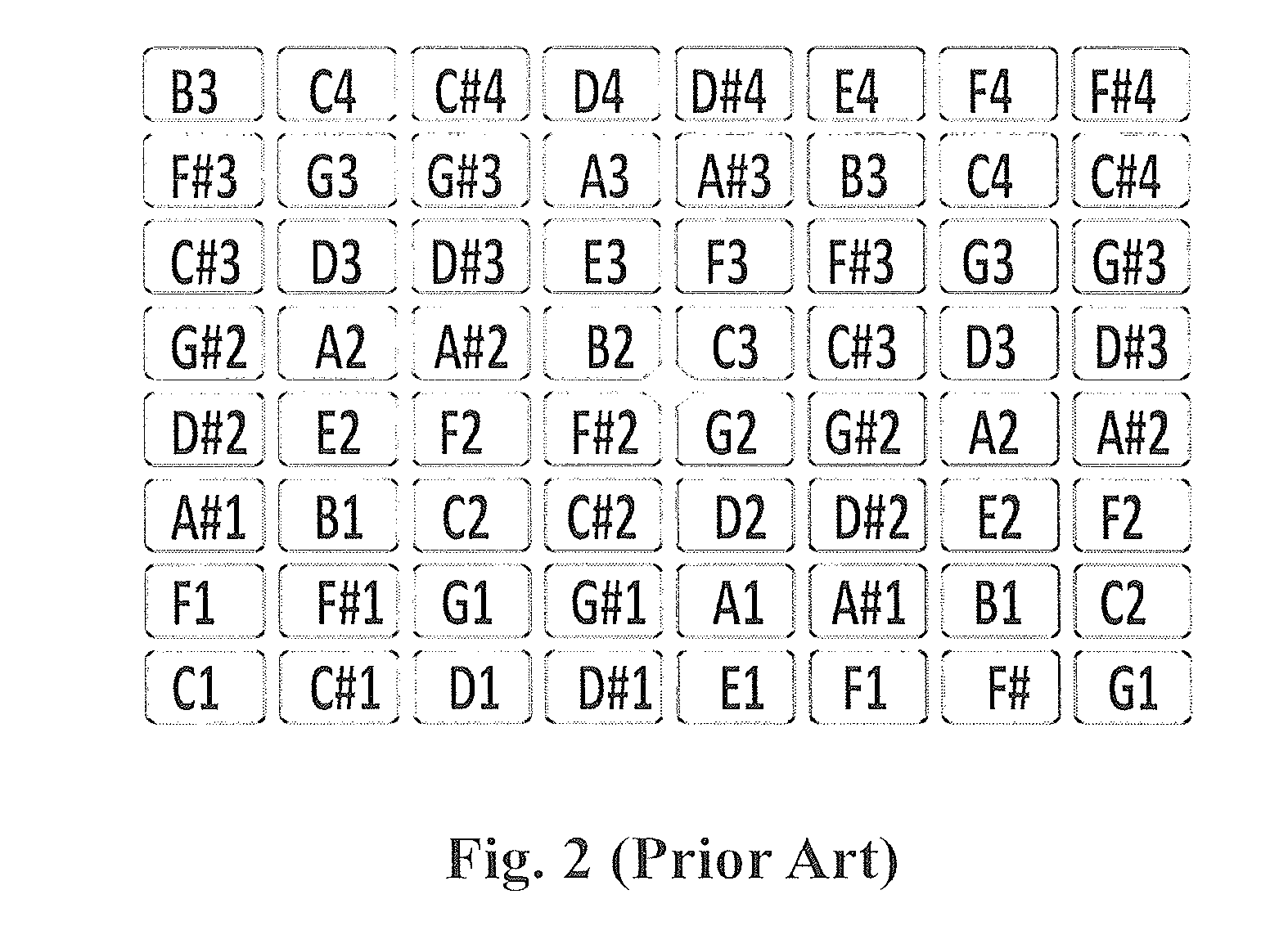
  • Figure 2
    Figure 2
  • Figure 3
    Figure 3
Patent Text Reader

Abstract

A musical instrument comprising buttons for playing notes is disclosed, wherein the buttons are arranged in an isomorphic layout consisting of rows and columns, characterized by means for choosing between a diatonic and a chromatic layout of the buttons and by means for choosing between different keys and scales. The buttons can be velocity and / or pressure sensitive, they can be backlit in different colors and they can have a dynamic note information thereon. When the layout is diatonic, the scales are arranged horizontally in rows, the rows being vertically spaced in relative fourths: when the layout is chromatic, the buttons corresponding to the scale notes of the selected key are lit in way different from the other keys.
Need to check novelty before this filing date? Find Prior Art

Description

FIELD OF THE INVENTION

[0001] The present invention is directed to a dynamic diatonic instrument which has an isomorphic layout of keys / buttons.BACKGROUND AND PRIOR ART

[0002] Conventional pianos and keyboards are ubiquitous with a standardized linear series of white and black keys / buttons arranged from left to right in ascending order. The white keys / buttons represent the diatonic C major scale, and the black keys / buttons represent the sharps or flats. This layout allows performance of chords and scales in all twelve chromatic keys of western music. However, the piano layout has limitations and takes years of practice to master, needing different hand positions and patterns of notes for performing chords and scales in different keys.

[0003] Even before the introduction of electronic musical instruments, isomorphic grid keyboards have already been developed. These keyboards improve on the traditional piano's design, by creating symmetrical grids of buttons with rows and columns, which mak...

Examples

Embodiment Construction

[0027]In a preferred embodiment, the musical instrument according to the present invention is made up of[0028]a two dimensional (8×8) grid of 64 velocity and pressure / velocity sensitive multicolor backlit buttons,[0029]twelve buttons to select the tonal center,[0030]two buttons to select the scale (i.e. major, minor etc.),[0031]a button to toggle between diatonic and chromatic layouts, and[0032]a screen to deliver key and scale information.

[0033]FIG. 1 shows the general arrangement of this instrument. Each button in the grid sends a variable MIDI note message, advantageously with velocity and pressure information, and may independently be backlit with a multi-color (RGB) LED. The note sent—and optionally the color of the button—can be dynamically changed depending on what key and what scale is selected.

[0034]The tones represented by the buttons can be arranged horizontally from left to right or vertically from bottom to top—the desired arrangement can be selected in a preferences ar...