
Extended playing surface apparatus for table tennis
a technology of extended playing surface and table tennis, which is applied in the field of table tennis or ping pong, can solve the problems of limited innovation in the standard game of table tennis, and in particular, and achieve the effects of uniform rebounding properties, greater variety of angled shots, and the same elasticity
- Summary
- Abstract
- Description
- Claims
- Application Information
AI Technical Summary
Benefits of technology
Problems solved by technology
Method used
Image

Examples
Embodiment Construction
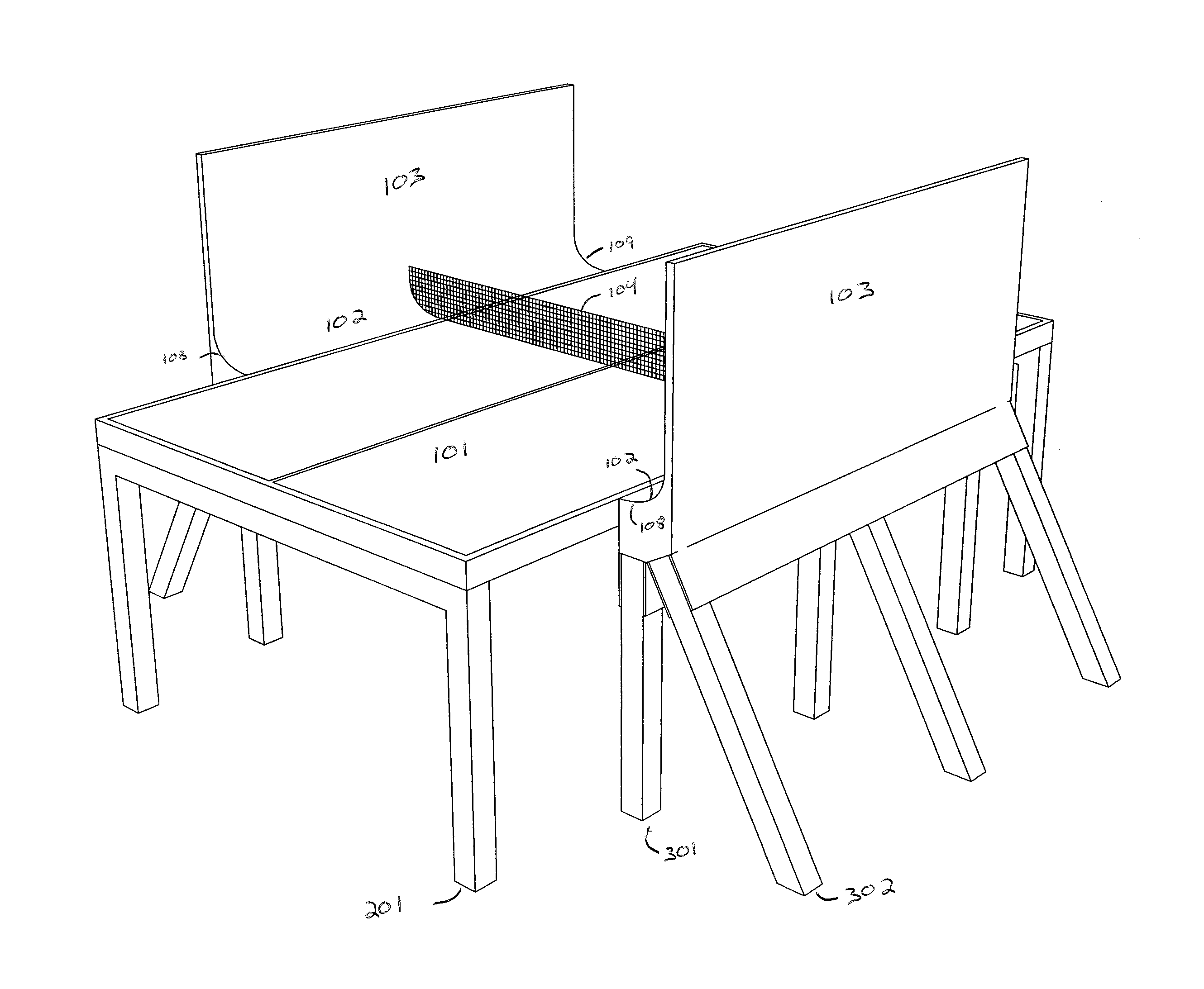
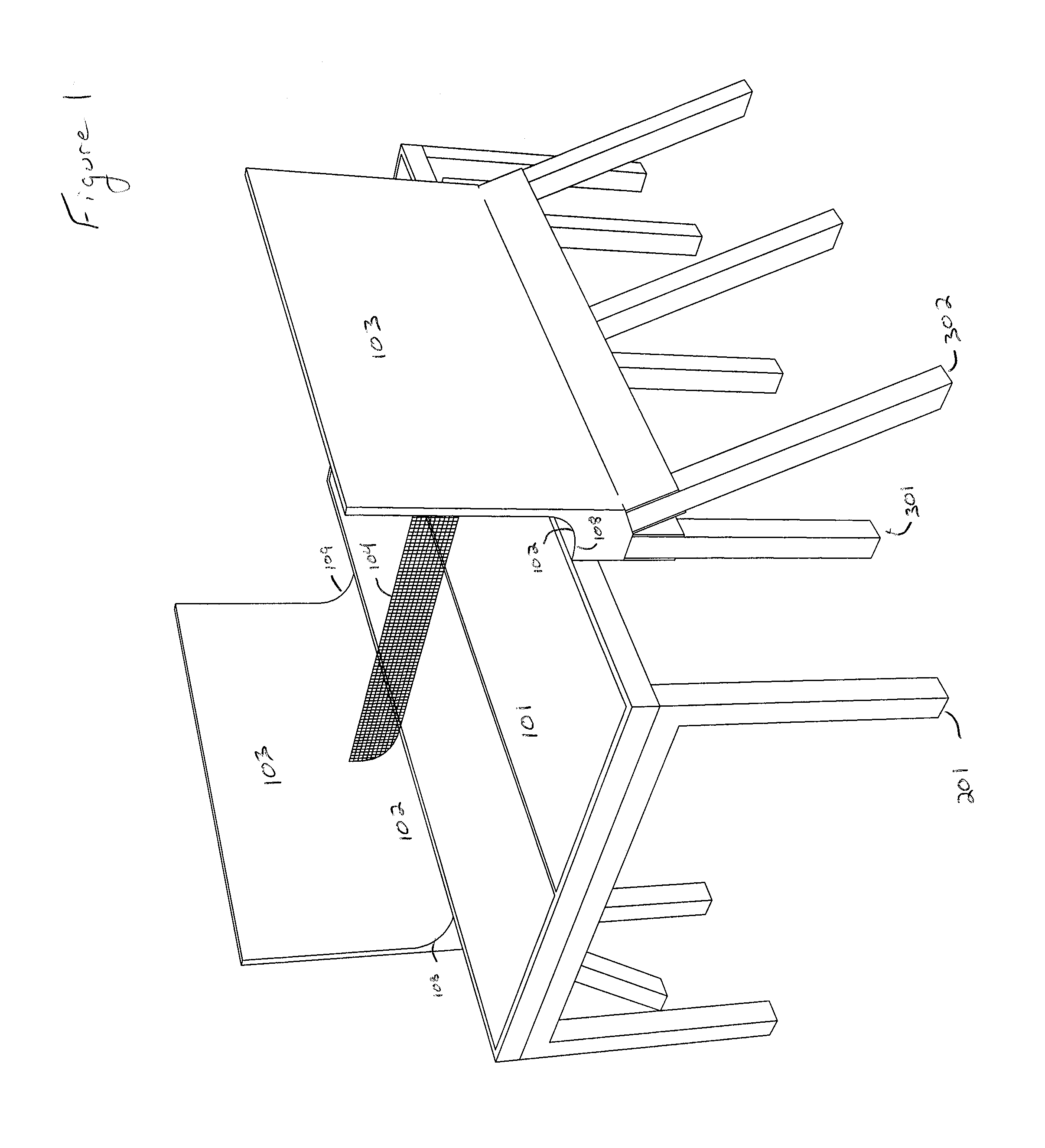
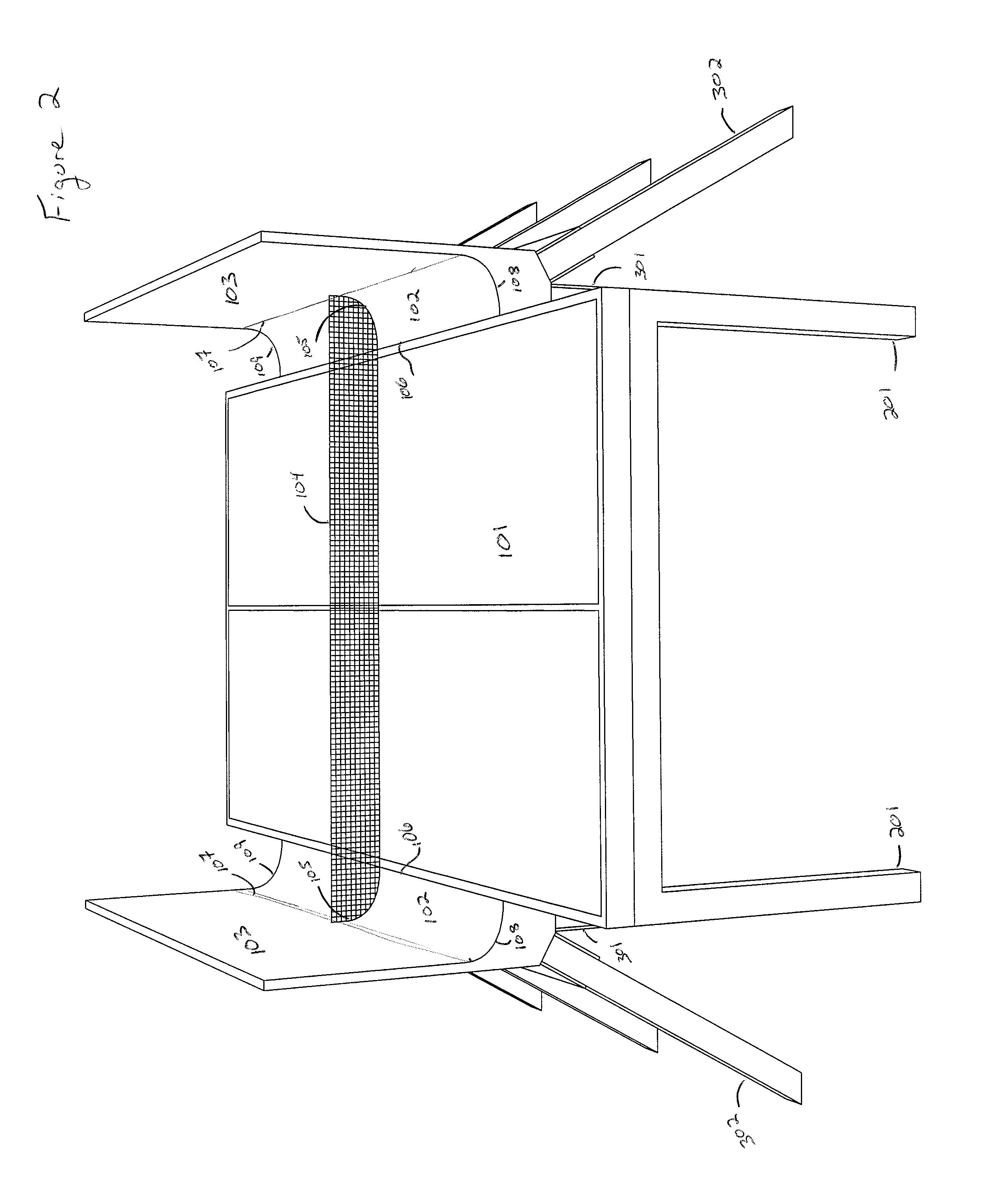
[0039]FIG. 1 shows a perspective of an embodiment of the extended table tennis playing surface apparatus. FIG. 2 shows a longitudinal view of the apparatus shown in FIG. 1. Horizontal section 101 is comparable to a standard table tennis playing surface. Curved sections 102 are provided across from each other on opposite sides of the horizontal section 101. FIGS. 1 and 2 show an embodiment of the curved section 102 for extending the table tennis playing surface 101. Curved section 102 has a predetermined length, in this case a length chosen to be less than the length of the horizontal section 101. The first edge 108 and the second edge 109 of the curved section are both perpendicular to said central axis. The third edge 106 and the fourth edge 107 are equal to said predetermined length, and both parallel to said central axis. The interior surface of said concave curved section is designed to rebound a table tennis ball. A second surface on the exterior of said concave curved section ...
PUM
| Property | Measurement | Unit |
|---|---|---|
| width | aaaaa | aaaaa |
| angle | aaaaa | aaaaa |
| angles θ1 | aaaaa | aaaaa |
Abstract
Description
Claims
Application Information
 Login to View More