

Method for manufacturing nano calcium carbonate from high-concentration carbon dioxide industrial exhaust gases
A nano-calcium carbonate and carbon dioxide technology, applied in the direction of calcium carbonate/strontium/barium, etc., can solve the problems affecting the performance of calcium carbonate products, unfavorable calcium carbonate nucleation and growth, and uneven particle size of calcium carbonate, so as to save carbonization Response time, excellent gloss, low surface energy density effect
Patent Information
- Authority / Receiving Office
- CN · China
- Patent Type
- Applications(China)
- Current Assignee / Owner
- Publication Date
- 2010-06-09
- Estimated Expiration
- Not applicable · inactive patent
Smart Images
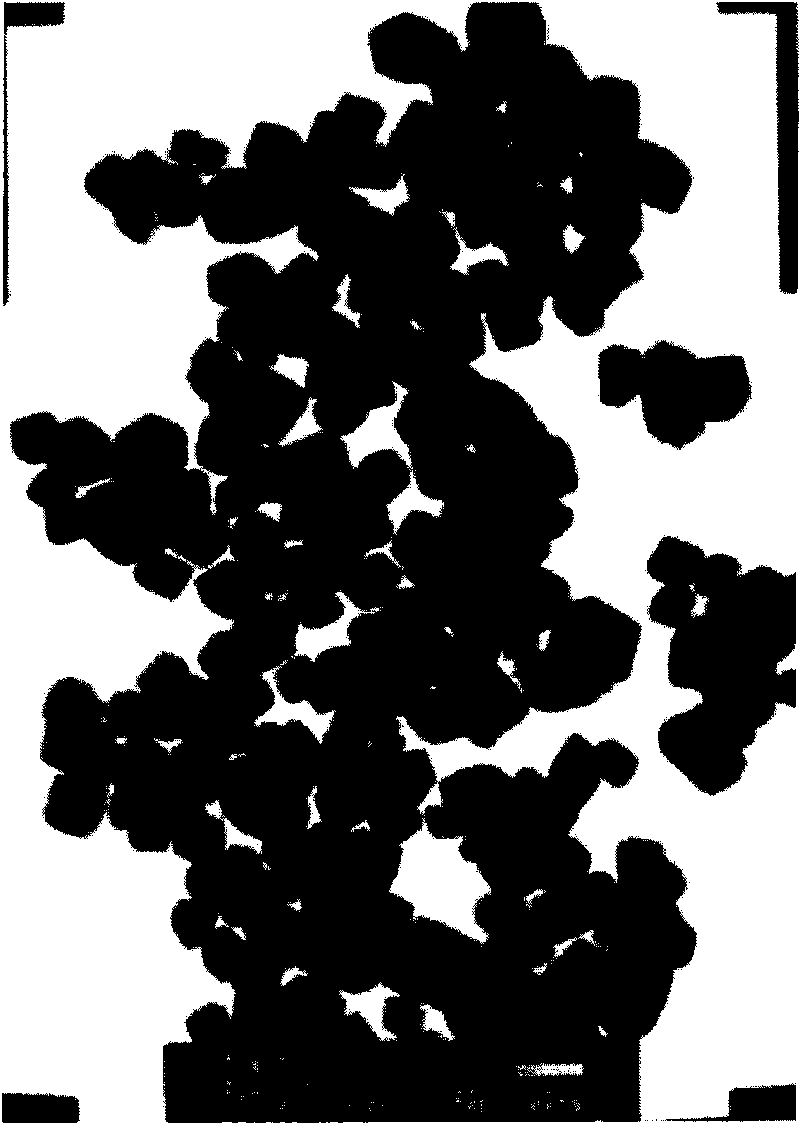
Figure 1 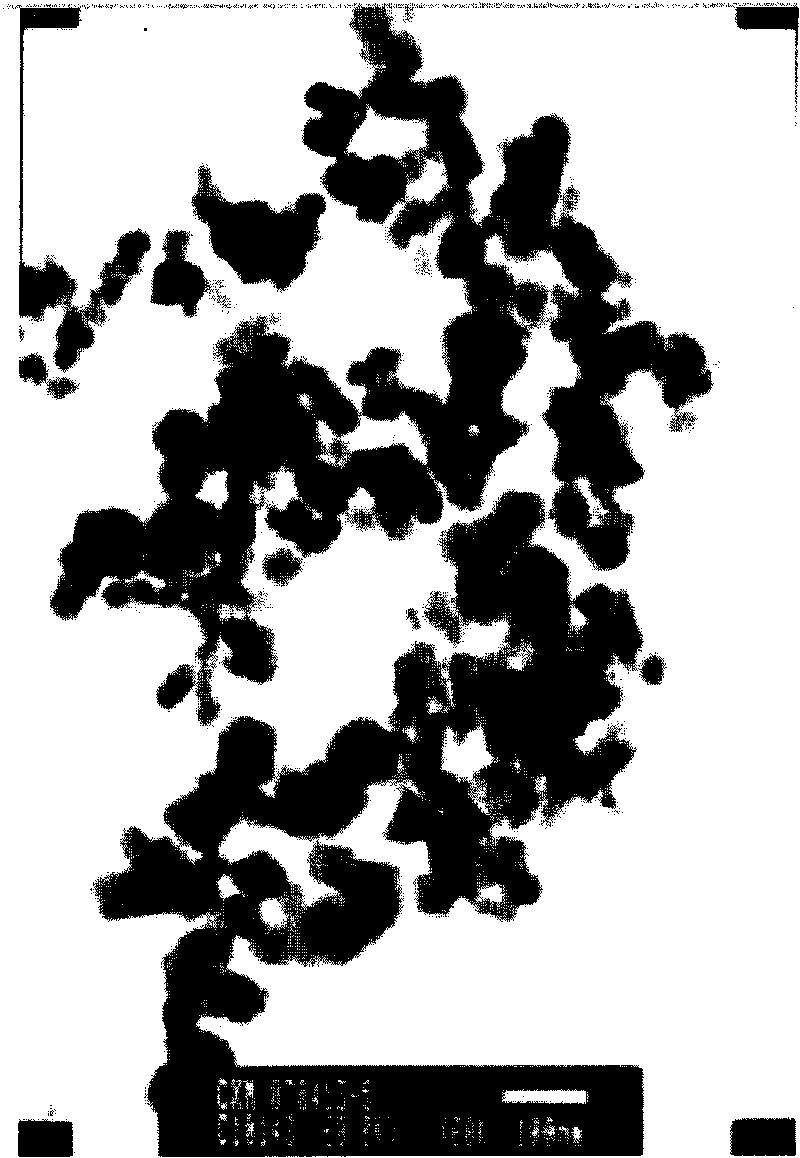
Figure 2
Abstract
Description
technical field
[0001] The invention relates to a preparation method of calcium carbonate particles, more specifically, relates to a method for preparing nanometer calcium carbonate particles by using high-concentration carbon dioxide gas discharged from industry. technical background
[0002] The commonly used industrial production method of nano-calcium carbonate is bubbling carbonization method. The stirred tank carbonization method is a method widely used at home and abroad to produce nano-calcium carbonate. This method needs to strictly control the carbonization temperature at 10-30°C during the entire carbonization process, while The formation process of calcium carbonate is an exothermic reaction, so a huge forced cooling heat exchange system is required.
[0003] Chinese patent application publication CN1330039A discloses a method for synthesizing calcium carbonate by mechanical stirring and mixing at a relatively low temperature, then heating the calcium carbonate s...
Examples
Embodiment 1
[0025] at 60m 3 Add 50m 3 Calcium hydroxide concentration 10% (weight concentration) initial temperature is the lime emulsion of 25 ℃, add 20kg sucrose and 130kg triethanolamine at the same time, after stirring evenly, pass into the industrial gas that the carbon dioxide content is 95% (volume concentration) and start to carry out Carbonization reaction, when the carbonization rate reaches 90%, add 20.5kg magnesium chloride, continue to ventilate until slurry pH is 6.5-7, obtain the nano-calcium carbonate suspension that temperature is 63 ℃, add sodium stearate 250kg in this slurry Concentration of 7% (weight concentration) saponified emulsion, continue to stir for 1.5h for coating activation treatment, then filter the slurry while hot, dry at 100°C, and pulverize to obtain cubic and spherical transparent calcium carbonate. The carbonization reaction time is 110 minutes, and the method specified by the national standard (GB / T 19590-2004) is used for measurement. The main part...
Embodiment 2
[0027] at 60m 3 Add 50m 3 Calcium hydroxide concentration 8.5% (mass concentration) initial temperature is the refined lime emulsion of 30 ℃, add 81kg sucrose simultaneously, after stirring, pass into the industrial gas that carbon dioxide content is 78% (volume concentration) and begin to carry out carbonization reaction, When the carbonization rate reaches 80%, add 8.6kg sodium hexametaphosphate, and continue aeration until the pH of the slurry is 6.5-7 to obtain a nano-calcium carbonate suspension with a temperature of 55°C. Add 125kg of sodium stearate to the slurry. The saponified emulsion with a concentration of 5% (weight concentration) is continuously stirred for 2 hours to carry out coating activation treatment, the slurry is filtered while it is hot, and dried at 100° C. to obtain cubic and spherical nano-active calcium carbonate. The carbonization reaction time is 70 minutes, and the method specified in the national standard (GB / T 19590-2004) is used for measuremen...
Embodiment 3
[0029] at 60m 3 Add 50m 3Calcium hydroxide concentration 13% (mass concentration) initial temperature is the refined lime emulsion of 39 ℃, add 160kg sodium citrate at the same time, after stirring evenly, pass into the industrial gas that carbon dioxide content is 85% (volume concentration) and begin to carry out carbonization Reaction, when the carbonization rate reaches 95%, add 60kg of sodium bicarbonate, and continue to ventilate until the pH of the slurry is 6.5-7 to obtain a nano-calcium carbonate suspension with a temperature of 70°C, and add TC-311 titanic acid to the slurry Lipid coupling agent 85kg concentration is the aqueous solution of 15% (weight concentration), continues to stir 1h and carries out coating activation treatment, slurry is filtered while hot, through 100 ℃ of drying, pulverization promptly obtains cubic nano-active calcium carbonate. The carbonization reaction time is 120 minutes, and it is measured by the method stipulated in the national standa...