

Method for separating 2,4-Dichlorophenol and 2,6-Dichlorophenol
A technology of dichlorophenol and mixture, applied in the field of separation 2, can solve the problems of small investment, high equipment requirements, and difficult post-processing, etc., and achieve the effects of industrial scale-up, rapid separation, and low implementation cost
Patent Information
- Authority / Receiving Office
- CN · China
- Patent Type
- Applications(China)
- Current Assignee / Owner
- Publication Date
- 2010-07-21
Smart Images
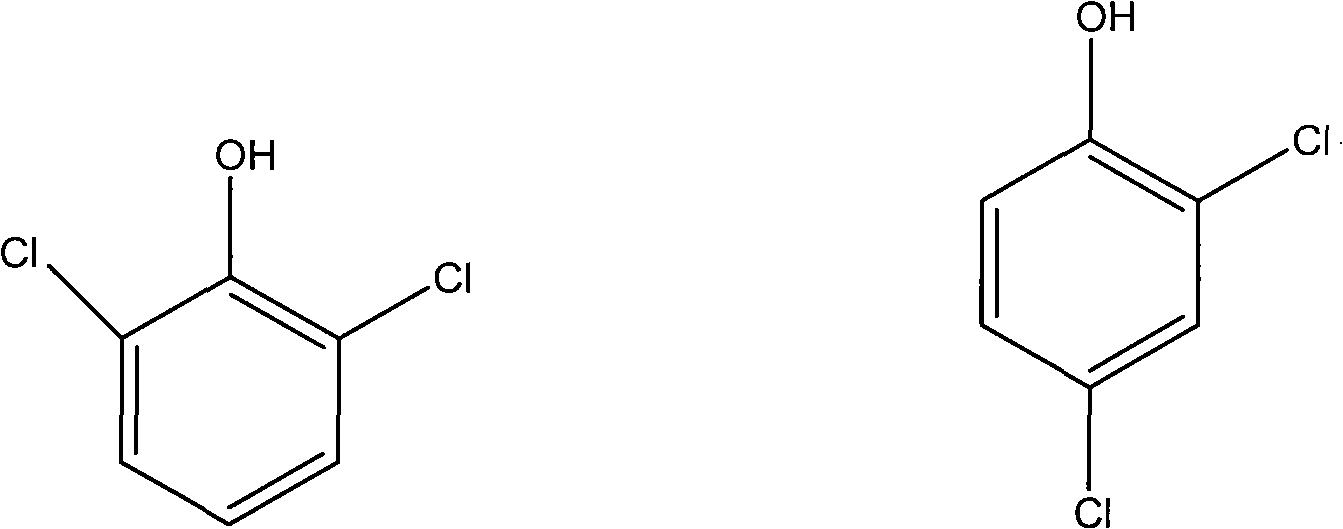
Figure 1
Abstract
Description
(1) Technical field
[0001] The invention relates to a method for separating 2,4-dichlorophenol and 2,6-dichlorophenol. (2) Background technology
[0002] 2,4-Dichlorophenol is an important fine chemical product, mainly used in pesticides, medicines and auxiliary products. Due to the intensified development of downstream products of p-dichlorophenol in China in recent years, especially the successful development of antifungal agent TCS and pesticide oxadiazone in my country, it has brought great benefits to the application and development of 2,4-dichlorophenol in my country. opportunity.
[0003] In the pesticide industry, 2,4-dichlorophenol is mainly used in the production of insecticides phenophos and herbicides, methyl ester herbicides, biben, dichlorophenoxy acid and its esters; in the pharmaceutical industry for the production of Insect repellent sulfur bisdichlorophene; used in the auxiliary industry to produce preservative TCS. However, the amount of 2,4-dichlorophen...
Examples
example 1
[0039]In a 200ml beaker, add 150ml ethanol and 50g 2,4 dichlorophenol, 2,6-dichlorophenol mixture, detect through high performance liquid chromatography (the same below) wherein 2,4-dichlorophenol and 2,6-dichlorophenol The content of phenol was 50% and 50% respectively, then 16g of morpholine was added, stirred and heated at 70° C. for 2 minutes until the solution was clear. Placed under the greenhouse for 7 days, colorless and transparent crystals were precipitated, and filtered under reduced pressure to obtain 31.5 g of filter cake crystals and filtrate. compound, and 2,4-dichlorophenol is left in the filtrate, and then high-purity 2,4-dichlorophenol 22.8g can be obtained by distillation, the yield is 91%, and the purity is 96% (high performance liquid Phase chromatography detection, the same below). Use 100ml of ethanol to recrystallize the crude 2,6-dichlorophenol once, add it to 60ml of 10% dilute hydrochloric acid solution for a full reaction at room temperature, then ...
example 2
[0041] In a 500ml beaker, add 200ml methyl alcohol and 50g 2,4 dichlorophenol, 2,6-dichlorophenol mixture, wherein the content of 2,4-dichlorophenol and 2,6-dichlorophenol is respectively 60% and 40%, then add 16g of triethylenediamine, stir and heat at 60°C for 2 minutes until the solution is clear. Placed under the greenhouse for 6 days, colorless and transparent crystals precipitated, and filtered under reduced pressure to obtain 30.8 g of filter cake crystals and filtrate. The crystals were 2,6-dichlorophenol crude product, which was 2,6-dichlorophenol and triethylene The compound of diamine, while 2,4-dichlorophenol is left in the filtrate, and then 28.0 g of high-purity 2,4-dichlorophenol can be obtained by distillation, the yield is 93%, and the purity is 98%. Recrystallize the crude product of 2,6-dichlorophenol once with 100ml of methanol, add it to 60ml of 10% dilute hydrochloric acid solution for a full reaction at room temperature, then add 60ml of benzene for extr...
example 3
[0043] Add 150ml ethanol and 50g 2,4 dichlorophenol, 2,6-dichlorophenol mixture in 200ml beaker, wherein 2,4-dichlorophenol and 2, the content of 6-dichlorophenol are respectively 60% and 40%, then add 12.5g piperazine, stir and heat at 70°C for 2 minutes until the solution is clear. Placed at room temperature for 8 days, colorless and transparent crystals precipitated, and filtered under reduced pressure to obtain 30.5 g of filter cake crystals and filtrate. The crystals were crude 2,6-dichlorophenol, which was the mixture of 2,6-dichlorophenol and piperazine. The complex, while 2,4-dichlorophenol is left in the filtrate, and then high-purity 2,4-dichlorophenol 29.1g can be obtained by distillation, the yield is 97%, and the purity is 98%. Use 100ml of acetone to recrystallize the crude 2,6-dichlorophenol once, add it to 60ml of 10% dilute hydrochloric acid solution for a full reaction at room temperature, then add 60ml of chloroform for extraction, let it stand for layers, a...