
Method for utilizing and disposing micro-electrolyzed waste residue of organic waste water and method for immobilizing arsenic and heavy metal in soil
A technology of organic wastewater and micro-electrolysis, applied in the environmental field, can solve the problems of surface water and marine environmental pollution, environmental damage, air pollution, etc., and achieve effective repair, good effect, and short treatment time
Patent Information
- Authority / Receiving Office
- CN · China
- Patent Type
- Applications(China)
- Current Assignee / Owner
- Publication Date
- 2010-08-04
- Estimated Expiration
- Not applicable · inactive patent
Smart Images
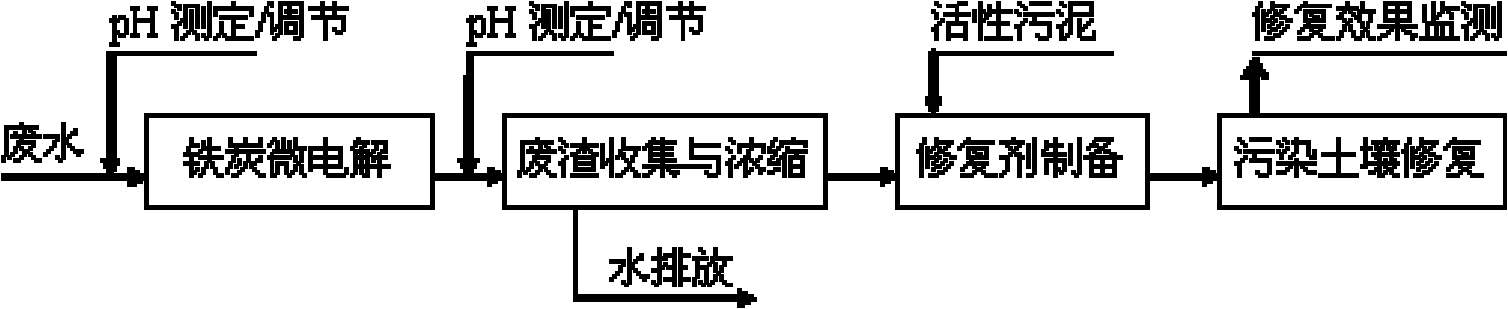
Figure 1 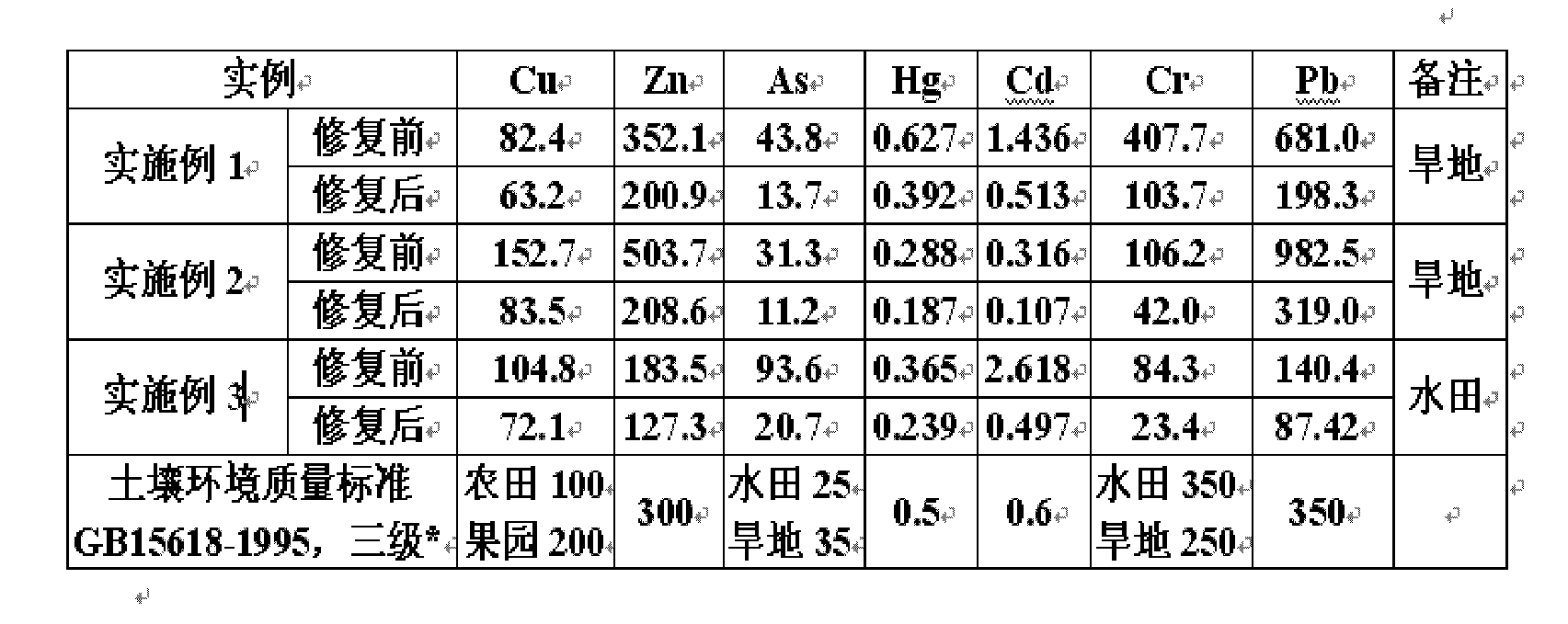
Figure 2
Abstract
Description
Technical field:
[0001] The invention belongs to the field of environmental technology, and relates to a method for the utilization and disposal of arsenic and heavy metals in soil, as well as organic wastewater micro-electrolysis waste residue and activated sludge. The method can not only realize the effective restoration of heavy metal contaminated soil and enhance agricultural safety, but also effectively dispose of organic wastewater micro-electrolysis waste residue. technical background:
[0002] Soil is an important natural resource for human survival and development and the foundation of the entire terrestrial ecosystem. The control of soil pollution has received extensive attention. The pollution sources of the soil environment are more complex than the atmospheric and water environments. There are many types of pollutants, including traditional chemical pollutants (inorganic pollutants and organic pollutants), physical pollutants, biological pollutants and radioactive po...
Examples
Embodiment 1
[0030] Laboratory preparation of soil sample restoration implementation steps.
[0031] ①Organic wastewater, iron-carbon micro-electrolysis waste: if there is wastewater, use concentrated sulfuric acid to adjust the pH=3.0, and treat it with a catalytic iron-carbon micro-electrolysis column with a ratio of iron to carbon of 2:1, with a residence time of 1.0h, and the iron-carbon micro-electrolysis column uses 10 After adjusting the pH to 9.0, the% lime milk enters the advection sedimentation tank, and the retention time of the sedimentation tank is 1.5h. The waste residue is concentrated by suction filtration.
[0032] ②Preparation of repairing agent: The remaining activated sludge produced by the treatment of domestic sewage is mixed with the organic wastewater iron-carbon micro-electrolysis waste at a mass ratio of 3:1, and the composting process is performed for 28 days to obtain the repairing agent.
[0033] ③Remediation of soil pollution: Take dry land soil, analyze the water c...
Embodiment 2
[0035] Implementation steps for remediation of soil contaminated by percolation water in a lead-zinc mine tailing pond.
[0036] Laboratory preparation of soil sample restoration implementation steps.
[0037] ①Organic wastewater, iron-carbon micro-electrolysis waste residue: If there is wastewater, use 5% sulfuric acid solution to adjust the pH of the wastewater to 4.0, and treat it with a catalytic iron-carbon micro-electrolysis column with a ratio of iron: carbon: catalyst of 2:1:0.02, with a residence time of 1.5h, The effluent of the iron-carbon micro-electrolysis column adopts 5% lime milk to adjust the pH to 10.0 and then microflocculates. The waste residue is concentrated by a plate and frame filter press.
[0038] ②Preparation of repairing agent: The remaining activated sludge produced by the anoxic and aerobic (A / O) biochemical treatment of organic wastewater is mixed with the organic wastewater iron-carbon micro-electrolysis waste at a mass ratio of 2:1, and then composted...
Embodiment 3
[0041] Implementation steps of soil restoration in a certain paddy field by the Xiangjiang River in Huangchaling, Hengyang.
[0042] ①Organic wastewater, iron-carbon micro-electrolysis waste residue: same as Example 1.
[0043] ② Preparation of repair agent: same as in Example 1.
[0044] ③Remediation of soil pollution: Take 40kg of paddy soil, add 0.30kg of remediation agent to 20kg of soil and mix well, and add no remediation agent to the other 20kg of soil. Both are saturated with water; other extraction and analysis steps are the same as in Example 1.
[0045] Table 1 shows the analysis results before and after soil restoration in Examples 1 to 3.
[0046] Table 1 Effect before and after soil restoration mg / kg
[0047]
[0048] *pH=6.5-7.5.