
Method for cleanly producing methoxyl propanediol acrylate and analogs thereof
A technology of methoxy propylene glycol acrylate and methoxy dipropylene glycol acrylate, which is applied in the field of light-curing materials, can solve the problems of high processing cost, environmental pollution of water bodies, and high manufacturing cost, and achieves guaranteed yield, quality, and yield. High and environmental benefits
Patent Information
- Authority / Receiving Office
- CN · China
- Patent Type
- Patents(China)
- Current Assignee / Owner
- Publication Date
- 2014-06-11
Smart Images
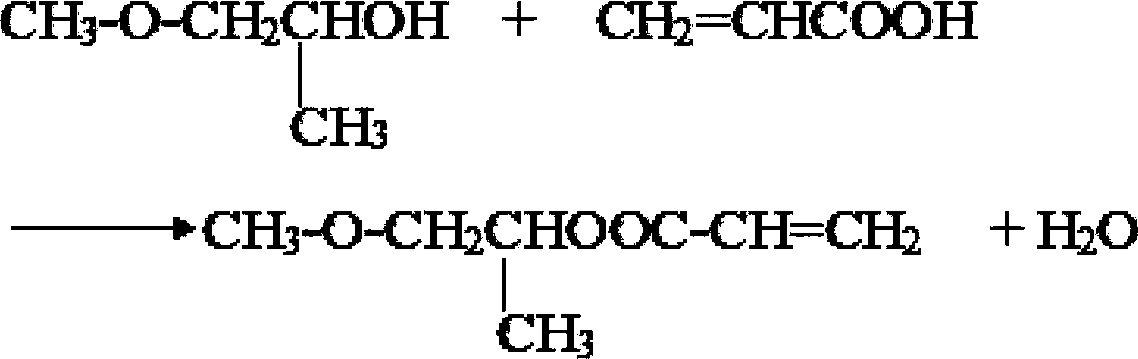
Figure 1 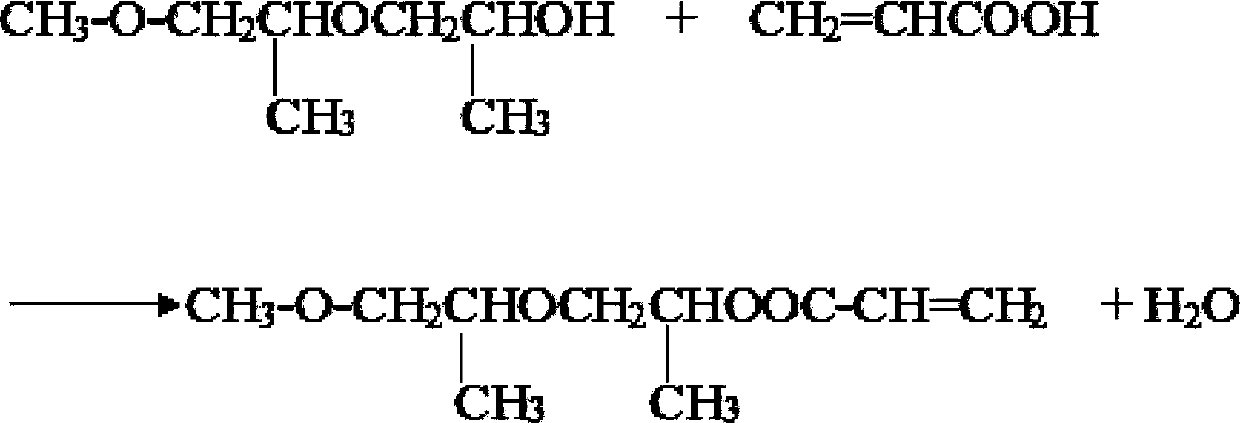
Figure 2 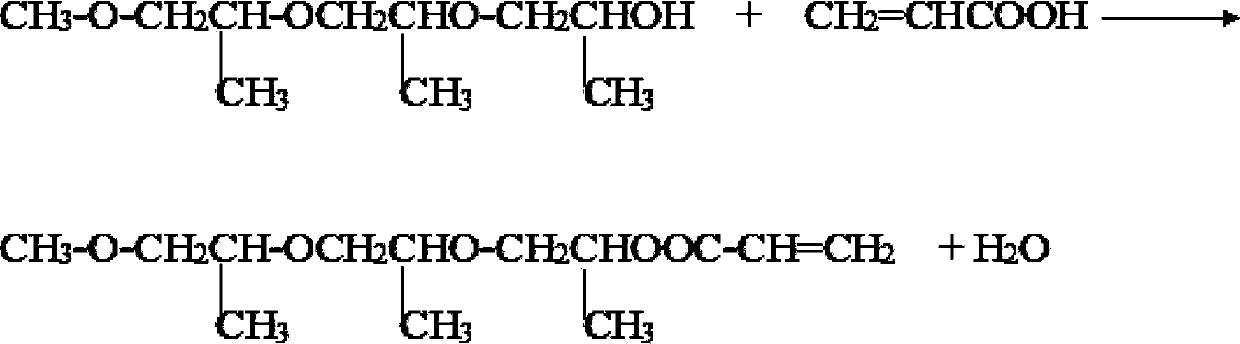
Figure 3
Abstract
Description
technical field
[0001] The invention belongs to the field of light-curing materials, and relates to a clean production method of methoxypropylene glycol acrylate and analogues thereof. Background technique
[0002] With the rapid development of science and technology and the strict restrictions on solvents in environmental protection regulations, more and more people pay attention to photocurable polymer materials. Light-curing materials have excellent properties such as fast curing, low energy consumption, less pollution, and high efficiency, so they are widely used in coatings, printing, and electronics industries, and have developed rapidly in recent years. Methoxypropylene glycol acrylate (MPGA), methoxydipropylene glycol acrylate (MDPGA) or methoxytripropylene glycol acrylate (MTPGA) is a new class of photocurable materials - monofunctional photocurable monomers with Low viscosity, low irritation, fast curing speed, strong dilution, high transparency and other excellen...
Examples
Embodiment 1
[0041] Put 500 kg of toluene, 290 kg of cyclohexane, 536.5 kg of methoxypropylene glycol (90 molecular weight), 463.5 kg of acrylic acid, 8 kg of p-hydroxyanisole, 4 kg of hypophosphorous acid, and 55 kg of p-toluenesulfonic acid into the 3000L reactor ; Turn on stirring, continuously feed compressed air into the kettle through the distributor at the bottom of the kettle, raise the temperature to 85-95°C and start reflux dehydration, the esterification reaction is 9-10 hours, the kettle temperature is 95-105°C, when the reflux dehydration reaches anhydrous When the acid value is 10-25mgKOH / g, after the reaction is over, cool to 40°C; add 25 kg of caustic soda and 60 kg of water, and stir for 30 minutes; add 6 kg of magnesium polysilicate, stir and absorb for 30 minutes; Above -0.098MPa, water and solvent are distilled under reduced pressure at 50-95°C. After the recovered water and solvent are separated, the water can be used directly in the next neutralization without any trea...
Embodiment 2
[0043] Put 585 kg of cyclohexane, 957.6 kg of methoxydipropylene glycol (molecular weight 148), 512.4 kg of acrylic acid, 6 kg of p-hydroxyanisole, 3 kg of sodium hypophosphite, and 30 kg of methanesulfonic acid into the 3000L reactor; start stirring , continuously feed compressed air into the kettle through the distributor at the bottom of the kettle, raise the temperature to 80-85°C and start reflux dehydration, the esterification reaction is 10-12 hours, the kettle temperature is 85-92°C, when the reflux dehydration reaches no water, the detection The acid value is 10-25mgKOH / g. After the reaction is over, cool to 40°C; add 32 kg of caustic soda and 75 kg of water, and stir for 30 minutes; add 6.5 kg of magnesium polysilicate, stir and absorb for 30 minutes; Above, water and solvent are distilled under reduced pressure at 50-95°C; after the recovered water and solvent are separated, the water can be used directly in the next neutralization without any treatment, and the solv...
Embodiment 3
[0045] Put 162 kg of methylcyclopentane, 198 kg of toluene, 1269 kg of methoxytripropylene glycol (molecular weight 206), 466 kg of acrylic acid, 7.2 kg of p-hydroxyanisole, 1.8 kg of hypophosphorous acid, and 1.8 kg of methanesulfonic acid into the 3000L reactor. 25.6 kg; start stirring, continuously feed compressed air into the kettle through the distributor at the bottom of the kettle, heat up to 85-95°C and start reflux dehydration, esterification reaction for 9-10 hours, kettle temperature 95-105°C, when reflux dehydration to no When the water comes out, the acid value is detected to be 10-25 mgKOH / g. After the reaction is over, cool to 40°C; add 43 kg of caustic soda and 108 kg of water, and stir for 30 minutes; add 17.3 kg of magnesium polysilicate, stir and absorb for 30 minutes; Vacuum degree above -0.098MPa, water and solvent are distilled under reduced pressure at 50-95°C. After the recovered water and solvent are separated, the water can be used directly in the next...