
Preparation method of tailing micropowder portland cement
A technology of portland cement and tailings micropowder, which is applied in the direction of cement production, etc., can solve the problems of limitations, failure to stimulate and mobilize chemical and physical functions, etc., and achieve improved rheology, good micro-aggregate effect, good The effect of the shape effect
Patent Information
- Authority / Receiving Office
- CN · China
- Patent Type
- Applications(China)
- Current Assignee / Owner
- Publication Date
- 2012-10-24
- Estimated Expiration
- Not applicable · inactive patent
Smart Images
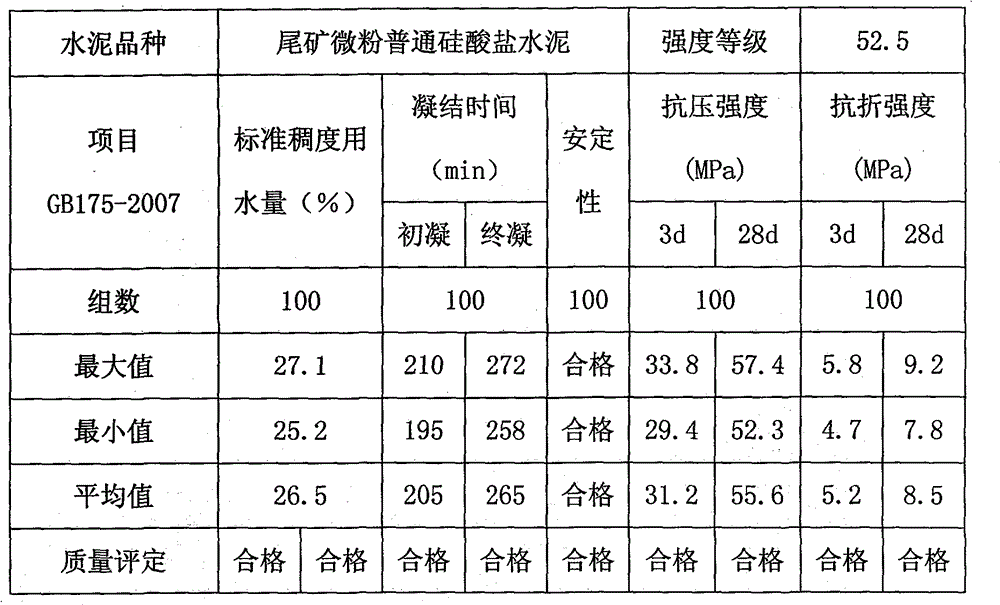
Figure 1 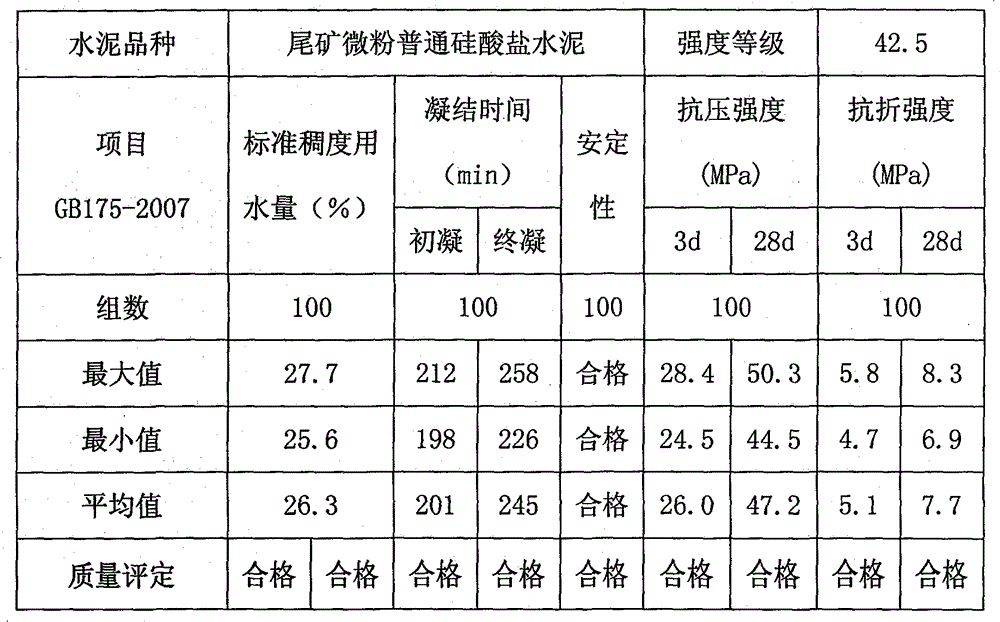
Figure 2 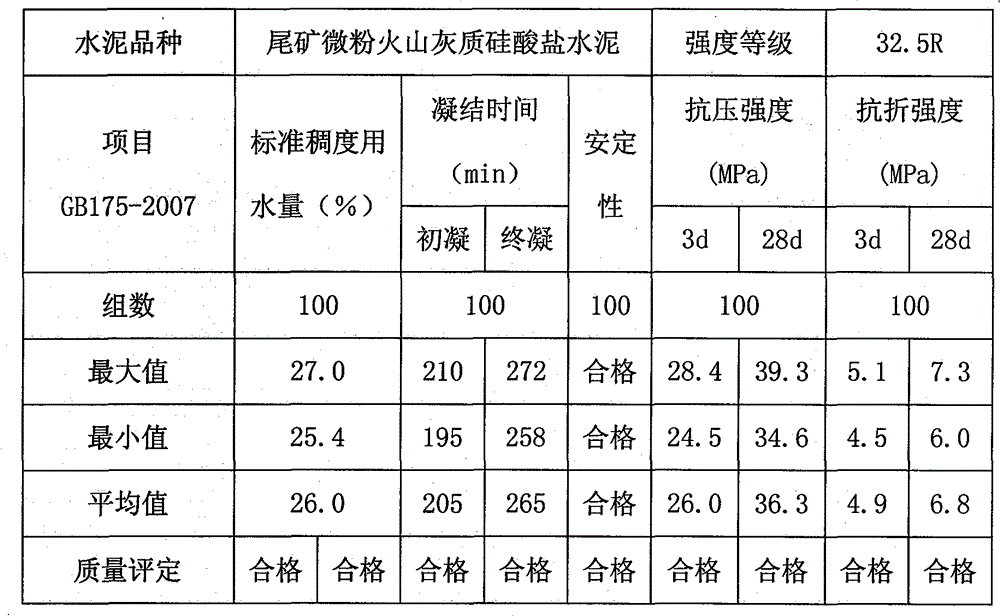
Figure 3
Abstract
Description
Technical field:
[0001] The invention relates to a cement production method, in particular to a method for preparing tailings micropowder Portland cement. Background technique:
[0002] As the most important building structure material, cement is in increasing demand. However, cement plants are well-known sources of pollution. Cement production consumes a large amount of non-renewable resources such as limestone, clay, and coal, and simultaneously emits hundreds of millions of tons of CO 2 , SO 2 and NO x Waste gas and dust, such as waste gas and dust, the resource consumption, energy consumption and environmental pollution in the production process are very prominent. The development of ecological cement and green cement is the direction to realize the sustainable development of the cement industry.
[0003] Related to Portland cement products and preparation methods thereof in the existing disclosed technologies are: such as the invention patent CN1213654A "composite Po...
Examples
Embodiment 1
[0032] Tailings micropowder Portland cement provided by the present invention is used to prepare tailings micropowder ordinary Portland 52.5 cement:
[0033] In terms of mass percentage, clinker micropowder is 95%, tailings micropowder 5%, which is obtained by mixing and grinding.
[0034] Statistical Table 1 of Verification Test Results
[0035]
Embodiment 2
[0037] The micro-powdered tailings Portland cement provided by the invention is prepared from the micro-powdered tailings ordinary Portland 42.5 cement; in terms of mass percentage, 85% of clinker micro-powder and 15% of tailings micro-powder are mixed and ground to obtain the product.
[0038] Statistical Table 2 of Verification Test Results
[0039]
Embodiment 3
[0041] Tailings micropowder Portland cement provided by the present invention is used to prepare tailings micropowder pozzolanic Portland 32.5R cement:
[0042] In terms of mass percentage, clinker micropowder is 70%, tailings micropowder 30%, which is obtained by mixing and grinding.
[0043] Statistical Table 3 of Verification Test Results
[0044]