
A kind of prrsv virus-like particle with immunogenicity and its preparation and application
An immunogenic, virus-like technology, used in antiviral agents, viruses/phages, viral antigen components, etc., can solve the problems of poor immune efficacy and strong virulence, and achieve high immunogenicity and immune protection rate. high effect
Patent Information
- Authority / Receiving Office
- CN · China
- Patent Type
- Patents(China)
- Current Assignee / Owner
- Publication Date
- 2016-01-20
Smart Images
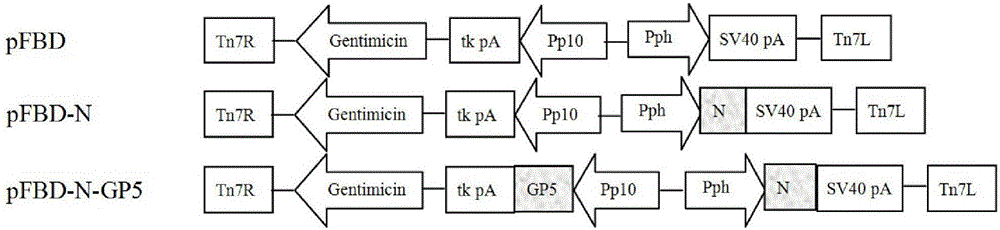
Figure 1 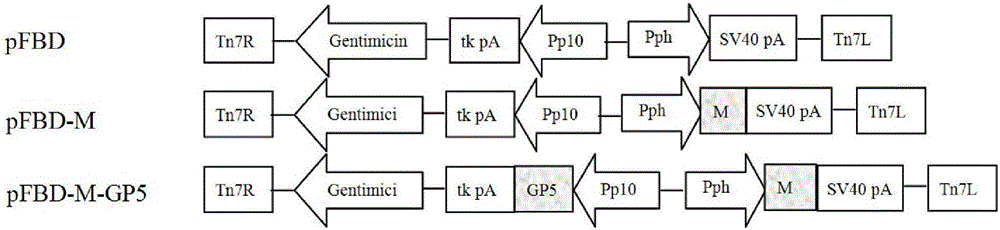
Figure 2 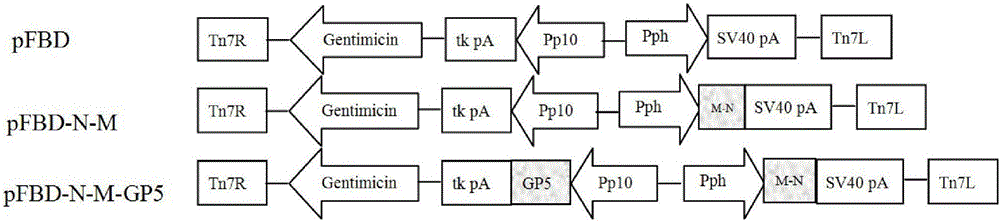
Figure 3
Abstract
Description
technical field
[0001] The invention belongs to the field of agricultural and veterinary biotechnology, and in particular relates to an immunogenic PRRSV virus-like particle and its preparation and application. Background technique
[0002] Porcine reproductive and respiratory syndrome (Porcine Reproductive and Respiratory Syndrome, PRRS) is caused by porcine reproductive and respiratory syndrome virus (PRRSV), an infectious disease that seriously endangers the pig industry. The disease was first discovered in the United States in 1987. In 1991, the Central Veterinary Research Institute of the Netherlands determined that the pathogen of the disease was a new RNA virus and named it Lelystad virus. In 1996, Guo Baoqing and others isolated PRRSV from domestic suspected PRRS-infected pigs for the first time, thus confirming the existence of the disease in my country. In April 2006, highly pathogenic porcine reproductive and respiratory syndrome broke out in pig herds in my cou...
Examples
Embodiment 1
[0076] The construction of embodiment 1 baculovirus
[0077] According to the instructions of the TakaRMiniBESTViralRNA / DNA (code: DV819A) kit, the RNA of the Guangdong isolate of highly pathogenic porcine reproductive and respiratory syndrome virus was extracted, using oligo(dT) as a primer, and M-MLV reverse transcriptase (Invitrogen, Carlsbad, CA, USA) for reverse transcription to obtain cDNA.
[0078] Referring to the GenBank accession number: EU109503.1 gene sequence, the upstream primer 5'-GGATCCATGCCAAATAACAACGGCAAGC-3' and the downstream primer 5'-AAGCTTTCATGCTGAGGGTGATGCTGTG-3' with restriction sites were designed to amplify the N protein encoding PRRSVGD strain using cDNA as template The gene fragment, the amplified fragment was named PRRSV-N; it was recovered by double digestion with BamHI and HindIII, subcloned into the pFastBacDual vector (Invitrogen, Carlsbad, CA, USA) (abbreviated as pFBD) treated by the same restriction enzyme digestion, and pFBD was constructe...
Embodiment 2
[0082] Example 2 Expression of PRRSV VLPs in insect cells
[0083] SF9 insect cells were infected with the Bac-PRRSV-N-GP5 recombinant baculovirus expression vector at the MOI specified by the instructions of Invitrogen. After the recombinant virus infected SF9 cells for 72 hours, wash the cells twice with PBS, fix the cells with 80% (v / v) cold acetone for 20 minutes, wash three times with PBS, and add the mouse monoclonal antibody against PRRSVN protein or anti-PRRSV GP5 protein antibody (anti-PRRSV GP5 protein Rabbit polyclonal antibody) primary antibody (1:100) for 1 hour at 37°C, washed three times with PBS, FITC-labeled goat anti-mouse secondary antibody or goat anti-rabbit secondary antibody (1:500) for 1 hour at 37°C, washed three times with PBS, 50 % (v / v) glycerol for mounting and observing under a fluorescence microscope.
[0084] The antibody against PRRSV GP5 protein was used to detect the expression of the target protein in infected insect cells by immunofluoresc...
Embodiment 3
[0087] Embodiment 3 Immunogenicity of three kinds of PRRSV virus-like particles in mice
[0088] The mice were immunized with the crudely purified three kinds of virus-like particles to evaluate the immunogenicity of the virus-like particles. On the 1st and 14th day, the crudely purified three kinds of virus-like particles were injected subcutaneously with 1 μg / mouse, and the aluminum adjuvant The agent is an adjuvant (ratio of 3:7 to antigen). The control group was immunized with substances expressed by pFBD empty vector without exogenous gene and aluminum adjuvant. The mouse serum was collected 7, 14, 21, and 28 days after immunization, and the N antibody was measured with the PRRSVN antibody detection kit (Table 1) and the GP5 antibody was measured with the PRRSV GP5 antibody detection kit (Table 2). The results showed that The prepared Bac-N-GP5 virus-like particle vaccine immunization group had the highest positive serum N antibody and GP5 antibody on day 21 and day 28, ...