
Method for depositing bionic hydroxyapatite (HA) on zinc phosphate conversion coating surface
A technology for depositing hydroxyapatite and zinc phosphate, which is applied in the field of surface modification of biomedical materials to achieve the effects of firm bonding, uniform pore distribution, and promotion of bone formation speed.
Patent Information
- Authority / Receiving Office
- CN · China
- Patent Type
- Applications(China)
- Current Assignee / Owner
- Publication Date
- 2014-12-10
Smart Images
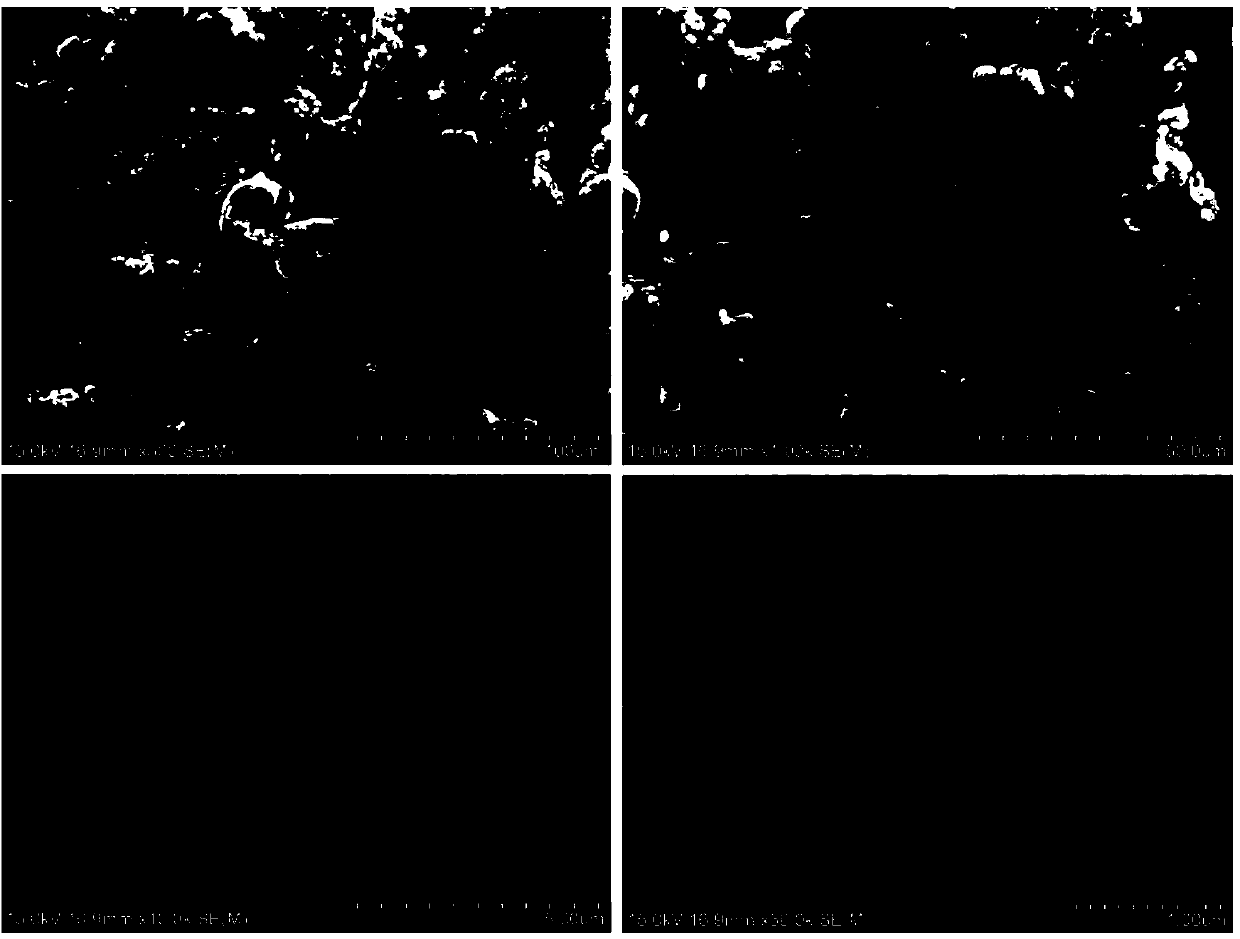
Figure 1 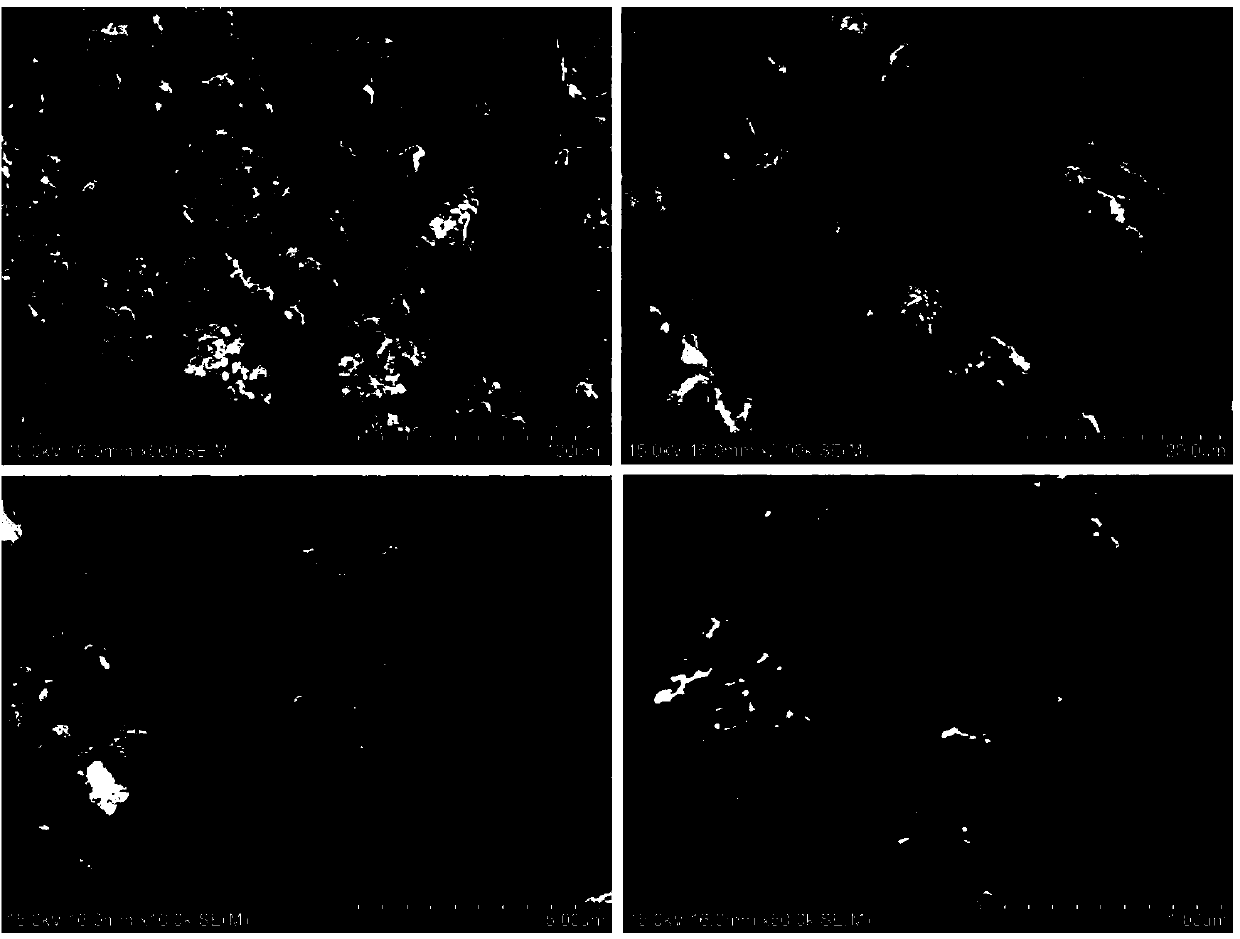
Figure 2
Abstract
Description
technical field
[0001] The invention relates to a method for biomimetic deposition of hydroxyapatite on the surface of a zinc phosphate conversion film, belonging to the field of surface modification of biomedical materials. Background technique
[0002] Hydroxyapatite (HA) has attracted much attention because of its excellent biocompatibility, bioactivity, non-toxicity, and strong integration with bone. The preparation of hydroxyapatite by biomimetic deposition has the advantages of simple process, low cost, and the ability to form uniform coatings on irregularly shaped and porous substrates. It has been widely used in many materials. Zinc phosphate (Hopeite, H) is the main crystal phase of zinc phosphate bone cement, and has attracted much attention due to its good biological activity and osteogenic performance. Zinc phosphate conversion coating (HPCC) has the advantages of being insoluble in water, good corrosion resistance, and firmly bonded to the substrate. It is wide...
Examples
Embodiment 1
[0025] (1) prepare zinc phosphate chemical conversion film on stainless steel surface;
[0026] (2) Cleaning: the stainless steel sample with zinc phosphate chemical conversion coating on the surface is cleaned with acetone, absolute ethanol and deionized water respectively for subsequent use;
[0027] (3) Preparation of SBF solution: sodium chloride 12.0525g / L, sodium bicarbonate 0.5325g / L, potassium chloride 0.3375g / L, dipotassium hydrogen phosphate dihydrate 0.3465g / L, magnesium chloride hexahydrate 0.4665g / L, 1mol / L hydrochloric acid 58.5mL / L, calcium chloride 0.438g / L, sodium sulfate 0.108g / L;
[0028] (4) Biomimetic deposition: put the cleaned sample into 200mL simulated body fluid, soak it in a constant temperature water bath oscillator at 37°C for 9 days, take it out, wash it with deionized water, and dry it to obtain the HA film layer.
Embodiment 2
[0030] (1) prepare zinc phosphate chemical conversion film on stainless steel surface;
[0031] (2) Cleaning: the stainless steel sample with zinc phosphate chemical conversion coating on the surface is cleaned with acetone, absolute ethanol and deionized water respectively for subsequent use;
[0032] (3) Preparation of SBF solution: sodium chloride 12.0525g / L, sodium bicarbonate 0.5325g / L, potassium chloride 0.3375g / L, dipotassium hydrogen phosphate dihydrate 0.3465g / L, magnesium chloride hexahydrate 0.4665g / L, 1mol / L hydrochloric acid 58.5mL / L, calcium chloride 0.438g / L, sodium sulfate 0.108g / L;
[0033] (4) Biomimetic deposition: put the cleaned sample into 25 mL of simulated body fluid, soak it in a constant temperature water bath oscillator at 37°C for 15 days, take it out, wash it with deionized water, and dry it to obtain the HA film.
Embodiment 3
[0035] (1) prepare zinc phosphate chemical conversion film on stainless steel surface;
[0036] (2) Cleaning: the stainless steel sample with zinc phosphate chemical conversion coating on the surface is cleaned with acetone, absolute ethanol and deionized water respectively for subsequent use;
[0037] (3) Preparation of SBF solution: sodium chloride 8.035g / L, sodium bicarbonate 0.355g / L, potassium chloride 0.225g / L, dipotassium hydrogen phosphate dihydrate 0.231g / L, magnesium chloride hexahydrate 0.311g / L, 1mol / L hydrochloric acid 39mL / L, calcium chloride 0.292g / L, sodium sulfate 0.072g / L;
[0038] (4) Biomimetic deposition: put the cleaned sample into 25mL simulated body fluid, soak it in a constant temperature water bath oscillator at 37°C for 7 days, take it out, wash it with deionized water, and dry it to obtain the HA film layer.