
Super-oleophobic and lyophobic coating and preparation method thereof
A technology of hydrophobic coating and processing method, which is applied in coatings, devices for coating liquid on the surface, special surfaces, etc., can solve the problems of no industrial mass production, restrictions on industrial application, and difficulty in achieving oleophobicity, etc., to achieve Simple processing method, good self-cleaning performance, and good application prospects
Patent Information
- Authority / Receiving Office
- CN · China
- Current Assignee / Owner
- Publication Date
- 2015-01-07
Smart Images
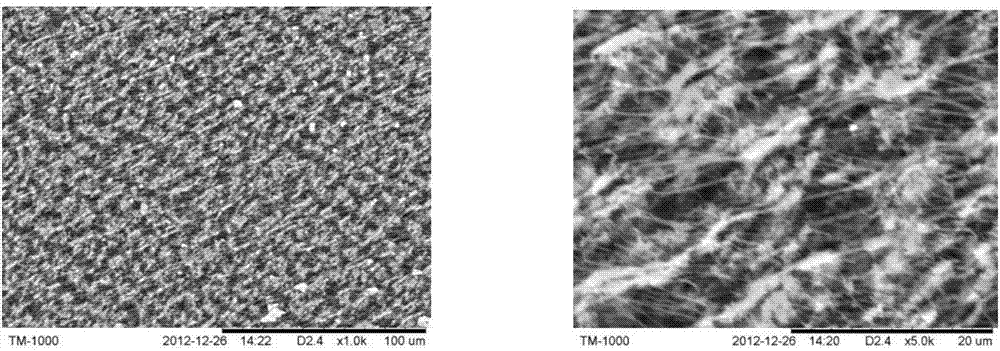
Figure 1 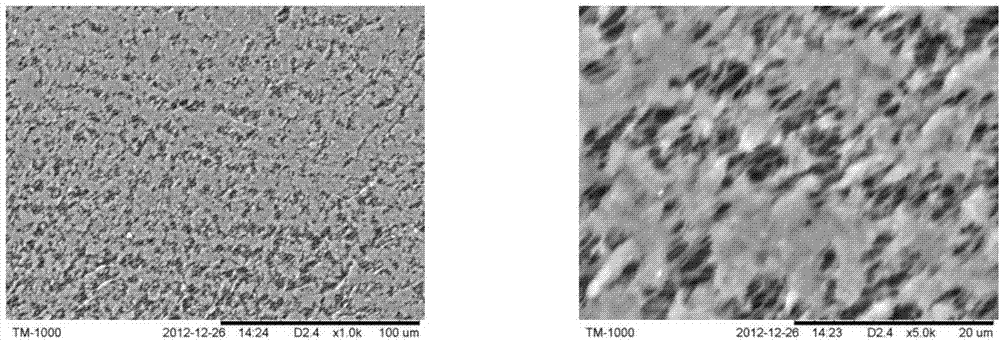
Figure 2 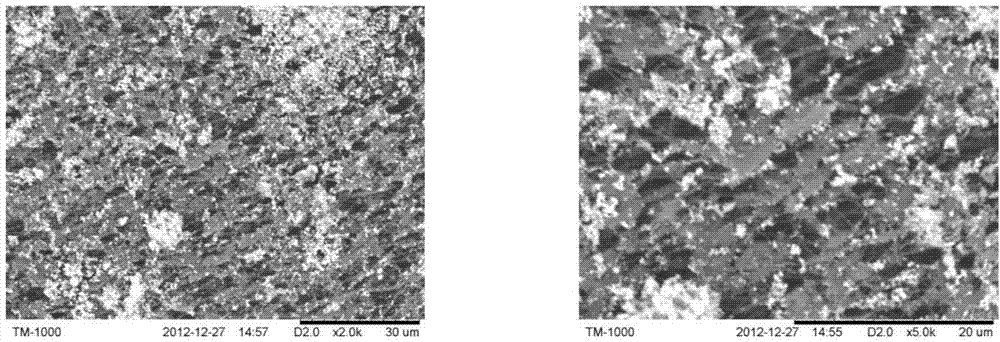
Figure 3
Abstract
Description
technical field
[0001] The invention belongs to the field of coatings, in particular to a super-oleophobic and hydrophobic coating and a processing method thereof. Background technique
[0002] At present, superhydrophobic coatings are mostly grafted or blended with fluoride or nanostructured polymers. These super-hydrophobic coatings generally cannot be oleophobic, and they do not have a coating, so they cannot be used in many fields. This year, it was reported that 500nm TiO 2 Nanoparticles then self-assemble nanolayers to achieve a superhydrophobic surface, but this application is greatly limited, the main limitations are (1) can not be oleophobic; (2) can only be used for nanoparticles; (3) long-term use The effect is reduced; (4) surface fluorination treatment, using expensive perfluoromercaptan treatment; (5) polluted and difficult to regenerate. So these are unfavorable factors for industrial applications.
[0003] There is also an electrospinning blend to obtain ...
Examples
Embodiment 1
[0028] Prepare 0.1wt% ethylaminocatechol solution, soak the PTFE membrane silk in the solution for 3h, see figure 1 with figure 2 . After drying, use 50mM Cu(NO 3 ) 2 The solution and the 1wt% perfluoroalkyl phosphate solution were soaked for 1 hour respectively. The contact angle tester shows that the contact angle to kerosene is 75-80 degrees.
Embodiment 2
[0030] A 0.2wt% ethylaminocatechol solution was prepared, and the PTFE substrate was soaked in the solution for 1.5h. After drying, use 50mM AgNO 3 The solution and the 1wt% perfluorooctyl quaternary ammonium iodide solution were each soaked for 2 hours. The contact angle tester shows that the contact angle to kerosene is 110-120 degrees.
[0031] Figure 5 It shows the contact angle of the treated PTFE hollow fiber membrane for water, kerosene, and alcohol. PTFE itself can be strongly hydrophobic, but it will be infiltrated when it encounters alcohol and kerosene. It can be clearly found in the figure that PTFE has obtained oleophobic properties after being coated.
Embodiment 3
[0033] A 0.1 wt% ethylaminocatechol solution was prepared, and an A4 paper substrate was soaked in the solution for 2 hours. After drying, use 50mM AgNO 3 The solution and the 1wt% perfluoroalkyl betaine solution were soaked for 1 hour respectively. The contact angle tester shows that the contact angle to kerosene is 85-90 degrees.