
Preparation method and application of a polymer vesicle with sugar sponge function
A technology of polymers and vesicles, applied in the fields of filters in blood vessels, medical science, surgery, etc., can solve the problems of difficulty, limited application prospects, limited research on sugar-responsive assemblies, etc., and achieve the effect of good stability.
Patent Information
- Authority / Receiving Office
- CN · China
- Patent Type
- Patents(China)
- Current Assignee / Owner
- Publication Date
- 2017-08-25
Smart Images
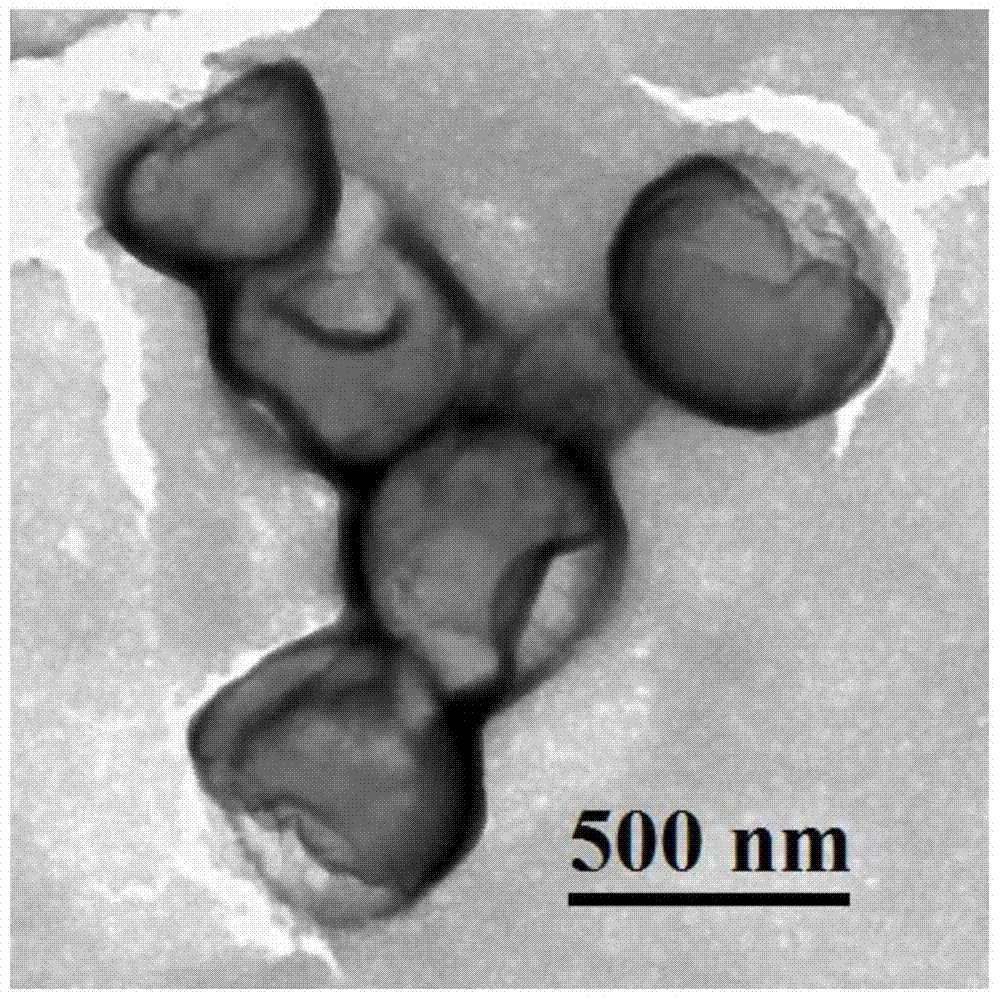
Figure 1 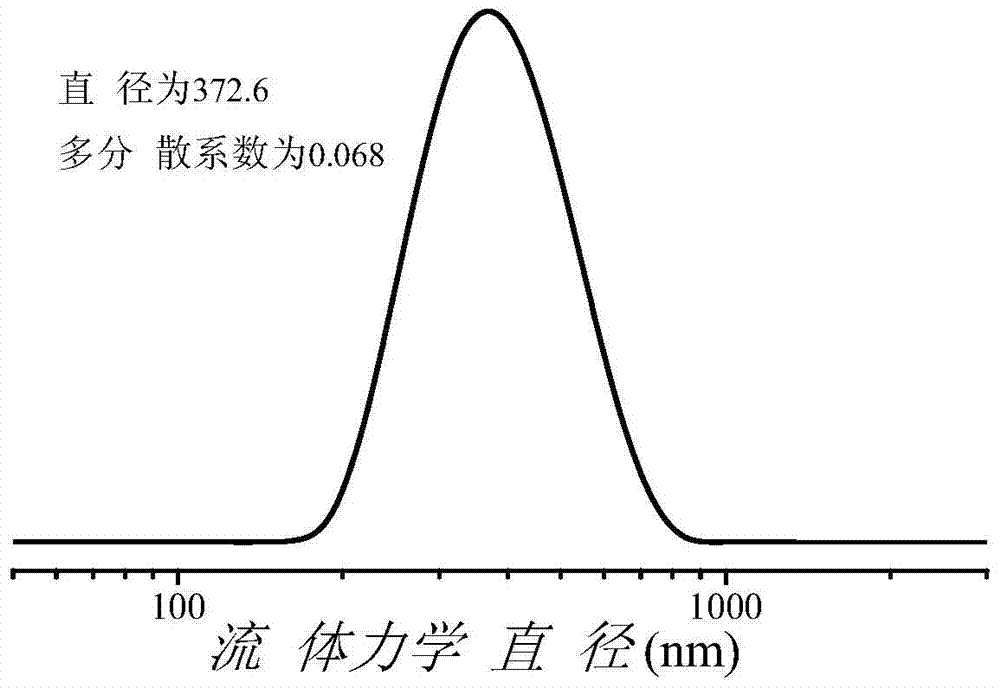
Figure 2 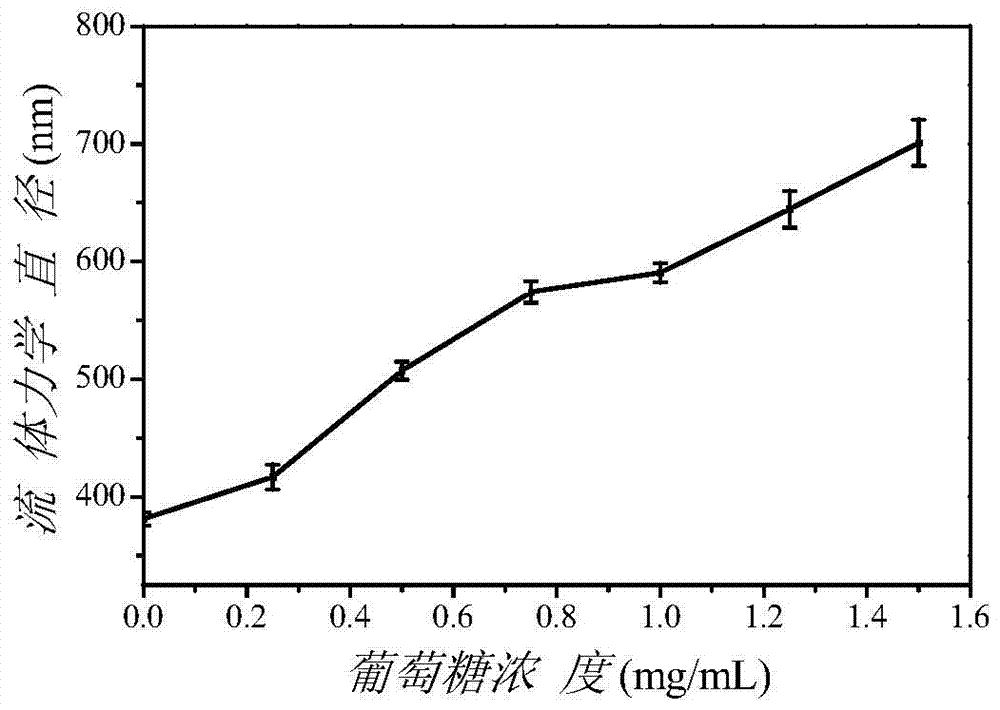
Figure 3
Abstract
Description
Technical field
[0001] The invention belongs to the field of polymer materials, and relates to a polymer vesicle and a preparation method and application thereof. Background technique
[0002] In recent years, the self-assembly technology of polymers has been a hot spot for researchers from all over the world. Various novel structures can be obtained through self-assembly technology, such as micelles, vesicles, disc-like structures, worm-like structures, and rod-like structures. Structure etc. Among them, polymer vesicles have a wider range of applications due to the cavity inside.
[0003] Stimulus-responsive polymer vesicles refer to polymer vesicles that can respond to certain external stimuli. These external stimuli include various types such as pH, temperature, light, magnetic field, and redox conditions. When the external stimulus conditions change, the morphology, structure or composition of the stimulus-responsive polymer vesicles will change accordingly. It is these in...
Examples
preparation example Construction
[0040]
[0041] The preparation method of sugar-responsive polymer vesicles of the present invention includes the following steps:
[0042] (1) Synthesis steps of amphiphilic sugar-containing polymer:
[0043] a. With brominated polyoxyethylene (PEO-Br) as the macroinitiator, the diethylaminoethyl methacrylate monomer (DEA), coumarin monomer (CMA), glucose monomer (AcGlcEMA) , The catalyst and the catalyst ligand are added to the round bottom flask, and then an appropriate amount of the first type solvent is added, mixed and removed the oxygen in the reaction system, and then reacted at 70~150℃ for 10~60h, and the polymer solution is obtained after the reaction is completed ;
[0044] b. The obtained polymer solution is subjected to rotary steaming, dissolution, passing through a neutral alumina column, re-dissolving, dialysis and freeze-drying to obtain polymer powder;
[0045] c. Dissolve the obtained polymer powder in a mixed solution of chloroform and methanol, add a strong base ...
Embodiment 1
[0067] This embodiment provides a method for preparing sugar-responsive polymer vesicles, including the following steps:
[0068] (1) The synthesis steps of amphiphilic sugar-based polymer PEO-b-P (DEA-stat-CMA-stat-GlcEMA):
[0069] a. Use 0.409g (0.2mmol) of brominated polyoxyethylene (PEO-Br) as the macroinitiator, diethylaminoethyl methacrylate (DEA) (2.220g, 12mmol), coumarin monomer (CMA) (0.346g, 1.2mmol), glucose monomer (AcGlcEMA) (0.736g, 1.6mmol), catalyst cuprous bromide (0.028g, 0.2mmol) and catalyst ligand PMDETA (0.042g, 0.24mmol) together Add to a 25mL round-bottom flask, dissolve all the above-mentioned reactants with 3mL of dimethylformamide, bubbling argon for 30 minutes to remove oxygen in the reaction system (form an oxygen-free environment), proceed Atom transfer radical polymerization (ATRP), the reaction temperature is 75℃, the reaction time is 60h, after the reaction is over, a polymer solution is obtained;
[0070] b. The obtained polymer solution is succe...
Embodiment 2
[0078] This embodiment provides a method for preparing sugar-responsive polymer vesicles, including the following steps:
[0079] (1) The synthesis steps of amphiphilic sugar-based polymer PEO-b-P (DEA-stat-CMA-stat-GlcEMA):
[0080] a. Use 0.409g (0.2mmol) of brominated polyoxyethylene (PEO-Br) as the macroinitiator, diethylaminoethyl methacrylate (DEA) (3.700g, 20mmol), coumarin monomer (CMA) (0.864g, 3.0mmol), glucose monomer (AcGlcEMA) (1.472g, 3.2mmol), catalyst cuprous bromide (0.028g, 0.2mmol) and catalyst ligand PMDETA (0.042g, 0.24mmol) together Add to a 25mL round-bottom flask, dissolve all the above-mentioned reactants with 5mL anisole, bubbling argon for 30 minutes to remove oxygen in the reaction system, and carry out atom transfer radical polymerization (ATRP) ), the reaction temperature is 100°C, the reaction time is 40h, and the polymer solution is obtained after the reaction is completed;
[0081] b. The obtained polymer solution is successively subjected to rotary...